Works for
1 of 1 advertised claim delivered
MoisturizingGlycerin, Ananas sativus fruit extract + 2 moreGood evidence
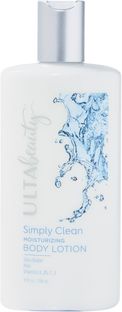
“Simply Clean Moisturizing Body Lotion”
This product contains good ingredients to attract water to the upper layer of the skin. These ingredients are called "humectants": glycerin.
When humectants are on the surface of the skin, they “pull in” the moisture from the outside environment, or from within deeper layers of the skin. If the air is dry, humectants can speed up the moisture loss from the skin. This is why it is a good idea to use another product on top of this one to help "seal in" the moisture (look for ingredients like dimethicone, squalane, oils and butters).
Anti-oxidationNot advertised by the brand · Punica granatum extract, Garcinia mangostana fruit extract + 5 moreModerate evidence
This product contains antioxidants (punica granatum extract) that might be able to help neutralize free radicals in skin to lessen the damage it gets from the UV light (sun). There is not enough evidence to confirm their effectiveness in skin though.
Can it cause trouble?
Irritancy6 strong irritants: Parfum, Benzophenone-4 + 4 more — patch-test recommendedHigh risk
Comedogenic1 ingredient rated 2 or more on the 0–5 pore-clogging scale1 flagged


User reviews
Be the first — your take helps the next person decide.
Ingredients
Filter by role to see what each ingredient is doing.
Water~45–55%
Sodium laureth sulfate~11–14%
- Irritation risk
- High
- Comedogenicity
- 2/5
Works as a foaming cleansing agent
More about Sodium laureth sulfateCocamidopropyl betaine~6.1–7.4%
- Irritation risk
- High
Helps water and oil mix together. Used as a cleansing ingredient. Could be an allergen
More about Cocamidopropyl betaineParfum~2.9–3.6%
- Irritation risk
- High
An aromatic blend of unspecified and possibly irritating ingredients
More about ParfumPeg-200 hydrogenated glyceryl palmate~2.3–2.8%
Acrylates copolymer~1.8–2.2%
- Irritation risk
- Medium
Used to stabilize product formulation, help create an even product layer over skin (for example, in sunscreen) and create a thicker product consistency
More about Acrylates copolymerActinidia chinensis fruit extract~1.6–1.9%
- Irritation risk
- High
A plant extract that might have some anti-oxidant properties, but evidence of effectiveness in skin is lacking
More about Actinidia chinensis fruit extractAnanas sativus fruit extract~1.3–1.6%
- Irritation risk
- Medium
A fruit extract that might help to attract water to the upper layer of the skin, but there is no evidence for any other benefits to the skin
More about Ananas sativus fruit extractAscorbic acid~1.1–1.4%
- Irritation risk
- High
The most well-researched antioxidant that works in skin. Helps neutralize free radicals supporting collagen production, helping to even out the skin tone and preventing early signs of aging
More about Ascorbic acidAverrhoa carambola fruit extract~0.75–1.15%
- Irritation risk
- Low
Benzophenone-4~1.1–1.3%
- Irritation risk
- High
Sulisobenzone. A UV filter. Is typically used to improve the product stability under exposure to UV light. It is effective against both UVA and UVB rays. It can be used is larger concentrations as a sun protection ingredient for the skin, but can be irritating
More about Benzophenone-4Citric acid~0.55–0.8%
- Irritation risk
- Medium
Can work as an exfoliant but is typically used to adjust the product pH
More about Citric acidCocamide mipa~0.5–0.75%
- Irritation risk
- Low
Surfactant - foam booster, viscosity increasing agent - aqueous, emulsifying, emulsion stabilising, foam boosting, surfactant, and viscosity controlling. Comes from coconut acid. Doesn't appear to be a common irritant
More about Cocamide mipaDisodium edta~0.45–0.7%
Garcinia mangostana fruit extract~0.4–0.6%
- Irritation risk
- High
A fruit extract that might have some anti-oxidant properties
More about Garcinia mangostana fruit extractGlycerin~0.45–0.7%
- Irritation risk
- Low
One of the best moisturizing ingredients. Naturally present in skin. It attracts water to the upper layer of the skin working as a humectant
More about GlycerinHydrolyzed egg protein~0.4–0.65%
- Irritation risk
- Low
Daucus carota sativa root extract~0.3–0.6%
- Irritation risk
- Low
Carrot extract. Might have anti-oxidant properties and be used to add orange color
More about Daucus carota sativa root extractCitrus limon peel oil~0.3–0.55%
Litchi chinensis fruit extract~0.3–0.5%
- Irritation risk
- Low
Passiflora incarnata fruit extract~0.25–0.45%
- Irritation risk
- Low
Peg-7 glyceryl cocoate~0.25–0.5%
- Irritation risk
- Medium
Helps oils and water mix together and works as a cleansing agent
More about Peg-7 glyceryl cocoatePolysorbate 20~0.25–0.5%
Psidium guajava fruit extract~0.2–0.4%
- Irritation risk
- High
A fruit extract that might have some anti-oxidant effect
More about Psidium guajava fruit extractPunica granatum extract~0.2–0.35%
- Irritation risk
- Medium
A plant extract that can help neutralize free radicals in skin and even out the skin tone, but is typically used in products in a concentration that is too low to be effective
More about Punica granatum extractRetinyl palmitate~0.15–0.3%
- Irritation risk
- High
Three steps removed from the active form of vitamin A - retinoic acid. To have an effect in the skin, it first needs to be converted twice to become the retinoic acid. This means it is less potent than retinol, but could also be less irritating. Once converted to the retinoic acid in the skin, it helps against all signs of aging, improves skin cell turnover and helps fight blemishes and clogged pores. However, in many cosmetic formulations, it is used in a concentration that is too low to have the full effect
More about Retinyl palmitateSodium hydroxide~0.15–0.3%
Sodium chloride~0.15–0.3%
- Irritation risk
- Low
Used to stabilize mixtures of oil and water, and create thicker, gel-like product textures
More about Sodium chlorideTocopherol~0.15–0.25%
- Irritation risk
- Low
Pure form of vitamin E. Can help moisturise and protect the skin from free radicals. Often used to help stabilise other ingredients or the formula itself
More about TocopherolZizyphus jujuba fruit extract~0.1–0.15%
- Irritation risk
- Low
Methylchloroisothiazolinone~0.00075–0.0015%
- Irritation risk
- High
A preservative. Is a frequent allergen in cosmetics
More about MethylchloroisothiazolinoneMethylisothiazolinone~0.00075–0.0015%
Ci 15985~0.05%
Ingredient list view
Water, Sodium laureth sulfate, Cocamidopropyl betaine, Parfum, Peg-200 hydrogenated glyceryl palmate, Acrylates copolymer, Actinidia chinensis fruit extract, Ananas sativus fruit extract, Ascorbic acid, Averrhoa carambola fruit extract, Benzophenone-4, Citric acid, Cocamide mipa, Disodium edta, Garcinia mangostana fruit extract, Glycerin, Hydrolyzed egg protein, Unknown, Daucus carota sativa root extract, Unknown, Citrus limon peel oil, Unknown, Litchi chinensis fruit extract, Passiflora incarnata fruit extract, Peg-7 glyceryl cocoate, Polysorbate 20, Psidium guajava fruit extract, Punica granatum extract, Retinyl palmitate, Sodium hydroxide, Sodium chloride, Tocopherol, Zizyphus jujuba fruit extract, Methylchloroisothiazolinone, Methylisothiazolinone, Ci 15985
Compare prices
Retailers ranked by price — lowest first.
Worth comparing, line by line.
Match % combines shared ingredients, the first five ingredients, shared actives and hero ingredients, irritancy (lower counts in the alternative's favour), texture and body area. Only products in the same routine step are compared.
| ULTASimply Clean Moisturizing Body LotionYOUR PRODUCT | Skincare by Dr VBody Brightening Oil | FreshLife Body Lotion | PacificaGlow Baby Super Lit SPF Lotion | |
|---|---|---|---|---|
| Match | — | 79% | 76% | 75% |
| Price | — | $44.95 | $26.44 | $19.99 |
| Shared key ingredients | — | 2 of 5 | 1 of 5 | 2 of 5 |
| Key difference | — | Retinal | Allantoin | Bisabolol |
| Irritancy | High | Medium | High | Medium |
| Drying alcohol | — | — | — | — |
| View product | Shop | Shop | Shop |


Sources cited in this review
Every concentration estimate and effectiveness label is anchored to one of these 12 studies and safety reviews.
- 1Surfactants and experimental irritant contact dermatitisncbi.nlm.nih.gov
- 2
- 3
- 4Benzophenone 4: An emerging allergen in cosmetics and toiletries?pubmed.ncbi.nlm.nih.gov
- 5
- 6

Affiliate links · As an Amazon Associate, WIMJ earns from qualifying purchases.