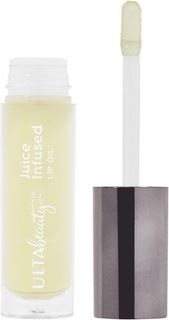
Works for
1 of 2 advertised claims delivered
Moisturizing22 ingredients credited for this claimGood support
“Moisturizes and improves skin elasticity, Reduce appearance of wrinkles and dryness on the lips, Anti-oxidant rich in Vitamin A & E. Jojoba & Peach.”
This product can help soften the skin and reduce its moisture loss with emollients and occlusives: helianthus annuus seed oil, ricinus communis seed oil.
Keep in mind that this product does not contain effective ingredients to attract water to the upper layer of the skin. This is why an additional product with humectants like glycerin or hyaluronic acid can be helpful (apply it before this product for the best results).
Anti-aging4 ingredients credited for this claimLimited support
“Moisturizes and improves skin elasticity, Reduce appearance of wrinkles and dryness on the lips, Anti-oxidant rich in Vitamin A & E. Jojoba & Peach.”
This product does not contain ingredients that are able to reduce fine lines and wrinkles or help with skin elasticity, but it can improve the look of the skin temporarily through moisturization. Well-moisturized skin might also be able to repair the sun damage better.
This ingredient punica granatum extract might be able to help neutralize free radicals in skin and help it fight off some of the sun damage.
Anti-oxidationNot advertised by the brand · 11 ingredients credited for this claimModerate support
This product contains antioxidants (punica granatum extract, vaccinium macrocarpon seed oil) that might be able to help neutralize free radicals in skin to lessen the damage it gets from the UV light (sun). There is not enough evidence to confirm their effectiveness in skin though.
Can it cause trouble?
Irritancy6 strong irritants: Parfum, Linalool + 4 more — patch-test recommendedHigh risk
Comedogenic1 ingredient rated 2 or more on the 0–5 pore-clogging scale1 flagged
User reviews
Be the first — your take helps the next person decide.
Ingredients
Filter by role to see what each ingredient is doing.
Vaccinium macrocarpon fruit extract~30–45%
- Irritation risk
- High
A berry extract. Might have some anti-oxidant properties
More about Vaccinium macrocarpon fruit extractPunica granatum extract~3.5–5.2%
- Irritation risk
- Medium
A plant extract that can help neutralize free radicals in skin and even out the skin tone, but is typically used in products in a concentration that is too low to be effective
More about Punica granatum extractOleic/linoleic/linolenic polyglycerides~3.6–5.4%
- Irritation risk
- Low
Helps soften the upper layer of the skin
More about Oleic/linoleic/linolenic polyglyceridesPolyglyceryl-2 isostearate/dimer dilinoleate copolymer~2.8–4.2%
- Irritation risk
- Low
Sesamum indicum seed oil~2.1–3.2%
- Irritation risk
- Low
A good moisturizing plant oil. Due to the high linoleic acid content, it helps soften the upper layer of the skin, reduce water loss and support skin barrier function
More about Sesamum indicum seed oilDilinoleic acid/propanediol copolymer~1.8–2.7%
- Irritation risk
- Low
Helianthus annuus seed oil~1.6–2.4%
- Irritation risk
- Low
A great emollient due to its high linoleic acid content. One of the most effective plant oils in helping skin hydration and repairing skin barrier function
More about Helianthus annuus seed oilGlyceryl caprylate~1.3–1.9%
- Irritation risk
- Low
An emollient that can also help water and oil mix together, as well as prevent bacteria growth in products
More about Glyceryl caprylateSqualane~1.2–1.8%
- Irritation risk
- Low
An oil naturally present in skin. Works as an emollient to soften the skin and form a protective layer on its surface without a greasy feeling.
More about SqualaneParfum~0.6–1.35%
- Irritation risk
- High
An aromatic blend of unspecified and possibly irritating ingredients
More about ParfumCamellia oleifera seed oil~0.55–1.25%
- Irritation risk
- Medium
An emollient that does not leave a greasy finish
More about Camellia oleifera seed oilAleurites moluccanus seed oil~0.4–0.95%
- Irritation risk
- Low
Helps soften the upper layer of the skin
More about Aleurites moluccanus seed oilAvena sativa kernel oil~0.4–0.9%
- Irritation risk
- Low
An effective moisturizing and skin barrier repair ingredient. Helps calm down inflammation and has some anti-oxidant properties
More about Avena sativa kernel oilPolyglyceryl-3 polyricinoleate~0.4–0.9%
- Irritation risk
- Medium
Helps oil and water mix together
More about Polyglyceryl-3 polyricinoleateSimmondsia chinensis seed oil~0.4–0.9%
- Irritation risk
- Medium
Softens the upper layer of skin and helps restore the healthy skin barrier. Has shown to help calm down inflammation in skin. It is a stable oil, meaning that it retains its properties even when exposed to air.
More about Simmondsia chinensis seed oilRubus occidentalis seed oil~0.35–0.85%
- Irritation risk
- Low
Vaccinium macrocarpon seed oil~0.35–0.8%
- Irritation risk
- Medium
A plant oil that can help neutralize free radicals, soften the upper layer of the skin, and support skin's barrier function
More about Vaccinium macrocarpon seed oilCalophyllum inophyllum seed oil~0.3–0.75%
- Irritation risk
- Low
Caprylic/capric triglyceride~0.35–0.75%
- Irritation risk
- Medium
A good mix of fatty acids that forms a protective layer on the skin. Improves the shelf life of products. Derived from coconut and glycerin
More about Caprylic/capric triglycerideTocopherol~0.2–0.7%
- Irritation risk
- Low
Pure form of vitamin E. Can help moisturise and protect the skin from free radicals. Often used to help stabilise other ingredients or the formula itself
More about TocopherolRicinus communis seed oil~0.2–0.7%
- Irritation risk
- Medium
A plant oil that can help soften the skin. It might be helpful in calming down inflammation, but solid research is lacking. Is often used in lip products to create the needed product consistency
More about Ricinus communis seed oilBenzyl alcohol~0.15–0.6%
- Irritation risk
- High
A preservative. Can be used to mask unpleasant smell. Can be irritating
More about Benzyl alcoholVitis vinifera seed oil~0.15–0.7%
- Irritation risk
- Medium
A great emollient that can also have anti-oxidant properties
More about Vitis vinifera seed oilOlea europaea fruit oil~0.15–0.65%
- Irritation risk
- Medium
An emollient that helps soften the skin but is not effective for restoring its barrier function. Might be helpful to calm down inflammation
More about Olea europaea fruit oilPunica granatum extract~0.15–0.6%
- Irritation risk
- Medium
A plant extract that can help neutralize free radicals in skin and even out the skin tone, but is typically used in products in a concentration that is too low to be effective
More about Punica granatum extractCi 75470~0.15–0.6%
Ci 17200~0.15–0.6%
Alaria esculenta extract~0.15–0.6%
- Irritation risk
- Low
Works as a humectant helping to attract water to the upper layer of the skin and might be effective as an anti-oxidant.
More about Alaria esculenta extractLinalool~0.15–0.55%
Ci 15850~0.15–0.55%
Ascorbyl palmitate~0.15–0.55%
- Irritation risk
- Medium
Being a lipid soluble form of vitamin C, it is more stable and can penetrate the skin better than L-Ascorbic acid. It is effective in protecting the skin from free radicals, as well as evening the skin tone, but is less effective in stimulating collagen production compared to L-Ascorbic acid.
More about Ascorbyl palmitateMoringa oleifera seed oil~0.15–0.6%
- Irritation risk
- Medium
A plant oil that helps soften the upper layer of the skin. Is unlikely to be helpful in restoring skin barrier function due to the low content of linoleic acid
More about Moringa oleifera seed oilBorago officinalis seed oil~0.15–0.6%
- Irritation risk
- Low
A plant oil that is effective in reducing irritation in skin, restore the barrier function and support its hydration
More about Borago officinalis seed oilAdansonia digitata seed oil~0.15–0.55%
- Irritation risk
- Medium
Helps soften the upper layer of the skin
More about Adansonia digitata seed oilChenopodium quinoa seed oil~0.15–0.5%
- Irritation risk
- Low
A plant oil that contains a high percentage of linoleic acid. It softens the upper layer of the skin and can help strengthen the skin barrier
More about Chenopodium quinoa seed oilVanillin~0.1–0.35%
- Irritation risk
- Low
Sclerocarya birrea seed oil~0.1–0.35%
- Irritation risk
- Medium
An emollient that helps to soften the skin. It has a high contetn of oleic acid that might weaken the skin barrier. Might have some anti-oxidant properties. It might be somewhat helpful against hyperpigmentation.
More about Sclerocarya birrea seed oilCitrus reticulata peel oil~0.05–0.2%
- Irritation risk
- High
An essential oil used for fragrance. Can be an allergen and irritant
More about Citrus reticulata peel oilButyrospermum parkii oil~0.05–0.3%
- Irritation risk
- Low
- Comedogenicity
- 3/5
Cinnamal~0.05–0.15%
- Irritation risk
- High
Limonene~0.01–0.1%
- Irritation risk
- High
A common frangrance that can easily irritate skin, especially if exposed to air, light or heat
More about LimoneneEugenol~0.01–0.05%
Ingredient list view
Vaccinium macrocarpon fruit extract, Punica granatum extract, Oleic/linoleic/linolenic polyglycerides, Polyglyceryl-2 isostearate/dimer dilinoleate copolymer, Sesamum indicum seed oil, Dilinoleic acid/propanediol copolymer, Helianthus annuus seed oil, Glyceryl caprylate, Squalane, Parfum, Camellia oleifera seed oil, Aleurites moluccanus seed oil, Avena sativa kernel oil, Polyglyceryl-3 polyricinoleate, Simmondsia chinensis seed oil, Rubus occidentalis seed oil, Vaccinium macrocarpon seed oil, Calophyllum inophyllum seed oil, Caprylic/capric triglyceride, Tocopherol, Ricinus communis seed oil, Benzyl alcohol, Vitis vinifera seed oil, Olea europaea fruit oil, Punica granatum extract, Ci 75470, Ci 17200, Alaria esculenta extract, Linalool, Ci 15850, Ascorbyl palmitate, Moringa oleifera seed oil, Borago officinalis seed oil, Adansonia digitata seed oil, Chenopodium quinoa seed oil, Vanillin, Sclerocarya birrea seed oil, Citrus reticulata peel oil, Butyrospermum parkii oil, Cinnamal, Limonene, Eugenol
Compare prices
Retailers ranked by price — lowest first.
Affiliate links · prices updated regularly · As an Amazon Associate, WIMJ earns from qualifying purchases.
Sources cited in this review
Every concentration estimate and effectiveness label is anchored to one of these 26 studies and safety reviews.
- 1
- 2
- 3
- 4
- 5Triglyceride composition of Sesamum indicum seed oilonlinelibrary.wiley.com
- 6

Affiliate links · As an Amazon Associate, WIMJ earns from qualifying purchases.