Works for
2 of 2 advertised claims delivered
Anti-agingLactobionic acid, Glycolic acid + 9 moreStrong evidence
“As a result, it appears smoother, brighter, and more youthful, with a radiant glow.”
This product can help reduce and prevent fine lines and wrinkles, improve skin elasticity and firmness because it contains glycolic acid, lactobionic acid.
These ingredients in the product can also be helpful, even though there is less evidence for their effectiveness: palmitoyl pentapeptide-4, palmitoyl tripeptide-8.
Keep in mind that it typically takes at least 6 weeks to notice any results because the changes that are needed to improve fine lines and elasticity happen in the deeper layers of the skin. No topical anti-aging product can “erase” wrinkles or fully reverse signs of aging.
MoisturizingPalmitoyl tripeptide-8, Lactobionic acid + 38 moreStrong evidence
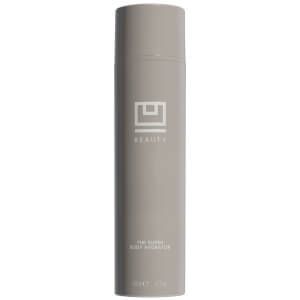
“The Super Hydrator Body”
This product can help improve hydration of the skin with the two types of ingredients.
The first type is called “humectants”:
these ingredients help attract water.
When humectants are on the surface of the skin, they “pull in” the moisture from the outside environment, or from
within deeper layers of the skin. The following ingredients in this product do the job:
dextran, glycerin.
This product also contains ingredients called “occlusives”. They help reduce the speed with which our skin loses moisture to the outside environment. These ingredients also help soften the upper layer of the skin, so it feels less tight and nicer to the touch. The following ingredients in this product do the job: beeswax, butyrospermum parkii butter.
The following ingredients in this product are especially good for supporting the skin barrier and helping with the hydration level: lactobionic acid, palmitoyl pentapeptide-4, palmitoyl tripeptide-8, panthenol
Anti-oxidationNot advertised by the brand · Glutathione, Superoxide dismutase + 10 moreStrong evidence
This product contains antioxidants (glutathione, lactobionic acid, superoxide dismutase) that can help neutralize free radicals in skin. By doing so, they can lessen the damage the skin gets from the UV light (sun).
ExfoliationNot advertised by the brand · Glycolic acid, Lactobionic acid + 1 moreStrong evidence
This product can help exfoliate the skin. In other words, it helps break down the bonds between dead cells on the surface of the skin and speed up the skin turnover. Skin often appears softer and brighter after exfoliation, but overdoing it can result in disrupted skin barrier. The following ingredient is doing the exfoliating job in this product: glycolic acid, lactobionic acid, mandelic acid.
Evens skin toneNot advertised by the brand · Glutathione, Glycolic acid + 3 moreStrong evidence
This product can help reduce hypepigmentation and even out the skin tone because it contains the following effective ingredients: glutathione, glycolic acid, lactobionic acid, mandelic acid
Keep in mind that you would need to apply any topical skincare targetted at hypigmentation consistently for a couple of months to get a result. No topical skincare product can help get rid of hyperpigmentation (including post-acne marks and age spots) instantly.
Can it cause trouble?
Irritancy1 strong irritant: Passiflora incarnata seed oilMedium risk
Comedogenic1 ingredient rated 2 or more on the 0–5 pore-clogging scale1 flagged

User reviews
Be the first — your take helps the next person decide.
Ingredients
Filter by role to see what each ingredient is doing.
Water~45–55%
Squalane~4.9–5.9%
- Irritation risk
- Low
An oil naturally present in skin. Works as an emollient to soften the skin and form a protective layer on its surface without a greasy feeling.
More about SqualanePentylene glycol~4.3–5.3%
- Irritation risk
- Medium
Used to preserve products, dissolve other ingredients and create a nice product texture
More about Pentylene glycolOctyldodecanol~3.1–3.7%
- Irritation risk
- Low
An emollient that helps to soften the skin and create a pleasant product texture and stabilize the formulation
More about OctyldodecanolButyrospermum parkii butter~2.4–2.9%
- Irritation risk
- Low
- Comedogenicity
- 3/5
A great moisturising ingredient that softens the skin and reduces water loss from its upper layer. It also can be helpful in protecting skin from free radicals
More about Butyrospermum parkii butterArgania spinosa kernel oil~1.9–2.3%
- Irritation risk
- Medium
An emollient that helps soften the upper layer of the skin. Might have some weak anti-oxidant properties
More about Argania spinosa kernel oilPersea gratissima oil~1.6–1.9%
- Irritation risk
- Medium
An emollient that helps soften the skin and could be helpful in repairing its barrier function
More about Persea gratissima oilVitis vinifera seed oil~1.4–1.7%
- Irritation risk
- Medium
A great emollient that can also have anti-oxidant properties
More about Vitis vinifera seed oilPrunus amygdalus dulcis oil~1.2–1.4%
- Irritation risk
- Low
An emollient that softens the skin
More about Prunus amygdalus dulcis oilEthylhexyl stearate~0.95–1.15%
- Irritation risk
- Low
Helps soften the upper layer of the skin
More about Ethylhexyl stearateCetyl peg/ppg-10/1 dimethicone~0.65–0.95%
- Irritation risk
- Low
A type of silicone that helps water and oil mix together. Can help to soften upper layer of the skin
More about Cetyl peg/ppg-10/1 dimethiconeSorbitol~0.55–0.8%
- Irritation risk
- Low
Helps attract water to the upper layer of the skin and improves the product texture
More about SorbitolMethyldihydrojasmonate~0.5–0.75%
Panthenol~0.45–0.7%
- Irritation risk
- Low
Helps attract water to the upper layer of the skin and can help improve skin barrier function
More about PanthenolMagnesium sulfate~0.45–0.7%
Passiflora incarnata seed oil~0.45–0.65%
- Irritation risk
- High
A plant oil that can help soften the upper layer of the skin. Contains essential oil that can be irritating
More about Passiflora incarnata seed oilHydrolyzed walnut extract~0.35–0.65%
- Irritation risk
- Low
Tocopherol~0.35–0.65%
- Irritation risk
- Low
Pure form of vitamin E. Can help moisturise and protect the skin from free radicals. Often used to help stabilise other ingredients or the formula itself
More about TocopherolTocopheryl acetate~0.3–0.6%
- Irritation risk
- Medium
A more stable but less bio-available form of vitamin E compared to Tocopherol. Might help moisturize and protect the skin from free radicals, but mostly used in low concentrations to stabilize other ingredients.
More about Tocopheryl acetateCera alba~0.45–0.65%
- Irritation risk
- Medium
Forms a protective barrier that holds water and keeps dry skin hydrated. Keeps an emulsion from separating into its oil and liquid components, and increases the thickness of a product. Can be an allergen
More about Cera albaBeeswax~0.3–0.6%
- Irritation risk
- Low
Forms a protective barrier that holds water and keeps dry skin hydrated. Keeps an emulsion from separating into its oil and liquid components, and increases the thickness of a product. Can be an allergen
More about BeeswaxBeta-glucan~0.25–0.45%
- Irritation risk
- Low
Helps attract water to the upper layer of the skin, calm down inflammation and irritation, restore the barrier function and support wound healing. It can be helpful in reducing fine lines and wrinkles
More about Beta-glucanAscorbyl palmitate~0.2–0.4%
- Irritation risk
- Medium
Being a lipid soluble form of vitamin C, it is more stable and can penetrate the skin better than L-Ascorbic acid. It is effective in protecting the skin from free radicals, as well as evening the skin tone, but is less effective in stimulating collagen production compared to L-Ascorbic acid.
More about Ascorbyl palmitateNiacinamide~0.25–0.45%
- Irritation risk
- Low
Is proven to be effective in reducing blemishes, evening out skin tone and helping to improve lines and wrinkles. It helps the skin to repair sun damage, calm down inflammation and keep maintain good levels of moisture. The concentration of about 2% is effective for supporting the skin barrier and evening out the skin tone. Concentration of 4-6% is better for helping with acne and balancing the sebum production
More about NiacinamideSodium ascorbyl phosphate~0.25–0.45%
- Irritation risk
- Medium
A stable derivative of vitamin C. It is oil-soluble which means it is more likely to penetrate the skin compared to the pure form of vitamin C (which is water-soluble), but it is less bio-available and is way less effective in stimulating collagen and reducing wrinkles compared to the pure form of vitamin C (L-ascorbic acid) and its other derivatives (for example, magnesium ascorbyl phosphate). At the same time, this vitamin C derivative has been shown in studies to be effective in reducing acne, blemishes and clogged pores. It is less irritating then the pure form of vitamin C
More about Sodium ascorbyl phosphateLinoleic acid~0.35–0.6%
- Irritation risk
- Low
An excellent emollient. Helps soften the skin, restore its barrier function, and can help to calm down inflammation. It can be helpful to prevent blemishes and clogged pores
More about Linoleic acidDextran~0.2–0.4%
- Irritation risk
- Low
Helps attract water to the most upper layer of the skin. Derived from sugar
More about DextranPalmitoyl tripeptide-8~0.2–0.4%
Oleic acid~0.25–0.5%
- Irritation risk
- Medium
Helps soften the upper layer of the skin. At the same time, it can weaken the skin's barrier enhancing penetration of other ingredients and increasing the risk of skin dryness
More about Oleic acidSodium acetylated hyaluronate~0.2–0.4%
- Irritation risk
- Low
A type of hyaluronic acid that works as an excellent moisturizer by attracting water into the upper layer of the skin. Is typically feels less sticky on the skin compared to the usual hyaluronic acid
More about Sodium acetylated hyaluronateSodium hyaluronate~0.2–0.4%
- Irritation risk
- Low
One of the best moisturizing ingredients. Attracts water into the upper layer of the skin
More about Sodium hyaluronatePalmitic acid~0.3–0.55%
- Irritation risk
- Low
An emollient that is naturally present in skin and helps soften it
More about Palmitic acidStearic acid~0.35–0.65%
- Irritation risk
- Low
Helps oil and water mix together and works as an emollient
More about Stearic acidSodium hyaluronate crosspolymer~0.25–0.45%
- Irritation risk
- Medium
Attracts water into the upper layer of the skin
More about Sodium hyaluronate crosspolymerHydrolyzed sodium hyaluronate~0.25–0.45%
- Irritation risk
- Low
Attracts water into the upper layer of the skin
More about Hydrolyzed sodium hyaluronateHydrolyzed hyaluronic acid~0.25–0.45%
- Irritation risk
- Low
One of the best moisturizing ingredients. Attracts water into the upper layer of the skin. A version of it is naturally present in skin
More about Hydrolyzed hyaluronic acidSuperoxide dismutase~0.25–0.45%
- Irritation risk
- Low
An antioxidant enzyme that is naturally present in skin. It can help support skin barrier function and reduce inflammation in skin. It is used in topical medications for inflammatory skin conditions including atopic dermatitis (eczema) and psoriasis. There are three types of natural Superoxide Dismutase in human skin. The compound used in topical treatments and cosmetics are mimics of typically one of these natural variants
More about Superoxide dismutaseGlycolic acid~0.25–0.45%
- Irritation risk
- High
An alpha-hydroxy acid (AHA) that helps to remove the dead skin cells on the surface of the skin reveling a more even, smoother complexation. It is also able to stimulate collagen production with long-term use. Could help to reduce pore congestion. It can be irritating to the skin. Apply sunscreen daily if using products with glycolic acid
More about Glycolic acidLactobionic acid~0.25–0.45%
- Irritation risk
- Medium
A polyhydroxy acid (PHA) that helps shed dead cells from the surface of the skin revealing a smoother, more even skin. PHAs tend to be gentler on the skin compared to AHAs (for example, glycolic acid). It also has hydrating properties and helps attract water to the upper layer of the skin. It can help calm down inflammation in skin and support restoration of the barrier function. It has an anti-oxidant effect as well. It can help reduce fine line, wrinkles and improve skin elasticity
More about Lactobionic acidGlutathione~0.25–0.45%
- Irritation risk
- Medium
A peptide that can help neutralize free radicals in skin and reduce melanin production resulting in skin lightening effect and reduction in hyperpigmentation. It can also help attract moisture to the upper layer of the skin
More about GlutathioneMandelic acid~0.25–0.45%
- Irritation risk
- High
Helps shed the upper layer of dead cells from the surface of the skin revealing smoother, brighter skin. It can help to reduce hyperpigmentation. It has anti-bacterial properties, and might help to reduce blemishes, as well as fine lines and wrinkles. It is considered to be gentler than glycolic acid
More about Mandelic acidLinolenic acid~0.3–0.55%
- Irritation risk
- Medium
An emollient that helps soften the skin and calm down inflammation
More about Linolenic acidPalmitoyl pentapeptide-4~0.25–0.45%
- Irritation risk
- Low
A type of peptide. Peptides are excellent moisturizers and might be able support collagen production reducing fine lines and wrinkles
More about Palmitoyl pentapeptide-4Acacia decurrens/jojoba/sunflower seed cera/polyglyceryl-3 esters~0.3–0.5%
- Irritation risk
- Low
Acacia decurrens/jojoba/sunflower seed wax polyglyceryl-3 esters~0.25–0.5%
- Irritation risk
- Medium
Helps soften the upper layer of the skin and create a nice product texture
More about Acacia decurrens/jojoba/sunflower seed wax polyglyceryl-3 estersDisteardimonium hectorite~0.25–0.45%
- Irritation risk
- Low
A type of clay that is used to thicken the product consistency
More about Disteardimonium hectoritePolyglyceryl-4 diisostearate/polyhydroxystearate/sebacate~0.25–0.5%
- Irritation risk
- Medium
Helps water and oil mix together
More about Polyglyceryl-4 diisostearate/polyhydroxystearate/sebacateButylene glycol~0.25–0.45%
- Irritation risk
- Low
Used to create a nice product texture and help delivery of other ingredients. Might be somewhat helpful in attracting water to the upper layer of the skin
More about Butylene glycolMica~0.25–0.5%
- Irritation risk
- Low
Creates an illusion of smoother and more radiant skin tone. Adds shimmer to the skin by reflecting light
More about MicaCaprylic/capric triglyceride~0.3–0.55%
- Irritation risk
- Medium
A good mix of fatty acids that forms a protective layer on the skin. Improves the shelf life of products. Derived from coconut and glycerin
More about Caprylic/capric triglycerideTitanium dioxide~0.3–0.6%
- Irritation risk
- Low
Works as a UV filter when used in high concentrations. It is photostable and is effective mostly against the UVB light, with some protection in the UVA range. In small concentrations, used for its ability to improve the color of cosmetic products. Is usually well tolerated by the skin
More about Titanium dioxideDiisostearoyl polyglyceryl-3 dimer dilinoleate~0.3–0.5%
- Irritation risk
- Low
Propylene carbonate~0.25–0.5%
- Irritation risk
- Low
Is used to dissolve other ingredients and create nice product texture
More about Propylene carbonatePolyglyceryl-3 oleate~0.25–0.5%
- Irritation risk
- Medium
Helps oil and water mix together
More about Polyglyceryl-3 oleatePhenethyl alcohol~0.25–0.45%
Hydroxyphenyl propamidobenzoic acid~0.2–0.4%
- Irritation risk
- Low
Might help to reduce inflammation in skin, but solid research is lacking
More about Hydroxyphenyl propamidobenzoic acidCaprylyl glycol~0.25–0.4%
- Irritation risk
- Medium
Helps preserve products and creates a nice product texture
More about Caprylyl glycolPolysorbate 20~0.2–0.4%
Xanthan gum~0.15–0.3%
- Irritation risk
- Low
Used to create a thicker product consistency
More about Xanthan gumGlycerin~0.15–0.3%
- Irritation risk
- Low
One of the best moisturizing ingredients. Naturally present in skin. It attracts water to the upper layer of the skin working as a humectant
More about GlycerinCarbomer~0.1–0.2%
- Irritation risk
- Low
Helps create a thicker or gel-like product texture. It is not a surfactant but can be used in gentle cleansing formulations
More about CarbomerCitric acid~0.1–0.2%
- Irritation risk
- Medium
Can work as an exfoliant but is typically used to adjust the product pH
More about Citric acidEthylhexylglycerin~0.1–0.2%
Sodium benzoate~0.1–0.15%
Potassium sorbate~0.1–0.2%
Ingredient list view
Water, Squalane, Pentylene glycol, Octyldodecanol, Butyrospermum parkii butter, Argania spinosa kernel oil, Persea gratissima oil, Vitis vinifera seed oil, Prunus amygdalus dulcis oil, Ethylhexyl stearate, Cetyl peg/ppg-10/1 dimethicone, Sorbitol, Methyldihydrojasmonate, Panthenol, Magnesium sulfate, Passiflora incarnata seed oil, Hydrolyzed walnut extract, Tocopherol, Tocopheryl acetate, Cera alba, Beeswax, Beta-glucan, Ascorbyl palmitate, Niacinamide, Sodium ascorbyl phosphate, Linoleic acid, Dextran, Palmitoyl tripeptide-8, Oleic acid, Sodium acetylated hyaluronate, Sodium hyaluronate, Palmitic acid, Stearic acid, Sodium hyaluronate crosspolymer, Hydrolyzed sodium hyaluronate, Hydrolyzed hyaluronic acid, Superoxide dismutase, Glycolic acid, Lactobionic acid, Glutathione, Mandelic acid, Linolenic acid, Palmitoyl pentapeptide-4, Acacia decurrens/jojoba/sunflower seed cera/polyglyceryl-3 esters, Acacia decurrens/jojoba/sunflower seed wax polyglyceryl-3 esters, Disteardimonium hectorite, Polyglyceryl-4 diisostearate/polyhydroxystearate/sebacate, Butylene glycol, Mica, Caprylic/capric triglyceride, Titanium dioxide, Diisostearoyl polyglyceryl-3 dimer dilinoleate, Propylene carbonate, Polyglyceryl-3 oleate, Phenethyl alcohol, Hydroxyphenyl propamidobenzoic acid, Caprylyl glycol, Polysorbate 20, Xanthan gum, Glycerin, Carbomer, Citric acid, Ethylhexylglycerin, Sodium benzoate, Potassium sorbate
Compare prices
Retailers ranked by price — lowest first.

Worth comparing, line by line.
Match % combines shared ingredients, the first five ingredients, shared actives and hero ingredients, irritancy (lower counts in the alternative's favour), texture and body area. Only products in the same routine step are compared.
| U BeautyThe Super Hydrator BodyYOUR PRODUCT | MetodeSpesialpleie karbamidkrem 9,5% | NécessaireThe Body Cream | Skin HelpersУльтрапитательная эмульсия | |
|---|---|---|---|---|
| Match | — | 68% | 66% | 66% |
| Price | $128.00 | — | $33.35−$94.65 | — |
| Shared key ingredients | — | 6 of 29 | 8 of 29 | 7 of 29 |
| Key difference | — | Urea | Colloidal Oatmeal | Phytosphingosine |
| Irritancy | Medium | Low | Low | Low |
| Drying alcohol | — | — | — | — |
| View product | Shop | Shop | Shop |

Product summary
Based on the ingredients included, "U Beauty - The Super Hydrator Body" works well for moisturizing the skin. The formulation is based on a combination of good humectants and emollients. Both are needed to increase the skin hydration level. Humectants in this product (panthenol, dextran, glycerin, hydrolyzed hyaluronic acid and sodium acetylated hyaluronate) help to increase the water content in the upper layer of the skin. (These ingredients do so by "capturing" water molecules from the outside air or from within the deeper layers of the skin). Emollients in this formulation (argania spinosa kernel oil, linolenic acid, persea gratissima oil, vitis vinifera seed oil and beeswax) help to reduce the moisture loss from the skin. They also soften the skin surface and relieve the feeling of dryness and tightness.
Ingredient callouts
- This product contains acids (lactobionic acid 0.25% - 0.45%, mandelic acid 0.25% - 0.45% and glycolic acid 0.25% - 0.45%). Their concentration is low, and they will not have a strong exfoliating effect. Instead, they work to support the skin natural acid mantle and to attract water (as humectants). PHAs (lactobionic acid) especially are great for improving skin hydration. They might be even able to stimulate the production of skin's natural humectants and support the healthy skin microbiome.
- We like that this moisturizer contains peptides (palmitoyl pentapeptide-4 0.25% - 0.45% and palmitoyl tripeptide-8 0.20% - 0.40%). There are many different kind of Peptides and they are naturally present in our skin. They all are a combination of aminoacids. Some of them work as natural antibiotics, promote wound-healing and production of collagen. The science is still not settled on how effective Peptides are in skincare, but it is very likely that they have a benefit. Peptides might help restore the skin barrier and fight the signs of aging. At the very least, Peptides work as humectants: they attract water to the upper layer of the skin and improve its hydration.
Irritation risk
This moisturizer contains some common irritants, including those without a benefit for the skin. We assess the overall irritancy of this moisturizer to be medium. For a detailed overview of all potential irritants: click here
You can see the detailed formula review with the breakdown of all actives in the product and the full ingredient list with estimated concentrations in the tables below.
Price
The product retails from 128.00$ up to 136.10$ in the United States and for 124.00£ in the United Kingdom.
For a detailed price comparison: click here.
Sources cited in this review
Every concentration estimate and effectiveness label is anchored to one of these 56 studies and safety reviews.
- 1
- 2
- 3Skin moisturizing effects of panthenol-based formulationspdfs.semanticscholar.org
- 4
- 5Safety Assessment of Magnesium Sulfate as Used in Cosmeticsncbi.nlm.nih.gov
- 6

Affiliate links · As an Amazon Associate, WIMJ earns from qualifying purchases.