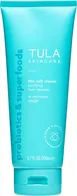
Tula The Cult Classic Purifying Face Cleanser
Works for
CleansingDisodium laureth sulfosuccinate, Sodium hydroxypropylsulfonate laurylglucoside crosspolymer + 6 moreCleanses gently
“The Cult Classic Purifying Face Cleanser”
This product works by removing dirt and oil from the surface of the skin. It uses a combination of mild cleansing agents (coco-glucoside, disodium laureth sulfosuccinate, lauryl glucoside, peg-120 methyl glucose dioleate, polysorbate 20, sodium hydroxypropylsulfonate laurylglucoside crosspolymer, sodium lauryl sulfoacetate, sorbitan isostearate) and should be able to cleanse the skin gently. Still keep in mind that any cleansing can disrupt the skin barrier, and most people do not need to cleanse their skin more than once per day.
Even though this formulation is mild, the following cleansing agents could trigger an irritation or allergy for some people: coco-glucoside
ExfoliationNo ingredient credited for this claimNot delivered
“Lactic acid naturally cleanses and exfoliates to reveal healthy, radiant looking skin”
This product does not contain effective exfoliating ingredients. It might be able to deliver physical exfoliation, that is scrub off some of the dead cells on the surface of the skin. We do not recommend physical exfoliation, because it is not uniform (some bits of skin can get exfoliated too much while others not at all). It can also traumatize the skin and aggrevate acne and other skin conditions.
Can it cause trouble?
Irritancy7 strong irritants: Parfum, Alpha-isomethyl ionone + 5 more — patch-test recommendedHigh risk
ComedogenicClean of flagged comedogenic ingredientsNone flagged
User reviews
2 of 3 community members would buy it again.
It doesn’t burn your eyes and cleans face well seems moisturized after
My all time favorite facial cleanser <3
I had a bad reaction to this product. As soon as I exited the shower, my face was bright red, where it wasn’t before. It gave me an itchy, swollen red rash that lingered for days & I don’t have sensitive skin normally.
Ingredients
Filter by role to see what each ingredient is doing.
Water~45–55%
Disodium laureth sulfosuccinate~8.3–10.1%
Sodium hydroxypropylsulfonate laurylglucoside crosspolymer~4.8–5.8%
- Irritation risk
- Low
Lauryl glucoside~3.8–4.7%
Sodium lauryl sulfoacetate~2.7–3.3%
- Irritation risk
- Low
Helps oil and water mix together
More about Sodium lauryl sulfoacetateSodium chloride~1.9–2.4%
- Irritation risk
- Low
Used to stabilize mixtures of oil and water, and create thicker, gel-like product textures
More about Sodium chlorideDisteareth-75 ipdi~1.6–2%
- Irritation risk
- Low
Bifida ferment lysate~1.4–1.7%
- Irritation risk
- Low
Consists of remains of dead yeast bacteria cells. Helps to hydrate the skin and reduce irritation. Might has some anti-oxidant effect
More about Bifida ferment lysateHydrolyzed rice protein~1.1–1.4%
- Irritation risk
- Low
Helps attract water to the upper layer of the skin. Might have some anti-oxidant properties
More about Hydrolyzed rice proteinCurcuma longa root extract~0.9–1.15%
- Irritation risk
- High
A plant extract that can contain an active compound curcumin, that may have some anti-inflammatory properties when applied to the skin, but solid research is lacking and the typical concentration used in skincare products is too low. Can be an irritant
More about Curcuma longa root extractCamellia sinensis leaf extract~0.65–1%
- Irritation risk
- Low
Can contain potent anti-oxidant compounds (abbreviated ECG, GCG, EGC, and EGCG) that might help protect the skin from free radicals. Can help calm down inflammation and has some anti-bacterial properties. Unfortunately, these antioxidants are unstable and lose their effectiveness very quickly in products. The concentration of the antioxidant compounds in the extract also tends to be low to be effective in topical formulation
More about Camellia sinensis leaf extractVaccinium angustifolium fruit extract~0.45–0.65%
- Irritation risk
- Medium
A plant extract tha can have anti-oxidant properties, but evidence of effectiveness in skin is lacking
More about Vaccinium angustifolium fruit extractCichorium intybus root extract~0.5–0.75%
- Irritation risk
- Low
Camelina sativa seed oil~0.45–0.7%
- Irritation risk
- Low
Helps soften the upper layer of the skin
More about Camelina sativa seed oilLactose~0.45–0.65%
- Irritation risk
- Low
Helps attract water to the upper layer of the skin
More about LactoseMilk protein~0.45–0.65%
- Irritation risk
- Low
Helps attract water to the upper layer of the skin
More about Milk proteinYogurt powder~0.45–0.65%
- Irritation risk
- Low
Olus oil~0.45–0.65%
- Irritation risk
- Low
An oil from a mixture of different vegetables. Helps soften the upper layer of the skin
More about Olus oilTocopheryl acetate~0.35–0.65%
- Irritation risk
- Medium
A more stable but less bio-available form of vitamin E compared to Tocopherol. Might help moisturize and protect the skin from free radicals, but mostly used in low concentrations to stabilize other ingredients.
More about Tocopheryl acetateAscorbyl palmitate~0.3–0.55%
- Irritation risk
- Medium
Being a lipid soluble form of vitamin C, it is more stable and can penetrate the skin better than L-Ascorbic acid. It is effective in protecting the skin from free radicals, as well as evening the skin tone, but is less effective in stimulating collagen production compared to L-Ascorbic acid.
More about Ascorbyl palmitatePanthenol~0.3–0.55%
- Irritation risk
- Low
Helps attract water to the upper layer of the skin and can help improve skin barrier function
More about PanthenolCarthamus tinctorius seed oil~0.3–0.6%
- Irritation risk
- Low
An emollient that helps soften the skin and might help calm down inflammation
More about Carthamus tinctorius seed oilPolysorbate 20~0.3–0.55%
Butylene glycol~0.25–0.5%
- Irritation risk
- Low
Used to create a nice product texture and help delivery of other ingredients. Might be somewhat helpful in attracting water to the upper layer of the skin
More about Butylene glycolInulin~0.25–0.5%
- Irritation risk
- Low
Helps attract water to the upper layer of the skin. Is claimed to support the growth of "good" bacteria in skin (as a "prebiotic"), but the research is lacking
More about InulinPentylene glycol~0.3–0.6%
- Irritation risk
- Medium
Used to preserve products, dissolve other ingredients and create a nice product texture
More about Pentylene glycolCaprylyl glycol~0.3–0.55%
- Irritation risk
- Medium
Helps preserve products and creates a nice product texture
More about Caprylyl glycolCoco-glucoside~0.35–0.6%
- Irritation risk
- High
Used as a cleansing agent (surfactant) in cleansers. Helps water and oil mix together in lotions. Can be irritating
More about Coco-glucosideHydroxyethyl acrylate/sodium acryloyldimethyl taurate copolymer~0.25–0.5%
- Irritation risk
- Medium
A gelling agent that thickens the product consistency and leaves the skin with a velvety finish
More about Hydroxyethyl acrylate/sodium acryloyldimethyl taurate copolymerEthylhexylglycerin~0.25–0.5%
Peg-120 methyl glucose dioleate~0.3–0.55%
Styrene/acrylates copolymer~0.25–0.5%
- Irritation risk
- Low
Used to create an even product consistency. Can help boost efficiency of sunscreen filters
More about Styrene/acrylates copolymerSorbitan isostearate~0.3–0.5%
- Irritation risk
- Low
Helps oil and water mix together
More about Sorbitan isostearateTrisodium ethylenediamine disuccinate~0.25–0.5%
- Irritation risk
- Medium
Used to improve stability of the formulation
More about Trisodium ethylenediamine disuccinateGlutaral~0.05–0.1%
- Irritation risk
- Low
Glycerin~0.3–0.55%
- Irritation risk
- Low
One of the best moisturizing ingredients. Naturally present in skin. It attracts water to the upper layer of the skin working as a humectant
More about GlycerinCitric acid~0.25–0.5%
- Irritation risk
- Medium
Can work as an exfoliant but is typically used to adjust the product pH
More about Citric acidSodium hydroxide~0.25–0.45%
Sorbic acid~0.25–0.45%
Phenoxyethanol~0.25–0.45%
- Irritation risk
- Low
A preservative. It helps prevent bacterial growth in cosmetic products
More about PhenoxyethanolBenzoic acid~0.2–0.35%
Phenethyl alcohol~0.25–0.4%
Parfum~0.15–0.3%
- Irritation risk
- High
An aromatic blend of unspecified and possibly irritating ingredients
More about ParfumAlpha-isomethyl ionone~0.15–0.3%
- Irritation risk
- High
A fragrance. Potential allergen and can be irritating
More about Alpha-isomethyl iononeBenzyl benzoate~0.15–0.25%
- Irritation risk
- High
Fragrance with sweet balsamic smell. Help to preserve products and dissolve other ingredients. Could trigger allergic reactions and be irritating
More about Benzyl benzoateCitronellol~0.15–0.25%
Hexyl cinnamal~0.15–0.25%
Limonene~0.1–0.15%
- Irritation risk
- High
A common frangrance that can easily irritate skin, especially if exposed to air, light or heat
More about LimoneneLinalool~0.1–0.15%
Ingredient list view
Water, Disodium laureth sulfosuccinate, Sodium hydroxypropylsulfonate laurylglucoside crosspolymer, Lauryl glucoside, Sodium lauryl sulfoacetate, Sodium chloride, Disteareth-75 ipdi, Bifida ferment lysate, Hydrolyzed rice protein, Curcuma longa root extract, Camellia sinensis leaf extract, Vaccinium angustifolium fruit extract, Cichorium intybus root extract, Camelina sativa seed oil, Lactose, Milk protein, Yogurt powder, Olus oil, Tocopheryl acetate, Ascorbyl palmitate, Panthenol, Carthamus tinctorius seed oil, Polysorbate 20, Butylene glycol, Inulin, Pentylene glycol, Caprylyl glycol, Coco-glucoside, Hydroxyethyl acrylate/sodium acryloyldimethyl taurate copolymer, Ethylhexylglycerin, Peg-120 methyl glucose dioleate, Styrene/acrylates copolymer, Sorbitan isostearate, Trisodium ethylenediamine disuccinate, Glutaral, Glycerin, Citric acid, Sodium hydroxide, Sorbic acid, Phenoxyethanol, Benzoic acid, Phenethyl alcohol, Parfum, Alpha-isomethyl ionone, Benzyl benzoate, Citronellol, Hexyl cinnamal, Limonene, Linalool
Worth comparing, line by line.
Match % combines shared ingredients, the first five ingredients, shared actives and hero ingredients, irritancy (lower counts in the alternative's favour), texture and body area. Only products in the same routine step are compared.
| TulaThe Cult Classic Purifying Face CleanserYOUR PRODUCT | SUNDAY RILEYBreakout Breakup Salicylic Acid Cleanser for Blemish-Prone Skin | VeganifectClean and Glow Green Barley Gel Cleanser | the Torriden StoreBalanceful Cica Cleansing Gel | |
|---|---|---|---|---|
| Match | — | 38% | 36% | 35% |
| Price | $12.00 | $35.00+$23.00 | — | $4.02−$7.98 |
| Shared key ingredients | — | 5 of 15 | 4 of 15 | 4 of 15 |
| Key difference | — | Salicylic Acid | Capryloyl Salicylic Acid | Madecassoside |
| Irritancy | High | Medium | Medium | Medium |
| Drying alcohol | — | Contains drying alcohol | — | — |
| View product | Shop | Shop | Shop |

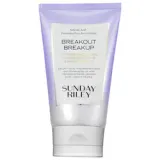
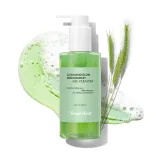

More alternatives: Ahava Mineral Radiance Cleansing Gelawe Stachys Affinis My Fit Purifying Cleansing Gel
Sources cited in this review
Every concentration estimate and effectiveness label is anchored to one of these 15 studies and safety reviews.
- 1Bifidobacterium longumlysate, a new ingredient forreactive skinonlinelibrary.wiley.com
- 2Use of Probiotics for Dermal Applicationsresearchgate.net
- 3
- 4
- 5
- 6
