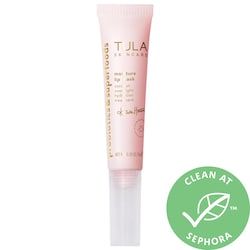
Tula Moisture Lip Mask Coconut Overnight Hydration Treatment
Works for
1 of 1 advertised claim delivered
MoisturizingPalmitoyl tripeptide-1, Alpha-glucan oligosaccharide + 21 moreStrong evidence
“Moisture Lip Mask Coconut Overnight Hydration Treatment”
This product can help improve hydration of the skin with the two types of ingredients.
The first type is called “humectants”:
these ingredients help attract water.
When humectants are on the surface of the skin, they “pull in” the moisture from the outside environment, or from
within deeper layers of the skin. The following ingredients in this product do the job:
hyaluronic acid, lactobacillus ferment.
This product also contains ingredients called “occlusives”. They help reduce the speed with which our skin loses moisture to the outside environment. These ingredients also help soften the upper layer of the skin, so it feels less tight and nicer to the touch. The following ingredients in this product do the job: bis-diglyceryl polyacyladipate-2, cocos nucifera oil.
The following ingredients in this product are especially good for supporting the skin barrier and helping with the hydration level: palmitoyl tripeptide-1
Anti-agingNot advertised by the brand · Palmitoyl tripeptide-1, Hyaluronic acid + 4 moreModerate evidence
This product contains palmitoyl tripeptide-1. This ingredient might be able to help reduce and prevent fine lines and wrinkles, improve skin elasticity and firmness, but there is not enough evidence that it actually works.
Can it cause trouble?
Irritancy4 strong irritants: Parfum, Benzyl salicylate + 2 more — patch-test recommendedHigh risk
Comedogenic3 ingredients rated 2 or more on the 0–5 pore-clogging scale3 flagged
User reviews
Be the first — your take helps the next person decide.
Ingredients
Filter by role to see what each ingredient is doing.
Dipentaerythrityl tetrahydroxystearate/tetraisostearate~22–33%
- Irritation risk
- Low
Bis-diglyceryl polyacyladipate-2~4.4–6.6%
- Irritation risk
- Low
Helps soften the upper layer of the skin and reduce water loss from its surface
More about Bis-diglyceryl polyacyladipate-2Phytosteryl/isostearyl/cetyl/stearyl/behenyl dimer dilinoleate~4.3–6.4%
- Irritation risk
- Low
Helps soften the upper layer of the skin and create a nice product consistency
More about Phytosteryl/isostearyl/cetyl/stearyl/behenyl dimer dilinoleateBis-behenyl/isostearyl/phytosteryl dimer dilinoleyl dimer dilinoleate~3.5–5.3%
- Irritation risk
- High
Polyglyceryl-2 isostearate/dimer dilinoleate copolymer~2.6–3.9%
- Irritation risk
- Low
Squalane~2–3.1%
- Irritation risk
- Low
An oil naturally present in skin. Works as an emollient to soften the skin and form a protective layer on its surface without a greasy feeling.
More about SqualanePersea gratissima oil~1.4–2.2%
- Irritation risk
- Medium
An emollient that helps soften the skin and could be helpful in repairing its barrier function
More about Persea gratissima oilParfum~1–1.5%
- Irritation risk
- High
An aromatic blend of unspecified and possibly irritating ingredients
More about ParfumSimmondsia chinensis seed oil~1–1.6%
- Irritation risk
- Medium
Softens the upper layer of skin and helps restore the healthy skin barrier. Has shown to help calm down inflammation in skin. It is a stable oil, meaning that it retains its properties even when exposed to air.
More about Simmondsia chinensis seed oilCocos nucifera oil~0.55–1.25%
- Irritation risk
- Low
- Comedogenicity
- 3/5
An emollient. Found to be as effective as a moisturizer for dry skin as mineral oil. Could be comedogenic
More about Cocos nucifera oilHyaluronic acid~0.35–0.85%
- Irritation risk
- Low
One of the best moisturizing ingredients. Attracts water into the upper layer of the skin. Naturally present in skin. Typically has large molecule size unless advertised otherwise on the product label. Helps support skin's barrier function and may help to reduce inflammation
More about Hyaluronic acidPseudozyma epicola/evening primrose oil ferment extract~0.35–0.85%
- Irritation risk
- Low
Palmitoyl tripeptide-1~0.35–0.75%
- Irritation risk
- Low
A type of peptide. Peptides are excellent moisturizers and might be able support collagen production reducing fine lines and wrinkles
More about Palmitoyl tripeptide-1Acacia decurrens flower wax~0.2–0.75%
Beta vulgaris root extract~0.15–0.65%
- Irritation risk
- Medium
A plant extract that might have some antioxidant properties, but mostly used in cosmetics for its color
More about Beta vulgaris root extractLactococcus ferment lysate~0.15–0.65%
- Irritation risk
- Low
Consists of remains of dead bacteria cells. Is likely helpful in attracting water to the upper layer of the skin. Might be helpful in reducing inflammation and neutralizing free radicals in skin
More about Lactococcus ferment lysateLactobacillus ferment~0.15–0.6%
- Irritation risk
- Low
A fermentation product created by bacteria Lactobacillus. The fermented product has anti-bacterial properties and might be helpful in calming down inflammation, but studies are lacking. Helps attract water to the upper layer of the skin. Can be used as a preservative
More about Lactobacillus fermentLactobacillus~0.15–0.55%
- Irritation risk
- Low
A non-living ingredient made by fermentation with the bacteria Lactobacillus. It can help attract water to the upper layer of the skin and might help reduce inflammation
More about LactobacillusLactic acid~0.1–0.45%
- Irritation risk
- Medium
An exfoliating and moisturizing alpha-hydroxy acid (AHA). Typically causes less irritation than other AHAs, for example, glycolic acid. At high concentrations (about 15%), lactic acid can help reduce lines and wrinkles. Recent studies show that lactic acid can support the "good" bacteria living on skin's surface (healthy skin microbiome)
More about Lactic acidInulin~0.1–0.45%
- Irritation risk
- Low
Helps attract water to the upper layer of the skin. Is claimed to support the growth of "good" bacteria in skin (as a "prebiotic"), but the research is lacking
More about InulinTocopherol~0.15–0.6%
- Irritation risk
- Low
Pure form of vitamin E. Can help moisturise and protect the skin from free radicals. Often used to help stabilise other ingredients or the formula itself
More about TocopherolTocopheryl acetate~0.15–0.6%
- Irritation risk
- Medium
A more stable but less bio-available form of vitamin E compared to Tocopherol. Might help moisturize and protect the skin from free radicals, but mostly used in low concentrations to stabilize other ingredients.
More about Tocopheryl acetateCurcuma longa root extract~0.1–0.3%
- Irritation risk
- High
A plant extract that can contain an active compound curcumin, that may have some anti-inflammatory properties when applied to the skin, but solid research is lacking and the typical concentration used in skincare products is too low. Can be an irritant
More about Curcuma longa root extractTetrahexyldecyl ascorbate~0.15–0.55%
- Irritation risk
- Medium
Being a lipid soluble form of vitamin C, it is more stable than ascorbic acid, but still degrades quickly and needs to be stabilized in a formulation with another ingredient. It is claimed to penetrate skin better than pure vitamin C and have the the similar benefits, but solid studies of its effectiveness are lacking. Is likely to require a higher concentration in a product than pure vitamin C to be effective. It might be able to help reduce pore clogging.
More about Tetrahexyldecyl ascorbateHelianthus annuus seed wax~0.15–0.5%
- Irritation risk
- Low
Helps soften the upper layer of the skin and support skin's barrier function while creating a thicker product consistency
More about Helianthus annuus seed waxJojoba esters~0.15–0.5%
- Irritation risk
- Medium
An emollient made of jojoba oil. Helps soften the skin and support its barrier function
More about Jojoba estersSambucus nigra fruit extract~0.1–0.35%
- Irritation risk
- High
A plant extract that may contain a small amount of essential oils. Might be helpful in neutralizing free radicals in skin
More about Sambucus nigra fruit extractPunica granatum flower extract~0.1–0.35%
- Irritation risk
- Low
Alpha-glucan oligosaccharide~0.1–0.5%
- Irritation risk
- Low
Helps attract water to the upper layer of the skin
More about Alpha-glucan oligosaccharidePolymnia sonchifolia root juice~0.1–0.4%
- Irritation risk
- High
A plant extract that helps attract water to the upper layer of the skin and might have some anti-oxidant properties
More about Polymnia sonchifolia root juiceEthylhexyl palmitate~0.1–0.5%
- Irritation risk
- Low
- Comedogenicity
- 3/5
An emollient that helps soften the skin and create a nice product texture
More about Ethylhexyl palmitatePolyglyceryl-3 diisostearate~0.15–0.55%
- Irritation risk
- Medium
- Comedogenicity
- 3/5
Helps oil and water mix together
More about Polyglyceryl-3 diisostearateTribehenin~0.15–0.7%
- Irritation risk
- Low
Used to create a thicker product consistency and soften the upper layer of the skin
More about TribeheninSorbitan isostearate~0.15–0.55%
- Irritation risk
- Low
Helps oil and water mix together
More about Sorbitan isostearatePolyglycerin-3~0.1–0.5%
- Irritation risk
- Low
Helps to attract water to the upper layer of the skin
More about Polyglycerin-3Butylene glycol~0.1–0.45%
- Irritation risk
- Low
Used to create a nice product texture and help delivery of other ingredients. Might be somewhat helpful in attracting water to the upper layer of the skin
More about Butylene glycol1,2-hexanediol~0.1–0.35%
Sodium benzoate~0.1–0.3%
Sodium chloride~0.1–0.4%
- Irritation risk
- Low
Used to stabilize mixtures of oil and water, and create thicker, gel-like product textures
More about Sodium chlorideMaltodextrin~0.15–0.5%
- Irritation risk
- Low
Used to stabilize the product formulation and can help absorb oil
More about MaltodextrinBenzyl salicylate~0.05–0.3%
Linalool~0.05–0.2%
Hydroxycitronellal~0.05–0.2%
- Irritation risk
- High
A fragrance. A likely allergen and can be irritating
More about HydroxycitronellalIngredient list view
Dipentaerythrityl tetrahydroxystearate/tetraisostearate, Bis-diglyceryl polyacyladipate-2, Phytosteryl/isostearyl/cetyl/stearyl/behenyl dimer dilinoleate, Bis-behenyl/isostearyl/phytosteryl dimer dilinoleyl dimer dilinoleate, Polyglyceryl-2 isostearate/dimer dilinoleate copolymer, Squalane, Persea gratissima oil, Parfum, Simmondsia chinensis seed oil, Cocos nucifera oil, Hyaluronic acid, Pseudozyma epicola/evening primrose oil ferment extract, Palmitoyl tripeptide-1, Acacia decurrens flower wax, Beta vulgaris root extract, Lactococcus ferment lysate, Lactobacillus ferment, Lactobacillus, Lactic acid, Inulin, Tocopherol, Tocopheryl acetate, Curcuma longa root extract, Tetrahexyldecyl ascorbate, Helianthus annuus seed wax, Jojoba esters, Sambucus nigra fruit extract, Punica granatum flower extract, Alpha-glucan oligosaccharide, Polymnia sonchifolia root juice, Ethylhexyl palmitate, Polyglyceryl-3 diisostearate, Tribehenin, Sorbitan isostearate, Polyglycerin-3, Butylene glycol, 1,2-hexanediol, Sodium benzoate, Sodium chloride, Maltodextrin, Benzyl salicylate, Linalool, Hydroxycitronellal
Compare prices
Retailers ranked by price — lowest first.

Affiliate links · prices updated regularly
Worth comparing, line by line.
Match % combines shared ingredients, the first five ingredients, shared actives and hero ingredients, irritancy (lower counts in the alternative's favour), texture and body area. Only products in the same routine step are compared.
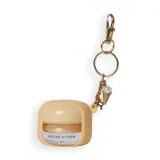
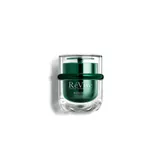
| TulaMoisture Lip Mask Coconut Overnight Hydration TreatmentYOUR PRODUCT | RéVive SkincareRenewal Rescue Lip Mask | KosasPlump Juicy Lip Booster Lip Treatment | BECCAHydra-Light Plumping Lip Mask | |
|---|---|---|---|---|
| Match | — | 52% | 51% | 51% |
| Price | $18.00 | $80.00+$62.00 | $25.00+$7.00 | $24.06+$6.06 |
| Shared key ingredients | — | 2 of 15 | 6 of 15 | 2 of 15 |
| Key difference | — | Lactic Acid | Butyrospermum Parkii Butter | Butyrospermum Parkii Butter |
| Irritancy | High | Medium | Medium | Medium |
| Drying alcohol | — | — | — | — |
| View product | Shop | Shop | Shop |



Product summary
"Tula - Moisture Lip Mask Coconut Overnight Hydration Treatment" is effective for: Moisturizing
It could be helpful for: Anti-aging, but its actives are not the most effective or are not well-studied.
Ingredient callouts
- We like that this moisturizer contains peptides (palmitoyl tripeptide-1 0.35% - 0.75%). There are many different kind of Peptides and they are naturally present in our skin. They all are a combination of aminoacids. Some of them work as natural antibiotics, promote wound-healing and production of collagen. The science is still not settled on how effective Peptides are in skincare, but it is very likely that they have a benefit. Peptides might help restore the skin barrier and fight the signs of aging. At the very least, Peptides work as humectants: they attract water to the upper layer of the skin and improve its hydration.
About the brand
According to Cruelty-Free Kitty "Tula" is cruelty free, but its parent company is not.
Price
The product retails for 24.00CA$ in Canada and for 18.00$ in the United States.
For a detailed price comparison: click here.
Sources cited in this review
Every concentration estimate and effectiveness label is anchored to one of these 19 studies and safety reviews.
- 1
- 2Efficacy of a New Topical Nano-hyaluronic Acid in Humansncbi.nlm.nih.gov
- 3Physiochemical properties and application of hyaluronic acid: a systematic reviewonlinelibrary.wiley.com
- 4
- 5
- 6

Affiliate links · As an Amazon Associate, WIMJ earns from qualifying purchases.