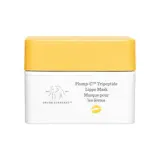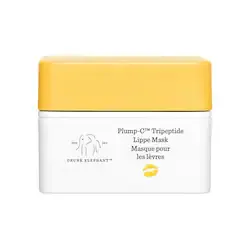
Drunk Elephant Plump-C Tripeptide Lippe Mask with Vitamin C

Drunk Elephant Plump-C Tripeptide Lippe Mask with Vitamin C

Efficacy87/100IrritancyMedium

Works for

Moisturizing
Palmitoyl tripeptide-1, Linoleic acid + 35 more
Works well
What the product description says
“Vitamin C and a tripeptide help support healthy collagen, increasing hydration levels and improving the look of fine lines.”
Source: Drunk Elephant

This product can help improve hydration of the skin with the two types of ingredients.

The first type is called “humectants”:
these ingredients help attract water. When humectants are on the surface of the skin, they “pull in” the moisture from the outside environment, or from within deeper layers of the skin. The following ingredients in this product do the job: alanine, arginine.

This product also contains ingredients called “occlusives”. They help reduce the speed with which our skin loses moisture to the outside environment. These ingredients also help soften the upper layer of the skin, so it feels less tight and nicer to the touch. The following ingredients in this product do the job: arginine, bis-diglyceryl polyacyladipate-2.

The following ingredients in this product are especially good for supporting the skin barrier and helping with the hydration level: linoleic acid, palmitoyl tripeptide-1

Palmitoyl tripeptide-1Hero· EmollientEffect: HighA type of peptide. Peptides are excellent moisturizers and might be able support collagen production reducing fine lines and wrinkles~0.4–0.9%
Linoleic acidHero· EmollientEffect: HighAn excellent emollient. Helps soften the skin, restore its barrier function, and can help to calm down inflammation. It can be helpful to prevent blemishes and clogged pores~0.35–0.85%
Bis-diglyceryl polyacyladipate-2Key active· Emollient, OcclusiveEffect: HighHelps soften the upper layer of the skin and reduce water loss from its surface~22–34%
Ricinus communis seed oilKey active· Emollient, OcclusiveEffect: HighA plant oil that can help soften the skin. It might be helpful in calming down inflammation, but solid research is lacking. Is often used in lip products to create the needed product consistency~4.2–6.2%
Hydroxystearic/linolenic/oleic polyglyceridesKey active· EmollientEffect: Medium~4.2–6.3%
Hydrogenated castor oilKey active· EmollientEffect: MediumA plant oil that can help soften the skin. It might be helpful in calming down inflammation, but solid research is lacking. Is often used in lip products to create the needed product consistency~3.3–5%
Sclerocarya birrea seed oilKey active· Humectant, EmollientEffect: MediumAn emollient that helps to soften the skin. It has a high contetn of oleic acid that might weaken the skin barrier. Might have some anti-oxidant properties. It might be somewhat helpful against hyperpigmentation.~2.7–4.1%
Butyrospermum parkii butterKey active· Emollient, OcclusiveEffect: HighA great moisturising ingredient that softens the skin and reduces water loss from its upper layer. It also can be helpful in protecting skin from free radicals~1.6–2.4%
Camellia sinensis seed oilKey active· Humectant, EmollientEffect: HighA plant oil that helps to soften the upper layer of the skin and can help restore the skin barrier. Might have some anti-oxidant effect~1.2–1.8%
Mangifera indica seed butterKey activeEffect: HighHelps to soften the upper layer of the skin and might have some anti-oxidant effect~0.95–1.45%
Persea gratissima oilKey active· EmollientEffect: HighAn emollient that helps soften the skin and could be helpful in repairing its barrier function~0.9–1.35%
Prunus armeniaca kernel oilKey active· EmollientEffect: HighAn emollient that helps soften the skin~0.55–1.35%
Ethylhexyl palmitateKey active· EmollientEffect: MediumAn emollient that helps soften the skin and create a nice product texture~0.4–0.95%
Linolenic acidKey active· EmollientEffect: HighAn emollient that helps soften the skin and calm down inflammation~0.35–0.8%
Sodium pcaKey active· HumectantEffect: HighNaturally present in skin and helps to attract water to its upper layer~0.35–0.85%
Helianthus annuus seed waxKey active· EmollientEffect: HighHelps soften the upper layer of the skin and support skin's barrier function while creating a thicker product consistency~0.3–0.75%
Sodium hyaluronate crosspolymerKey active· HumectantEffect: HighAttracts water into the upper layer of the skin~0.2–0.75%
AlanineKey active· HumectantEffect: HighAn amino-acid that helps to attract water to the upper layer of the skin and might help to lighten the skin, but solid evidence is lacking~0.15–0.6%
ArginineKey active· Humectant, OcclusiveEffect: HighAn amino acid that is naturally present in skin and helps keep it hydrated. When used together with AHAs, it can reduce their irritating effect on the skin~0.15–0.55%
Aspartic acidKey active· HumectantEffect: HighAn amino-acid that helps increase skin hydration and might help to slightly improve skin firmness, potentially reducing lines and wrinkles~0.15–0.7%
IsoleucineKey activeEffect: HighAn amino acid that can help attract water to the upper layer of the skin and support skin's barrier function~0.15–0.6%
PcaKey active· HumectantEffect: HighNaturally present in skin and helps to attract water to its upper layer~0.15–0.65%
SerineKey activeEffect: HighAn amino-acid that helps to attract water to the upper layer of the skin. In combination with other amino-acids, might help to reduce fine lines and wrinkles~0.15–0.6%
Sodium lactateKey active· HumectantEffect: HighHelps attract water to the upper layer of the skin. Is often used to adjust the pH level of the product~0.15–0.7%
ThreonineKey activeEffect: HighAn amino-acid that helps to attract water to the upper layer of the skin. In combination with other amino-acids, might help to reduce fine lines and wrinkles~0.15–0.6%
GlycineKey active· HumectantEffect: HighHelps to attract water to the upper layer of the skin and can help restore the skin barrier function~0.15–0.6%
HistidineKey active· HumectantEffect: High~0.15–0.6%
ProlineKey activeEffect: Medium~0.15–0.65%
Epigallocatechin gallateEffect: LowA polyphenol found in tea. This particular compound abbreviated EGCG is the most powerful antioxidant among those extracted from tea (usually green tea). Unfortunately, EGCG is unstable, requires a low pH (below 4) to prevent quick degradation, and does not penetrate the skin very well. This is why the full anti-oxidant effect of EGCG is typically not realized when it is added to topical skincare~0.35–0.85%
Oleic acid· EmollientEffect: LowHelps soften the upper layer of the skin. At the same time, it can weaken the skin's barrier enhancing penetration of other ingredients and increasing the risk of skin dryness~0.3–0.75%
Tribehenin· EmollientEffect: LowUsed to create a thicker product consistency and soften the upper layer of the skin~0.3–0.7%
Palmitic acid· EmollientEffect: LowAn emollient that is naturally present in skin and helps soften it~0.2–0.8%
Pentylene glycol· EmollientEffect: LowUsed to preserve products, dissolve other ingredients and create a nice product texture~0.15–0.65%
Stearic acidEffect: Low, below effective doseHelps oil and water mix together and works as an emollient~0.35–0.75%
TocopherolEffect: Low, below effective dosePure form of vitamin E. Can help moisturise and protect the skin from free radicals. Often used to help stabilise other ingredients or the formula itself~0.15–0.5%
Dipotassium glycyrrhizateUnder-dosedA salt derived from licorice. Works as an emollient to soften the upper layer of the skin and can help calm down inflammation. Might be helpful for skin lightening~0.15–0.55%
Lactic acidUnder-dosedAn exfoliating and moisturizing alpha-hydroxy acid (AHA). Typically causes less irritation than other AHAs, for example, glycolic acid. At high concentrations (about 15%), lactic acid can help reduce lines and wrinkles. Recent studies show that lactic acid can support the "good" bacteria living on skin's surface (healthy skin microbiome)~0.1–0.45%
Anti-aging
Palmitoyl tripeptide-1, Epigallocatechin gallate + 8 more
May help
What the product description says
“Vitamin C and a tripeptide help support healthy collagen, increasing hydration levels and improving the look of fine lines.”
Source: Drunk Elephant

This product contains aspartic acid, epigallocatechin gallate, palmitoyl tripeptide-1, serine, threonine. These ingredients might be able to help reduce and prevent fine lines and wrinkles, improve skin elasticity and firmness, but there is not enough evidence that it actually works.

Palmitoyl tripeptide-1Key activeEffect: MediumA type of peptide. Peptides are excellent moisturizers and might be able support collagen production reducing fine lines and wrinkles~0.4–0.9%
Epigallocatechin gallateKey activeEffect: MediumA polyphenol found in tea. This particular compound abbreviated EGCG is the most powerful antioxidant among those extracted from tea (usually green tea). Unfortunately, EGCG is unstable, requires a low pH (below 4) to prevent quick degradation, and does not penetrate the skin very well. This is why the full anti-oxidant effect of EGCG is typically not realized when it is added to topical skincare~0.35–0.85%
ThreonineKey activeEffect: MediumAn amino-acid that helps to attract water to the upper layer of the skin. In combination with other amino-acids, might help to reduce fine lines and wrinkles~0.15–0.6%
Aspartic acidKey activeEffect: MediumAn amino-acid that helps increase skin hydration and might help to slightly improve skin firmness, potentially reducing lines and wrinkles~0.15–0.7%
SerineKey activeEffect: MediumAn amino-acid that helps to attract water to the upper layer of the skin. In combination with other amino-acids, might help to reduce fine lines and wrinkles~0.15–0.6%
Butyrospermum parkii butterEffect: LowA great moisturising ingredient that softens the skin and reduces water loss from its upper layer. It also can be helpful in protecting skin from free radicals~1.6–2.4%
Camellia sinensis seed oilEffect: LowA plant oil that helps to soften the upper layer of the skin and can help restore the skin barrier. Might have some anti-oxidant effect~1.2–1.8%
Magnesium ascorbyl phosphateEffect: Low, below effective doseA derivative of vitamin C that is more stable, but less bioavailable than the pure form of vitamin C. It does not penetrate the skin well, but has been shown to convert to pure vitamin C once in skin. It can be helpful in stimulating collagen production and lightening the skin tone, but the required concentration is likely to be very high~0.4–0.9%
TocopherolEffect: Low, below effective dosePure form of vitamin E. Can help moisturise and protect the skin from free radicals. Often used to help stabilise other ingredients or the formula itself~0.15–0.5%
Lactic acidUnder-dosedAn exfoliating and moisturizing alpha-hydroxy acid (AHA). Typically causes less irritation than other AHAs, for example, glycolic acid. At high concentrations (about 15%), lactic acid can help reduce lines and wrinkles. Recent studies show that lactic acid can support the "good" bacteria living on skin's surface (healthy skin microbiome)~0.1–0.45%
Anti-oxidation
Side benefit · Epigallocatechin gallate, Sclerocarya birrea seed oil + 6 more
May help

This product contains antioxidants (epigallocatechin gallate) that might be able to help neutralize free radicals in skin to lessen the damage it gets from the UV light (sun). There is not enough evidence to confirm their effectiveness in skin though.

Epigallocatechin gallateKey activeEffect: MediumA polyphenol found in tea. This particular compound abbreviated EGCG is the most powerful antioxidant among those extracted from tea (usually green tea). Unfortunately, EGCG is unstable, requires a low pH (below 4) to prevent quick degradation, and does not penetrate the skin very well. This is why the full anti-oxidant effect of EGCG is typically not realized when it is added to topical skincare~0.35–0.85%
Sclerocarya birrea seed oilEffect: LowAn emollient that helps to soften the skin. It has a high contetn of oleic acid that might weaken the skin barrier. Might have some anti-oxidant properties. It might be somewhat helpful against hyperpigmentation.~2.7–4.1%
Butyrospermum parkii butterEffect: LowA great moisturising ingredient that softens the skin and reduces water loss from its upper layer. It also can be helpful in protecting skin from free radicals~1.6–2.4%
Camellia sinensis seed oilEffect: LowA plant oil that helps to soften the upper layer of the skin and can help restore the skin barrier. Might have some anti-oxidant effect~1.2–1.8%
Mangifera indica seed butterEffect: LowHelps to soften the upper layer of the skin and might have some anti-oxidant effect~0.95–1.45%
Prunus armeniaca kernel oilEffect: LowAn emollient that helps soften the skin~0.55–1.35%
Magnesium ascorbyl phosphateEffect: Low, below effective doseA derivative of vitamin C that is more stable, but less bioavailable than the pure form of vitamin C. It does not penetrate the skin well, but has been shown to convert to pure vitamin C once in skin. It can be helpful in stimulating collagen production and lightening the skin tone, but the required concentration is likely to be very high~0.4–0.9%
TocopherolUnder-dosedPure form of vitamin E. Can help moisturise and protect the skin from free radicals. Often used to help stabilise other ingredients or the formula itself~0.15–0.5%

Can it cause trouble?

Irritancy
14 flagged ingredients
Medium risk
We flagged 14 ingredients with irritancy potential. Severity depends on your sensitivity threshold; the table lists the worst offenders first.
IngredientFunctionIrritationEst. amount
Ricinus communis seed oilA plant oil that can help soften the skin. It might be helpful in calming down inflammation, but solid research is lacking. Is often used in lip products to create the needed product consistencyMedium~4.2–6.2%est.
Hydrogenated castor oilA plant oil that can help soften the skin. It might be helpful in calming down inflammation, but solid research is lacking. Is often used in lip products to create the needed product consistencyMedium~3.3–5%est.
Sclerocarya birrea seed oilAn emollient that helps to soften the skin. It has a high contetn of oleic acid that might weaken the skin barrier. Might have some anti-oxidant properties. It might be somewhat helpful against hyperpigmentation.Medium~2.7–4.1%est.
Polyhydroxystearic acidUsed to create a thicker product consistency and stabilize the formulationMedium~1.9–2.8%est.
Persea gratissima oilAn emollient that helps soften the skin and could be helpful in repairing its barrier functionMedium~0.9–1.35%est.
Prunus armeniaca kernel oilAn emollient that helps soften the skinMedium~0.55–1.35%est.
Magnesium ascorbyl phosphateA derivative of vitamin C that is more stable, but less bioavailable than the pure form of vitamin C. It does not penetrate the skin well, but has been shown to convert to pure vitamin C once in skin. It can be helpful in stimulating collagen production and lightening the skin tone, but the required concentration is likely to be very highMedium~0.4–0.9%est.
Sodium hyaluronate crosspolymerAttracts water into the upper layer of the skinMedium~0.2–0.75%est.
Sodium lactateHelps attract water to the upper layer of the skin. Is often used to adjust the pH level of the productMedium~0.15–0.7%est.
Oleic acidHelps soften the upper layer of the skin. At the same time, it can weaken the skin's barrier enhancing penetration of other ingredients and increasing the risk of skin drynessMedium~0.3–0.75%est.
Linolenic acidAn emollient that helps soften the skin and calm down inflammationMedium~0.35–0.8%est.
Pentylene glycolUsed to preserve products, dissolve other ingredients and create a nice product textureMedium~0.15–0.65%est.
Lactic acidAn exfoliating and moisturizing alpha-hydroxy acid (AHA). Typically causes less irritation than other AHAs, for example, glycolic acid. At high concentrations (about 15%), lactic acid can help reduce lines and wrinkles. Recent studies show that lactic acid can support the "good" bacteria living on skin's surface (healthy skin microbiome)Medium~0.1–0.45%est.
EthylhexylglycerinA preservativeMedium~0.1–0.35%est.
Comedogenic
2 ingredients rated 2 or more on the 0–5 pore-clogging scale
2 flagged
These ingredients have a comedogenic rating of 2 or more on a 0–5 scale; the table shows each one's rating. In leave-on products they can clog pores in acne-prone skin.
IngredientFunctionRatingEst. amount
Butyrospermum parkii butterA great moisturising ingredient that softens the skin and reduces water loss from its upper layer. It also can be helpful in protecting skin from free radicals3/5~1.6–2.4%est.
Ethylhexyl palmitateAn emollient that helps soften the skin and create a nice product texture3/5~0.4–0.95%est.

User reviews

Would you recommend?
No community reviews yet.

Be the first — your take helps the next person decide.

Ingredients

Filter by role to see what each ingredient is doing.

Bis-diglyceryl polyacyladipate-2~22–34%
Key active
Irritation risk
Low
Works for
Moisturizing

Helps soften the upper layer of the skin and reduce water loss from its surface

More about Bis-diglyceryl polyacyladipate-2
Ricinus communis seed oil~4.2–6.2%
Key activeIrritant · medium
Irritation risk
Medium
Works for
MoisturizingAnti-inflammatory

A plant oil that can help soften the skin. It might be helpful in calming down inflammation, but solid research is lacking. Is often used in lip products to create the needed product consistency

More about Ricinus communis seed oil
Hydroxystearic/linolenic/oleic polyglycerides~4.2–6.3%
Key active
Irritation risk
Low
Works for
Moisturizing
More about Hydroxystearic/linolenic/oleic polyglycerides
Hydrogenated castor oil~3.3–5%
Key activeIrritant · medium
Irritation risk
Medium
Works for
CleansingMoisturizingAnti-inflammatory

A plant oil that can help soften the skin. It might be helpful in calming down inflammation, but solid research is lacking. Is often used in lip products to create the needed product consistency

More about Hydrogenated castor oil
Sclerocarya birrea seed oil~2.7–4.1%
Key activeIrritant · medium
Irritation risk
Medium
Works for
MoisturizingAnti-oxidation

An emollient that helps to soften the skin. It has a high contetn of oleic acid that might weaken the skin barrier. Might have some anti-oxidant properties. It might be somewhat helpful against hyperpigmentation.

More about Sclerocarya birrea seed oil
Polyhydroxystearic acid~1.9–2.8%
Irritant · medium
Irritation risk
Medium
Works for
Cleansing

Used to create a thicker product consistency and stabilize the formulation

More about Polyhydroxystearic acid
Butyrospermum parkii butter~1.6–2.4%
Key activeComedogenic 3/5
Irritation risk
Low
Comedogenicity
3/5
Works for
MoisturizingAnti-oxidationAnti-aging

A great moisturising ingredient that softens the skin and reduces water loss from its upper layer. It also can be helpful in protecting skin from free radicals

More about Butyrospermum parkii butter
Camellia sinensis seed oil~1.2–1.8%
Key active
Irritation risk
Low
Works for
MoisturizingAnti-oxidationAnti-aging

A plant oil that helps to soften the upper layer of the skin and can help restore the skin barrier. Might have some anti-oxidant effect

More about Camellia sinensis seed oil
Mangifera indica seed butter~0.95–1.45%
Key active
Irritation risk
Low
Works for
MoisturizingAnti-oxidation

Helps to soften the upper layer of the skin and might have some anti-oxidant effect

More about Mangifera indica seed butter
Persea gratissima oil~0.9–1.35%
Key activeIrritant · medium
Irritation risk
Medium
Works for
Moisturizing

An emollient that helps soften the skin and could be helpful in repairing its barrier function

More about Persea gratissima oil
Prunus armeniaca kernel oil~0.55–1.35%
Key activeIrritant · medium
Irritation risk
Medium
Works for
MoisturizingAnti-oxidation

An emollient that helps soften the skin

More about Prunus armeniaca kernel oil
Sclerocarya birrea seed butter~0.5–1.2%
Formula
Euphorbia cerifera wax~0.55–1.25%
Formula
Sodium pca~0.35–0.85%
Key active
Irritation risk
Low
Works for
Moisturizing

Naturally present in skin and helps to attract water to its upper layer

More about Sodium pca
Ethylhexyl palmitate~0.4–0.95%
Key activeComedogenic 3/5
Irritation risk
Low
Comedogenicity
3/5
Works for
Moisturizing

An emollient that helps soften the skin and create a nice product texture

More about Ethylhexyl palmitate
Palmitoyl tripeptide-1~0.4–0.9%
Hero · Moisturizing
Irritation risk
Low
Works for
MoisturizingAnti-aging

A type of peptide. Peptides are excellent moisturizers and might be able support collagen production reducing fine lines and wrinkles

More about Palmitoyl tripeptide-1
Magnesium ascorbyl phosphate~0.4–0.9%
Irritant · medium
Irritation risk
Medium
Works for
Evens skin toneAnti-agingAnti-oxidation

A derivative of vitamin C that is more stable, but less bioavailable than the pure form of vitamin C. It does not penetrate the skin well, but has been shown to convert to pure vitamin C once in skin. It can be helpful in stimulating collagen production and lightening the skin tone, but the required concentration is likely to be very high

More about Magnesium ascorbyl phosphate
Epigallocatechin gallate~0.35–0.85%
Key active
Irritation risk
Low
Works for
Anti-agingEvens skin toneAnti-blemishAnti-oxidationMoisturizing

A polyphenol found in tea. This particular compound abbreviated EGCG is the most powerful antioxidant among those extracted from tea (usually green tea). Unfortunately, EGCG is unstable, requires a low pH (below 4) to prevent quick degradation, and does not penetrate the skin very well. This is why the full anti-oxidant effect of EGCG is typically not realized when it is added to topical skincare

More about Epigallocatechin gallate
Sodium hyaluronate crosspolymer~0.2–0.75%
Key activeIrritant · medium
Irritation risk
Medium
Works for
Moisturizing

Attracts water into the upper layer of the skin

More about Sodium hyaluronate crosspolymer
Sodium lactate~0.15–0.7%
Key activeIrritant · medium
Irritation risk
Medium
Works for
Moisturizing

Helps attract water to the upper layer of the skin. Is often used to adjust the pH level of the product

More about Sodium lactate
Oleic acid~0.3–0.75%
Irritant · medium
Irritation risk
Medium
Works for
CleansingMoisturizingAnti-inflammatory

Helps soften the upper layer of the skin. At the same time, it can weaken the skin's barrier enhancing penetration of other ingredients and increasing the risk of skin dryness

More about Oleic acid
Pca~0.15–0.65%
Key active
Irritation risk
Low
Works for
Moisturizing

Naturally present in skin and helps to attract water to its upper layer

More about Pca
Alanine~0.15–0.6%
Key active
Irritation risk
Low
Works for
MoisturizingEvens skin tone

An amino-acid that helps to attract water to the upper layer of the skin and might help to lighten the skin, but solid evidence is lacking

More about Alanine
Arginine~0.15–0.55%
Key active
Irritation risk
Low
Works for
Moisturizing

An amino acid that is naturally present in skin and helps keep it hydrated. When used together with AHAs, it can reduce their irritating effect on the skin

More about Arginine
Glycine~0.15–0.6%
Key active
Irritation risk
Low
Works for
Moisturizing

Helps to attract water to the upper layer of the skin and can help restore the skin barrier function

More about Glycine
Histidine~0.15–0.6%
Key active
Irritation risk
Low
Works for
Moisturizing
More about Histidine
Isoleucine~0.15–0.6%
Key active
Irritation risk
Low
Works for
Moisturizing

An amino acid that can help attract water to the upper layer of the skin and support skin's barrier function

More about Isoleucine
Phenylalanine~0.15–0.65%
Formula
Irritation risk
Low
More about Phenylalanine
Proline~0.15–0.65%
Key active
Irritation risk
Low
Works for
Moisturizing
More about Proline
Serine~0.15–0.6%
Key active
Irritation risk
Low
Works for
MoisturizingAnti-aging

An amino-acid that helps to attract water to the upper layer of the skin. In combination with other amino-acids, might help to reduce fine lines and wrinkles

More about Serine
Threonine~0.15–0.6%
Key active
Irritation risk
Low
Works for
MoisturizingAnti-aging

An amino-acid that helps to attract water to the upper layer of the skin. In combination with other amino-acids, might help to reduce fine lines and wrinkles

More about Threonine
Valine~0.15–0.6%
Formula
Irritation risk
Low
More about Valine
Palmitic acid~0.2–0.8%
Formula
Irritation risk
Low
Works for
CleansingMoisturizing

An emollient that is naturally present in skin and helps soften it

More about Palmitic acid
Dipotassium glycyrrhizate~0.15–0.55%
Under-dosed
Irritation risk
Low
Works for
MoisturizingAnti-inflammatoryEvens skin tone

A salt derived from licorice. Works as an emollient to soften the upper layer of the skin and can help calm down inflammation. Might be helpful for skin lightening

More about Dipotassium glycyrrhizate
Linoleic acid~0.35–0.85%
Hero · Moisturizing
Irritation risk
Low
Works for
CleansingMoisturizingAnti-blemish

An excellent emollient. Helps soften the skin, restore its barrier function, and can help to calm down inflammation. It can be helpful to prevent blemishes and clogged pores

More about Linoleic acid
Linolenic acid~0.35–0.8%
Key activeIrritant · medium
Irritation risk
Medium
Works for
CleansingMoisturizingReduces irritationAnti-inflammatory

An emollient that helps soften the skin and calm down inflammation

More about Linolenic acid
Aspartic acid~0.15–0.7%
Key active
Irritation risk
Low
Works for
MoisturizingAnti-aging

An amino-acid that helps increase skin hydration and might help to slightly improve skin firmness, potentially reducing lines and wrinkles

More about Aspartic acid
Helianthus annuus seed wax~0.3–0.75%
Key active
Irritation risk
Low
Works for
Moisturizing

Helps soften the upper layer of the skin and support skin's barrier function while creating a thicker product consistency

More about Helianthus annuus seed wax
Tribehenin~0.3–0.7%
Formula
Irritation risk
Low
Works for
Moisturizing

Used to create a thicker product consistency and soften the upper layer of the skin

More about Tribehenin
Stearic acid~0.35–0.75%
Formula
Irritation risk
Low
Works for
CleansingMoisturizing

Helps oil and water mix together and works as an emollient

More about Stearic acid
Tocopherol~0.15–0.5%
Under-dosed
Irritation risk
Low
Works for
Anti-oxidationAnti-agingAnti-inflammatoryMoisturizing

Pure form of vitamin E. Can help moisturise and protect the skin from free radicals. Often used to help stabilise other ingredients or the formula itself

More about Tocopherol
Pentylene glycol~0.15–0.65%
Irritant · medium
Irritation risk
Medium
Works for
Moisturizing

Used to preserve products, dissolve other ingredients and create a nice product texture

More about Pentylene glycol
Sorbitan isostearate~0.1–0.45%
Formula
Irritation risk
Low
Works for
Cleansing

Helps oil and water mix together

More about Sorbitan isostearate
Lactic acid~0.1–0.45%
Under-dosedIrritant · medium
Irritation risk
Medium
Works for
Evens skin toneMoisturizingExfoliationAnti-aging

An exfoliating and moisturizing alpha-hydroxy acid (AHA). Typically causes less irritation than other AHAs, for example, glycolic acid. At high concentrations (about 15%), lactic acid can help reduce lines and wrinkles. Recent studies show that lactic acid can support the "good" bacteria living on skin's surface (healthy skin microbiome)

More about Lactic acid
Water~0.1–0.35%
Formula
Irritation risk
Low

Plain old water

More about Water
Ethylhexylglycerin~0.1–0.35%
Irritant · medium
Irritation risk
Medium

A preservative

More about Ethylhexylglycerin
Ingredient list view

Bis-diglyceryl polyacyladipate-2, Ricinus communis seed oil, Hydroxystearic/linolenic/oleic polyglycerides, Hydrogenated castor oil, Sclerocarya birrea seed oil, Polyhydroxystearic acid, Butyrospermum parkii butter, Camellia sinensis seed oil, Mangifera indica seed butter, Persea gratissima oil, Prunus armeniaca kernel oil, Sclerocarya birrea seed butter, Euphorbia cerifera wax, Sodium pca, Ethylhexyl palmitate, Palmitoyl tripeptide-1, Magnesium ascorbyl phosphate, Epigallocatechin gallate, Sodium hyaluronate crosspolymer, Sodium lactate, Oleic acid, Pca, Alanine, Arginine, Glycine, Histidine, Isoleucine, Phenylalanine, Proline, Serine, Threonine, Valine, Palmitic acid, Dipotassium glycyrrhizate, Linoleic acid, Linolenic acid, Aspartic acid, Helianthus annuus seed wax, Tribehenin, Stearic acid, Tocopherol, Pentylene glycol, Sorbitan isostearate, Lactic acid, Water, Ethylhexylglycerin

Compare prices

Retailers ranked by price — lowest first.

Drunk Elephant
$25.20
Buy
Sephora
$28.00
Buy

Affiliate links · As an Amazon Associate, WIMJ earns from qualifying purchases.

Worth comparing, line by line.

Match % combines shared ingredients, the first five ingredients, shared actives and hero ingredients, irritancy (lower counts in the alternative's favour), texture and body area. Only products in the same routine step are compared.

Side-by-side comparison of this product against its closest alternatives
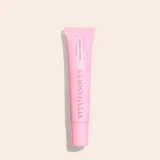
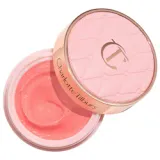
Drunk ElephantPlump-C Tripeptide Lippe Mask with Vitamin CYOUR PRODUCTVitamasquesSugar Cookie Overnight Lip MaskCharlotte TilburyLife Changing Lip Mask with Cushioning CeramidesCOSRXBalancium Ceramide Lip Butter Sleeping Mask
Match—36%35%33%
Price$25.20—$30.00+$4.80$17.11−$8.09
Shared key ingredients—5 of 252 of 254 of 25
Key difference—Copper Tripeptide-1Ceramide NpCeramide Np
Irritancy Medium Medium Medium Low
Drying alcohol————
View product Shop Shop Shop

More alternatives: Farsali Unicorn Antioxidant Lip MaskRevolution Juicy Peptide Pudding Lip Mask Frosted Vanilla Yellow

Cheaper alternatives? See how this stacks up against similar formulas.
We compare ingredient profiles across our catalog — pick the closest match for your budget.
Open dupe finder

Sources cited in this review

Every concentration estimate and effectiveness label is anchored to one of these 36 studies and safety reviews.

  1. 1
  2. 2
  3. 3
  4. 4
  5. 5
  6. 6
Drunk Elephant Plump-C Tripeptide Lippe Mask with Vitamin C
Drunk ElephantPlump-C Tripeptide Lippe Mask with Vitamin C

Affiliate links · As an Amazon Associate, WIMJ earns from qualifying purchases.

As an Amazon Associate, WIMJ earns from qualifying purchases.