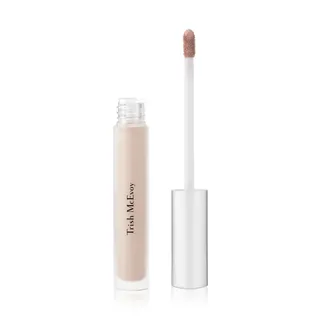
Works for
Anti-agingPalmitoyl tetrapeptide-7, Dipeptide-2 + 1 moreMay help
“This cult-favorite brightener softens dark circles, fine lines, and fatigue, acting as both a line filler and illuminator.”
This product contains dipeptide-2, palmitoyl pentapeptide-4, palmitoyl tetrapeptide-7. There is some human evidence that these ingredients help reduce and prevent fine lines and wrinkles and improve skin elasticity and firmness, though it is smaller or less consistent than the evidence for the best anti-aging ingredients.
MoisturizingSide benefit · Palmitoyl tetrapeptide-7, Palmitoyl pentapeptide-4 + 11 moreWorks well
This product can help improve hydration of the skin with the two types of ingredients.
The first type is called “humectants”:
these ingredients help attract water.
When humectants are on the surface of the skin, they “pull in” the moisture from the outside environment, or from
within deeper layers of the skin. The following ingredients in this product do the job:
glycerin, sodium hyaluronate.
This product also contains ingredients called “occlusives”. They help reduce the speed with which our skin loses moisture to the outside environment. These ingredients also help soften the upper layer of the skin, so it feels less tight and nicer to the touch. The following ingredients in this product do the job: dimethicone, cyclopentasiloxane.
The following ingredients in this product are especially good for supporting the skin barrier and helping with the hydration level: dipeptide-2, palmitoyl pentapeptide-4, palmitoyl tetrapeptide-7
Can it cause trouble?
Irritancy2 strong irritants: Citral, Parfum — patch-test recommendedHigh risk
ComedogenicClean of flagged comedogenic ingredientsNone flagged


User reviews
Be the first — your take helps the next person decide.
Ingredients
Filter by role to see what each ingredient is doing.
Water~40–60%
Cyclopentasiloxane~5.5–8.2%
- Irritation risk
- Low
A silicone that helps improve the product texture and spreadability. Can absorb oil creating a short-term mattifying effect on the skin
More about CyclopentasiloxaneTalc~4.2–6.3%
Butylene glycol~3–4.5%
- Irritation risk
- Low
Used to create a nice product texture and help delivery of other ingredients. Might be somewhat helpful in attracting water to the upper layer of the skin
More about Butylene glycolGlyceryl ethylhexanoate/stearate/adipate~2.5–3.7%
- Irritation risk
- Low
Cetyl peg/ppg-10/1 dimethicone~2–3%
- Irritation risk
- Low
A type of silicone that helps water and oil mix together. Can help to soften upper layer of the skin
More about Cetyl peg/ppg-10/1 dimethiconeIsononyl isononanoate~1.8–2.7%
- Irritation risk
- Low
Forms a protective film on the surface of the skin to prevent moisture loss. Gives a velvety feel to products while reducing tackiness
More about Isononyl isononanoateKaolin~1.6–2.4%
- Irritation risk
- Low
A type of clay that consists mainly of aluminum silicate. Helps absorb oil and creates a thicker product consistency. Can be used to add a white color
More about KaolinTrimethylsiloxysilicate~1.3–1.9%
- Irritation risk
- Low
A type of silicone that helps create a nice product consistency and support the delivery of other ingredients
More about TrimethylsiloxysilicatePpg-25-laureth-25~0.9–1.4%
Disteardimonium hectorite~0.85–1.3%
- Irritation risk
- Low
A type of clay that is used to thicken the product consistency
More about Disteardimonium hectoritePolymethyl methacrylate~0.8–1.25%
- Irritation risk
- Low
Is used to enhance product texture and can help to optically mask skin imperfections
More about Polymethyl methacrylatePolysorbate 20~0.55–1.3%
Glycerin~0.55–1.25%
- Irritation risk
- Low
One of the best moisturizing ingredients. Naturally present in skin. It attracts water to the upper layer of the skin working as a humectant
More about GlycerinDimethicone~0.55–1.25%
- Irritation risk
- Low
A silicone that helps to reduce water loss from the surface of the skin. Can temporarily "fill in" lines and wrinkles, absorb oil, and create a nice product finish
More about DimethiconeHydrogen dimethicone~0.5–1.15%
- Irritation risk
- Low
Helps the function of sunscreen and pigment ingredients in the formulation
More about Hydrogen dimethiconePhenoxyethanol~0.5–1%
- Irritation risk
- Low
A preservative. It helps prevent bacterial growth in cosmetic products
More about PhenoxyethanolHydrolyzed wheat protein~0.4–0.95%
- Irritation risk
- Medium
Can help attract water to the upper layer of the skin. Avoid if sensitive to gluten
More about Hydrolyzed wheat proteinCarbomer~0.4–0.95%
- Irritation risk
- Low
Helps create a thicker or gel-like product texture. It is not a surfactant but can be used in gentle cleansing formulations
More about CarbomerPalmitoyl pentapeptide-4~0.35–0.85%
- Irritation risk
- Low
A type of peptide. Peptides are excellent moisturizers and might be able support collagen production reducing fine lines and wrinkles
More about Palmitoyl pentapeptide-4Tocopheryl acetate~0.35–0.85%
- Irritation risk
- Medium
A more stable but less bio-available form of vitamin E compared to Tocopherol. Might help moisturize and protect the skin from free radicals, but mostly used in low concentrations to stabilize other ingredients.
More about Tocopheryl acetateSodium hyaluronate~0.35–0.8%
- Irritation risk
- Low
One of the best moisturizing ingredients. Attracts water into the upper layer of the skin
More about Sodium hyaluronateHesperidin methyl chalcone~0.35–0.8%
- Irritation risk
- High
Might help neutralize free radicals in skin. Is claimed to be able to improve the appearance of undereye darkness but evidence is missing. Can be an allergen and cause irritation
More about Hesperidin methyl chalconeSteareth-20~0.4–0.9%
Dipeptide-2~0.35–0.75%
- Irritation risk
- Low
A type of peptide. Peptides are excellent moisturizers and might be able support collagen production reducing fine lines and wrinkles
More about Dipeptide-2Palmitoyl tetrapeptide-7~0.35–0.85%
- Irritation risk
- Low
A type of peptide. Peptides are excellent moisturizers and might be able support collagen production reducing fine lines and wrinkles
More about Palmitoyl tetrapeptide-7Propylene glycol~0.3–0.75%
- Irritation risk
- High
Helps oil and water mix together and can enhance the penetration of other ingredients into the skin. It can be irritating
More about Propylene glycolMethylparaben~0.15–0.3%
Ethylparaben~0.2–0.4%
Propylparaben~0.2–0.4%
Sodium dehydroacetate~0.3–0.6%
Aluminum hydroxide~0.35–0.85%
- Irritation risk
- Low
Is used to add opaque (non-transparent) appearance to formulations. Can be used to coat other ingredients for even dispersion. This is a different ingredient compared to the ones used in antipersperants (aluminium chloride and aluminium chlorohydrate)
More about Aluminum hydroxideDisodium edta~0.35–0.8%
Sodium citrate~0.35–0.75%
- Irritation risk
- Medium
Helps to control the skin's pH level. Maintains the skin's natural film of amino-lactic acids and oils. Helps to preserve products
More about Sodium citrateChlorhexidine digluconate~0.15–0.3%
Potassium sorbate~0.3–0.6%
Polymethylsilsesquioxane~0.35–0.85%
- Irritation risk
- Low
A silicone that improves product texture and helps dissolve other ingredients. Can form a non-greasy film on the skin to prevent moisture loss
More about PolymethylsilsesquioxaneCitric acid~0.35–0.8%
- Irritation risk
- Medium
Can work as an exfoliant but is typically used to adjust the product pH
More about Citric acidPentaerythrityl tetra-di-t-butyl hydroxyhydrocinnamate~0.35–0.8%
- Irritation risk
- Low
Used to increase stability of product formulations
More about Pentaerythrityl tetra-di-t-butyl hydroxyhydrocinnamateCitral~0.3–0.75%
Parfum~0.3–0.75%
- Irritation risk
- High
An aromatic blend of unspecified and possibly irritating ingredients
More about ParfumTitanium dioxide~0.4–0.95%
- Irritation risk
- Low
Works as a UV filter when used in high concentrations. It is photostable and is effective mostly against the UVB light, with some protection in the UVA range. In small concentrations, used for its ability to improve the color of cosmetic products. Is usually well tolerated by the skin
More about Titanium dioxideIron oxides~0.35–0.75%
- Irritation risk
- Low
An umbrella term for the following three colorants: CI 77491, CI 77492, CI 77499. They might be able to offer some protection against visible light, but the degree of the protection is not clear
More about Iron oxidesIron oxides~0.35–0.75%
- Irritation risk
- Low
An umbrella term for the following three colorants: CI 77491, CI 77492, CI 77499. They might be able to offer some protection against visible light, but the degree of the protection is not clear
More about Iron oxidesIron oxides~0.35–0.75%
- Irritation risk
- Low
An umbrella term for the following three colorants: CI 77491, CI 77492, CI 77499. They might be able to offer some protection against visible light, but the degree of the protection is not clear
More about Iron oxidesWater~0.35–0.8%
Cyclopentasiloxane~0.35–0.85%
- Irritation risk
- Low
A silicone that helps improve the product texture and spreadability. Can absorb oil creating a short-term mattifying effect on the skin
More about CyclopentasiloxaneTalc~0.4–1%
Butylene glycol~0.35–0.8%
- Irritation risk
- Low
Used to create a nice product texture and help delivery of other ingredients. Might be somewhat helpful in attracting water to the upper layer of the skin
More about Butylene glycolGlyceryl ethylhexanoate/stearate/adipate~0.35–0.85%
- Irritation risk
- Low
Cetyl peg/ppg-10/1 dimethicone~0.35–0.8%
- Irritation risk
- Low
A type of silicone that helps water and oil mix together. Can help to soften upper layer of the skin
More about Cetyl peg/ppg-10/1 dimethiconeIsononyl isononanoate~0.35–0.85%
- Irritation risk
- Low
Forms a protective film on the surface of the skin to prevent moisture loss. Gives a velvety feel to products while reducing tackiness
More about Isononyl isononanoateKaolin~0.4–1%
- Irritation risk
- Low
A type of clay that consists mainly of aluminum silicate. Helps absorb oil and creates a thicker product consistency. Can be used to add a white color
More about KaolinTrimethylsiloxysilicate~0.35–0.85%
- Irritation risk
- Low
A type of silicone that helps create a nice product consistency and support the delivery of other ingredients
More about TrimethylsiloxysilicatePpg-25-laureth-25~0.2–0.75%
Disteardimonium hectorite~0.35–0.8%
- Irritation risk
- Low
A type of clay that is used to thicken the product consistency
More about Disteardimonium hectoritePolymethyl methacrylate~0.35–0.85%
- Irritation risk
- Low
Is used to enhance product texture and can help to optically mask skin imperfections
More about Polymethyl methacrylatePolysorbate 20~0.35–0.85%
Glycerin~0.35–0.85%
- Irritation risk
- Low
One of the best moisturizing ingredients. Naturally present in skin. It attracts water to the upper layer of the skin working as a humectant
More about GlycerinDimethicone~0.4–0.9%
- Irritation risk
- Low
A silicone that helps to reduce water loss from the surface of the skin. Can temporarily "fill in" lines and wrinkles, absorb oil, and create a nice product finish
More about DimethiconeHydrogen dimethicone~0.35–0.85%
- Irritation risk
- Low
Helps the function of sunscreen and pigment ingredients in the formulation
More about Hydrogen dimethiconePhenoxyethanol~0.35–0.8%
- Irritation risk
- Low
A preservative. It helps prevent bacterial growth in cosmetic products
More about PhenoxyethanolHydrolyzed wheat protein~0.35–0.75%
- Irritation risk
- Medium
Can help attract water to the upper layer of the skin. Avoid if sensitive to gluten
More about Hydrolyzed wheat proteinCarbomer~0.35–0.8%
- Irritation risk
- Low
Helps create a thicker or gel-like product texture. It is not a surfactant but can be used in gentle cleansing formulations
More about CarbomerPalmitoyl pentapeptide-4~0.35–0.75%
- Irritation risk
- Low
A type of peptide. Peptides are excellent moisturizers and might be able support collagen production reducing fine lines and wrinkles
More about Palmitoyl pentapeptide-4Tocopheryl acetate~0.35–0.8%
- Irritation risk
- Medium
A more stable but less bio-available form of vitamin E compared to Tocopherol. Might help moisturize and protect the skin from free radicals, but mostly used in low concentrations to stabilize other ingredients.
More about Tocopheryl acetateSodium hyaluronate~0.35–0.8%
- Irritation risk
- Low
One of the best moisturizing ingredients. Attracts water into the upper layer of the skin
More about Sodium hyaluronateHesperidin methyl chalcone~0.35–0.8%
- Irritation risk
- High
Might help neutralize free radicals in skin. Is claimed to be able to improve the appearance of undereye darkness but evidence is missing. Can be an allergen and cause irritation
More about Hesperidin methyl chalconeSteareth-20~0.4–0.9%
Dipeptide-2~0.35–0.75%
- Irritation risk
- Low
A type of peptide. Peptides are excellent moisturizers and might be able support collagen production reducing fine lines and wrinkles
More about Dipeptide-2Palmitoyl tetrapeptide-7~0.35–0.85%
- Irritation risk
- Low
A type of peptide. Peptides are excellent moisturizers and might be able support collagen production reducing fine lines and wrinkles
More about Palmitoyl tetrapeptide-7Propylene glycol~0.3–0.75%
- Irritation risk
- High
Helps oil and water mix together and can enhance the penetration of other ingredients into the skin. It can be irritating
More about Propylene glycolMethylparaben~0.15–0.3%
Ethylparaben~0.2–0.4%
Propylparaben~0.2–0.4%
Sodium dehydroacetate~0.3–0.6%
Aluminum hydroxide~0.35–0.85%
- Irritation risk
- Low
Is used to add opaque (non-transparent) appearance to formulations. Can be used to coat other ingredients for even dispersion. This is a different ingredient compared to the ones used in antipersperants (aluminium chloride and aluminium chlorohydrate)
More about Aluminum hydroxideDisodium edta~0.35–0.8%
Sodium citrate~0.35–0.75%
- Irritation risk
- Medium
Helps to control the skin's pH level. Maintains the skin's natural film of amino-lactic acids and oils. Helps to preserve products
More about Sodium citrateChlorhexidine digluconate~0.15–0.3%
Potassium sorbate~0.3–0.6%
Polymethylsilsesquioxane~0.35–0.85%
- Irritation risk
- Low
A silicone that improves product texture and helps dissolve other ingredients. Can form a non-greasy film on the skin to prevent moisture loss
More about PolymethylsilsesquioxaneCitric acid~0.35–0.8%
- Irritation risk
- Medium
Can work as an exfoliant but is typically used to adjust the product pH
More about Citric acidPentaerythrityl tetra-di-t-butyl hydroxyhydrocinnamate~0.35–0.8%
- Irritation risk
- Low
Used to increase stability of product formulations
More about Pentaerythrityl tetra-di-t-butyl hydroxyhydrocinnamateCitral~0.3–0.75%
Parfum~0.3–0.75%
- Irritation risk
- High
An aromatic blend of unspecified and possibly irritating ingredients
More about ParfumTitanium dioxide~0.45–1.05%
- Irritation risk
- Low
Works as a UV filter when used in high concentrations. It is photostable and is effective mostly against the UVB light, with some protection in the UVA range. In small concentrations, used for its ability to improve the color of cosmetic products. Is usually well tolerated by the skin
More about Titanium dioxideIron oxides~0.35–0.85%
- Irritation risk
- Low
An umbrella term for the following three colorants: CI 77491, CI 77492, CI 77499. They might be able to offer some protection against visible light, but the degree of the protection is not clear
More about Iron oxidesIron oxides~0.35–0.85%
- Irritation risk
- Low
An umbrella term for the following three colorants: CI 77491, CI 77492, CI 77499. They might be able to offer some protection against visible light, but the degree of the protection is not clear
More about Iron oxidesIron oxides~0.35–0.85%
- Irritation risk
- Low
An umbrella term for the following three colorants: CI 77491, CI 77492, CI 77499. They might be able to offer some protection against visible light, but the degree of the protection is not clear
More about Iron oxidesWater~0.35–0.85%
Cyclopentasiloxane~0.4–0.9%
- Irritation risk
- Low
A silicone that helps improve the product texture and spreadability. Can absorb oil creating a short-term mattifying effect on the skin
More about CyclopentasiloxaneTalc~0.45–1.1%
Butylene glycol~0.4–0.9%
- Irritation risk
- Low
Used to create a nice product texture and help delivery of other ingredients. Might be somewhat helpful in attracting water to the upper layer of the skin
More about Butylene glycolGlyceryl ethylhexanoate/stearate/adipate~0.4–0.95%
- Irritation risk
- Low
Cetyl peg/ppg-10/1 dimethicone~0.4–0.9%
- Irritation risk
- Low
A type of silicone that helps water and oil mix together. Can help to soften upper layer of the skin
More about Cetyl peg/ppg-10/1 dimethiconeIsononyl isononanoate~0.4–0.95%
- Irritation risk
- Low
Forms a protective film on the surface of the skin to prevent moisture loss. Gives a velvety feel to products while reducing tackiness
More about Isononyl isononanoateKaolin~0.45–1.1%
- Irritation risk
- Low
A type of clay that consists mainly of aluminum silicate. Helps absorb oil and creates a thicker product consistency. Can be used to add a white color
More about KaolinTrimethylsiloxysilicate~0.4–0.9%
- Irritation risk
- Low
A type of silicone that helps create a nice product consistency and support the delivery of other ingredients
More about TrimethylsiloxysilicatePpg-25-laureth-25~0.3–0.75%
Disteardimonium hectorite~0.4–0.9%
- Irritation risk
- Low
A type of clay that is used to thicken the product consistency
More about Disteardimonium hectoritePolymethyl methacrylate~0.4–0.95%
- Irritation risk
- Low
Is used to enhance product texture and can help to optically mask skin imperfections
More about Polymethyl methacrylatePolysorbate 20~0.4–0.95%
Glycerin~0.4–0.95%
- Irritation risk
- Low
One of the best moisturizing ingredients. Naturally present in skin. It attracts water to the upper layer of the skin working as a humectant
More about GlycerinDimethicone~0.4–1%
- Irritation risk
- Low
A silicone that helps to reduce water loss from the surface of the skin. Can temporarily "fill in" lines and wrinkles, absorb oil, and create a nice product finish
More about DimethiconeHydrogen dimethicone~0.4–0.9%
- Irritation risk
- Low
Helps the function of sunscreen and pigment ingredients in the formulation
More about Hydrogen dimethiconePhenoxyethanol~0.4–0.9%
- Irritation risk
- Low
A preservative. It helps prevent bacterial growth in cosmetic products
More about PhenoxyethanolHydrolyzed wheat protein~0.35–0.85%
- Irritation risk
- Medium
Can help attract water to the upper layer of the skin. Avoid if sensitive to gluten
More about Hydrolyzed wheat proteinCarbomer~0.4–0.9%
- Irritation risk
- Low
Helps create a thicker or gel-like product texture. It is not a surfactant but can be used in gentle cleansing formulations
More about CarbomerPalmitoyl pentapeptide-4~0.35–0.85%
- Irritation risk
- Low
A type of peptide. Peptides are excellent moisturizers and might be able support collagen production reducing fine lines and wrinkles
More about Palmitoyl pentapeptide-4Tocopheryl acetate~0.4–0.9%
- Irritation risk
- Medium
A more stable but less bio-available form of vitamin E compared to Tocopherol. Might help moisturize and protect the skin from free radicals, but mostly used in low concentrations to stabilize other ingredients.
More about Tocopheryl acetateSodium hyaluronate~0.35–0.85%
- Irritation risk
- Low
One of the best moisturizing ingredients. Attracts water into the upper layer of the skin
More about Sodium hyaluronateHesperidin methyl chalcone~0.35–0.85%
- Irritation risk
- High
Might help neutralize free radicals in skin. Is claimed to be able to improve the appearance of undereye darkness but evidence is missing. Can be an allergen and cause irritation
More about Hesperidin methyl chalconeSteareth-20~0.45–1%
Dipeptide-2~0.35–0.85%
- Irritation risk
- Low
A type of peptide. Peptides are excellent moisturizers and might be able support collagen production reducing fine lines and wrinkles
More about Dipeptide-2Palmitoyl tetrapeptide-7~0.4–0.9%
- Irritation risk
- Low
A type of peptide. Peptides are excellent moisturizers and might be able support collagen production reducing fine lines and wrinkles
More about Palmitoyl tetrapeptide-7Propylene glycol~0.35–0.85%
- Irritation risk
- High
Helps oil and water mix together and can enhance the penetration of other ingredients into the skin. It can be irritating
More about Propylene glycolMethylparaben~0.15–0.3%
Ethylparaben~0.2–0.4%
Propylparaben~0.2–0.4%
Sodium dehydroacetate~0.3–0.6%
Aluminum hydroxide~0.3–0.75%
- Irritation risk
- Low
Is used to add opaque (non-transparent) appearance to formulations. Can be used to coat other ingredients for even dispersion. This is a different ingredient compared to the ones used in antipersperants (aluminium chloride and aluminium chlorohydrate)
More about Aluminum hydroxideDisodium edta~0.2–0.75%
Sodium citrate~0.2–0.7%
- Irritation risk
- Medium
Helps to control the skin's pH level. Maintains the skin's natural film of amino-lactic acids and oils. Helps to preserve products
More about Sodium citrateChlorhexidine digluconate~0.15–0.3%
Potassium sorbate~0.3–0.6%
Polymethylsilsesquioxane~0.15–0.65%
- Irritation risk
- Low
A silicone that improves product texture and helps dissolve other ingredients. Can form a non-greasy film on the skin to prevent moisture loss
More about PolymethylsilsesquioxaneCitric acid~0.15–0.55%
- Irritation risk
- Medium
Can work as an exfoliant but is typically used to adjust the product pH
More about Citric acidPentaerythrityl tetra-di-t-butyl hydroxyhydrocinnamate~0.15–0.6%
- Irritation risk
- Low
Used to increase stability of product formulations
More about Pentaerythrityl tetra-di-t-butyl hydroxyhydrocinnamateCitral~0.1–0.45%
Parfum~0.1–0.35%
- Irritation risk
- High
An aromatic blend of unspecified and possibly irritating ingredients
More about ParfumTitanium dioxide~0.15–0.6%
- Irritation risk
- Low
Works as a UV filter when used in high concentrations. It is photostable and is effective mostly against the UVB light, with some protection in the UVA range. In small concentrations, used for its ability to improve the color of cosmetic products. Is usually well tolerated by the skin
More about Titanium dioxideIron oxides~0.1–0.35%
- Irritation risk
- Low
An umbrella term for the following three colorants: CI 77491, CI 77492, CI 77499. They might be able to offer some protection against visible light, but the degree of the protection is not clear
More about Iron oxidesIron oxides~0.05–0.25%
- Irritation risk
- Low
An umbrella term for the following three colorants: CI 77491, CI 77492, CI 77499. They might be able to offer some protection against visible light, but the degree of the protection is not clear
More about Iron oxidesIron oxides~0.05–0.25%
- Irritation risk
- Low
An umbrella term for the following three colorants: CI 77491, CI 77492, CI 77499. They might be able to offer some protection against visible light, but the degree of the protection is not clear
More about Iron oxidesIngredient list view
Water, Cyclopentasiloxane, Talc, Butylene glycol, Glyceryl ethylhexanoate/stearate/adipate, Cetyl peg/ppg-10/1 dimethicone, Isononyl isononanoate, Kaolin, Trimethylsiloxysilicate, Ppg-25-laureth-25, Disteardimonium hectorite, Polymethyl methacrylate, Polysorbate 20, Glycerin, Dimethicone, Hydrogen dimethicone, Phenoxyethanol, Hydrolyzed wheat protein, Carbomer, Palmitoyl pentapeptide-4, Tocopheryl acetate, Sodium hyaluronate, Hesperidin methyl chalcone, Steareth-20, Dipeptide-2, Palmitoyl tetrapeptide-7, Propylene glycol, Methylparaben, Ethylparaben, Propylparaben, Sodium dehydroacetate, Aluminum hydroxide, Disodium edta, Sodium citrate, Chlorhexidine digluconate, Potassium sorbate, Polymethylsilsesquioxane, Citric acid, Pentaerythrityl tetra-di-t-butyl hydroxyhydrocinnamate, Citral, Parfum, Titanium dioxide, Iron oxides, Iron oxides, Iron oxides, Water, Cyclopentasiloxane, Talc, Butylene glycol, Glyceryl ethylhexanoate/stearate/adipate, Cetyl peg/ppg-10/1 dimethicone, Isononyl isononanoate, Kaolin, Trimethylsiloxysilicate, Ppg-25-laureth-25, Disteardimonium hectorite, Polymethyl methacrylate, Polysorbate 20, Glycerin, Dimethicone, Hydrogen dimethicone, Phenoxyethanol, Hydrolyzed wheat protein, Carbomer, Palmitoyl pentapeptide-4, Tocopheryl acetate, Sodium hyaluronate, Hesperidin methyl chalcone, Steareth-20, Dipeptide-2, Palmitoyl tetrapeptide-7, Propylene glycol, Methylparaben, Ethylparaben, Propylparaben, Sodium dehydroacetate, Aluminum hydroxide, Disodium edta, Sodium citrate, Chlorhexidine digluconate, Potassium sorbate, Polymethylsilsesquioxane, Citric acid, Pentaerythrityl tetra-di-t-butyl hydroxyhydrocinnamate, Citral, Parfum, Titanium dioxide, Iron oxides, Iron oxides, Iron oxides, Water, Cyclopentasiloxane, Talc, Butylene glycol, Glyceryl ethylhexanoate/stearate/adipate, Cetyl peg/ppg-10/1 dimethicone, Isononyl isononanoate, Kaolin, Trimethylsiloxysilicate, Ppg-25-laureth-25, Disteardimonium hectorite, Polymethyl methacrylate, Polysorbate 20, Glycerin, Dimethicone, Hydrogen dimethicone, Phenoxyethanol, Hydrolyzed wheat protein, Carbomer, Palmitoyl pentapeptide-4, Tocopheryl acetate, Sodium hyaluronate, Hesperidin methyl chalcone, Steareth-20, Dipeptide-2, Palmitoyl tetrapeptide-7, Propylene glycol, Methylparaben, Ethylparaben, Propylparaben, Sodium dehydroacetate, Aluminum hydroxide, Disodium edta, Sodium citrate, Chlorhexidine digluconate, Potassium sorbate, Polymethylsilsesquioxane, Citric acid, Pentaerythrityl tetra-di-t-butyl hydroxyhydrocinnamate, Citral, Parfum, Titanium dioxide, Iron oxides, Iron oxides, Iron oxides
Compare prices
Retailers ranked by price — lowest first.

Worth comparing, line by line.
Match % combines shared ingredients, the first five ingredients, shared actives and hero ingredients, irritancy (lower counts in the alternative's favour), texture and body area. Only products in the same routine step are compared.
| Trish McEvoyInstant Eye LiftYOUR PRODUCT | MesoesteticCollagen 360 Degree Eye Contour | DermadoctorWrinkle Revenge Rescue & Protect Eye Balm | PCA SKINEyeXcellence | |
|---|---|---|---|---|
| Match | — | 58% | 58% | 57% |
| Price | $48.00 | — | — | — |
| Shared key ingredients | — | 8 of 10 | 6 of 10 | 5 of 10 |
| Key difference | — | Niacinamide | Retinyl Palmitate | Vitis Vinifera Seed Oil |
| Irritancy | High | Medium | High | Low |
| Drying alcohol | — | — | — | — |
| View product | Shop | Shop | Shop |


More alternatives: Dr. Bailey Skin Care Advanced Corrective Eye CreamDermaquest Peptide Eye Firming Serum
Sources cited in this review
Every concentration estimate and effectiveness label is anchored to one of these 14 studies and safety reviews.
- 1
- 2
- 3Final Report on the Safety Assessment of Dimethicone Copolyoljournals.sagepub.com
- 4Wheat in skin caremdedge.com
- 5Hyaluronic acid: A key molecule in skin agingncbi.nlm.nih.gov
- 6

Affiliate links · As an Amazon Associate, WIMJ earns from qualifying purchases.