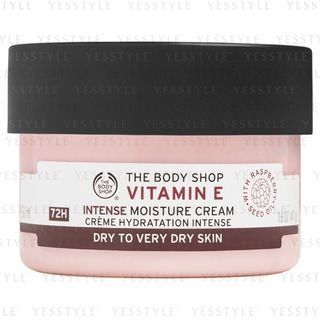
The Body Shop Vitamin E Intense Moisture Cream
Works for
1 of 1 advertised claim delivered
Moisturizing17 ingredients credited for this claimGood support
“Vitamin E Intense Moisture Cream”
This product can help improve hydration of the skin with the two types of ingredients.
The first type is called “humectants”:
these ingredients help attract water.
When humectants are on the surface of the skin, they “pull in” the moisture from the outside environment, or from
within deeper layers of the skin. The following ingredients in this product do the job:
glycerin, saccharide isomerate.
This product also contains ingredients called “occlusives”. They help reduce the speed with which our skin loses moisture to the outside environment. These ingredients also help soften the upper layer of the skin, so it feels less tight and nicer to the touch. The following ingredients in this product do the job: butyrospermum parkii butter, dimethicone.
Can it cause trouble?
Irritancy2 strong irritants: Retinyl palmitate, ParfumMedium risk
Comedogenic3 ingredients rated 2 or more on the 0–5 pore-clogging scale3 flagged

User reviews
Be the first — your take helps the next person decide.
Ingredients
Filter by role to see what each ingredient is doing.
Water~40–60%
Glycerin~4.3–6.4%
- Irritation risk
- Low
One of the best moisturizing ingredients. Naturally present in skin. It attracts water to the upper layer of the skin working as a humectant
More about GlycerinDimethicone~3.7–5.5%
- Irritation risk
- Low
A silicone that helps to reduce water loss from the surface of the skin. Can temporarily "fill in" lines and wrinkles, absorb oil, and create a nice product finish
More about DimethiconeOlea europaea fruit oil~2.7–4%
- Irritation risk
- Medium
An emollient that helps soften the skin but is not effective for restoring its barrier function. Might be helpful to calm down inflammation
More about Olea europaea fruit oilButyrospermum parkii butter~2.1–3.1%
- Irritation risk
- Low
- Comedogenicity
- 3/5
A great moisturising ingredient that softens the skin and reduces water loss from its upper layer. It also can be helpful in protecting skin from free radicals
More about Butyrospermum parkii butterTriticum vulgare germ oil~1.7–2.5%
- Irritation risk
- Low
- Comedogenicity
- 3/5
A good emoillient. Contains vitamin E which can help neutralise free radicals, however the oil is unstable. Avoid if you have gluten or wheat sensitivity (including food allergies).
More about Triticum vulgare germ oilButylene glycol~1.4–2.1%
- Irritation risk
- Low
Used to create a nice product texture and help delivery of other ingredients. Might be somewhat helpful in attracting water to the upper layer of the skin
More about Butylene glycolCetearyl alcohol~1.3–1.9%
- Irritation risk
- Low
- Comedogenicity
- 2/5
A non-drying alcohol. Works as an emollient. Helps water and oil mix together and creates a nice product texture
More about Cetearyl alcoholCetearyl glucoside~1–1.5%
- Irritation risk
- Medium
Helps water and oil in the product mix well together and improves product texture
More about Cetearyl glucosideVitis vinifera seed oil~0.85–1.25%
- Irritation risk
- Medium
A great emollient that can also have anti-oxidant properties
More about Vitis vinifera seed oilCyclopentasiloxane~0.5–1.15%
- Irritation risk
- Low
A silicone that helps improve the product texture and spreadability. Can absorb oil creating a short-term mattifying effect on the skin
More about CyclopentasiloxaneSodium hyaluronate~0.4–0.9%
- Irritation risk
- Low
One of the best moisturizing ingredients. Attracts water into the upper layer of the skin
More about Sodium hyaluronateSaccharide isomerate~0.35–0.8%
- Irritation risk
- Low
Helps attract water to the upper layer of the skin
More about Saccharide isomerateSodium polyacrylate~0.35–0.8%
- Irritation risk
- Low
Used to create a gel-like product texture, as well as to stabilize emulsions
More about Sodium polyacrylatePanthenol~0.2–0.75%
- Irritation risk
- Low
Helps attract water to the upper layer of the skin and can help improve skin barrier function
More about PanthenolTocopherol~0.2–0.75%
- Irritation risk
- Low
Pure form of vitamin E. Can help moisturise and protect the skin from free radicals. Often used to help stabilise other ingredients or the formula itself
More about TocopherolPolysilicone-11~0.2–0.75%
- Irritation risk
- Low
A silicone that forms a light film on the skin surface helping to bind water and temporarily absorb oils creating a matt and powdery feel
More about Polysilicone-11Dimethicone crosspolymer~0.15–0.65%
- Irritation risk
- Low
Used to create a thicker product texture. Helps soften the upper layer of the skin and might be able to prevent moisture loss from its surface
More about Dimethicone crosspolymerSodium stearoyl glutamate~0.2–0.75%
- Irritation risk
- Medium
Helps oil and water mix together
More about Sodium stearoyl glutamateXanthan gum~0.15–0.55%
- Irritation risk
- Low
Used to create a thicker product consistency
More about Xanthan gumPropylene glycol~0.1–0.45%
- Irritation risk
- High
Helps oil and water mix together and can enhance the penetration of other ingredients into the skin. It can be irritating
More about Propylene glycolRetinyl palmitate~0.1–0.35%
- Irritation risk
- High
Three steps removed from the active form of vitamin A - retinoic acid. To have an effect in the skin, it first needs to be converted twice to become the retinoic acid. This means it is less potent than retinol, but could also be less irritating. Once converted to the retinoic acid in the skin, it helps against all signs of aging, improves skin cell turnover and helps fight blemishes and clogged pores. However, in many cosmetic formulations, it is used in a concentration that is too low to have the full effect
More about Retinyl palmitateDisodium edta~0.1–0.35%
Sodium hydroxide~0.1–0.35%
Myristyl alcohol~0.1–0.45%
- Irritation risk
- High
Helps to stabilize the product formulation while softening the upper layer of the skin. Can be irritating
More about Myristyl alcoholStearyl alcohol~0.1–0.45%
- Irritation risk
- Low
An emollient that helps soften the skin
More about Stearyl alcoholPhenoxyethanol~0.05–0.25%
- Irritation risk
- Low
A preservative. It helps prevent bacterial growth in cosmetic products
More about PhenoxyethanolMethylparaben~0.05–0.2%
Ethylparaben~0.05–0.2%
Propylparaben~0.05–0.15%
Butylparaben~0.05–0.15%
Parfum~0.01–0.05%
- Irritation risk
- High
An aromatic blend of unspecified and possibly irritating ingredients
More about ParfumIngredient list view
Water, Glycerin, Dimethicone, Olea europaea fruit oil, Butyrospermum parkii butter, Triticum vulgare germ oil, Butylene glycol, Cetearyl alcohol, Cetearyl glucoside, Vitis vinifera seed oil, Cyclopentasiloxane, Sodium hyaluronate, Saccharide isomerate, Sodium polyacrylate, Panthenol, Tocopherol, Polysilicone-11, Dimethicone crosspolymer, Sodium stearoyl glutamate, Xanthan gum, Propylene glycol, Retinyl palmitate, Disodium edta, Sodium hydroxide, Myristyl alcohol, Stearyl alcohol, Phenoxyethanol, Methylparaben, Ethylparaben, Propylparaben, Butylparaben, Parfum
Compare prices
Retailers ranked by price — lowest first.

Worth comparing, line by line.
Match % combines shared ingredients, the first five ingredients, shared actives and hero ingredients, irritancy (lower counts in the alternative's favour), texture and body area. Only products in the same routine step are compared.
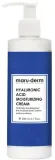
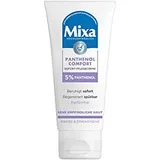
| The Body ShopVitamin E Intense Moisture CreamYOUR PRODUCT | MixaInstant Care Cream | MarudermHyaluronic Acid Moisturizer Face & Body Cream | La Roche-PosayCicaplast Baume B5 For Dry Skin Irritations | |
|---|---|---|---|---|
| Match | — | 62% | 61% | 61% |
| Price | $37.59 | — | $21.99−$15.60 | $8.00−$29.59 |
| Shared key ingredients | — | 4 of 13 | 5 of 13 | 4 of 13 |
| Key difference | — | Copper Gluconate | Niacinamide | Madecassoside |
| Irritancy | Medium | Low | Low | Low |
| Drying alcohol | — | — | — | — |
| View product | Shop | Shop | Shop |

Sources cited in this review
Every concentration estimate and effectiveness label is anchored to one of these 16 studies and safety reviews.
- 1
- 2
- 3Final Report on the Safety Assessment of Dimethicone Copolyoljournals.sagepub.com
- 4Use of “natural” oils for moisturization: Review of olive, coconut, and sunflower seed oilonlinelibrary.wiley.com
- 5Hyaluronic acid: A key molecule in skin agingncbi.nlm.nih.gov
- 6

Affiliate links · As an Amazon Associate, WIMJ earns from qualifying purchases.