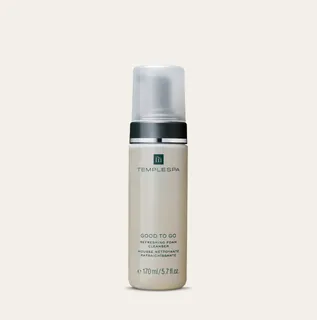
Works for
CleansingCocamidopropyl betaine, Coco-glucoside + 2 moreCan be harsh
“Perfect for no-fuss people on the run who need a quick yet effective wash-off cleanser that leaves the skin soft and nourished without feeling taut.”
This product works by removing dirt and oil from the surface of the skin.
The following cleansing agents are typically mild, but still can cause an irritation or allergy for some people cocamidopropyl betaine, coco-glucoside.
Keep in mind that cleansing can disrupt the skin barrier, and most people do not need to cleanse their skin more than once per day.
Can it cause trouble?
Irritancy12 strong irritants: Parfum, Citrus aurantium bergamia fruit oil + 10 more — patch-test recommendedHigh risk
Comedogenic1 ingredient rated 2 or more on the 0–5 pore-clogging scale1 flagged
User reviews
Be the first — your take helps the next person decide.
Ingredients
Filter by role to see what each ingredient is doing.
Water~45–55%
Cocamidopropyl betaine~7.6–9.2%
- Irritation risk
- High
Helps water and oil mix together. Used as a cleansing ingredient. Could be an allergen
More about Cocamidopropyl betainePolysorbate 20~4–4.8%
Coco-glucoside~4.2–5.1%
- Irritation risk
- High
Used as a cleansing agent (surfactant) in cleansers. Helps water and oil mix together in lotions. Can be irritating
More about Coco-glucosideGlycerin~2.4–3%
- Irritation risk
- Low
One of the best moisturizing ingredients. Naturally present in skin. It attracts water to the upper layer of the skin working as a humectant
More about GlycerinBetaine~1.9–2.3%
- Irritation risk
- Low
Helps attract water to the upper layer of the skin and improves the product texture
More about BetaineInulin~1.7–2%
- Irritation risk
- Low
Helps attract water to the upper layer of the skin. Is claimed to support the growth of "good" bacteria in skin (as a "prebiotic"), but the research is lacking
More about InulinPhenoxyethanol~0.5–1%
- Irritation risk
- Low
A preservative. It helps prevent bacterial growth in cosmetic products
More about PhenoxyethanolCitric acid~1.2–1.4%
- Irritation risk
- Medium
Can work as an exfoliant but is typically used to adjust the product pH
More about Citric acidParfum~0.95–1.15%
- Irritation risk
- High
An aromatic blend of unspecified and possibly irritating ingredients
More about ParfumAloe barbadensis leaf juice~0.7–1.05%
- Irritation risk
- Medium
Traditionally used to treat sunburns, dermatitis and inflammation, but evidence for its effectiveness is lacking. The extract can contain humectants that help attract water into the skin
More about Aloe barbadensis leaf juicePanthenol~0.6–0.9%
- Irritation risk
- Low
Helps attract water to the upper layer of the skin and can help improve skin barrier function
More about PanthenolAlpha-glucan oligosaccharide~0.6–0.9%
- Irritation risk
- Low
Helps attract water to the upper layer of the skin
More about Alpha-glucan oligosaccharideHydroxypropyl methylcellulose~0.5–0.8%
- Irritation risk
- Medium
Used to create a thicker product consistency and stabilize the formulation
More about Hydroxypropyl methylcellulosePolyquaternium-39~0.5–0.75%
- Irritation risk
- Low
Helps soften the upper layer of the skin and create a nice product finish
More about Polyquaternium-39Acer saccharum sap~0.45–0.7%
- Irritation risk
- Low
Ethylhexylglycerin~0.45–0.7%
Sodium gluconate~0.35–0.65%
Propylene glycol~0.35–0.6%
- Irritation risk
- High
Helps oil and water mix together and can enhance the penetration of other ingredients into the skin. It can be irritating
More about Propylene glycolCucumis sativus juice~0.35–0.65%
- Irritation risk
- Low
Cucumber juice. Might help attract water to the upper layer of the skin, but mostly works as plain water in skincare
More about Cucumis sativus juiceAscorbic acid~0.3–0.55%
- Irritation risk
- High
The most well-researched antioxidant that works in skin. Helps neutralize free radicals supporting collagen production, helping to even out the skin tone and preventing early signs of aging
More about Ascorbic acidCitrus aurantium bergamia fruit oil~0.3–0.5%
- Irritation risk
- High
A plant oil with a high content of volatile compounds that can irritate the skin and lead to allergic reactions. Can lead to photosensitivity
More about Citrus aurantium bergamia fruit oilTocopheryl acetate~0.3–0.55%
- Irritation risk
- Medium
A more stable but less bio-available form of vitamin E compared to Tocopherol. Might help moisturize and protect the skin from free radicals, but mostly used in low concentrations to stabilize other ingredients.
More about Tocopheryl acetateRaphanus sativus root extract~0.25–0.5%
- Irritation risk
- Low
Citrus reticulata fruit extract~0.3–0.55%
- Irritation risk
- High
Helianthus annuus seed oil~0.3–0.55%
- Irritation risk
- Low
A great emollient due to its high linoleic acid content. One of the most effective plant oils in helping skin hydration and repairing skin barrier function
More about Helianthus annuus seed oilSodium benzoate~0.3–0.5%
Retinyl palmitate~0.25–0.5%
- Irritation risk
- High
Three steps removed from the active form of vitamin A - retinoic acid. To have an effect in the skin, it first needs to be converted twice to become the retinoic acid. This means it is less potent than retinol, but could also be less irritating. Once converted to the retinoic acid in the skin, it helps against all signs of aging, improves skin cell turnover and helps fight blemishes and clogged pores. However, in many cosmetic formulations, it is used in a concentration that is too low to have the full effect
More about Retinyl palmitateBeta vulgaris root extract~0.25–0.5%
- Irritation risk
- Medium
A plant extract that might have some antioxidant properties, but mostly used in cosmetics for its color
More about Beta vulgaris root extractCaprylic/capric triglyceride~0.35–0.6%
- Irritation risk
- Medium
A good mix of fatty acids that forms a protective layer on the skin. Improves the shelf life of products. Derived from coconut and glycerin
More about Caprylic/capric triglyceridePotassium sorbate~0.3–0.55%
Citrus nobilis fruit extract~0.25–0.5%
- Irritation risk
- High
Arctium majus root extract~0.25–0.5%
- Irritation risk
- Low
Citrus limon peel extract~0.25–0.5%
Fucus vesiculosus extract~0.3–0.55%
- Irritation risk
- Low
- Comedogenicity
- 3/5
Hedera helix leaf extract~0.25–0.5%
- Irritation risk
- Low
Nasturtium officinale extract~0.25–0.45%
- Irritation risk
- High
Used as a fragrance. Might have anti-oxidant properties
More about Nasturtium officinale extractSalvia officinalis leaf extract~0.3–0.6%
- Irritation risk
- High
Sage leaf extract. It can be irritating
More about Salvia officinalis leaf extractSaponaria officinalis leaf/root extract~0.25–0.5%
- Irritation risk
- Low
Phosphoric acid~0.3–0.55%
Beta-carotene~0.25–0.5%
Daucus carota sativa root extract~0.25–0.45%
- Irritation risk
- Low
Carrot extract. Might have anti-oxidant properties and be used to add orange color
More about Daucus carota sativa root extractDaucus carota sativa seed oil~0.3–0.5%
- Irritation risk
- Low
A plant oil that might help neutralize free radicals and have an anti-bacterial effect
More about Daucus carota sativa seed oilTocopherol~0.25–0.45%
- Irritation risk
- Low
Pure form of vitamin E. Can help moisturise and protect the skin from free radicals. Often used to help stabilise other ingredients or the formula itself
More about TocopherolSodium sulfite~0.1–0.2%
Ascorbyl palmitate~0.2–0.4%
- Irritation risk
- Medium
Being a lipid soluble form of vitamin C, it is more stable and can penetrate the skin better than L-Ascorbic acid. It is effective in protecting the skin from free radicals, as well as evening the skin tone, but is less effective in stimulating collagen production compared to L-Ascorbic acid.
More about Ascorbyl palmitateLinalyl acetate~0.2–0.4%
- Irritation risk
- Low
Linalool~0.15–0.3%
Tetramethyl acetyloctahydronaphthalenes~0.15–0.25%
- Irritation risk
- Low
Limonene~0.15–0.3%
- Irritation risk
- High
A common frangrance that can easily irritate skin, especially if exposed to air, light or heat
More about LimoneneCitrus limon peel oil~0.15–0.25%
Citrus aurantium bergamia peel oil~0.1–0.2%
- Irritation risk
- High
Lavandula oil/extract~0.1–0.2%
- Irritation risk
- Low
Ingredient list view
Water, Cocamidopropyl betaine, Polysorbate 20, Coco-glucoside, Glycerin, Betaine, Inulin, Phenoxyethanol, Citric acid, Parfum, Aloe barbadensis leaf juice, Panthenol, Alpha-glucan oligosaccharide, Hydroxypropyl methylcellulose, Polyquaternium-39, Acer saccharum sap, Ethylhexylglycerin, Sodium gluconate, Propylene glycol, Cucumis sativus juice, Ascorbic acid, Citrus aurantium bergamia fruit oil, Tocopheryl acetate, Raphanus sativus root extract, Citrus reticulata fruit extract, Helianthus annuus seed oil, Sodium benzoate, Retinyl palmitate, Beta vulgaris root extract, Caprylic/capric triglyceride, Potassium sorbate, Citrus nobilis fruit extract, Arctium majus root extract, Citrus limon peel extract, Fucus vesiculosus extract, Hedera helix leaf extract, Nasturtium officinale extract, Salvia officinalis leaf extract, Saponaria officinalis leaf/root extract, Phosphoric acid, Beta-carotene, Daucus carota sativa root extract, Daucus carota sativa seed oil, Tocopherol, Sodium sulfite, Ascorbyl palmitate, Linalyl acetate, Linalool, Tetramethyl acetyloctahydronaphthalenes, Limonene, Citrus limon peel oil, Citrus aurantium bergamia peel oil, Lavandula oil/extract
Compare prices
Retailers ranked by price — lowest first.

Worth comparing, line by line.
Match % combines shared ingredients, the first five ingredients, shared actives and hero ingredients, irritancy (lower counts in the alternative's favour), texture and body area. Only products in the same routine step are compared.
| Temple SpaGOOD TO GOYOUR PRODUCT | PharmacerisA - Puri-Sensilium Soothing Foam | CetaphilGentle Foaming Facial Cleanser | RoC SkincareRoC Energising Cleansing Mousse | |
|---|---|---|---|---|
| Match | — | 40% | 39% | 37% |
| Price | — | $17.99 | $12.78 | $13.48 |
| Shared key ingredients | — | 6 of 13 | 6 of 13 | 4 of 13 |
| Key difference | — | Peg-7 Glyceryl Cocoate | — | Copper Gluconate |
| Irritancy | High | Low | Low | Medium |
| Drying alcohol | — | — | — | — |
| View product | Shop | Shop | Shop |

More alternatives: ROUND LAB 1025 Dokdo Bubble FoamHerbal Essentials Foaming Face Wash
Sources cited in this review
Every concentration estimate and effectiveness label is anchored to one of these 21 studies and safety reviews.
- 1
- 2Allergen of the Year—Alkyl Glucosidepracticeupdate.com
- 3
- 4
- 5Skin moisturizing effects of panthenol-based formulationspdfs.semanticscholar.org
- 6

Affiliate links · As an Amazon Associate, WIMJ earns from qualifying purchases.