Works for
1 of 1 advertised claim delivered
Moisturizing17 ingredients credited for this claimGood support
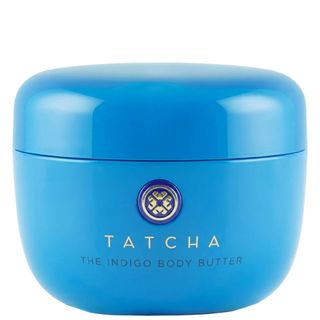
“Tatcha Body Care Indigo Body Butter is a rich body cream designed to comfort dry, sensitive skin while supporting the skin’s moisture barrier.”
This product can help improve hydration of the skin with the two types of ingredients.
The first type is called “humectants”:
these ingredients help attract water.
When humectants are on the surface of the skin, they “pull in” the moisture from the outside environment, or from
within deeper layers of the skin. The following ingredients in this product do the job:
glycerin, inositol.
This product also contains ingredients called “occlusives”. They help reduce the speed with which our skin loses moisture to the outside environment. These ingredients also help soften the upper layer of the skin, so it feels less tight and nicer to the touch. The following ingredients in this product do the job: cera alba, dimethicone.
Evens skin toneNot advertised by the brand · 2 ingredients credited for this claimModerate support
The following ingredient (ingredients) in this product might be helpful, but there is no evidence to confirm that it actually works: stearyl glycyrrhetinate.
Anti-oxidationNot advertised by the brand · 6 ingredients credited for this claimModerate support
This product contains antioxidants (camellia sinensis leaf extract) that might be able to help neutralize free radicals in skin to lessen the damage it gets from the UV light (sun). There is not enough evidence to confirm their effectiveness in skin though.
Can it cause trouble?
Irritancy6 strong irritants: Parfum, Hydrolyzed gardenia florida extract + 4 more — patch-test recommendedHigh risk
Comedogenic1 ingredient rated 2 or more on the 0–5 pore-clogging scale1 flagged
User reviews
Be the first — your take helps the next person decide.
Ingredients
Filter by role to see what each ingredient is doing.
Water~45–55%
Saccharomyces/rice ferment filtrate~6.7–8.2%
- Irritation risk
- Low
A product of yeast fermentation. Can contain humectants that help attract water to the upper layer of the skin and might help neutralize free oxidants
More about Saccharomyces/rice ferment filtrateGlycerin~3.8–4.6%
- Irritation risk
- Low
One of the best moisturizing ingredients. Naturally present in skin. It attracts water to the upper layer of the skin working as a humectant
More about GlycerinSqualane~3.1–3.8%
- Irritation risk
- Low
An oil naturally present in skin. Works as an emollient to soften the skin and form a protective layer on its surface without a greasy feeling.
More about SqualanePropanediol~2.3–2.8%
- Irritation risk
- Low
Acts as a solvent for other ingredients. Speeds up the absorption of other ingredients into the skin
More about PropanediolDimethicone~2–2.4%
- Irritation risk
- Low
A silicone that helps to reduce water loss from the surface of the skin. Can temporarily "fill in" lines and wrinkles, absorb oil, and create a nice product finish
More about DimethiconeDiisostearyl malate~1.6–1.9%
- Irritation risk
- Medium
Helps to soften the upper layer of the skin
More about Diisostearyl malateMyristyl myristate~1.5–1.8%
- Irritation risk
- Medium
- Comedogenicity
- 3/5
An emollient. Is not recommended for acne-prone skin as it can be comedogenic
More about Myristyl myristateBehenyl alcohol~1.2–1.5%
- Irritation risk
- Low
Non-drying alcohol that helps water and oil mix together. Also serves as an emollient
More about Behenyl alcoholDipentaerythrityl hexahydroxystearate~0.8–1.15%
Parfum~0.6–0.95%
- Irritation risk
- High
An aromatic blend of unspecified and possibly irritating ingredients
More about ParfumCera alba~0.7–1.05%
- Irritation risk
- Medium
Forms a protective barrier that holds water and keeps dry skin hydrated. Keeps an emulsion from separating into its oil and liquid components, and increases the thickness of a product. Can be an allergen
More about Cera albaSorbitan tristearate~0.5–0.8%
- Irritation risk
- Medium
Helps oil and water mix together
More about Sorbitan tristearateBeheneth-20~0.5–0.75%
Inositol~0.45–0.65%
Colloidal oatmeal~0.6–0.9%
- Irritation risk
- Low
Helps to restore skin barrier function, soften the upper layer of the skin and calm down inflammation
More about Colloidal oatmealHydrolyzed gardenia florida extract~0.4–0.65%
- Irritation risk
- High
Used as a fragrance. Might have some anti-oxidant properties
More about Hydrolyzed gardenia florida extractPolygonum tinctorium leaf/stem extract~0.35–0.65%
- Irritation risk
- Low
Camellia sinensis leaf extract~0.35–0.65%
- Irritation risk
- Low
Can contain potent anti-oxidant compounds (abbreviated ECG, GCG, EGC, and EGCG) that might help protect the skin from free radicals. Can help calm down inflammation and has some anti-bacterial properties. Unfortunately, these antioxidants are unstable and lose their effectiveness very quickly in products. The concentration of the antioxidant compounds in the extract also tends to be low to be effective in topical formulation
More about Camellia sinensis leaf extractCladosiphon okamuranus extract~0.3–0.55%
- Irritation risk
- Low
Oryza sativa germ oil~0.35–0.6%
Stearyl glycyrrhetinate~0.3–0.5%
- Irritation risk
- Medium
A fatty acid derived from licorice. Works as an emollient and can help calm down inflammation
More about Stearyl glycyrrhetinateSericin~0.25–0.5%
Betaphycus gelatinum extract~0.3–0.5%
- Irritation risk
- Low
Sodium dilauramidoglutamide lysine~0.25–0.5%
- Irritation risk
- Low
Sodium polyacrylate starch~0.3–0.55%
- Irritation risk
- Low
Used to create a thicker product consistency
More about Sodium polyacrylate starchDimethicone/vinyl dimethicone crosspolymer~0.25–0.5%
- Irritation risk
- Low
Used to stabilize product formulations and create a nice product texture
More about Dimethicone/vinyl dimethicone crosspolymerHydroxyethyl acrylate/sodium acryloyldimethyl taurate copolymer~0.25–0.45%
- Irritation risk
- Medium
A gelling agent that thickens the product consistency and leaves the skin with a velvety finish
More about Hydroxyethyl acrylate/sodium acryloyldimethyl taurate copolymerSorbitan isostearate~0.25–0.5%
- Irritation risk
- Low
Helps oil and water mix together
More about Sorbitan isostearateButylene glycol~0.25–0.45%
- Irritation risk
- Low
Used to create a nice product texture and help delivery of other ingredients. Might be somewhat helpful in attracting water to the upper layer of the skin
More about Butylene glycolPolysorbate 60~0.25–0.45%
Synthetic fluorphlogopite~0.25–0.45%
- Irritation risk
- Low
A mineral that is used as an optical filter (makes the skin looks nicer through light reflection) and to improve the texture of cosmetic products
More about Synthetic fluorphlogopiteDextrin~0.2–0.4%
- Irritation risk
- Low
A sugar that is used to stabilize the product formulation. Can help attract water to the upper layer of the skin
More about DextrinTocopherol~0.15–0.3%
- Irritation risk
- Low
Pure form of vitamin E. Can help moisturise and protect the skin from free radicals. Often used to help stabilise other ingredients or the formula itself
More about TocopherolAlcohol~0.15–0.25%
- Irritation risk
- High
Can be drying and contribute to skin irritation. Used in formulars to dissolve other ingredients, create a thinner product consistency or for its antibacterial properties
More about AlcoholEthylhexylglycerin~0.1–0.2%
Phenoxyethanol~0.1–0.15%
- Irritation risk
- Low
A preservative. It helps prevent bacterial growth in cosmetic products
More about PhenoxyethanolCitral~0.05–0.1%
Limonene~0.01–0.05%
- Irritation risk
- High
A common frangrance that can easily irritate skin, especially if exposed to air, light or heat
More about LimoneneLinalool~0.01–0.05%
Ingredient list view
Water, Saccharomyces/rice ferment filtrate, Glycerin, Squalane, Propanediol, Dimethicone, Diisostearyl malate, Myristyl myristate, Behenyl alcohol, Dipentaerythrityl hexahydroxystearate, Parfum, Cera alba, Sorbitan tristearate, Beheneth-20, Inositol, Colloidal oatmeal, Hydrolyzed gardenia florida extract, Polygonum tinctorium leaf/stem extract, Camellia sinensis leaf extract, Cladosiphon okamuranus extract, Oryza sativa germ oil, Stearyl glycyrrhetinate, Sericin, Betaphycus gelatinum extract, Sodium dilauramidoglutamide lysine, Sodium polyacrylate starch, Dimethicone/vinyl dimethicone crosspolymer, Hydroxyethyl acrylate/sodium acryloyldimethyl taurate copolymer, Sorbitan isostearate, Butylene glycol, Polysorbate 60, Synthetic fluorphlogopite, Dextrin, Tocopherol, Alcohol, Ethylhexylglycerin, Phenoxyethanol, Citral, Limonene, Linalool
Compare prices
Retailers ranked by price — lowest first.

Affiliate links · prices updated regularly
Worth comparing, line by line.
Match % combines shared ingredients, the first five ingredients, shared actives and hero ingredients, irritancy (lower counts in the alternative's favour), texture and body area. Only products in the same routine step are compared.
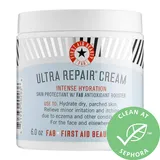
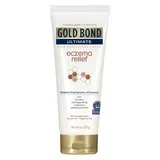
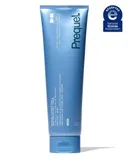
| TatchaBody Care Indigo Body ButterYOUR PRODUCT | First Aid BeautyUltra Repair Cream Intense Hydration | PrequelBARRIER THERAPY RICH | Gold BondUnscented Gold Bond Eczema Hand And Body Lotions | |
|---|---|---|---|---|
| Match | — | 52% | 51% | 51% |
| Price | $49.58 | $16.00−$33.58 | $20.00−$29.58 | $5.52−$44.06 |
| Shared key ingredients | — | 4 of 9 | 3 of 9 | 3 of 9 |
| Key difference | — | Ceramide Np | Adenosine | Oatmeal Extract |
| Irritancy | High | Medium | Medium | Medium |
| Drying alcohol | Contains drying alcohol | — | — | — |
| View product | Shop | Shop | Shop |
Sources cited in this review
Every concentration estimate and effectiveness label is anchored to one of these 8 studies and safety reviews.
- 1
- 2
- 3Final Report on the Safety Assessment of Dimethicone Copolyoljournals.sagepub.com
- 4
- 5
- 6

Affiliate links · As an Amazon Associate, WIMJ earns from qualifying purchases.