Works for
MoisturizingGlycerin, Hydrolyzed soybean fiber + 13 moreWorks
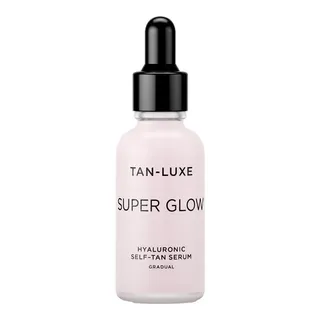
“What it does This self-tan serum combines both a high weight Hyaluronic Acid and extremely low molecular weight Sodium Hyaluronate to achieve hydration binding across multiple layers of the skin.”
This product can help improve hydration of the skin with the two types of ingredients.
The first type is called “humectants”:
these ingredients help attract water.
When humectants are on the surface of the skin, they “pull in” the moisture from the outside environment, or from
within deeper layers of the skin. The following ingredients in this product do the job:
glycerin, glyceryl acrylate/acrylic acid copolymer.
This product also contains ingredients called “occlusives”. They help reduce the speed with which our skin loses moisture to the outside environment. These ingredients also help soften the upper layer of the skin, so it feels less tight and nicer to the touch. The following ingredients in this product do the job: cocos nucifera oil, dimethicone.
Anti-agingRetinyl acetate, Hyaluronic acid + 2 moreMay help
“Anti-Ageing benefits boost collagen production.”
This product contains retinyl acetate. This ingredient might be able to help reduce and prevent fine lines and wrinkles, improve skin elasticity and firmness, but there is not enough evidence that it actually works.
Anti-oxidationSide benefit · Rubus idaeus seed oil, Vaccinium myrtillus fruit extract + 3 moreMay help
This product contains antioxidants (rubus idaeus seed oil) that might be able to help neutralize free radicals in skin to lessen the damage it gets from the UV light (sun). There is not enough evidence to confirm their effectiveness in skin though.
Can it cause trouble?
Irritancy6 strong irritants: Retinyl acetate, Parfum + 4 more — patch-test recommendedHigh risk
Comedogenic4 ingredients rated 2 or more on the 0–5 pore-clogging scale4 flagged
User reviews
Be the first — your take helps the next person decide.
Ingredients
Filter by role to see what each ingredient is doing.
Water~45–55%
Glycerin~4.7–5.8%
- Irritation risk
- Low
One of the best moisturizing ingredients. Naturally present in skin. It attracts water to the upper layer of the skin working as a humectant
More about GlycerinDihydroxyacetone~4.1–5.1%
Hydrolyzed soybean fiber~3.1–3.7%
Hyaluronic acid~2.3–2.8%
- Irritation risk
- Low
One of the best moisturizing ingredients. Attracts water into the upper layer of the skin. Naturally present in skin. Typically has large molecule size unless advertised otherwise on the product label. Helps support skin's barrier function and may help to reduce inflammation
More about Hyaluronic acidBeta vulgaris root extract~1.9–2.3%
- Irritation risk
- Medium
A plant extract that might have some antioxidant properties, but mostly used in cosmetics for its color
More about Beta vulgaris root extractBrassica oleracea acephala leaf extract~1.6–2%
- Irritation risk
- Medium
Might be helpful in neutralizing free radicals in skin but solid research is lacking. Helps attract water to the upper layer of the skin
More about Brassica oleracea acephala leaf extractSodium hyaluronate~1.4–1.7%
- Irritation risk
- Low
One of the best moisturizing ingredients. Attracts water into the upper layer of the skin
More about Sodium hyaluronateRubus idaeus seed oil~1.2–1.5%
- Irritation risk
- Medium
A plant oil that might be able to help neutralize free radicals in skin
More about Rubus idaeus seed oilCocos nucifera oil~0.95–1.2%
- Irritation risk
- Low
- Comedogenicity
- 3/5
An emollient. Found to be as effective as a moisturizer for dry skin as mineral oil. Could be comedogenic
More about Cocos nucifera oilPersea gratissima oil~0.75–1.1%
- Irritation risk
- Medium
An emollient that helps soften the skin and could be helpful in repairing its barrier function
More about Persea gratissima oilSalvia hispanica seed oil~0.6–0.9%
- Irritation risk
- Low
Chia seed oil. Helps to soften the upper layer of the skin and might be helpful in repairing skin barrier
More about Salvia hispanica seed oilVaccinium myrtillus fruit extract~0.5–0.75%
- Irritation risk
- Medium
A plant extract that might help neutralize free radicals in skin, but research on its efficacy in skin is lacking
More about Vaccinium myrtillus fruit extractTheobroma cacao seed extract~0.45–0.7%
- Irritation risk
- Low
- Comedogenicity
- 3/5
Aloe barbadensis leaf juice~0.45–0.65%
- Irritation risk
- Medium
Traditionally used to treat sunburns, dermatitis and inflammation, but evidence for its effectiveness is lacking. The extract can contain humectants that help attract water into the skin
More about Aloe barbadensis leaf juiceTocopheryl acetate~0.45–0.65%
- Irritation risk
- Medium
A more stable but less bio-available form of vitamin E compared to Tocopherol. Might help moisturize and protect the skin from free radicals, but mostly used in low concentrations to stabilize other ingredients.
More about Tocopheryl acetateAscorbic acid~0.4–0.6%
- Irritation risk
- High
The most well-researched antioxidant that works in skin. Helps neutralize free radicals supporting collagen production, helping to even out the skin tone and preventing early signs of aging
More about Ascorbic acidRetinyl acetate~0.3–0.6%
Erythrulose~0.3–0.55%
- Irritation risk
- Low
Cyclopentasiloxane~0.3–0.6%
- Irritation risk
- Low
A silicone that helps improve the product texture and spreadability. Can absorb oil creating a short-term mattifying effect on the skin
More about CyclopentasiloxaneHydroxyethylcellulose~0.3–0.55%
- Irritation risk
- Low
Used to thicken product formulations and create gel-like textures
More about HydroxyethylcellulosePolyacrylamide~0.3–0.55%
- Irritation risk
- Medium
Used to improve product texture and help oil and water mix together
More about PolyacrylamideC13-14 isoparaffin~0.3–0.5%
- Irritation risk
- Low
Helps soften the upper layer of the skin, dissolve other ingredients and create a thicker product consistency
More about C13-14 isoparaffinGlyceryl acrylate/acrylic acid copolymer~0.25–0.45%
- Irritation risk
- Medium
Helps attract water to the upper layer of the skin and provide a longer-lasting hydration. Can create a thicker product consistency
More about Glyceryl acrylate/acrylic acid copolymerDimethicone crosspolymer~0.25–0.45%
- Irritation risk
- Low
Used to create a thicker product texture. Helps soften the upper layer of the skin and might be able to prevent moisture loss from its surface
More about Dimethicone crosspolymerDimethicone~0.3–0.55%
- Irritation risk
- Low
A silicone that helps to reduce water loss from the surface of the skin. Can temporarily "fill in" lines and wrinkles, absorb oil, and create a nice product finish
More about DimethiconePvm/ma copolymer~0.25–0.5%
- Irritation risk
- Low
Laureth-7~0.25–0.45%
Laureth-23~0.3–0.6%
- Irritation risk
- Medium
- Comedogenicity
- 2/5
Helps oil and water mix together
More about Laureth-23Laureth-4~0.25–0.5%
- Irritation risk
- Medium
- Comedogenicity
- 2/5
Helps water and oil mix together
More about Laureth-4Butylene glycol~0.25–0.45%
- Irritation risk
- Low
Used to create a nice product texture and help delivery of other ingredients. Might be somewhat helpful in attracting water to the upper layer of the skin
More about Butylene glycolEthylhexylglycerin~0.25–0.45%
Parfum~0.2–0.35%
- Irritation risk
- High
An aromatic blend of unspecified and possibly irritating ingredients
More about ParfumLimonene~0.2–0.35%
- Irritation risk
- High
A common frangrance that can easily irritate skin, especially if exposed to air, light or heat
More about LimoneneGeraniol~0.2–0.35%
Hexyl cinnamal~0.15–0.3%
Benzyl salicylate~0.15–0.3%
Tetrasodium edta~0.15–0.3%
Citric acid~0.15–0.25%
- Irritation risk
- Medium
Can work as an exfoliant but is typically used to adjust the product pH
More about Citric acidPhenoxyethanol~0.15–0.3%
- Irritation risk
- Low
A preservative. It helps prevent bacterial growth in cosmetic products
More about PhenoxyethanolTriethylene glycol~0.15–0.25%
- Irritation risk
- Low
Potassium sorbate~0.15–0.25%
Ci 17200~0.1–0.15%
Ingredient list view
Water, Glycerin, Dihydroxyacetone, Hydrolyzed soybean fiber, Hyaluronic acid, Beta vulgaris root extract, Brassica oleracea acephala leaf extract, Sodium hyaluronate, Rubus idaeus seed oil, Cocos nucifera oil, Persea gratissima oil, Salvia hispanica seed oil, Vaccinium myrtillus fruit extract, Theobroma cacao seed extract, Aloe barbadensis leaf juice, Tocopheryl acetate, Ascorbic acid, Retinyl acetate, Erythrulose, Cyclopentasiloxane, Hydroxyethylcellulose, Polyacrylamide, C13-14 isoparaffin, Glyceryl acrylate/acrylic acid copolymer, Dimethicone crosspolymer, Dimethicone, Pvm/ma copolymer, Laureth-7, Laureth-23, Laureth-4, Butylene glycol, Ethylhexylglycerin, Parfum, Limonene, Geraniol, Hexyl cinnamal, Benzyl salicylate, Tetrasodium edta, Citric acid, Phenoxyethanol, Triethylene glycol, Potassium sorbate, Ci 17200
Compare prices
Retailers ranked by price — lowest first.
Affiliate links · As an Amazon Associate, WIMJ earns from qualifying purchases.
Worth comparing, line by line.
Match % combines shared ingredients, the first five ingredients, shared actives and hero ingredients, irritancy (lower counts in the alternative's favour), texture and body area. Only products in the same routine step are compared.
| TAN-LUXESuper Glow Serum Self TannerYOUR PRODUCT | Isle of ParadiseHyglo Hyaluronic Face Serum | James ReadGlow20 Serum | the SKIN HOUSEWrinkle Supreme Serum | |
|---|---|---|---|---|
| Match | — | 48% | 39% | 38% |
| Price | $49.00 | $11.24−$37.76 | $36.91−$12.09 | $14.11−$34.89 |
| Shared key ingredients | — | 11 of 12 | 4 of 12 | 5 of 12 |
| Key difference | — | Panthenol | 3-O-Ethyl Ascorbic Acid | Adenosine |
| Irritancy | High | High | Medium | Medium |
| Drying alcohol | — | — | — | Contains drying alcohol |
| View product | Shop | Shop | Shop |


More alternatives: M-61 Hydraboost Gradual Tan SerumMEDI-PEEL Derma Maison Time Wrinkle Perfect Serum
Product summary
"TAN-LUXE - Super Glow Serum Self Tanner" could be helpful for: Moisturizing and Anti-aging, but its actives are not the most effective or are not well-studied.
Ingredient callouts
- This product also contains Vitamin C (Ascorbic Acid). It can be an effective active for anti-aging and evening out the skin tone, but in this product it is used for stabilizing other ingredients in the formulation. In this concentration (0.40% - 0.60%) it cannot have a noticeable benefit for the skin.
- This product includes a form of Retinoids (vitamin A) - retinyl acetate 0.30% - 0.60%, but this type of vitamin A is not very effective. It could in theory help with fine lines and wrinkles, but the effect is most likely minimal.
- Humectants (sodium hyaluronate 1.40% - 1.70%, hyaluronic acid 2.30% - 2.80%, glyceryl acrylate/acrylic acid copolymer 0.25% - 0.45% and glycerin 4.70% - 5.80%). These ingredients help attract water to the upper layer of the skin and improve the skin hydration.
About the brand
According to Cruelty-Free Kitty "TAN-LUXE" is cruelty free and so is its parent company.
Price
The product retails for 61.00A$ in Australia and for 69.00NZ$ in New Zealand.
For a detailed price comparison: click here.
Sources cited in this review
Every concentration estimate and effectiveness label is anchored to one of these 12 studies and safety reviews.
- 1
- 2Efficacy of a New Topical Nano-hyaluronic Acid in Humansncbi.nlm.nih.gov
- 3Physiochemical properties and application of hyaluronic acid: a systematic reviewonlinelibrary.wiley.com
- 4Hyaluronic acid: A key molecule in skin agingncbi.nlm.nih.gov
- 5
- 6

Affiliate links · As an Amazon Associate, WIMJ earns from qualifying purchases.