Works for
1 of 1 advertised claim delivered
MoisturizingHelianthus annuus seed oil, Oryza sativa bran oil + 3 moreGood evidence
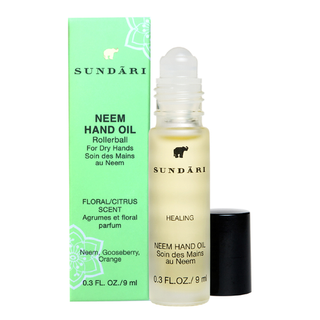
“All natural, non-greasy oil to intensively moisturize dry hands and nourish the skin.”
This product can help soften the skin and reduce its moisture loss with emollients and occlusives: helianthus annuus seed oil, oryza sativa bran oil.
Keep in mind that this product does not contain effective ingredients to attract water to the upper layer of the skin. This is why an additional product with humectants like glycerin or hyaluronic acid can be helpful (apply it before this product for the best results).
Can it cause trouble?
Irritancy6 strong irritants: Citrus aurantium dulcis peel oil, Citrus reticulata peel oil + 4 more — patch-test recommendedHigh risk
ComedogenicClean of flagged comedogenic ingredientsNone flagged
User reviews
Be the first — your take helps the next person decide.
Ingredients
Filter by role to see what each ingredient is doing.
Oryza sativa bran oil~23–34%
- Irritation risk
- Low
Helps soften the upper layer of the skin and might have some anti-oxidant properties
More about Oryza sativa bran oilHelianthus annuus seed oil~6.1–9.1%
- Irritation risk
- Low
A great emollient due to its high linoleic acid content. One of the most effective plant oils in helping skin hydration and repairing skin barrier function
More about Helianthus annuus seed oilCitrus aurantium dulcis peel oil~4.6–6.9%
- Irritation risk
- High
An essentil oil from orange peel. Potential allergen and can be irritating
More about Citrus aurantium dulcis peel oilBisabolol~3.8–5.6%
- Irritation risk
- Low
An active component of chamomile plant that historically has been used to calm down irritated skin. A recent study shows that bisabolol indeed can have some anti-inflammatory effect on skin, even though conclusive data is lacking. Bisabolol has a sweet floral scent and can be added to products for its aromatic properties
More about BisabololCitrus reticulata peel oil~2.3–3.4%
- Irritation risk
- High
An essential oil used for fragrance. Can be an allergen and irritant
More about Citrus reticulata peel oilVitis vinifera seed oil~2.1–3.2%
- Irritation risk
- Medium
A great emollient that can also have anti-oxidant properties
More about Vitis vinifera seed oilPeg-400~1.5–2.2%
- Irritation risk
- Low
Cananga odorata flower oil~1.2–1.7%
Phyllanthus emblica extract~1–1.6%
- Irritation risk
- Low
Terminalia chebula extract~0.8–1.2%
- Irritation risk
- Low
Terminalia bellerica fruit extract~0.6–1.35%
- Irritation risk
- Low
Tocopherol~0.4–1%
- Irritation risk
- Low
Pure form of vitamin E. Can help moisturise and protect the skin from free radicals. Often used to help stabilise other ingredients or the formula itself
More about TocopherolAniba rosaeodora wood oil~0.3–0.7%
- Irritation risk
- High
Citrus aurantium flower oil~0.15–0.6%
- Irritation risk
- High
Rosa damascena flower oil~0.15–0.55%
- Irritation risk
- High
Used as a fragrance. Can be irritating
More about Rosa damascena flower oilAscorbyl palmitate~0.1–0.3%
- Irritation risk
- Medium
Being a lipid soluble form of vitamin C, it is more stable and can penetrate the skin better than L-Ascorbic acid. It is effective in protecting the skin from free radicals, as well as evening the skin tone, but is less effective in stimulating collagen production compared to L-Ascorbic acid.
More about Ascorbyl palmitateAscorbic acid~0.05–0.25%
- Irritation risk
- High
The most well-researched antioxidant that works in skin. Helps neutralize free radicals supporting collagen production, helping to even out the skin tone and preventing early signs of aging
More about Ascorbic acidCitric acid~0.05–0.2%
- Irritation risk
- Medium
Can work as an exfoliant but is typically used to adjust the product pH
More about Citric acidIngredient list view
Oryza sativa bran oil, Helianthus annuus seed oil, Citrus aurantium dulcis peel oil, Bisabolol, Citrus reticulata peel oil, Vitis vinifera seed oil, Peg-400, Cananga odorata flower oil, Phyllanthus emblica extract, Terminalia chebula extract, Terminalia bellerica fruit extract, Tocopherol, Aniba rosaeodora wood oil, Citrus aurantium flower oil, Rosa damascena flower oil, Ascorbyl palmitate, Ascorbic acid, Citric acid
Compare prices
Retailers ranked by price — lowest first.
Affiliate links · prices updated regularly · As an Amazon Associate, WIMJ earns from qualifying purchases.
Sources cited in this review
Every concentration estimate and effectiveness label is anchored to one of these 9 studies and safety reviews.
- 1
- 2
- 3
- 4Effect of topically applied lipids on surfactant-irritated skinonlinelibrary.wiley.com
- 5
- 6

Affiliate links · As an Amazon Associate, WIMJ earns from qualifying purchases.