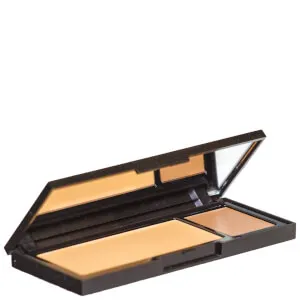
Studio 10 Age Repair Perfect Canvas SPF 30
Works for
Sun protectionSPF 30 · 3 UV filters · Partial spectrumWeak protectionLow filter dose
This product does not offer good protection against UVA rays.
Anti-agingRetinyl palmitateMay help
“Fortified with antioxidant Nyamplung Oil™ and Suberlift™ (a natural extract of the Cork Oak Tree), the weightless foundation provides anti-ageing benefits, whilst delivering broad spectrum protection to defend against environmental aggressors.”
This product contains retinyl palmitate. This ingredient might be able to help reduce and prevent fine lines and wrinkles, improve skin elasticity and firmness, but there is not enough evidence that it actually works. The biggest anti-aging effect in this product comes from sun protection. Sun damage is the main factor causing early signs of skin aging. We, however, do not recommend using this product as a sunscreen because the protection it offers is not strong enough).
MoisturizingSide benefit the brand mentions · Linoleic acid, Caprylic/capric triglyceride + 8 moreWorks well
“Achieve a smooth, flawless complexion with Studio 10 Age Repair Perfect Canvas SPF 30 ; an all-in-one treatment foundation that works to hydrate, protect and create an airbrushed effect.”
This product can help soften the skin and reduce its moisture loss with emollients and occlusives: caprylic/capric triglyceride, dimethicone.
Keep in mind that this product does not contain effective ingredients to attract water to the upper layer of the skin. This is why an additional product with humectants like glycerin or hyaluronic acid can be helpful (apply it before this product for the best results).
The following ingredients in this product are especially good for supporting the skin barrier and helping with the hydration level: linoleic acid
Evens skin toneSide benefit the brand mentions · Retinyl palmitateMay help
“Utilising optical diffusing pigments, the unique colour-adjusting formula blends seamlessly onto skin to blur the appearance of fine lines, visible pores and uneven skin tone.”
The following ingredient (ingredients) in this product might be helpful, but there is no evidence to confirm that it actually works: retinyl palmitate.
The biggest effect for evening out skin tone in this product comes from sun protection. Sun damage is the main factor causing age spots, darkening of post-acne marks and other discolorations. This is why sun protection is the best strategy for maintaining an even skin tone. We, however, do not recommend using this product as a sunscreen because the protection it offers is not strong enough).
Can it cause trouble?
Irritancy1 strong irritant: Retinyl palmitateMedium risk
Comedogenic6 ingredients rated 2 or more on the 0–5 pore-clogging scale6 flagged
User reviews
Be the first — your take helps the next person decide.
Ingredients
Filter by role to see what each ingredient is doing.
Caprylic/capric triglyceride~22–34%
- Irritation risk
- Medium
A good mix of fatty acids that forms a protective layer on the skin. Improves the shelf life of products. Derived from coconut and glycerin
More about Caprylic/capric triglyceridePentaerythrityl tetraisostearate~3.6–5.4%
- Irritation risk
- Medium
Used to create a thicker product consistency
More about Pentaerythrityl tetraisostearateIsononyl isononanoate~4.5–6.8%
- Irritation risk
- Low
Forms a protective film on the surface of the skin to prevent moisture loss. Gives a velvety feel to products while reducing tackiness
More about Isononyl isononanoatePolyethylene~3.7–5.5%
Caprylic/capric triglyceride~2.9–4.4%
- Irritation risk
- Medium
A good mix of fatty acids that forms a protective layer on the skin. Improves the shelf life of products. Derived from coconut and glycerin
More about Caprylic/capric triglyceridePentaerythrityl tetraisostearate~2.1–3.1%
- Irritation risk
- Medium
Used to create a thicker product consistency
More about Pentaerythrityl tetraisostearateIsononyl isononanoate~1.8–2.6%
- Irritation risk
- Low
Forms a protective film on the surface of the skin to prevent moisture loss. Gives a velvety feel to products while reducing tackiness
More about Isononyl isononanoatePolyethylene~1.5–2.3%
Ethylhexyl methoxycinnamate~1.5–2.3%
- Irritation risk
- High
Octinoxate. When used in higher concentrations, works as a sunscreen protecting the skin from UVB rays. When used in lower concentration, helps to preserve the product formulation. Is shown to be harmful to coral reefs - consider avoiding bathing in coral reef areas when wearing a product with this ingredient. It can be irritating
More about Ethylhexyl methoxycinnamateTitanium dioxide~1.3–1.9%
- Irritation risk
- Low
Works as a UV filter when used in high concentrations. It is photostable and is effective mostly against the UVB light, with some protection in the UVA range. In small concentrations, used for its ability to improve the color of cosmetic products. Is usually well tolerated by the skin
More about Titanium dioxideEthylhexyl salicylate~1–1.5%
- Irritation risk
- Low
Octisalate. A UV filter. It offers some protection against the sun rays that cause sunburn (UVB), but does not protect against the most aging sun rays (UVA). It loses its effectiveness quickly when exposed to sunlight. It is an organic, or so called "chemical" sunscreen
More about Ethylhexyl salicylateAluminum starch octenylsuccinate~0.45–1.05%
- Irritation risk
- Medium
Used to thicken the product's consistency
More about Aluminum starch octenylsuccinateSilica silylate~0.5–1.2%
Mica~0.5–1.2%
- Irritation risk
- Low
Creates an illusion of smoother and more radiant skin tone. Adds shimmer to the skin by reflecting light
More about MicaAlumina~0.55–1.25%
- Irritation risk
- Low
The same compound that is used safely in dental implants and bone cements. In cosmetics, it is used to improve the consistency of products
More about AluminaTocopheryl acetate~0.35–0.85%
- Irritation risk
- Medium
A more stable but less bio-available form of vitamin E compared to Tocopherol. Might help moisturize and protect the skin from free radicals, but mostly used in low concentrations to stabilize other ingredients.
More about Tocopheryl acetateTriethoxycaprylylsilane~0.35–0.85%
- Irritation risk
- Low
A type of silicone that helps oil and water mix well together. Helps to disperse other ingredients, e.g. pigments, evenly in a formulation
More about TriethoxycaprylylsilanePentaerythrityl tetra-di-t-butyl hydroxyhydrocinnamate~0.35–0.8%
- Irritation risk
- Low
Used to increase stability of product formulations
More about Pentaerythrityl tetra-di-t-butyl hydroxyhydrocinnamateDimethicone~0.4–0.9%
- Irritation risk
- Low
A silicone that helps to reduce water loss from the surface of the skin. Can temporarily "fill in" lines and wrinkles, absorb oil, and create a nice product finish
More about Dimethicone1,2-hexanediol~0.2–0.75%
Caprylyl glycol~0.3–0.75%
- Irritation risk
- Medium
Helps preserve products and creates a nice product texture
More about Caprylyl glycolDicalcium phosphate~0.4–0.9%
- Irritation risk
- Low
Calophyllum inophyllum seed oil~0.15–0.7%
- Irritation risk
- Low
Isopropyl myristate~0.2–0.8%
- Irritation risk
- Low
- Comedogenicity
- 3/5
An emollient that helps soften the skin. Could be comedogenic
More about Isopropyl myristateZea mays oil~0.15–0.6%
- Irritation risk
- Low
- Comedogenicity
- 3/5
A good moisturizing plant oil. Due to the high linoleic acid content, it helps soften the upper layer of the skin, reduce water loss and support skin barrier function
More about Zea mays oilRicinus communis seed oil~0.2–0.75%
- Irritation risk
- Medium
A plant oil that can help soften the skin. It might be helpful in calming down inflammation, but solid research is lacking. Is often used in lip products to create the needed product consistency
More about Ricinus communis seed oilGlycine soja oil~0.2–0.75%
- Irritation risk
- Medium
- Comedogenicity
- 2/5
A good emollient that helps soften the skin and helps repair its barrier function. It can clog pores if used in high concentrations.
More about Glycine soja oilQuercus suber bark extract~0.15–0.6%
- Irritation risk
- Low
Carthamus tinctorius seed oil~0.2–0.8%
- Irritation risk
- Low
An emollient that helps soften the skin and might help calm down inflammation
More about Carthamus tinctorius seed oilLinoleic acid~0.35–0.8%
- Irritation risk
- Low
An excellent emollient. Helps soften the skin, restore its barrier function, and can help to calm down inflammation. It can be helpful to prevent blemishes and clogged pores
More about Linoleic acidRetinyl palmitate~0.15–0.55%
- Irritation risk
- High
Three steps removed from the active form of vitamin A - retinoic acid. To have an effect in the skin, it first needs to be converted twice to become the retinoic acid. This means it is less potent than retinol, but could also be less irritating. Once converted to the retinoic acid in the skin, it helps against all signs of aging, improves skin cell turnover and helps fight blemishes and clogged pores. However, in many cosmetic formulations, it is used in a concentration that is too low to have the full effect
More about Retinyl palmitateCi 77891~0.15–0.6%
- Irritation risk
- Low
Ci 77492~0.15–0.65%
Ci 77491~0.15–0.65%
- Irritation risk
- Low
A red colorant made of iron oxide. Typically is not irritating
More about Ci 77491Ci 77007~0.15–0.65%
Titanium dioxide~0.2–0.75%
- Irritation risk
- Low
Works as a UV filter when used in high concentrations. It is photostable and is effective mostly against the UVB light, with some protection in the UVA range. In small concentrations, used for its ability to improve the color of cosmetic products. Is usually well tolerated by the skin
More about Titanium dioxideEthylhexyl salicylate~0.35–0.75%
- Irritation risk
- Low
Octisalate. A UV filter. It offers some protection against the sun rays that cause sunburn (UVB), but does not protect against the most aging sun rays (UVA). It loses its effectiveness quickly when exposed to sunlight. It is an organic, or so called "chemical" sunscreen
More about Ethylhexyl salicylateAluminum starch octenylsuccinate~0.15–0.65%
- Irritation risk
- Medium
Used to thicken the product's consistency
More about Aluminum starch octenylsuccinateSilica silylate~0.3–0.75%
Mica~0.2–0.75%
- Irritation risk
- Low
Creates an illusion of smoother and more radiant skin tone. Adds shimmer to the skin by reflecting light
More about MicaAlumina~0.35–0.8%
- Irritation risk
- Low
The same compound that is used safely in dental implants and bone cements. In cosmetics, it is used to improve the consistency of products
More about AluminaTocopheryl acetate~0.15–0.65%
- Irritation risk
- Medium
A more stable but less bio-available form of vitamin E compared to Tocopherol. Might help moisturize and protect the skin from free radicals, but mostly used in low concentrations to stabilize other ingredients.
More about Tocopheryl acetateTriethoxycaprylylsilane~0.15–0.65%
- Irritation risk
- Low
A type of silicone that helps oil and water mix well together. Helps to disperse other ingredients, e.g. pigments, evenly in a formulation
More about TriethoxycaprylylsilanePentaerythrityl tetra-di-t-butyl hydroxyhydrocinnamate~0.15–0.65%
- Irritation risk
- Low
Used to increase stability of product formulations
More about Pentaerythrityl tetra-di-t-butyl hydroxyhydrocinnamateDimethicone~0.3–0.7%
- Irritation risk
- Low
A silicone that helps to reduce water loss from the surface of the skin. Can temporarily "fill in" lines and wrinkles, absorb oil, and create a nice product finish
More about Dimethicone1,2-hexanediol~0.15–0.6%
Caprylyl glycol~0.2–0.75%
- Irritation risk
- Medium
Helps preserve products and creates a nice product texture
More about Caprylyl glycolDicalcium phosphate~0.35–0.85%
- Irritation risk
- Low
Calophyllum inophyllum seed oil~0.15–0.65%
- Irritation risk
- Low
Isopropyl myristate~0.2–0.75%
- Irritation risk
- Low
- Comedogenicity
- 3/5
An emollient that helps soften the skin. Could be comedogenic
More about Isopropyl myristateZea mays oil~0.15–0.55%
- Irritation risk
- Low
- Comedogenicity
- 3/5
A good moisturizing plant oil. Due to the high linoleic acid content, it helps soften the upper layer of the skin, reduce water loss and support skin barrier function
More about Zea mays oilRicinus communis seed oil~0.2–0.75%
- Irritation risk
- Medium
A plant oil that can help soften the skin. It might be helpful in calming down inflammation, but solid research is lacking. Is often used in lip products to create the needed product consistency
More about Ricinus communis seed oilGlycine soja oil~0.15–0.65%
- Irritation risk
- Medium
- Comedogenicity
- 2/5
A good emollient that helps soften the skin and helps repair its barrier function. It can clog pores if used in high concentrations.
More about Glycine soja oilQuercus suber bark extract~0.15–0.55%
- Irritation risk
- Low
Carthamus tinctorius seed oil~0.15–0.65%
- Irritation risk
- Low
An emollient that helps soften the skin and might help calm down inflammation
More about Carthamus tinctorius seed oilLinoleic acid~0.2–0.75%
- Irritation risk
- Low
An excellent emollient. Helps soften the skin, restore its barrier function, and can help to calm down inflammation. It can be helpful to prevent blemishes and clogged pores
More about Linoleic acidRetinyl palmitate~0.1–0.35%
- Irritation risk
- High
Three steps removed from the active form of vitamin A - retinoic acid. To have an effect in the skin, it first needs to be converted twice to become the retinoic acid. This means it is less potent than retinol, but could also be less irritating. Once converted to the retinoic acid in the skin, it helps against all signs of aging, improves skin cell turnover and helps fight blemishes and clogged pores. However, in many cosmetic formulations, it is used in a concentration that is too low to have the full effect
More about Retinyl palmitateCi 77891~0.1–0.4%
- Irritation risk
- Low
Ci 77492~0.1–0.4%
Ci 77491~0.1–0.3%
- Irritation risk
- Low
A red colorant made of iron oxide. Typically is not irritating
More about Ci 77491Ci 77007~0.1–0.3%
Ingredient list view
Caprylic/capric triglyceride, Pentaerythrityl tetraisostearate, Isononyl isononanoate, Polyethylene, Caprylic/capric triglyceride, Pentaerythrityl tetraisostearate, Isononyl isononanoate, Polyethylene, Ethylhexyl methoxycinnamate, Titanium dioxide, Ethylhexyl salicylate, Aluminum starch octenylsuccinate, Silica silylate, Mica, Alumina, Tocopheryl acetate, Triethoxycaprylylsilane, Pentaerythrityl tetra-di-t-butyl hydroxyhydrocinnamate, Dimethicone, 1,2-hexanediol, Caprylyl glycol, Dicalcium phosphate, Calophyllum inophyllum seed oil, Isopropyl myristate, Zea mays oil, Ricinus communis seed oil, Glycine soja oil, Quercus suber bark extract, Carthamus tinctorius seed oil, Linoleic acid, Retinyl palmitate, Ci 77891, Ci 77492, Ci 77491, Ci 77007, Unknown, Titanium dioxide, Ethylhexyl salicylate, Aluminum starch octenylsuccinate, Silica silylate, Mica, Alumina, Tocopheryl acetate, Triethoxycaprylylsilane, Pentaerythrityl tetra-di-t-butyl hydroxyhydrocinnamate, Dimethicone, 1,2-hexanediol, Caprylyl glycol, Dicalcium phosphate, Calophyllum inophyllum seed oil, Isopropyl myristate, Zea mays oil, Ricinus communis seed oil, Glycine soja oil, Quercus suber bark extract, Carthamus tinctorius seed oil, Linoleic acid, Retinyl palmitate, Ci 77891, Ci 77492, Ci 77491, Ci 77007
Compare prices
Retailers ranked by price — lowest first.

Worth comparing, line by line.
Match % combines shared ingredients, the first five ingredients, shared actives and hero ingredients, irritancy (lower counts in the alternative's favour), texture and body area. Only products in the same routine step are compared.
| Studio 10Age Repair Perfect Canvas SPF 30YOUR PRODUCT | BeautyStatUniversal C Skin Refiner Broad Spectrum SPF 50 | holifrog 810SOLAR Daily Mineral Sunscreen Broad Spectrum SPF 30 | IDFSolar Daily Mineral Sunscreen Broad Spectrum SPF 30 | |
|---|---|---|---|---|
| Match | — | 49% | 46% | 46% |
| Price | — | — | $42.53 | $36.00 |
| Shared key ingredients | — | 4 of 11 | 2 of 11 | 2 of 11 |
| Key difference | — | Vitamin C | Butyloctyl Salicylate | Butyloctyl Salicylate |
| Irritancy | Medium | Low | Low | Low |
| SPF | SPF 30 | SPF 50 | SPF 30 | SPF 30 |
| Drying alcohol | — | — | — | — |
| View product | Shop | Shop | Shop |



More alternatives: TiZO NEW! Mineral Sun Defense SPF 50FOTOPROTECTOR Fusion Fluid Mineral SPF 50
Product summary
"Studio 10 - Age Repair Perfect Canvas SPF 30" does not provide enough UVA protection. UVA rays do not cause sunburn, but still damage the skin, leading to early signs of aging and pigmentation issues.
It also works as a moisturizer, so you do not have to use an additional hydrating product.
Sunscreen filters
This sunscreen uses a mixture of both mineral and organic (so-called "chemical") UV filters. Here are the organic filters this product uses: octinoxate and octisalate. As for the mineral filters, this sunscreen uses titanium dioxide.
Irritation risk
There are actives in this product that can be irritating. We assess the overall irritancy of this product to be medium. For a detailed overview of all potential irritants: click here
You can see the detailed formula review with the breakdown of all actives in the product and the full ingredient list with estimated concentrations in the tables below.
Price
The product retails for 47.00$ in the United States and for 34.00£ in the United Kingdom.
For a detailed price comparison: click here.
Sources cited in this review
Every concentration estimate and effectiveness label is anchored to one of these 12 studies and safety reviews.
- 1
- 2
- 3
- 4
- 5Final Report on the Safety Assessment of Dimethicone Copolyoljournals.sagepub.com
- 6

Affiliate links · As an Amazon Associate, WIMJ earns from qualifying purchases.