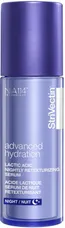
StriVectin Lactic Acid Nightly Retexturizing Serum
Works for
Anti-agingLactic acid, Nonapeptide-1 + 4 moreWorks well
“A potent blend of nonapeptides and StriVectin's proprietary NIA-114™ work synergistically to help even the skin tone and minimise the look of fine lines and pores.”
This product can help reduce and prevent fine lines and wrinkles, improve skin elasticity and firmness because it contains adenosine.
These ingredients in the product can also be helpful, even though there is less evidence for their effectiveness: lactic acid, nonapeptide-1.
Keep in mind that it typically takes at least 6 weeks to notice any results because the changes that are needed to improve fine lines and elasticity happen in the deeper layers of the skin. No topical anti-aging product can “erase” wrinkles or fully reverse signs of aging.
ExfoliationLactic acidWorks well
“Powered by lactic acid, the formula works as you sleep to gently exfoliate the complexion, encouraging a baby-soft finish.”
This product can help exfoliate the skin. In other words, it helps break down the bonds between dead cells on the surface of the skin and speed up the skin turnover. Skin often appears softer and brighter after exfoliation, but overdoing it can result in disrupted skin barrier. The following ingredient is doing the exfoliating job in this product: lactic acid.
Evens skin toneLactic acidWorks well
“A potent blend of nonapeptides and StriVectin's proprietary NIA-114™ work synergistically to help even the skin tone and minimise the look of fine lines and pores.”
This product can help reduce hypepigmentation and even out the skin tone because it contains the following effective ingredients: lactic acid
Keep in mind that you would need to apply any topical skincare targetted at hypigmentation consistently for a couple of months to get a result. No topical skincare product can help get rid of hyperpigmentation (including post-acne marks and age spots) instantly.
MoisturizingSide benefit the brand mentions · Nonapeptide-1, Caprylic/capric triglyceride + 16 moreWorks well
“Lactic Acid Nightly Retexturizing Serum from Stri Vectin exfoliates and smooths while helping to improve skin's natural moisturizing factors for a glowing, baby-soft, visibly renewed complexion.”
This product can help improve hydration of the skin with the two types of ingredients.
The first type is called “humectants”:
these ingredients help attract water.
When humectants are on the surface of the skin, they “pull in” the moisture from the outside environment, or from
within deeper layers of the skin. The following ingredients in this product do the job:
glycerin, lactic acid.
This product also contains ingredients called “occlusives”. They help reduce the speed with which our skin loses moisture to the outside environment. These ingredients also help soften the upper layer of the skin, so it feels less tight and nicer to the touch. The following ingredients in this product do the job: caprylic/capric triglyceride, dimethicone.
The following ingredients in this product are especially good for supporting the skin barrier and helping with the hydration level: nonapeptide-1
Can it cause trouble?
Irritancy7 strong irritants: Hibiscus sabdariffa flower extract, Parfum + 5 more — patch-test recommendedHigh risk
Comedogenic2 ingredients rated 2 or more on the 0–5 pore-clogging scale2 flagged

User reviews
Be the first — your take helps the next person decide.
Ingredients
Filter by role to see what each ingredient is doing.
Water~45–55%
Caprylic/capric triglyceride~6.1–7.4%
- Irritation risk
- Medium
A good mix of fatty acids that forms a protective layer on the skin. Improves the shelf life of products. Derived from coconut and glycerin
More about Caprylic/capric triglycerideGlycerin~4.2–5.1%
- Irritation risk
- Low
One of the best moisturizing ingredients. Naturally present in skin. It attracts water to the upper layer of the skin working as a humectant
More about GlycerinCaprylyl methicone~3.2–3.9%
- Irritation risk
- Low
A type of silicone that helps to soften the upper layer of the skin and create a nice product finish on the skin
More about Caprylyl methiconeLactic acid~2.4–2.9%
- Irritation risk
- Medium
An exfoliating and moisturizing alpha-hydroxy acid (AHA). Typically causes less irritation than other AHAs, for example, glycolic acid. At high concentrations (about 15%), lactic acid can help reduce lines and wrinkles. Recent studies show that lactic acid can support the "good" bacteria living on skin's surface (healthy skin microbiome)
More about Lactic acidPeg-12 dimethicone/ppg-20 crosspolymer~2–2.5%
- Irritation risk
- Low
Helps water and oil mix together
More about Peg-12 dimethicone/ppg-20 crosspolymerLactococcus ferment lysate~1.7–2.1%
- Irritation risk
- Low
Consists of remains of dead bacteria cells. Is likely helpful in attracting water to the upper layer of the skin. Might be helpful in reducing inflammation and neutralizing free radicals in skin
More about Lactococcus ferment lysateDimethicone~1.6–1.9%
- Irritation risk
- Low
A silicone that helps to reduce water loss from the surface of the skin. Can temporarily "fill in" lines and wrinkles, absorb oil, and create a nice product finish
More about DimethiconeHibiscus sabdariffa flower extract~1.2–1.4%
- Irritation risk
- High
A plant extract that can be irritating. It might contain a compound anthocyanin that could be helpful in neutralizing free radicals
More about Hibiscus sabdariffa flower extractHydrolyzed opuntia ficus-indica flower extract~1.1–1.4%
- Irritation risk
- High
A plant extract. Can help attract water the upper layer of the skin and might have some anti-oxidant properties
More about Hydrolyzed opuntia ficus-indica flower extractPolygonum cuspidatum root extract~0.75–1.1%
- Irritation risk
- Medium
A plant extract that can contain resveratrol, an antioxidant that can help neutralize free radicals in skin. The effectiveness depends on the extract quality and concentration in the product
More about Polygonum cuspidatum root extractLaminaria digitata extract~0.6–0.9%
- Irritation risk
- Low
- Comedogenicity
- 3/5
Seaweed extract that helps the skin to attract water and make it more smooth for touch. Also shows promise of anti-aging properties, but good research is lacking at the moment
More about Laminaria digitata extractCocos nucifera fruit extract~0.55–0.85%
- Irritation risk
- Low
- Comedogenicity
- 3/5
An emollient. Found to be as effective as a moisturizer for dry skin as mineral oil. Could be comedogenic
More about Cocos nucifera fruit extractOryza sativa bran extract~0.5–0.7%
Callitris intratropica wood oil~0.45–0.7%
- Irritation risk
- Low
Nonapeptide-1~0.45–0.65%
- Irritation risk
- Low
A type of peptide. Peptides are excellent moisturizers and might be able support collagen production reducing fine lines and wrinkles
More about Nonapeptide-1Myristyl nicotinate~0.45–0.65%
- Irritation risk
- Low
Bisabolol~0.3–0.6%
- Irritation risk
- Low
An active component of chamomile plant that historically has been used to calm down irritated skin. A recent study shows that bisabolol indeed can have some anti-inflammatory effect on skin, even though conclusive data is lacking. Bisabolol has a sweet floral scent and can be added to products for its aromatic properties
More about BisabololAdenosine~0.3–0.6%
- Irritation risk
- Low
Might help improve cell turnover and reduce inflammation in skin. One study shows that the ingredients might be able to help reduce dynamic wrinkles (for example, in the corners of the eyes or on the forehead)
More about AdenosineDiatomaceous earth~0.5–0.7%
Dimethicone/polyglycerin-3 crosspolymer~0.7–1.05%
- Irritation risk
- Medium
Helps oil and water mix together
More about Dimethicone/polyglycerin-3 crosspolymerCetyl peg/ppg-10/1 dimethicone~0.3–0.55%
- Irritation risk
- Low
A type of silicone that helps water and oil mix together. Can help to soften upper layer of the skin
More about Cetyl peg/ppg-10/1 dimethiconeSorbitol~0.25–0.5%
- Irritation risk
- Low
Helps attract water to the upper layer of the skin and improves the product texture
More about SorbitolLecithin~0.3–0.55%
- Irritation risk
- Low
Used mostly for creating emulsions - helping oil and water mix together. Helps soften the upper layer of the skin
More about LecithinCaprylyl glycol~0.3–0.55%
- Irritation risk
- Medium
Helps preserve products and creates a nice product texture
More about Caprylyl glycolEthylhexylglycerin~0.25–0.5%
Hexyl laurate~0.3–0.55%
- Irritation risk
- Medium
Helps soften the upper layer of the skin and create a nice product consistency
More about Hexyl laurateTocopherol~0.25–0.5%
- Irritation risk
- Low
Pure form of vitamin E. Can help moisturise and protect the skin from free radicals. Often used to help stabilise other ingredients or the formula itself
More about TocopherolGlyceryl caprylate~0.3–0.6%
- Irritation risk
- Low
An emollient that can also help water and oil mix together, as well as prevent bacteria growth in products
More about Glyceryl caprylateSilica~0.45–0.65%
Disodium edta~0.25–0.5%
Dipropylene glycol~0.25–0.45%
- Irritation risk
- Low
Helps to dissolve other ingredients in a formulation. Slows down the rate of product drying
More about Dipropylene glycolXanthan gum~0.3–0.5%
- Irritation risk
- Low
Used to create a thicker product consistency
More about Xanthan gumPolyglyceryl-4 isostearate~0.3–0.55%
- Irritation risk
- Medium
Helps water and oil mix together
More about Polyglyceryl-4 isostearateSodium phosphate~0.25–0.5%
Parfum~0.25–0.45%
- Irritation risk
- High
An aromatic blend of unspecified and possibly irritating ingredients
More about ParfumMagnesium sulfate~0.3–0.5%
Disodium phosphate~0.25–0.5%
- Irritation risk
- Low
Helps adjust the product pH and stabilize the formulation
More about Disodium phosphateMagnesium hydroxide~0.25–0.5%
- Irritation risk
- Low
Mica~0.3–0.55%
- Irritation risk
- Low
Creates an illusion of smoother and more radiant skin tone. Adds shimmer to the skin by reflecting light
More about MicaTin oxide~0.4–0.65%
- Irritation risk
- Low
A colorant that can add a pearl-like appearance to the formulation
More about Tin oxidePentaerythrityl tetra-di-t-butyl hydroxyhydrocinnamate~0.25–0.5%
- Irritation risk
- Low
Used to increase stability of product formulations
More about Pentaerythrityl tetra-di-t-butyl hydroxyhydrocinnamateSodium citrate~0.25–0.45%
- Irritation risk
- Medium
Helps to control the skin's pH level. Maintains the skin's natural film of amino-lactic acids and oils. Helps to preserve products
More about Sodium citrateSodium chloride~0.25–0.5%
- Irritation risk
- Low
Used to stabilize mixtures of oil and water, and create thicker, gel-like product textures
More about Sodium chloridePhenoxyethanol~0.25–0.45%
- Irritation risk
- Low
A preservative. It helps prevent bacterial growth in cosmetic products
More about PhenoxyethanolSodium benzoate~0.2–0.4%
Benzyl benzoate~0.2–0.35%
- Irritation risk
- High
Fragrance with sweet balsamic smell. Help to preserve products and dissolve other ingredients. Could trigger allergic reactions and be irritating
More about Benzyl benzoateLimonene~0.2–0.35%
- Irritation risk
- High
A common frangrance that can easily irritate skin, especially if exposed to air, light or heat
More about LimoneneLinalool~0.15–0.3%
Citral~0.15–0.25%
Citronellol~0.15–0.3%
Titanium dioxide~0.2–0.35%
- Irritation risk
- Low
Works as a UV filter when used in high concentrations. It is photostable and is effective mostly against the UVB light, with some protection in the UVA range. In small concentrations, used for its ability to improve the color of cosmetic products. Is usually well tolerated by the skin
More about Titanium dioxideCi 77510~0.1–0.2%
- Irritation risk
- Low
Ingredient list view
Water, Caprylic/capric triglyceride, Glycerin, Caprylyl methicone, Lactic acid, Peg-12 dimethicone/ppg-20 crosspolymer, Lactococcus ferment lysate, Dimethicone, Hibiscus sabdariffa flower extract, Hydrolyzed opuntia ficus-indica flower extract, Polygonum cuspidatum root extract, Laminaria digitata extract, Cocos nucifera fruit extract, Oryza sativa bran extract, Callitris intratropica wood oil, Nonapeptide-1, Myristyl nicotinate, Bisabolol, Adenosine, Diatomaceous earth, Dimethicone/polyglycerin-3 crosspolymer, Cetyl peg/ppg-10/1 dimethicone, Sorbitol, Lecithin, Caprylyl glycol, Ethylhexylglycerin, Hexyl laurate, Tocopherol, Glyceryl caprylate, Silica, Disodium edta, Dipropylene glycol, Xanthan gum, Polyglyceryl-4 isostearate, Sodium phosphate, Parfum, Magnesium sulfate, Disodium phosphate, Magnesium hydroxide, Mica, Tin oxide, Pentaerythrityl tetra-di-t-butyl hydroxyhydrocinnamate, Sodium citrate, Sodium chloride, Phenoxyethanol, Sodium benzoate, Benzyl benzoate, Limonene, Linalool, Citral, Citronellol, Titanium dioxide, Ci 77510
Compare prices
Retailers ranked by price — lowest first.
Affiliate links · As an Amazon Associate, WIMJ earns from qualifying purchases.
Worth comparing, line by line.
Match % combines shared ingredients, the first five ingredients, shared actives and hero ingredients, irritancy (lower counts in the alternative's favour), texture and body area. Only products in the same routine step are compared.
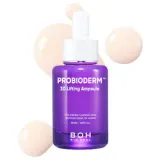
| StriVectinLactic Acid Nightly Retexturizing SerumYOUR PRODUCT | Drunk ElephantProtini Powerpeptide Resurf Serum | BIOHEAL BOHPROBIODERM 3D Lifting Ampoule | celimaxThe Vita-a Retinol Shot Thightening Serum | |
|---|---|---|---|---|
| Match | — | 53% | 53% | 52% |
| Price | — | $49.95 | $35.00 | — |
| Shared key ingredients | — | 5 of 11 | 5 of 11 | 5 of 11 |
| Key difference | — | Copper Palmitoyl Heptapeptide-14 | Acetyl Hexapeptide-1 | Dipeptide-2 |
| Irritancy | High | Medium | Medium | Medium |
| Drying alcohol | — | — | — | — |
| View product | Shop | Shop | Shop |


More alternatives: PEACH & LILY Power Cocktail Lactic Acid Repair SerumUriage Age Lift Intensive Firming Smoothing Serum
Product summary
"StriVectin - Lactic Acid Nightly Retexturizing Serum" is effective for: Anti-aging, Exfoliation, Moisturizing and Evens skin tone
Ingredient callouts
- This product contains acids (lactic acid 2.40% - 2.90%). Their concentration is low, and they will not have a strong exfoliating effect. Instead, they work to support the skin natural acid mantle and to attract water (as humectants). Lactic acid is particularly good in attracting water to the upper layer of the skin and improving the skin barrier.
- Peptides (nonapeptide-1 0.45% - 0.65%). Peptides are a very big group of ingredients. They all consist of a different combination of aminoacids. Our skin produces Peptides naturally. Some of them work as natural antibiotics, promote wound-healing and production of collagen. The scientists are still studying how effective the topical application of Peptides is, but it is very likely that theynare helpful. Peptides might be able to support skin barrier restoration and even have an anti-aging benefit. At the very least, they certainly help attract water to the skin and support the hydration in this way.
- Adenosine 0.30% - 0.60%. It is a compound that in involved in many biological processes inside the skin cells. According one high-quality clinical trial, topical Adenosine in low concentrations can somewhat help improve "deep wrinkles" - the wrinkles that appear with age in places where our faces are most dynamic (for example, on the forehead or in the corners of the eyes).
- Humectants (lactic acid 2.40% - 2.90% and glycerin 4.20% - 5.10%). These ingredients help attract water to the upper layer of the skin and improve the skin hydration.
Price
The product retails from 60.00$ up to 79.00$ in the United States, for 88.64A$ in Australia, from 51.00£ up to 60.00£ in the United Kingdom and for 84.00CA$ in Canada.
For a detailed price comparison: click here.
Sources cited in this review
Every concentration estimate and effectiveness label is anchored to one of these 17 studies and safety reviews.
- 1
- 2Epidermal and dermal effects of topical lactic acidncbi.nlm.nih.gov
- 3Dual Effects of Alpha-Hydroxy Acids on the Skinpdfs.semanticscholar.org
- 4
- 5Final Report on the Safety Assessment of Dimethicone Copolyoljournals.sagepub.com
- 6

Affiliate links · As an Amazon Associate, WIMJ earns from qualifying purchases.