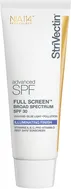
StriVectin Full Screen SPF 30 Illuminating Finish
Works for
Sun protectionSPF 30 · 6 UV filtersBroad spectrum
This product offers a good level of protection against both UVB and UVA rays.
This sunscreen uses organic (so-called "chemical") sunscreen filters. Organic, or "chemical" filters usually provide reliable sun protection and rarely leave a white cast. Sunscreens with organic filters can sting eyes.
This product can be considered "reef safe" because it does not contain the UV filters (oxybenzone and octinoxate) that can be harmful to coral reefs when present in the water in high concentrations.
Evens skin toneNot advertised by the brand · Retinyl palmitate, Glycyrrhiza glabra root extractWorks well
This product offers broad spectrum sun protection. It means that it can prevent hyperpigmentation and help keep the skin tone even (sun damage is the main factor causing age spots, darkening of post-acne marks and other discolorations).
MoisturizingSide benefit the brand mentions · Glycerin, Dimethicone + 12 moreWorks
“Strengthens the Skin Barrier”
This product can help improve hydration of the skin with the two types of ingredients.
The first type is called “humectants”:
these ingredients help attract water.
When humectants are on the surface of the skin, they “pull in” the moisture from the outside environment, or from
within deeper layers of the skin. The following ingredients in this product do the job:
glycerin, caprylyl glycol.
This product also contains ingredients called “occlusives”. They help reduce the speed with which our skin loses moisture to the outside environment. These ingredients also help soften the upper layer of the skin, so it feels less tight and nicer to the touch. The following ingredients in this product do the job: cocos nucifera oil, dimethicone.
Can it cause trouble?
Irritancy5 strong irritants: Parfum, Retinyl palmitate + 3 more — patch-test recommendedHigh risk
Comedogenic3 ingredients rated 2 or more on the 0–5 pore-clogging scale3 flagged
User reviews
Be the first — your take helps the next person decide.
Ingredients
Filter by role to see what each ingredient is doing.
Butyl methoxydibenzoylmethane3%
- Irritation risk
- Medium
Avobenzone. An organic, or so-called "chemical" UV filter. Protects against both UVA and UVB rays. Needs to be combined with other filters in a formulation to be stable.
More about Butyl methoxydibenzoylmethaneHomosalate7%
- Irritation risk
- Medium
A weak sunscreen that offers some protection against the sun rays that cause sunburn (UVB), but does not offer meaningful protection against protect against the most aging sun rays (UVA). It loses its effectiveness quickly when exposed to sunlight. It is an organic, or so called "chemical" sunscreen. When used in low concentrations, helps to stabilize the product formulation
More about HomosalateEthylhexyl salicylate4.5%
- Irritation risk
- Low
Octisalate. A UV filter. It offers some protection against the sun rays that cause sunburn (UVB), but does not protect against the most aging sun rays (UVA). It loses its effectiveness quickly when exposed to sunlight. It is an organic, or so called "chemical" sunscreen
More about Ethylhexyl salicylateOctocrylene10%
- Irritation risk
- Medium
A weak sunscreen that protects against the sun rays that cause sunburn (UVB) and is somewhat effective against the UVA rays. It is quite stable and can help stabilize other, more vulnerable, sunscreen ingredients like Avobenzone. It is an organic, or so called "chemical" sunscreen
More about OctocryleneWater~45–55%
Glycerin~5.2–6.4%
- Irritation risk
- Low
One of the best moisturizing ingredients. Naturally present in skin. It attracts water to the upper layer of the skin working as a humectant
More about GlycerinButyloctyl salicylate~5.8–7%
- Irritation risk
- Medium
A synthetic ester of salicylic acid that is used to help disperse pigments and boost effectiveness of sunscreen ingredients. It is able to absorb UV light (working as an organic, or chemical filter), but is not approved as a sunscreen ingredient on its own
More about Butyloctyl salicylateMica~4.3–5.3%
- Irritation risk
- Low
Creates an illusion of smoother and more radiant skin tone. Adds shimmer to the skin by reflecting light
More about MicaDimethicone~3.5–4.3%
- Irritation risk
- Low
A silicone that helps to reduce water loss from the surface of the skin. Can temporarily "fill in" lines and wrinkles, absorb oil, and create a nice product finish
More about DimethiconeTitanium dioxide~2.9–3.6%
- Irritation risk
- Low
Works as a UV filter when used in high concentrations. It is photostable and is effective mostly against the UVB light, with some protection in the UVA range. In small concentrations, used for its ability to improve the color of cosmetic products. Is usually well tolerated by the skin
More about Titanium dioxideDiisobutyl adipate~1.9–2.3%
Polymethylsilsesquioxane/silica crosspolymer~1.5–1.9%
- Irritation risk
- Low
A type of silicone that helps add a "soft focus" effect on the surface of the skin and create a nice product texture
More about Polymethylsilsesquioxane/silica crosspolymerAcrylates/dimethicone copolymer~1.3–1.6%
- Irritation risk
- Medium
Used to stabilize product formulation, help create an even product layer over skin (for example, in sunscreen), evenly disperse pigements and create a nice product consistency
More about Acrylates/dimethicone copolymerParfum~1–1.2%
- Irritation risk
- High
An aromatic blend of unspecified and possibly irritating ingredients
More about ParfumMyristyl nicotinate~0.75–1.15%
- Irritation risk
- Low
Argania spinosa kernel oil~0.7–1.05%
- Irritation risk
- Medium
An emollient that helps soften the upper layer of the skin. Might have some weak anti-oxidant properties
More about Argania spinosa kernel oilCocos nucifera oil~0.6–0.9%
- Irritation risk
- Low
- Comedogenicity
- 3/5
An emollient. Found to be as effective as a moisturizer for dry skin as mineral oil. Could be comedogenic
More about Cocos nucifera oilEthylhexyl olivate~0.55–0.8%
- Irritation risk
- Low
Helps soften the upper layer of the skin
More about Ethylhexyl olivateGlycine soja oil~0.55–0.8%
- Irritation risk
- Medium
- Comedogenicity
- 2/5
A good emollient that helps soften the skin and helps repair its barrier function. It can clog pores if used in high concentrations.
More about Glycine soja oilBrassica campestris seed oil~0.5–0.75%
- Irritation risk
- Low
Helps soften the upper layer of the skin
More about Brassica campestris seed oilPolysilicone-11~0.6–0.9%
- Irritation risk
- Low
A silicone that forms a light film on the skin surface helping to bind water and temporarily absorb oils creating a matt and powdery feel
More about Polysilicone-11Caprylyl glycol~0.5–0.75%
- Irritation risk
- Medium
Helps preserve products and creates a nice product texture
More about Caprylyl glycolTocopherol~0.45–0.65%
- Irritation risk
- Low
Pure form of vitamin E. Can help moisturise and protect the skin from free radicals. Often used to help stabilise other ingredients or the formula itself
More about TocopherolBis(cyano butylacetate) anthracenediylidene~0.45–0.65%
- Irritation risk
- Low
Sodium acrylates copolymer~0.45–0.7%
- Irritation risk
- Medium
Used to create a thicker product consistency
More about Sodium acrylates copolymerPhenoxyethanol~0.35–0.6%
- Irritation risk
- Low
A preservative. It helps prevent bacterial growth in cosmetic products
More about PhenoxyethanolPolyglyceryl-3 diisostearate~0.35–0.6%
- Irritation risk
- Medium
- Comedogenicity
- 3/5
Helps oil and water mix together
More about Polyglyceryl-3 diisostearateQuercus suber bark extract~0.3–0.55%
- Irritation risk
- Low
Polyglyceryl-4 olivate~0.4–0.6%
- Irritation risk
- Low
Glycyrrhiza glabra root extract~0.35–0.6%
- Irritation risk
- Medium
A plant extract that can help lighten the skin and calm down inflammation. Might be helpful in neutralizing free radicals
More about Glycyrrhiza glabra root extractHexylene glycol~0.3–0.55%
- Irritation risk
- Medium
Helps create a more spreadable product texture
More about Hexylene glycolOryza sativa extract~0.3–0.6%
- Irritation risk
- Low
A grain extract that helps to create a thicker product consistency. It might have some anti-oxidant properties and help attract water to the upper layer of the skin
More about Oryza sativa extractOryza sativa germ extract~0.45–0.65%
- Irritation risk
- Low
Disodium edta~0.3–0.55%
Oak root extract~0.35–0.6%
- Irritation risk
- Low
Althaea officinalis root extract~0.3–0.6%
- Irritation risk
- High
A plant extract that can help attract water to the upper layer of the skin and might help to reduce inflammation
More about Althaea officinalis root extractOryza sativa bran extract~0.3–0.6%
Retinyl palmitate~0.25–0.5%
- Irritation risk
- High
Three steps removed from the active form of vitamin A - retinoic acid. To have an effect in the skin, it first needs to be converted twice to become the retinoic acid. This means it is less potent than retinol, but could also be less irritating. Once converted to the retinoic acid in the skin, it helps against all signs of aging, improves skin cell turnover and helps fight blemishes and clogged pores. However, in many cosmetic formulations, it is used in a concentration that is too low to have the full effect
More about Retinyl palmitate7-dehydrocholesterol~0.3–0.5%
- Irritation risk
- Medium
Pro-vitamin D. It is claimed to have anti-inflammatory effect in skin, but there is no research available confirming that this compound converts to vitamin D in skin or has any other benefits apart from softening the upper layer of the skin. This compound is different from the Vitamin D3 analogues used in medicine to treat psoriasis
More about 7-dehydrocholesterolAscorbyl palmitate~0.25–0.45%
- Irritation risk
- Medium
Being a lipid soluble form of vitamin C, it is more stable and can penetrate the skin better than L-Ascorbic acid. It is effective in protecting the skin from free radicals, as well as evening the skin tone, but is less effective in stimulating collagen production compared to L-Ascorbic acid.
More about Ascorbyl palmitateLimonene~0.25–0.45%
- Irritation risk
- High
A common frangrance that can easily irritate skin, especially if exposed to air, light or heat
More about LimoneneCitral~0.2–0.35%
Linalool~0.2–0.35%
Tin oxide~0.3–0.55%
- Irritation risk
- Low
A colorant that can add a pearl-like appearance to the formulation
More about Tin oxideIngredient list view
Butyl methoxydibenzoylmethane, Homosalate, Ethylhexyl salicylate, Octocrylene, Water, Glycerin, Butyloctyl salicylate, Mica, Dimethicone, Titanium dioxide, Diisobutyl adipate, Polymethylsilsesquioxane/silica crosspolymer, Acrylates/dimethicone copolymer, Parfum, Myristyl nicotinate, Argania spinosa kernel oil, Cocos nucifera oil, Ethylhexyl olivate, Glycine soja oil, Brassica campestris seed oil, Polysilicone-11, Caprylyl glycol, Tocopherol, Bis(cyano butylacetate) anthracenediylidene, Sodium acrylates copolymer, Phenoxyethanol, Polyglyceryl-3 diisostearate, Quercus suber bark extract, Polyglyceryl-4 olivate, Glycyrrhiza glabra root extract, Hexylene glycol, Oryza sativa extract, Oryza sativa germ extract, Disodium edta, Oak root extract, Althaea officinalis root extract, Oryza sativa bran extract, Retinyl palmitate, 7-dehydrocholesterol, Ascorbyl palmitate, Limonene, Citral, Linalool, Tin oxide
Compare prices
Retailers ranked by price — lowest first.
Affiliate links · As an Amazon Associate, WIMJ earns from qualifying purchases.
Worth comparing, line by line.
Match % combines shared ingredients, the first five ingredients, shared actives and hero ingredients, irritancy (lower counts in the alternative's favour), texture and body area. Only products in the same routine step are compared.
| StriVectinFull Screen SPF 30 Illuminating FinishYOUR PRODUCT | CliniqueNEW UV Solutions Mattifying Sunscreen SPF 50 | PrequelSOLAR SHADE | La Roche-PosayMelt-In Sunscreen Milk SPF 60 | |
|---|---|---|---|---|
| Match | — | 44% | 44% | 44% |
| Price | — | $40.10 | $25.00 | $28.99 |
| Shared key ingredients | — | 7 of 16 | 7 of 16 | 7 of 16 |
| Key difference | — | Salicylic Acid | Betaine | Caprylic/Capric Triglyceride |
| Irritancy | High | Low | Low | Low |
| SPF | SPF 30 | SPF 50 | SPF 46 | SPF 60 |
| Drying alcohol | — | — | — | Contains drying alcohol |
| View product | Shop | Shop | Shop |


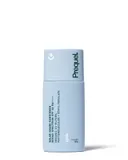

More alternatives: First Aid Beauty Hydrating Sunscreen Milk with Colloidal Oatmeal Broad Spectrum SPF 45SkinCeuticals Light Moisture UV Defense SPF 50 Oil free sunscreen for face and body
Product summary
We believe that "StriVectin - Full Screen SPF 30 Illuminating Finish" can provide reliable sun protection based on the ingredients listed. It can protect from both UVA and UVB rays. This is great news because not all sunscreens with SPF ratings give UVA protection. (UVA rays do not cause sunburn, but still damage our skin and lead to early aging).
This product should also be hydrating enough to use without an additional moisturizer during the day.
Sunscreen filters
This sunscreen uses a mixture of both mineral and organic (so-called "chemical") UV filters. The organic filters in the product are: avobenzone, butyloctyl salicylate, octisalate, homosalate and octocrylene. As for the mineral filters, this sunscreen uses titanium dioxide.
Irritation risk
We assess the overall irritancy of it to be high. For a detailed overview of all potential irritants: click here
You can see the detailed formula review with the breakdown of all actives in the product and the full ingredient list with estimated concentrations in the tables below.
Price
The product retails for 90.45A$ in Australia.
For a detailed price comparison: click here.
Sources cited in this review
Every concentration estimate and effectiveness label is anchored to one of these 17 studies and safety reviews.
- 1
- 2
- 3
- 4
- 5Final Report on the Safety Assessment of Dimethicone Copolyoljournals.sagepub.com
- 6

Affiliate links · As an Amazon Associate, WIMJ earns from qualifying purchases.