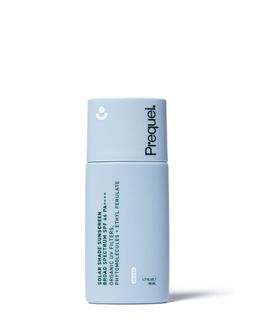
Works for
1 of 1 advertised claim delivered
Sun protectionSPF 46 · 5 UV filtersBroad spectrum
This product offers a good level of protection against both UVB and UVA rays.
This sunscreen uses organic (so-called "chemical") sunscreen filters. Organic, or "chemical" filters usually provide reliable sun protection and rarely leave a white cast. Sunscreens with organic filters can sting eyes.
This product can be considered "reef safe" because it does not contain the UV filters (oxybenzone and octinoxate) that can be harmful to coral reefs when present in the water in high concentrations.
Anti-agingNot advertised by the brand · Glycine soja seed extract, TocopherolStrong evidence
This product can help prevent early signs of skin aging because it offers a good level of broad spectrum sun protection. Sun damage is the main cause of premature skin aging, and protecting your skin from the sun is the best anti-aging strategy.
Evens skin toneNot advertised by the brand · Glycine soja seed extractStrong evidence
This product offers broad spectrum sun protection. It means that it can prevent hyperpigmentation and help keep the skin tone even (sun damage is the main factor causing age spots, darkening of post-acne marks and other discolorations).
Anti-oxidationNot advertised by the brand · Haematococcus pluvialis extract, Glycine soja seed extract + 3 moreModerate evidence
This product contains antioxidants (haematococcus pluvialis extract) that might be able to help neutralize free radicals in skin to lessen the damage it gets from the UV light (sun). There is not enough evidence to confirm their effectiveness in skin though.
MoisturizingNot advertised by the brand · Betaine, Fructose + 14 moreGood evidence
This product can help improve hydration of the skin with the two types of ingredients.
The first type is called “humectants”:
these ingredients help attract water.
When humectants are on the surface of the skin, they “pull in” the moisture from the outside environment, or from
within deeper layers of the skin. The following ingredients in this product do the job:
betaine, fructose.
This product also contains ingredients called “occlusives”. They help reduce the speed with which our skin loses moisture to the outside environment. These ingredients also help soften the upper layer of the skin, so it feels less tight and nicer to the touch. The following ingredients in this product do the job: glycine soja oil, c12-15 alkyl benzoate.
Can it cause trouble?
Irritancy17 flagged ingredientsLow risk
Comedogenic2 ingredients rated 2 or more on the 0–5 pore-clogging scale2 flagged
User reviews
Be the first — your take helps the next person decide.
Ingredients
Filter by role to see what each ingredient is doing.
Butyl methoxydibenzoylmethane3%
- Irritation risk
- Medium
Avobenzone. An organic, or so-called "chemical" UV filter. Protects against both UVA and UVB rays. Needs to be combined with other filters in a formulation to be stable.
More about Butyl methoxydibenzoylmethaneHomosalate7%
- Irritation risk
- Medium
A weak sunscreen that offers some protection against the sun rays that cause sunburn (UVB), but does not offer meaningful protection against protect against the most aging sun rays (UVA). It loses its effectiveness quickly when exposed to sunlight. It is an organic, or so called "chemical" sunscreen. When used in low concentrations, helps to stabilize the product formulation
More about HomosalateOctocrylene9%
- Irritation risk
- Medium
A weak sunscreen that protects against the sun rays that cause sunburn (UVB) and is somewhat effective against the UVA rays. It is quite stable and can help stabilize other, more vulnerable, sunscreen ingredients like Avobenzone. It is an organic, or so called "chemical" sunscreen
More about OctocryleneEthylhexyl salicylate5%
- Irritation risk
- Low
Octisalate. A UV filter. It offers some protection against the sun rays that cause sunburn (UVB), but does not protect against the most aging sun rays (UVA). It loses its effectiveness quickly when exposed to sunlight. It is an organic, or so called "chemical" sunscreen
More about Ethylhexyl salicylateWater~45–55%
Glycerin~5.3–6.5%
- Irritation risk
- Low
One of the best moisturizing ingredients. Naturally present in skin. It attracts water to the upper layer of the skin working as a humectant
More about GlycerinButyloctyl salicylate~5.7–7%
- Irritation risk
- Medium
A synthetic ester of salicylic acid that is used to help disperse pigments and boost effectiveness of sunscreen ingredients. It is able to absorb UV light (working as an organic, or chemical filter), but is not approved as a sunscreen ingredient on its own
More about Butyloctyl salicylateC12-15 alkyl benzoate~4.5–5.5%
- Irritation risk
- Low
Enhances the product texture and makes it more spreadable. Helps reduce water loss from the outer layer of skin. Extands the shelf life by preventing bacteria growth
More about C12-15 alkyl benzoatePongamia glabra seed oil~3.2–3.9%
- Irritation risk
- Low
A plant oil that helps soften the upper layer of the skin
More about Pongamia glabra seed oilUndecane~2.5–3%
- Irritation risk
- Medium
Helps create a non-greasy finish on the skin
More about UndecaneBetaine~1.8–2.2%
- Irritation risk
- Low
Helps attract water to the upper layer of the skin and improves the product texture
More about BetaineSilica~1.8–2.2%
Ethyl ferulate~1.3–1.6%
- Irritation risk
- Low
Oryza sativa extract~1.1–1.4%
- Irritation risk
- Low
A grain extract that helps to create a thicker product consistency. It might have some anti-oxidant properties and help attract water to the upper layer of the skin
More about Oryza sativa extractOryza sativa germ extract~0.95–1.2%
- Irritation risk
- Low
Glycine soja seed extract~0.75–1.1%
- Irritation risk
- Medium
An emollient that helps soften the skin. Might be somewhat helpful in evening the skin tone.
More about Glycine soja seed extractTridecane~0.55–0.85%
Glycine soja oil~0.6–0.9%
- Irritation risk
- Medium
- Comedogenicity
- 2/5
A good emollient that helps soften the skin and helps repair its barrier function. It can clog pores if used in high concentrations.
More about Glycine soja oilSodium dilauramidoglutamide lysine~0.5–0.75%
- Irritation risk
- Low
Dunaliella salina extract~0.5–0.75%
- Irritation risk
- Low
A green micro-algae extract that might help neutralize free radicals in skin, but solid evidence is lacking. It helps to soften the upper layer of the skin
More about Dunaliella salina extractHaematococcus pluvialis extract~0.5–0.75%
- Irritation risk
- Medium
Green algae extract that might contain antioxidant astaxanthin
More about Haematococcus pluvialis extractInulin~0.45–0.7%
- Irritation risk
- Low
Helps attract water to the upper layer of the skin. Is claimed to support the growth of "good" bacteria in skin (as a "prebiotic"), but the research is lacking
More about InulinFructose~0.45–0.65%
- Irritation risk
- Low
Helps attract water to the upper layer of the skin
More about FructoseGlucose~0.4–0.6%
- Irritation risk
- Low
Helps attract water to the upper layer of the skin. Could be helpful in restoring the skin barrier function
More about GlucosePongamia pinnata seed extract~0.4–0.6%
- Irritation risk
- Low
Polyglyceryl-4 laurate~0.4–0.6%
Hydroxyethyl acrylate/sodium acryloyldimethyl taurate copolymer~0.3–0.6%
- Irritation risk
- Medium
A gelling agent that thickens the product consistency and leaves the skin with a velvety finish
More about Hydroxyethyl acrylate/sodium acryloyldimethyl taurate copolymerHydroxyacetophenone~0.3–0.6%
Arachidyl alcohol~0.45–0.65%
- Irritation risk
- Low
Used to soften the upper layer of the skin and create a thicker product consistency
More about Arachidyl alcoholPolyglyceryl-6 laurate~0.4–0.6%
- Irritation risk
- Medium
Helps oil and water mix together
More about Polyglyceryl-6 laurate1,2-hexanediol~0.3–0.55%
Caprylyl glycol~0.45–0.65%
- Irritation risk
- Medium
Helps preserve products and creates a nice product texture
More about Caprylyl glycolBehenyl alcohol~0.45–0.7%
- Irritation risk
- Low
Non-drying alcohol that helps water and oil mix together. Also serves as an emollient
More about Behenyl alcoholCellulose gum~0.45–0.65%
- Irritation risk
- Low
Used to create thicker product consistency and stabilize emulsions
More about Cellulose gumPolyglyceryl-3 diisostearate~0.35–0.65%
- Irritation risk
- Medium
- Comedogenicity
- 3/5
Helps oil and water mix together
More about Polyglyceryl-3 diisostearateArachidyl glucoside~0.3–0.6%
Tocopherol~0.3–0.55%
- Irritation risk
- Low
Pure form of vitamin E. Can help moisturise and protect the skin from free radicals. Often used to help stabilise other ingredients or the formula itself
More about TocopherolSodium phytate~0.25–0.5%
Polysorbate 60~0.3–0.5%
Sorbitan isostearate~0.25–0.45%
- Irritation risk
- Low
Helps oil and water mix together
More about Sorbitan isostearateCitric acid~0.2–0.35%
- Irritation risk
- Medium
Can work as an exfoliant but is typically used to adjust the product pH
More about Citric acidXanthan gum~0.2–0.4%
- Irritation risk
- Low
Used to create a thicker product consistency
More about Xanthan gumCellulose~0.25–0.4%
- Irritation risk
- Low
Can be used to help absorb oil as well as add volume and imporve texture of products.
More about CelluloseIngredient list view
Butyl methoxydibenzoylmethane, Homosalate, Octocrylene, Ethylhexyl salicylate, Water, Glycerin, Butyloctyl salicylate, C12-15 alkyl benzoate, Pongamia glabra seed oil, Undecane, Betaine, Silica, Ethyl ferulate, Oryza sativa extract, Oryza sativa germ extract, Glycine soja seed extract, Tridecane, Glycine soja oil, Sodium dilauramidoglutamide lysine, Dunaliella salina extract, Haematococcus pluvialis extract, Inulin, Fructose, Glucose, Pongamia pinnata seed extract, Polyglyceryl-4 laurate, Hydroxyethyl acrylate/sodium acryloyldimethyl taurate copolymer, Hydroxyacetophenone, Arachidyl alcohol, Polyglyceryl-6 laurate, 1,2-hexanediol, Caprylyl glycol, Behenyl alcohol, Cellulose gum, Polyglyceryl-3 diisostearate, Arachidyl glucoside, Tocopherol, Sodium phytate, Polysorbate 60, Sorbitan isostearate, Citric acid, Xanthan gum, Cellulose
Compare prices
Retailers ranked by price — lowest first.
Affiliate links · prices updated regularly · As an Amazon Associate, WIMJ earns from qualifying purchases.
Worth comparing, line by line.
Match % combines shared ingredients, the first five ingredients, shared actives and hero ingredients, irritancy (lower counts in the alternative's favour), texture and body area. Only products in the same routine step are compared.
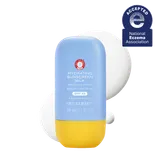
| PrequelSOLAR SHADEYOUR PRODUCT | First Aid BeautyHydrating Sunscreen Milk with Colloidal Oatmeal Broad Spectrum SPF 45 | |
|---|---|---|
| Match | — | 52% |
| Price | $24.99 | $36.00+$11.01 |
| Shared key ingredients | — | 11 of 11 |
| Key difference | — | Avena Sativa Kernel Flour |
| Irritancy | Low | Low |
| SPF | SPF 46 | SPF 45 |
| Drying alcohol | — | — |
| View product | Shop |
Sources cited in this review
Every concentration estimate and effectiveness label is anchored to one of these 16 studies and safety reviews.
- 1
- 2
- 3
- 4
- 5
- 6

Affiliate links · As an Amazon Associate, WIMJ earns from qualifying purchases.