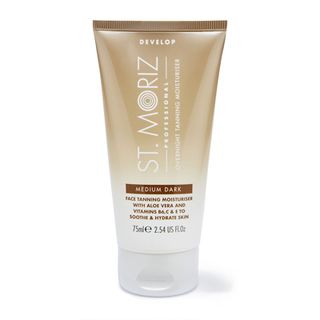
St. Moriz Professional Beauty Sleep Face Tanning Moisturiser
Works for
1 of 1 advertised claim delivered
Moisturizing10 ingredients credited for this claimGood support
“Professional Beauty Sleep Face Tanning Moisturiser”
This product can help improve hydration of the skin with the two types of ingredients.
The first type is called “humectants”:
these ingredients help attract water.
When humectants are on the surface of the skin, they “pull in” the moisture from the outside environment, or from
within deeper layers of the skin. The following ingredients in this product do the job:
glycerin.
This product also contains ingredients called “occlusives”. They help reduce the speed with which our skin loses moisture to the outside environment. These ingredients also help soften the upper layer of the skin, so it feels less tight and nicer to the touch. The following ingredients in this product do the job: dimethicone, isopropyl myristate.
Anti-oxidationNot advertised by the brand · 3 ingredients credited for this claimModerate support
This product contains antioxidants (sodium ascorbyl phosphate) that might be able to help neutralize free radicals in skin to lessen the damage it gets from the UV light (sun). There is not enough evidence to confirm their effectiveness in skin though.
Can it cause trouble?
Irritancy10 strong irritants: Parfum, Limonene + 8 more — patch-test recommendedHigh risk
Comedogenic3 ingredients rated 2 or more on the 0–5 pore-clogging scale3 flagged

User reviews
Be the first — your take helps the next person decide.
Ingredients
Filter by role to see what each ingredient is doing.
Water~45–55%
Dihydroxyacetone~5.4–6.6%
Propylene glycol~4.2–5.1%
- Irritation risk
- High
Helps oil and water mix together and can enhance the penetration of other ingredients into the skin. It can be irritating
More about Propylene glycolIsopropyl myristate~3.2–3.9%
- Irritation risk
- Low
- Comedogenicity
- 3/5
An emollient that helps soften the skin. Could be comedogenic
More about Isopropyl myristateGlycerin~2.4–3%
- Irritation risk
- Low
One of the best moisturizing ingredients. Naturally present in skin. It attracts water to the upper layer of the skin working as a humectant
More about GlycerinStearic acid~2.1–2.5%
- Irritation risk
- Low
Helps oil and water mix together and works as an emollient
More about Stearic acidCetearyl alcohol~1.7–2%
- Irritation risk
- Low
- Comedogenicity
- 2/5
A non-drying alcohol. Works as an emollient. Helps water and oil mix together and creates a nice product texture
More about Cetearyl alcoholHydroxyethyl acrylate/sodium acryloyldimethyl taurate copolymer~1.4–1.7%
- Irritation risk
- Medium
A gelling agent that thickens the product consistency and leaves the skin with a velvety finish
More about Hydroxyethyl acrylate/sodium acryloyldimethyl taurate copolymerGlyceryl stearate se~1.2–1.4%
- Irritation risk
- Low
- Comedogenicity
- 2/5
Used to stabilize the product formulations and works as an emollient
More about Glyceryl stearate seIsohexadecane~1.1–1.3%
- Irritation risk
- Low
Improves the texture of the product and helps soften the skin. Helps oil and water mix together and can be used as a cleansing agent
More about IsohexadecanePhenoxyethanol~0.65–1%
- Irritation risk
- Low
A preservative. It helps prevent bacterial growth in cosmetic products
More about PhenoxyethanolDimethicone~0.65–1%
- Irritation risk
- Low
A silicone that helps to reduce water loss from the surface of the skin. Can temporarily "fill in" lines and wrinkles, absorb oil, and create a nice product finish
More about DimethiconeXanthan gum~0.55–0.8%
- Irritation risk
- Low
Used to create a thicker product consistency
More about Xanthan gumParfum~0.45–0.7%
- Irritation risk
- High
An aromatic blend of unspecified and possibly irritating ingredients
More about ParfumPolysorbate 60~0.5–0.7%
Ethylhexylglycerin~0.45–0.7%
Sodium isostearate~0.55–0.8%
Niacinamide~0.4–0.6%
- Irritation risk
- Low
Is proven to be effective in reducing blemishes, evening out skin tone and helping to improve lines and wrinkles. It helps the skin to repair sun damage, calm down inflammation and keep maintain good levels of moisture. The concentration of about 2% is effective for supporting the skin barrier and evening out the skin tone. Concentration of 4-6% is better for helping with acne and balancing the sebum production
More about NiacinamideCalcium pantothenate~0.35–0.65%
- Irritation risk
- Low
Helps support skin barrier function improving skin hydration and reducing sensitivity
More about Calcium pantothenateMaltodextrin~0.3–0.6%
- Irritation risk
- Low
Used to stabilize the product formulation and can help absorb oil
More about MaltodextrinSodium starch octenylsuccinate~0.3–0.55%
- Irritation risk
- Low
Limonene~0.25–0.5%
- Irritation risk
- High
A common frangrance that can easily irritate skin, especially if exposed to air, light or heat
More about LimoneneAloe barbadensis leaf extract~0.3–0.6%
- Irritation risk
- Medium
Traditionally used to treat sunburns, dermatitis and inflammation, but evidence for its effectiveness is lacking. The extract can contain humectants that help attract water into the skin
More about Aloe barbadensis leaf extractCoumarin~0.25–0.45%
Sodium ascorbyl phosphate~0.25–0.5%
- Irritation risk
- Medium
A stable derivative of vitamin C. It is oil-soluble which means it is more likely to penetrate the skin compared to the pure form of vitamin C (which is water-soluble), but it is less bio-available and is way less effective in stimulating collagen and reducing wrinkles compared to the pure form of vitamin C (L-ascorbic acid) and its other derivatives (for example, magnesium ascorbyl phosphate). At the same time, this vitamin C derivative has been shown in studies to be effective in reducing acne, blemishes and clogged pores. It is less irritating then the pure form of vitamin C
More about Sodium ascorbyl phosphateCitronellol~0.25–0.45%
Alpha-isomethyl ionone~0.2–0.4%
- Irritation risk
- High
A fragrance. Potential allergen and can be irritating
More about Alpha-isomethyl iononeButylphenyl methylpropional~0.2–0.4%
- Irritation risk
- High
A fragrance. Can trigger allergic reactions and be irritating
More about Butylphenyl methylpropionalTocopheryl acetate~0.25–0.45%
- Irritation risk
- Medium
A more stable but less bio-available form of vitamin E compared to Tocopherol. Might help moisturize and protect the skin from free radicals, but mostly used in low concentrations to stabilize other ingredients.
More about Tocopheryl acetatePyridoxine hcl~0.2–0.4%
- Irritation risk
- Medium
Might help neutralize free radicals in skin
More about Pyridoxine hclLinalool~0.2–0.35%
Benzyl salicylate~0.15–0.3%
Eugenol~0.15–0.25%
Citral~0.15–0.25%
Silica~0.2–0.4%
Potassium sorbate~0.15–0.25%
Sodium benzoate~0.1–0.2%
Ingredient list view
Water, Dihydroxyacetone, Propylene glycol, Isopropyl myristate, Glycerin, Stearic acid, Cetearyl alcohol, Hydroxyethyl acrylate/sodium acryloyldimethyl taurate copolymer, Glyceryl stearate se, Isohexadecane, Phenoxyethanol, Dimethicone, Xanthan gum, Parfum, Polysorbate 60, Ethylhexylglycerin, Sodium isostearate, Niacinamide, Calcium pantothenate, Maltodextrin, Sodium starch octenylsuccinate, Limonene, Aloe barbadensis leaf extract, Coumarin, Sodium ascorbyl phosphate, Citronellol, Alpha-isomethyl ionone, Butylphenyl methylpropional, Tocopheryl acetate, Pyridoxine hcl, Linalool, Benzyl salicylate, Eugenol, Citral, Silica, Potassium sorbate, Sodium benzoate
Compare prices
Retailers ranked by price — lowest first.
Worth comparing, line by line.
Match % combines shared ingredients, the first five ingredients, shared actives and hero ingredients, irritancy (lower counts in the alternative's favour), texture and body area. Only products in the same routine step are compared.
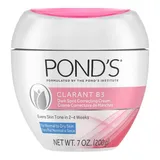
| St. MorizProfessional Beauty Sleep Face Tanning MoisturiserYOUR PRODUCT | Secret KeyHyaluron Aqua Soft Cream | POND'SCorrecting Cream Clarant B3 Dark Spot Normal to Dry Skin | RevolutionSkincare Vitamin C Radiance Moisturiser | |
|---|---|---|---|---|
| Match | — | 90% | 89% | 88% |
| Price | $6.60 | $11.40+$4.80 | $9.49+$2.89 | $6.99 |
| Shared key ingredients | — | 4 of 6 | 4 of 6 | 3 of 6 |
| Key difference | — | Glycolic Acid | Mineral Oil | Sodium Ascorbyl Phosphate |
| Irritancy | High | Medium | Medium | Medium |
| Drying alcohol | — | — | — | Contains drying alcohol |
| View product | Shop | Shop | Shop |



Sources cited in this review
Every concentration estimate and effectiveness label is anchored to one of these 18 studies and safety reviews.
- 1Surfactants and experimental irritant contact dermatitisncbi.nlm.nih.gov
- 2Propylene Glycolpubmed.ncbi.nlm.nih.gov
- 3Skin-sensitizing and irritant properties of propylene glycolonlinelibrary.wiley.com
- 4
- 5
- 6Final Report on the Safety Assessment of Dimethicone Copolyoljournals.sagepub.com

Affiliate links · As an Amazon Associate, WIMJ earns from qualifying purchases.