Works for
0 of 1 advertised claim delivered
Anti-aging4 ingredients credited for this claimWeak support
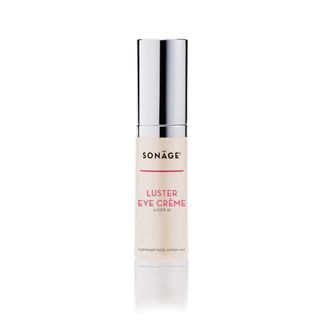
“Infused with collagen, this sheer eye cream works to reduce the appearance of fine lines and aging.”
Effective ingredients missing or their concentration is too low.
MoisturizingNot advertised by the brand · 19 ingredients credited for this claimGood support
This product can help improve hydration of the skin with the two types of ingredients.
The first type is called “humectants”:
these ingredients help attract water.
When humectants are on the surface of the skin, they “pull in” the moisture from the outside environment, or from
within deeper layers of the skin. The following ingredients in this product do the job:
rice amino acids, hydrolyzed soy protein.
This product also contains ingredients called “occlusives”. They help reduce the speed with which our skin loses moisture to the outside environment. These ingredients also help soften the upper layer of the skin, so it feels less tight and nicer to the touch. The following ingredients in this product do the job: caprylic/capric triglyceride, cocos nucifera oil.
Can it cause trouble?
Irritancy1 strong irritant: Rosa damascena extractMedium risk
Comedogenic3 ingredients rated 2 or more on the 0–5 pore-clogging scale3 flagged


User reviews
Be the first — your take helps the next person decide.
Ingredients
Filter by role to see what each ingredient is doing.
Rosa damascena extract~25–37%
- Irritation risk
- High
Oil of a very fragrant pink rose used as fragrance in cosmetics. Extensive research has shown it has mixed benefits. In the pro column, inhaling this flower’s scent seems to have relaxing properties and the plant’s petals contain skin-soothing and antioxidant compounds that can benefit skin. On the flipside, the numerous chemicals that create this rose’s distinctive fragrance pose a risk of causing skin aggravation.
More about Rosa damascena extractWater~12–18%
Ppg-2 myristyl ether propionate~4.3–6.5%
- Irritation risk
- Low
Squalane~3.4–5.1%
- Irritation risk
- Low
An oil naturally present in skin. Works as an emollient to soften the skin and form a protective layer on its surface without a greasy feeling.
More about SqualaneOlea europaea fruit oil~2.3–3.4%
- Irritation risk
- Medium
An emollient that helps soften the skin but is not effective for restoring its barrier function. Might be helpful to calm down inflammation
More about Olea europaea fruit oilMethyl gluceth-20~1.7–2.5%
- Irritation risk
- Low
Helps attract water to the upper layer of the skin and soften it
More about Methyl gluceth-20Glyceryl stearate~1.5–2.3%
- Irritation risk
- Low
An emollient that softens the skin and forms a protective layer on its surface. Helps water and oil mix together
More about Glyceryl stearateCetearyl glucoside~1.3–2%
- Irritation risk
- Medium
Helps water and oil in the product mix well together and improves product texture
More about Cetearyl glucosideLimnanthes alba seed oil~1.2–1.8%
- Irritation risk
- Low
This oil's cmposition is closest to rapeseed oil. It is a very stable oil and serves as an emoillient
More about Limnanthes alba seed oilCaprylic/capric triglyceride~1–1.6%
- Irritation risk
- Medium
A good mix of fatty acids that forms a protective layer on the skin. Improves the shelf life of products. Derived from coconut and glycerin
More about Caprylic/capric triglycerideCocos nucifera oil~0.6–1.35%
- Irritation risk
- Low
- Comedogenicity
- 3/5
An emollient. Found to be as effective as a moisturizer for dry skin as mineral oil. Could be comedogenic
More about Cocos nucifera oilBisabolol~0.5–1.15%
- Irritation risk
- Low
An active component of chamomile plant that historically has been used to calm down irritated skin. A recent study shows that bisabolol indeed can have some anti-inflammatory effect on skin, even though conclusive data is lacking. Bisabolol has a sweet floral scent and can be added to products for its aromatic properties
More about BisabololChamomilla recutita extract~0.5–1.1%
- Irritation risk
- High
Plant extract that can have healing and anti-inflammatory properties. It is a potential allergen and can be irritating
More about Chamomilla recutita extractSclerocarya birrea seed oil~0.5–1.1%
- Irritation risk
- Medium
An emollient that helps to soften the skin. It has a high contetn of oleic acid that might weaken the skin barrier. Might have some anti-oxidant properties. It might be somewhat helpful against hyperpigmentation.
More about Sclerocarya birrea seed oilTetradecane~0.4–0.95%
Hydrolyzed soy protein~0.45–1%
- Irritation risk
- Low
Helps attract water to the upper layer of the skin. Might have some anti-aging, anti-oxidant, and skin lightening properties, but solid evidence is missing
More about Hydrolyzed soy proteinRice amino acids~0.4–0.95%
- Irritation risk
- Low
Help attract water to the upper layer of the skin
More about Rice amino acidsHydrolyzed adansonia digitata seed extract~0.4–0.95%
- Irritation risk
- Low
Proline~0.4–0.9%
Hydrolyzed elastin~0.35–0.85%
- Irritation risk
- Low
Glycoproteins~0.3–0.75%
Cetyl alcohol~0.35–0.85%
- Irritation risk
- Low
A non-drying alcohol that works to soften the skin and stabilize product formulations helping oil and water mix together
More about Cetyl alcoholCetearyl alcohol~0.35–0.8%
- Irritation risk
- Low
- Comedogenicity
- 2/5
A non-drying alcohol. Works as an emollient. Helps water and oil mix together and creates a nice product texture
More about Cetearyl alcoholTocopheryl acetate~0.2–0.75%
- Irritation risk
- Medium
A more stable but less bio-available form of vitamin E compared to Tocopherol. Might help moisturize and protect the skin from free radicals, but mostly used in low concentrations to stabilize other ingredients.
More about Tocopheryl acetateTocopherol~0.2–0.75%
- Irritation risk
- Low
Pure form of vitamin E. Can help moisturise and protect the skin from free radicals. Often used to help stabilise other ingredients or the formula itself
More about TocopherolPanthenol~0.2–0.7%
- Irritation risk
- Low
Helps attract water to the upper layer of the skin and can help improve skin barrier function
More about PanthenolAloe barbadensis leaf juice~0.15–0.65%
- Irritation risk
- Medium
Traditionally used to treat sunburns, dermatitis and inflammation, but evidence for its effectiveness is lacking. The extract can contain humectants that help attract water into the skin
More about Aloe barbadensis leaf juiceCamellia sinensis leaf extract~0.2–0.75%
- Irritation risk
- Low
Can contain potent anti-oxidant compounds (abbreviated ECG, GCG, EGC, and EGCG) that might help protect the skin from free radicals. Can help calm down inflammation and has some anti-bacterial properties. Unfortunately, these antioxidants are unstable and lose their effectiveness very quickly in products. The concentration of the antioxidant compounds in the extract also tends to be low to be effective in topical formulation
More about Camellia sinensis leaf extractChamomilla recutita flower extract~0.15–0.6%
- Irritation risk
- High
Plant extract that can have healing and anti-inflammatory properties. It is a potential allergen and can be irritating
More about Chamomilla recutita flower extractHydrogenated vegetable oil~0.15–0.7%
- Irritation risk
- Low
- Comedogenicity
- 2/5
An oil from a mixture of different vegetables. Helps soften the upper layer of the skin
More about Hydrogenated vegetable oilPotassium cetyl phosphate~0.1–0.5%
- Irritation risk
- Medium
Helps oil and water mix together
More about Potassium cetyl phosphateCarbomer~0.1–0.3%
- Irritation risk
- Low
Helps create a thicker or gel-like product texture. It is not a surfactant but can be used in gentle cleansing formulations
More about CarbomerAcrylates/c10-30 alkyl acrylate crosspolymer~0.15–0.55%
- Irritation risk
- Medium
Maintains the texture of skincare products. Allows the product to spread evenly. Helps oil and water mix together
More about Acrylates/c10-30 alkyl acrylate crosspolymerAminomethyl propanol~0.05–0.2%
Phenoxyethanol~0.05–0.25%
- Irritation risk
- Low
A preservative. It helps prevent bacterial growth in cosmetic products
More about PhenoxyethanolEthylhexylglycerin~0.05–0.1%
Ingredient list view
Rosa damascena extract, Water, Ppg-2 myristyl ether propionate, Squalane, Olea europaea fruit oil, Methyl gluceth-20, Glyceryl stearate, Cetearyl glucoside, Limnanthes alba seed oil, Caprylic/capric triglyceride, Cocos nucifera oil, Bisabolol, Chamomilla recutita extract, Sclerocarya birrea seed oil, Tetradecane, Hydrolyzed soy protein, Rice amino acids, Hydrolyzed adansonia digitata seed extract, Proline, Hydrolyzed elastin, Glycoproteins, Cetyl alcohol, Cetearyl alcohol, Tocopheryl acetate, Tocopherol, Panthenol, Aloe barbadensis leaf juice, Camellia sinensis leaf extract, Chamomilla recutita flower extract, Hydrogenated vegetable oil, Potassium cetyl phosphate, Carbomer, Acrylates/c10-30 alkyl acrylate crosspolymer, Aminomethyl propanol, Phenoxyethanol, Ethylhexylglycerin
Compare prices
Retailers ranked by price — lowest first.
Affiliate links · prices updated regularly · As an Amazon Associate, WIMJ earns from qualifying purchases.
Worth comparing, line by line.
Match % combines shared ingredients, the first five ingredients, shared actives and hero ingredients, irritancy (lower counts in the alternative's favour), texture and body area. Only products in the same routine step are compared.
| SonageLuster Eye CremeYOUR PRODUCT | Awake BeautyRise & Reset Eye Cream | TarteShape Tape Eye Cream | BiossanceSqualane + Marine Algae Eye Cream | |
|---|---|---|---|---|
| Match | — | 56% | 56% | 55% |
| Price | $37.62 | $15.00−$22.62 | $15.00−$22.62 | $44.00+$6.38 |
| Shared key ingredients | — | 3 of 10 | 3 of 10 | 3 of 10 |
| Key difference | — | Palmitoyl Tripeptide-5 | Palmitoyl Tripeptide-5 | Palmitoyl Tripeptide-5 |
| Irritancy | Medium | Low | Low | Low |
| Drying alcohol | — | — | — | — |
| View product | Shop | Shop | Shop |


Sources cited in this review
Every concentration estimate and effectiveness label is anchored to one of these 13 studies and safety reviews.
- 1Use of “natural” oils for moisturization: Review of olive, coconut, and sunflower seed oilonlinelibrary.wiley.com
- 2
- 3
- 4
- 5
- 6

Affiliate links · As an Amazon Associate, WIMJ earns from qualifying purchases.