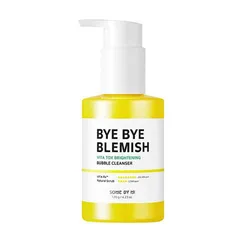
Works for:
based on ingredients and %- Cleansing
Doesn't work for:
based on ingredients and %- Exfoliation
- Anti-blemish
Can it cause trouble?
- Irritation risk: high
- Comedogenic risk ingredients: 1
Key actives


Cleansing
What does the product description say?
Vita Tox Brightening Bubble Cleanser
Source: From product name
This product works by removing dirt and oil from the surface of the skin. It uses a combination of mild cleansing agents (coco-betaine, disodium cocoamphodiacetate, linolenic acid, potassium cocoyl glycinate) and should be able to cleanse the skin gently. Still keep in mind that any cleansing can disrupt the skin barrier, and most people do not need to cleanse their skin more than once per day.
Even though this formulation is mild, the following cleansing agents could trigger an irritation or allergy for some people: coco-betaine
Helps oil and water mix together and works as a cleansing agent
Helps oil and water mix together and works as a cleansing agent. Can be allergenic
An emollient that helps soften the skin and calm down inflammation
Anti-blemish
What does the product description say?
Burst the bubble on blemishes and dark spots SOME BY MI Bye Bye Blemish Vita Tox Brightening Bubble Cleanser is a foaming bubble cleanser formulated with Goheung Yuja Extract, Jeju Green Tangerine Extract which is rich in Vitamin C. It helps fade dark spots, pigmentation and scars by whitening complexion and it helps eliminate dead skin cells to reveal energized and brighter skin.
Source: Glowsecret
Effective ingredients missing or their concentration is too low.
A plant extract that can help neutralize free radicals in skin. It contains a compound salicin that can theoretically be converted into salicylic acid that, in turn, helps reduce inflammation in skin, but the evidence of effectiveness in skin is lacking and the extract is usually not used in a concentration that would enable an exfoliating effect
A stable derivative of vitamin C. It is oil-soluble which means it is more likely to penetrate the skin compared to the pure form of vitamin C (which is water-soluble), but it is less bio-available and is way less effective in stimulating collagen and reducing wrinkles compared to the pure form of vitamin C (L-ascorbic acid) and its other derivatives (for example, magnesium ascorbyl phosphate). At the same time, this vitamin C derivative has been shown in studies to be effective in reducing acne, blemishes and clogged pores. It is less irritating then the pure form of vitamin C
Is proven to be effective in reducing blemishes, evening out skin tone and helping to improve lines and wrinkles. It helps the skin to repair sun damage, calm down inflammation and keep maintain good levels of moisture. The concentration of about 2% is effective for supporting the skin barrier and evening out the skin tone. Concentration of 4-6% is better for helping with acne and balancing the sebum production
Exfoliation
What does the product description say?
Refreshing bubble cleanser is formulated with yuja extract, Jeju green tangerine and 18 kinds of Vitamins to brighten skin while small konjac granules provide a gentle exfoliation.
Source: Yesstyle
This product does not contain effective exfoliating ingredients. It might be able to deliver physical exfoliation, that is scrub off some of the dead cells on the surface of the skin. We do not recommend physical exfoliation, because it is not uniform (some bits of skin can get exfoliated too much while others not at all). It can also traumatize the skin and aggrevate acne and other skin conditions.
A plant extract that can help neutralize free radicals in skin. It contains a compound salicin that can theoretically be converted into salicylic acid that, in turn, helps reduce inflammation in skin, but the evidence of effectiveness in skin is lacking and the extract is usually not used in a concentration that would enable an exfoliating effect
How honest is this product?
| Promise | Can it deliver? |
|---|---|
| Cleansing | |
| Exfoliation | |
| Anti-blemish |
Total Promises Fulfilled score: 33/100.
We receive a small commission for purchases made through these links at no cost for you. Thank you for your support! Learn more
Potential irritants
Comedogenic ingredients
User reviews (0)
Averages from community submissions.
No reviews yet for this product.
Be the first to share your experience!
Tried this product?
Help capture what the ingredient list can't—texture, finish, pilling, scent, and more. Answer what you can, skip the rest.
Takes ~30 seconds.
Reviews are shown in aggregate. No personal details.
| Product | Similarity | Price | Irritancy |
|---|---|---|---|
 Some By Mi Vita Tox Brightening Bubble Cleanser | Current | ≈ $15.27 | |
La Roche-Posay Effaclar H Iso-Biome Soothing Moisturising Cleansing Cream | 78% | ≈ $21.46 | |
Filorga Age-Purify Clean Smoothing Purifying Cleansing Gel | 78% | ≈ $37.02 | |
 CeraVe Hydrating Micellar Cleansing Water, Ultra Gentle Cleanser and Makeup Remover | 77% | - | |
 REVOLUTION SKINCARE Purifying Facial Gel Cleanser with Niacinamide | 77% | ≈ $8.53 | |
 Petite 'n Pretty My Stellar Micellar Makeup Remover Wipes | 77% | $10.00 |
Key Actives
Is proven to be effective in reducing blemishes, evening out skin tone and helping to improve lines and wrinkles. It helps the skin to repair sun damage, calm down inflammation and keep maintain good levels of moisture. The concentration of about 2% is effective for supporting the skin barrier and evening out the skin tone. Concentration of 4-6% is better for helping with acne and balancing the sebum production
Pure form of vitamin E. Can help moisturise and protect the skin from free radicals. Often used to help stabilise other ingredients or the formula itself
An emollient that helps soften the skin and calm down inflammation
Helps attract water to the upper layer of the skin and can help improve skin barrier function
A vitamin C derivative that is more stable but less potent than pure form of vitamin C. Has a potential to boost collagen production, nutralise free radicals and reduce hyperpigmentation, but the required concentration is likely to be much higher than for the pure form of vitamin C, limiting the ingredient's effectiveness in products
A peptide that can help neutralize free radicals in skin and reduce melanin production resulting in skin lightening effect and reduction in hyperpigmentation. It can also help attract moisture to the upper layer of the skin
Can support skin barrier function and reduce inflammation in skin
Helps oil and water mix together and works as a cleansing agent
One of the best moisturizing ingredients. Naturally present in skin. It attracts water to the upper layer of the skin working as a humectant
Helps oil and water mix together and works as a cleansing agent. Can be allergenic
One of the best moisturizing ingredients. Attracts water into the upper layer of the skin
Helps to attract water to the upper layer of the skin
Can help attract water to the upper layer of the skin. In crystal form, it can work as a gentle exfoliant, gentler than the salt scrub. Helps stabilize the emulsion
Might help neutralize free radicals in skin, but evidence of effectiveness in skin is lacking. It might be irritating
Works as a UV filter when used in high concentrations. It is photostable and is effective mostly against the UVB light, with some protection in the UVA range. In small concentrations, used for its ability to improve the color of cosmetic products. Is usually well tolerated by the skin
Potential irritants
Contains essential oil. Can be irritating and lead to photosensitivity
Helps oil and water mix together and works as a cleansing agent. Can be allergenic
A plant extract that can help neutralize free radicals in skin. It contains a compound salicin that can theoretically be converted into salicylic acid that, in turn, helps reduce inflammation in skin, but the evidence of effectiveness in skin is lacking and the extract is usually not used in a concentration that would enable an exfoliating effect
Used as a fragrance. Can be irritating and cause photosensitivity
The most well-researched antioxidant that works in skin. Helps neutralize free radicals supporting collagen production, helping to even out the skin tone and preventing early signs of aging
Might help neutralize free radicals in skin, but evidence of effectiveness in skin is lacking. It might be irritating
Used as a fragrance. It can reduce skin pigmentation, but it is not safe to use for these purposes in high concentrations as use of raspberry ketone and its derivative is linked to causing loss of skin pigmentation in people (leukoderma)
An aromatic blend of unspecified and possibly irritating ingredients
A common frangrance that can easily irritate skin, especially if exposed to air, light or heat
Helps oil and water mix together and works as a cleansing agent
A plant extract that might help neutralize free radicals in skin, but research on its effectiveness is lacking
A vitamin C derivative that is more stable but less potent than pure form of vitamin C. Has a potential to boost collagen production, nutralise free radicals and reduce hyperpigmentation, but the required concentration is likely to be much higher than for the pure form of vitamin C, limiting the ingredient's effectiveness in products
A more stable but less bio-available form of vitamin E compared to Tocopherol. Might help moisturize and protect the skin from free radicals, but mostly used in low concentrations to stabilize other ingredients.
A peptide that can help neutralize free radicals in skin and reduce melanin production resulting in skin lightening effect and reduction in hyperpigmentation. It can also help attract moisture to the upper layer of the skin
A vitamin C derivative. Studies show that is might be effective in reducing hyperpigmentation, but there are no studies confirming that it is effectively converted into the bioavailable form of Vitamin C in skin. It is not clear how this derivative compares in effectiveness to the topical application of bioavailable form of vitamin C (L-ascorbic acid)
An emollient that helps soften the skin and calm down inflammation
A stable derivative of vitamin C. It is oil-soluble which means it is more likely to penetrate the skin compared to the pure form of vitamin C (which is water-soluble), but it is less bio-available and is way less effective in stimulating collagen and reducing wrinkles compared to the pure form of vitamin C (L-ascorbic acid) and its other derivatives (for example, magnesium ascorbyl phosphate). At the same time, this vitamin C derivative has been shown in studies to be effective in reducing acne, blemishes and clogged pores. It is less irritating then the pure form of vitamin C
A derivative of vitamin C that is more stable, but less bioavailable than the pure form of vitamin C. It does not penetrate the skin well, but has been shown to convert to pure vitamin C once in skin. It can be helpful in stimulating collagen production and lightening the skin tone, but the required concentration is likely to be very high
Being a lipid soluble form of vitamin C, it is more stable than ascorbic acid, but still degrades quickly and needs to be stabilized in a formulation with another ingredient. It is claimed to penetrate skin better than pure vitamin C and have the the similar benefits, but solid studies of its effectiveness are lacking. Is likely to require a higher concentration in a product than pure vitamin C to be effective. It might be able to help reduce pore clogging.
Helps preserve products and creates a nice product texture
Can work as an exfoliant but is typically used to adjust the product pH
Used to thicken the product's consistency
Comedogenic ingredients
Used to thicken the product's consistency
All ingredients
Contains essential oil. Can be irritating and lead to photosensitivity
Helps oil and water mix together and works as a cleansing agent
One of the best moisturizing ingredients. Naturally present in skin. It attracts water to the upper layer of the skin working as a humectant
Helps oil and water mix together and works as a cleansing agent. Can be allergenic
A plant extract that can help neutralize free radicals in skin. It contains a compound salicin that can theoretically be converted into salicylic acid that, in turn, helps reduce inflammation in skin, but the evidence of effectiveness in skin is lacking and the extract is usually not used in a concentration that would enable an exfoliating effect
Used as a fragrance. Can be irritating and cause photosensitivity
A plant extract that might help neutralize free radicals in skin, but research on its effectiveness is lacking
One of the best moisturizing ingredients. Attracts water into the upper layer of the skin
Used to create a nice product texture and help delivery of other ingredients. Might be somewhat helpful in attracting water to the upper layer of the skin
Can help attract water to the upper layer of the skin. In crystal form, it can work as a gentle exfoliant, gentler than the salt scrub. Helps stabilize the emulsion
Helps attract water to the upper layer of the skin and can help improve skin barrier function
A vitamin C derivative that is more stable but less potent than pure form of vitamin C. Has a potential to boost collagen production, nutralise free radicals and reduce hyperpigmentation, but the required concentration is likely to be much higher than for the pure form of vitamin C, limiting the ingredient's effectiveness in products
Might have some moisturising properties. Is not effective when applied topically beyond some moisturizing effect
Is proven to be effective in reducing blemishes, evening out skin tone and helping to improve lines and wrinkles. It helps the skin to repair sun damage, calm down inflammation and keep maintain good levels of moisture. The concentration of about 2% is effective for supporting the skin barrier and evening out the skin tone. Concentration of 4-6% is better for helping with acne and balancing the sebum production
The most well-researched antioxidant that works in skin. Helps neutralize free radicals supporting collagen production, helping to even out the skin tone and preventing early signs of aging
A more stable but less bio-available form of vitamin E compared to Tocopherol. Might help moisturize and protect the skin from free radicals, but mostly used in low concentrations to stabilize other ingredients.
Pure form of vitamin E. Can help moisturise and protect the skin from free radicals. Often used to help stabilise other ingredients or the formula itself
A peptide that can help neutralize free radicals in skin and reduce melanin production resulting in skin lightening effect and reduction in hyperpigmentation. It can also help attract moisture to the upper layer of the skin
A vitamin C derivative. Studies show that is might be effective in reducing hyperpigmentation, but there are no studies confirming that it is effectively converted into the bioavailable form of Vitamin C in skin. It is not clear how this derivative compares in effectiveness to the topical application of bioavailable form of vitamin C (L-ascorbic acid)
Can support skin barrier function and reduce inflammation in skin
An emollient that helps soften the skin and calm down inflammation
Might help neutralize free radicals in skin, but evidence of effectiveness in skin is lacking. It might be irritating
A stable derivative of vitamin C. It is oil-soluble which means it is more likely to penetrate the skin compared to the pure form of vitamin C (which is water-soluble), but it is less bio-available and is way less effective in stimulating collagen and reducing wrinkles compared to the pure form of vitamin C (L-ascorbic acid) and its other derivatives (for example, magnesium ascorbyl phosphate). At the same time, this vitamin C derivative has been shown in studies to be effective in reducing acne, blemishes and clogged pores. It is less irritating then the pure form of vitamin C
A derivative of vitamin C that is more stable, but less bioavailable than the pure form of vitamin C. It does not penetrate the skin well, but has been shown to convert to pure vitamin C once in skin. It can be helpful in stimulating collagen production and lightening the skin tone, but the required concentration is likely to be very high
Being a lipid soluble form of vitamin C, it is more stable than ascorbic acid, but still degrades quickly and needs to be stabilized in a formulation with another ingredient. It is claimed to penetrate skin better than pure vitamin C and have the the similar benefits, but solid studies of its effectiveness are lacking. Is likely to require a higher concentration in a product than pure vitamin C to be effective. It might be able to help reduce pore clogging.
Helps preserve products and creates a nice product texture
Can work as an exfoliant but is typically used to adjust the product pH
Used to thicken the product's consistency
Used as a fragrance. It can reduce skin pigmentation, but it is not safe to use for these purposes in high concentrations as use of raspberry ketone and its derivative is linked to causing loss of skin pigmentation in people (leukoderma)
An umbrella term for the following three colorants: CI 77491, CI 77492, CI 77499. They might be able to offer some protection against visible light, but the degree of the protection is not clear
Works as a UV filter when used in high concentrations. It is photostable and is effective mostly against the UVB light, with some protection in the UVA range. In small concentrations, used for its ability to improve the color of cosmetic products. Is usually well tolerated by the skin
An aromatic blend of unspecified and possibly irritating ingredients
A common frangrance that can easily irritate skin, especially if exposed to air, light or heat
Ingredient list view
Water, Citrus junos fruit extract, Citrus reticulata fruit extract, Disodium cocoamphodiacetate, Glycerin, Potassium cocoyl glycinate, Coco-betaine, Methyl perfluorobutyl ether, Salix alba bark extract, Citrus limon fruit extract, Hippophae rhamnoides fruit extract, Bacillus/folic acid/soybean ferment extract, Sodium hyaluronate, Butylene glycol, Mannitol, Sucrose, Panthenol, Ascorbyl glucoside, Biotin, Niacinamide, Ascorbic acid, Tocopheryl acetate, Tocopherol, Glutathione, Ascorbyl tetraisopalmitate, Cyanocobalamin, Menadione, Linolenic acid, Pyridoxine, Unknown, Sodium ascorbyl phosphate, Magnesium ascorbyl phosphate, Tetrahexyldecyl ascorbate, Sodium riboflavin phosphate, Caprylyl glycol, Citric acid, Zea mays starch, Mannan, Microcrystalline cellulose, 1,2-hexanediol, Ethylhexylglycerin, Raspberry ketone, Disodium edta, Ci 19140, Ci 15985, Iron oxides, Ci 77492, Titanium dioxide, Ci 77891, Parfum, Limonene
- Safety Assessment of Citrus Fruit-Derived Ingredients as Used in Cosmetics
- Glycerol and the skin: holistic approach to its origin and functions
- Efficacy and Safety of White Willow Bark (Salix alba) Extract
- An evaluation of the effect of a topical product containing salicin on the visible signs of human skin aging
- Safety Assessment of Citrus-Derived Peel Oils as Used in Cosmetics
- Abundance of active ingredients in sea-buckthorn oil
- Hyaluronic acid: A key molecule in skin aging
- Hyaluronan (Hyaluronic Acid): a natural moisturizer for skin care
- Skin moisturizing effects of panthenol-based formulations
- Safety Assessment of Panthenol, Pantothenic Acid, and Derivatives as Used in Cosmetics
- The Roles of Vitamin C in Skin Health
- Stability, transdermal penetration, and cutaneous effects of ascorbic acid and its derivatives
- Niacinamide - mechanisms of action and its topical use in dermatology
- Gehring, W. (2004). Nicotinic acid/niacinamide and the skin. Journal of Cosmetic Dermatology, 3(2), 88–93. doi:10.1111/j.1473-2130.2004.00115.x
- Vitamin E in dermatology
- Vitamin E and Skin Health
- Glutathione as a skin whitening agent: Facts, myths, evidence and controversies
- Glutathione for skin lightening: a regnant myth or evidence-based verity?
- Glutathione for skin lightening for dermatologists and cosmetologists
- Assessment of penetration of Ascorbyl Tetraisopalmitate into biological membranes by molecular dynamics
- Stability evaluation of tocopheryl acetate and ascorbyl tetraisopalmitate in isolation and incorporated in cosmetic formulations using thermal analysis
- A new lipophilic pro-vitamin C, tetra-isopalmitoyl ascorbic acid (VC-IP), prevents UV-induced skin pigmentation through its anti-oxidative properties
- New lipophilic pro-vitamin C, tetra-isopalmitoyl ascorbic acid (VC-IP), suppresses senile lentigo through controlling of melanocytes-keratinocytes interaction
- Topical vitamin B12--a new therapeutic approach in atopic dermatitis-evaluation of efficacy and tolerability in a randomized placebo-controlled multicentre clinical trial
- Superiority of a vitamin B12-containing emollient compared to a standard emollient in the maintenance treatment of mild-to-moderate plaque psoriasis
- Cutaneous Metabolism of Vitamin B-6
- Sodium ascorbyl phosphate shows in vitro and in vivo efficacy in the prevention and treatment of acne vulgaris
- Sodium ascorbyl phosphate in topical microemulsions
- Final report of the safety assessment of L-Ascorbic Acid, Calcium Ascorbate, Magnesium Ascorbate, Magnesium Ascorbyl Phosphate, Sodium Ascorbate, and Sodium Ascorbyl Phosphate as used in cosmetics
- Regulation of collagen synthesis in human dermal fibroblasts by the sodium and magnesium salts of ascorbyl-2-phosphate
- Comparison of clinical efficacies of sodium ascorbyl phosphate, retinol and their combination in acne treatment
- Application of l-ascorbic acid and its derivatives (sodium ascorbyl phosphate and magnesium ascorbyl phosphate) in topical cosmetic formulations: stability studies
- Sodium L-ascorbyl-2-phosphate 5% lotion for the treatment of acne vulgaris: a randomized, double-blind, controlled trial
- Topical L-ascorbic acid: percutaneous absorption studies
- Double-blind, half-face study comparing topical vitamin C and vehicle for rejuvenation of photodamage
- Application of tetra-isopalmitoyl ascorbic acid in cosmetic formulations: Stability studies and in vivo efficacy
- The influence of alkane chain length on the skin irritation potential of 1,2-alkanediols
- Tyrosinase-Catalyzed Oxidation of the Leukoderma-Inducing Agent Raspberry Ketone Produces (E)-4-(3-Oxo-1-butenyl)-1,2-benzoquinone: Implications for Melanocyte Toxicity
- Analysis of Dyes in Cosmetics: Challenges and Recent Developments