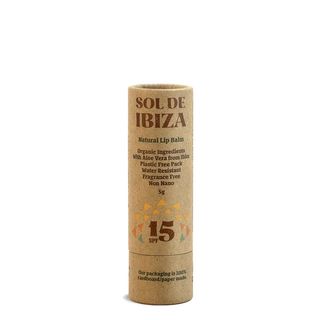
Sol de Ibiza Lip Balm SPF15
Works for
0 of 1 advertised claim delivered
Sun protectionSPF 15 · 1 UV filter · Broad spectrumWeak protectionSPF under 30
This product offers broad spectrum sun protection, but it is weak. We recommend to use a broad spectrum sunscreen with at least SPF 30.
This product can be considered "reef safe" because it does not contain the UV filters (oxybenzone and octinoxate) that can be harmful to coral reefs when present in the water in high concentrations.
MoisturizingNot advertised by the brand · 11 ingredients credited for this claimGood support
This product can help soften the skin and reduce its moisture loss with emollients and occlusives: caprylic/capric triglyceride, helianthus annuus seed oil.
Keep in mind that this product does not contain effective ingredients to attract water to the upper layer of the skin. This is why an additional product with humectants like glycerin or hyaluronic acid can be helpful (apply it before this product for the best results).
Can it cause trouble?
Irritancy1 strong irritant: Calendula officinalis flower extractMedium risk
Comedogenic1 ingredient rated 2 or more on the 0–5 pore-clogging scale1 flagged
User reviews
Be the first — your take helps the next person decide.
Ingredients
Filter by role to see what each ingredient is doing.
Zinc oxide~39–59%
- Irritation risk
- Low
A broad spectrum sunblock (protects from both UVA and UVB rays). Is suitable for most sensitive skins. In small concentrations, can be used as a colorant
More about Zinc oxidePrunus amygdalus dulcis oil~5.3–7.9%
- Irritation risk
- Low
An emollient that softens the skin
More about Prunus amygdalus dulcis oilCetyl alcohol~3.4–5.1%
- Irritation risk
- Low
A non-drying alcohol that works to soften the skin and stabilize product formulations helping oil and water mix together
More about Cetyl alcoholEuphorbia cerifera cera~2.9–4.4%
- Irritation risk
- Medium
Helps soften the upper layer of the skin and thickens the product's texture
More about Euphorbia cerifera ceraTheobroma cacao seed butter~2.3–3.4%
- Irritation risk
- Low
- Comedogenicity
- 3/5
Helps soften the upper layer of the skin and can be helpful in restoring the skin barrier function. Might have some anti-oxidant effect
More about Theobroma cacao seed butterCaprylic/capric triglyceride~1.9–2.8%
- Irritation risk
- Medium
A good mix of fatty acids that forms a protective layer on the skin. Improves the shelf life of products. Derived from coconut and glycerin
More about Caprylic/capric triglyceridePolyhydroxystearic acid~1.5–2.2%
- Irritation risk
- Medium
Used to create a thicker product consistency and stabilize the formulation
More about Polyhydroxystearic acidHelianthus annuus seed oil~1.3–2%
- Irritation risk
- Low
A great emollient due to its high linoleic acid content. One of the most effective plant oils in helping skin hydration and repairing skin barrier function
More about Helianthus annuus seed oilAloe barbadensis leaf juice~1–1.5%
- Irritation risk
- Medium
Traditionally used to treat sunburns, dermatitis and inflammation, but evidence for its effectiveness is lacking. The extract can contain humectants that help attract water into the skin
More about Aloe barbadensis leaf juiceAlthaea officinalis root extract~0.6–1.4%
- Irritation risk
- High
A plant extract that can help attract water to the upper layer of the skin and might help to reduce inflammation
More about Althaea officinalis root extractCalendula officinalis flower extract~0.5–1.1%
- Irritation risk
- High
A plant extract that has some anti-oxidant and anti-bacterial properties. Can be irritating
More about Calendula officinalis flower extractMalva sylvestris leaf extract~0.4–0.9%
- Irritation risk
- Medium
A plant extract that might help in reducing inflammation
More about Malva sylvestris leaf extractTocopheryl acetate~0.2–0.75%
- Irritation risk
- Medium
A more stable but less bio-available form of vitamin E compared to Tocopherol. Might help moisturize and protect the skin from free radicals, but mostly used in low concentrations to stabilize other ingredients.
More about Tocopheryl acetateTocopherol~0.15–0.6%
- Irritation risk
- Low
Pure form of vitamin E. Can help moisturise and protect the skin from free radicals. Often used to help stabilise other ingredients or the formula itself
More about TocopherolAscorbyl palmitate~0.1–0.3%
- Irritation risk
- Medium
Being a lipid soluble form of vitamin C, it is more stable and can penetrate the skin better than L-Ascorbic acid. It is effective in protecting the skin from free radicals, as well as evening the skin tone, but is less effective in stimulating collagen production compared to L-Ascorbic acid.
More about Ascorbyl palmitateLecithin~0.1–0.45%
- Irritation risk
- Low
Used mostly for creating emulsions - helping oil and water mix together. Helps soften the upper layer of the skin
More about LecithinCitric acid~0.05–0.2%
- Irritation risk
- Medium
Can work as an exfoliant but is typically used to adjust the product pH
More about Citric acidIngredient list view
Zinc oxide, Prunus amygdalus dulcis oil, Cetyl alcohol, Euphorbia cerifera cera, Theobroma cacao seed butter, Caprylic/capric triglyceride, Polyhydroxystearic acid, Helianthus annuus seed oil, Aloe barbadensis leaf juice, Althaea officinalis root extract, Calendula officinalis flower extract, Malva sylvestris leaf extract, Tocopheryl acetate, Tocopherol, Ascorbyl palmitate, Lecithin, Citric acid
Compare prices
Retailers ranked by price — lowest first.

Product summary
"Sol de Ibiza - Lip Balm SPF15" offers broad spectrum protection. It means that it protects from both UVA and UVB rays (you can remember UVB as "burning" sunlight - they cause sunburn. You can remember UVA rays as "aging" - they do not lead to sunburn, but they cause photodamage and contribute to early signs of skin aging and hyperpigmentation). On the negative side, the SPF of this lip product is not high enough. We recommend to use a sunscreen with at least SPF 30 daily.
Sunscreen filters
This lip product is a mineral sunscreen. It uses zinc oxide for sun protection. Zinc oxide almost never irritates the skin or stings eyes, but it can leave a white cast.
Irritation risk
There are some common irritants in this product, including ingredients that do not have benefits for the skin. We assess the overall irritancy of it to be medium. For a detailed overview of all potential irritants: click here
You can see the detailed formula review with the breakdown of all actives in the product and the full ingredient list with estimated concentrations in the tables below.
Price
The product retails for 11.00£ in the United Kingdom and for 11.00£ in the United Kingdom.
For a detailed price comparison: click here.
Sources cited in this review
Every concentration estimate and effectiveness label is anchored to one of these 19 studies and safety reviews.
- 1A review of inorganic UV filters zinc oxide and titanium dioxideonlinelibrary.wiley.com
- 2
- 3
- 4
- 5
- 6

Affiliate links · As an Amazon Associate, WIMJ earns from qualifying purchases.