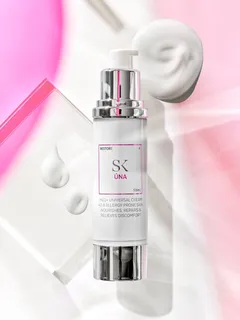
Works for
MoisturizingPanthenol, Coco-caprylate + 11 moreWorks well
“It is rich in gentle emollients (triglycerides and fatty acids that simulate our natural lipid film), ceramide precursors that repair damaged skin barrier function, beta glucan and panthenol that soothe inflammation (redness and itching) and rapeseed oil that contains balancing omega 3 and 6 fatty acids.”
This product can help improve hydration of the skin with the two types of ingredients.
The first type is called “humectants”:
these ingredients help attract water.
When humectants are on the surface of the skin, they “pull in” the moisture from the outside environment, or from
within deeper layers of the skin. The following ingredients in this product do the job:
betaine, glycerin.
This product also contains ingredients called “occlusives”. They help reduce the speed with which our skin loses moisture to the outside environment. These ingredients also help soften the upper layer of the skin, so it feels less tight and nicer to the touch. The following ingredients in this product do the job: caprylic/capric triglyceride, squalane.
The following ingredients in this product are especially good for supporting the skin barrier and helping with the hydration level: panthenol
Anti-agingTocopherol, Lactic acidNot delivered
“regenerates cells responsible for collagen production,”
This product does not contain ingredients that are able to reduce fine lines and wrinkles or help with skin elasticity, but it can improve the look of the skin temporarily through moisturization. Well-moisturized skin might also be able to repair the sun damage better.
Can it cause trouble?
Irritancy1 strong irritant: Sodium anisateMedium risk
ComedogenicClean of flagged comedogenic ingredientsNone flagged

User reviews
Be the first — your take helps the next person decide.
Ingredients
Filter by role to see what each ingredient is doing.
Water~40–60%
Coco-caprylate~5.5–8.3%
- Irritation risk
- Medium
An emollient that softens skin and creates a nice product texture
More about Coco-caprylateMethylpropanediol~3.9–5.9%
Caprylic/capric triglyceride~2.9–4.3%
- Irritation risk
- Medium
A good mix of fatty acids that forms a protective layer on the skin. Improves the shelf life of products. Derived from coconut and glycerin
More about Caprylic/capric triglycerideSqualane~2.2–3.3%
- Irritation risk
- Low
An oil naturally present in skin. Works as an emollient to soften the skin and form a protective layer on its surface without a greasy feeling.
More about SqualaneDiisostearoyl polyglyceryl-3 dimer dilinoleate~1.7–2.6%
- Irritation risk
- Low
Betaine~1.4–2.1%
- Irritation risk
- Low
Helps attract water to the upper layer of the skin and improves the product texture
More about BetaineGlycerin~1.3–2%
- Irritation risk
- Low
One of the best moisturizing ingredients. Naturally present in skin. It attracts water to the upper layer of the skin working as a humectant
More about GlycerinPhospholipids~1–1.5%
- Irritation risk
- Low
Emollients that are naturaly present in skin. In addition, they help water and oil mix together in the product
More about PhospholipidsSphingolipids~0.85–1.3%
- Irritation risk
- Low
Sphingolipids are a group of lipids with a common chemical structure. Some of them are naturally present in skin and can be converted to ceramides
More about SphingolipidsPanthenol~0.5–1.2%
- Irritation risk
- Low
Helps attract water to the upper layer of the skin and can help improve skin barrier function
More about PanthenolMagnesium carboxymethyl beta-glucan~0.45–1%
- Irritation risk
- Low
Helps attract water to the upper layer of the skin
More about Magnesium carboxymethyl beta-glucanMagnesium sulfate~0.4–1%
Hydrogenated rapeseed oil~0.4–0.9%
- Irritation risk
- Low
Bisabolol~0.3–0.7%
- Irritation risk
- Low
An active component of chamomile plant that historically has been used to calm down irritated skin. A recent study shows that bisabolol indeed can have some anti-inflammatory effect on skin, even though conclusive data is lacking. Bisabolol has a sweet floral scent and can be added to products for its aromatic properties
More about BisabololPentylene glycol~0.3–0.75%
- Irritation risk
- Medium
Used to preserve products, dissolve other ingredients and create a nice product texture
More about Pentylene glycolSodium levulinate~0.15–0.65%
Hydrogenated castor oil~0.2–0.7%
- Irritation risk
- Medium
A plant oil that can help soften the skin. It might be helpful in calming down inflammation, but solid research is lacking. Is often used in lip products to create the needed product consistency
More about Hydrogenated castor oilSodium anisate~0.15–0.5%
Potassium sorbate~0.1–0.4%
Disodium edta~0.1–0.35%
Tocopherol~0.1–0.35%
- Irritation risk
- Low
Pure form of vitamin E. Can help moisturise and protect the skin from free radicals. Often used to help stabilise other ingredients or the formula itself
More about TocopherolLactic acid~0.05–0.25%
- Irritation risk
- Medium
An exfoliating and moisturizing alpha-hydroxy acid (AHA). Typically causes less irritation than other AHAs, for example, glycolic acid. At high concentrations (about 15%), lactic acid can help reduce lines and wrinkles. Recent studies show that lactic acid can support the "good" bacteria living on skin's surface (healthy skin microbiome)
More about Lactic acidSodium citrate~0.05–0.15%
- Irritation risk
- Medium
Helps to control the skin's pH level. Maintains the skin's natural film of amino-lactic acids and oils. Helps to preserve products
More about Sodium citrateP-anisic acid~0.05–0.15%
- Irritation risk
- High
Helps preserve products. Can mask unpleasant smell. Could be irritating
More about P-anisic acidIngredient list view
Water, Coco-caprylate, Methylpropanediol, Caprylic/capric triglyceride, Squalane, Diisostearoyl polyglyceryl-3 dimer dilinoleate, Betaine, Glycerin, Phospholipids, Sphingolipids, Panthenol, Magnesium carboxymethyl beta-glucan, Magnesium sulfate, Hydrogenated rapeseed oil, Bisabolol, Pentylene glycol, Sodium levulinate, Hydrogenated castor oil, Sodium anisate, Potassium sorbate, Disodium edta, Tocopherol, Lactic acid, Sodium citrate, P-anisic acid
Compare prices
Retailers ranked by price — lowest first.

Worth comparing, line by line.
Match % combines shared ingredients, the first five ingredients, shared actives and hero ingredients, irritancy (lower counts in the alternative's favour), texture and body area. Only products in the same routine step are compared.
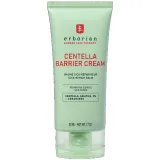
| SkintegraÚNAYOUR PRODUCT | ErborianCentella Barrier Cream Cica Repair Balm | BepanthenDerma Body Nutritive Cream | COSRXSkin Barrier Moisturizing Cream | |
|---|---|---|---|---|
| Match | — | 63% | 60% | 58% |
| Price | — | $28.69 | $17.99 | $16.22 |
| Shared key ingredients | — | 4 of 8 | 4 of 8 | 5 of 8 |
| Key difference | — | Ceramide Np | Niacinamide | Ceramide Ap |
| Irritancy | Medium | Low | Low | Medium |
| Drying alcohol | — | — | — | — |
| View product | Shop | Shop | Shop |

More alternatives: Dieux Skin Mercy Intense Recovery Cream for Sensitive & Eczema-Prone SkinBielenda HYDRO LIPIDIUM MAXIMUM TOLERANCE High-lipid barrier cream strongly regenerating
Product summary
"Skintegra - ÚNA" is effective for: Moisturizing
Ingredient callouts
- Panthenol (pro-vitamin B5) at about 0.50% - 1.20% concentration. In this concentration, Panthenol works effectively to improve the skin barrier and reduce inflammation.
- Humectants (panthenol 0.50% - 1.20%, glycerin 1.30% - 2.00% and betaine 1.40% - 2.10%). These ingredients help attract water to the upper layer of the skin and improve the skin hydration.
Sources cited in this review
Every concentration estimate and effectiveness label is anchored to one of these 14 studies and safety reviews.
- 1
- 2The role of epidermal sphingolipids in dermatologic diseasesncbi.nlm.nih.gov
- 3Skin moisturizing effects of panthenol-based formulationspdfs.semanticscholar.org
- 4
- 5Safety Assessment of Magnesium Sulfate as Used in Cosmeticsncbi.nlm.nih.gov
- 6

Affiliate links · As an Amazon Associate, WIMJ earns from qualifying purchases.