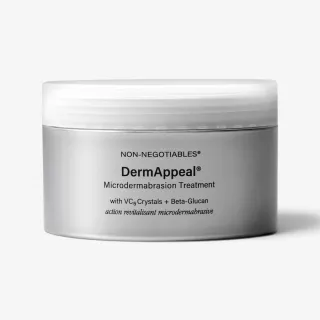
Skinn Non-Negotiables DermAppeal

Skinn Non-Negotiables DermAppeal

Efficacy18/100IrritancyMedium

Works for

Moisturizing
Caprylic/capric triglyceride, Glycerin + 2 more
Works
What the product description says
“• Helps replenish moisture, reduce the look of redness, and support a healthier skin barrier so skin feels more comfortable, resilient, and balanced post-exfoliation”
Source: TSC

This product can help improve hydration of the skin with the two types of ingredients.

The first type is called “humectants”:
these ingredients help attract water. When humectants are on the surface of the skin, they “pull in” the moisture from the outside environment, or from within deeper layers of the skin. The following ingredients in this product do the job: glycerin.

This product also contains ingredients called “occlusives”. They help reduce the speed with which our skin loses moisture to the outside environment. These ingredients also help soften the upper layer of the skin, so it feels less tight and nicer to the touch. The following ingredients in this product do the job: caprylic/capric triglyceride, glyceryl stearate.

Caprylic/capric triglycerideKey active· Emollient, OcclusiveEffect: HighA good mix of fatty acids that forms a protective layer on the skin. Improves the shelf life of products. Derived from coconut and glycerin~23–34%
GlycerinKey active· HumectantEffect: HighOne of the best moisturizing ingredients. Naturally present in skin. It attracts water to the upper layer of the skin working as a humectant~4.8–7.2%
TrihydroxystearinKey activeEffect: MediumHelps soften the upper layer of the skin and improve the product texture~1.1–1.6%
Glyceryl stearate· EmollientEffect: LowAn emollient that softens the skin and forms a protective layer on its surface. Helps water and oil mix together~4–6%
Evens skin tone
Tetrahexyldecyl ascorbate ~0.2–0.7% + 2 more
Under-dosed
What the product description says
“• Brightens the look of dull skin and helps improve the appearance of uneven skin tone”
Source: TSC

Effective ingredients missing or their concentration is too low

Magnesium ascorbyl phosphateEffect: Low, below effective doseA derivative of vitamin C that is more stable, but less bioavailable than the pure form of vitamin C. It does not penetrate the skin well, but has been shown to convert to pure vitamin C once in skin. It can be helpful in stimulating collagen production and lightening the skin tone, but the required concentration is likely to be very high~0.15–0.55%
Tetrahexyldecyl ascorbateUnder-dosedBeing a lipid soluble form of vitamin C, it is more stable than ascorbic acid, but still degrades quickly and needs to be stabilized in a formulation with another ingredient. It is claimed to penetrate skin better than pure vitamin C and have the the similar benefits, but solid studies of its effectiveness are lacking. Is likely to require a higher concentration in a product than pure vitamin C to be effective. It might be able to help reduce pore clogging.~0.2–0.7%
Ascorbic acidUnder-dosedThe most well-researched antioxidant that works in skin. Helps neutralize free radicals supporting collagen production, helping to even out the skin tone and preventing early signs of aging~0.1–0.4%
Ascorbyl glucosideUnder-dosedA vitamin C derivative that is more stable but less potent than pure form of vitamin C. Has a potential to boost collagen production, nutralise free radicals and reduce hyperpigmentation, but the required concentration is likely to be much higher than for the pure form of vitamin C, limiting the ingredient's effectiveness in products~0.1–0.4%
Anti-aging
Tetrahexyldecyl ascorbate ~0.2–0.7% + 2 more
Under-dosed
What the product description says
“• Reduces the appearance of fine lines and wrinkles and smooths rough texture”
Source: TSC

Effective ingredients missing or their concentration is too low.

Magnesium ascorbyl phosphateEffect: Low, below effective doseA derivative of vitamin C that is more stable, but less bioavailable than the pure form of vitamin C. It does not penetrate the skin well, but has been shown to convert to pure vitamin C once in skin. It can be helpful in stimulating collagen production and lightening the skin tone, but the required concentration is likely to be very high~0.15–0.55%
Tetrahexyldecyl ascorbateUnder-dosedBeing a lipid soluble form of vitamin C, it is more stable than ascorbic acid, but still degrades quickly and needs to be stabilized in a formulation with another ingredient. It is claimed to penetrate skin better than pure vitamin C and have the the similar benefits, but solid studies of its effectiveness are lacking. Is likely to require a higher concentration in a product than pure vitamin C to be effective. It might be able to help reduce pore clogging.~0.2–0.7%
Ascorbic acidUnder-dosedThe most well-researched antioxidant that works in skin. Helps neutralize free radicals supporting collagen production, helping to even out the skin tone and preventing early signs of aging~0.1–0.4%
Ascorbyl glucosideUnder-dosedA vitamin C derivative that is more stable but less potent than pure form of vitamin C. Has a potential to boost collagen production, nutralise free radicals and reduce hyperpigmentation, but the required concentration is likely to be much higher than for the pure form of vitamin C, limiting the ingredient's effectiveness in products~0.1–0.4%
Exfoliation
No ingredient credited for this claim
Not delivered
What the product description says
“• Five forms of vitamin C exfoliate and polish away dull skin”
Source: TSC

This product does not contain effective exfoliating ingredients. It might be able to deliver physical exfoliation, that is scrub off some of the dead cells on the surface of the skin. We do not recommend physical exfoliation, because it is not uniform (some bits of skin can get exfoliated too much while others not at all). It can also traumatize the skin and aggrevate acne and other skin conditions.

Can it cause trouble?

Irritancy
1 strong irritant: Mentha piperita oil
Medium risk
We flagged 8 ingredients with irritancy potential. Severity depends on your sensitivity threshold; the table lists the worst offenders first.
IngredientFunctionIrritationEst. amount
Mentha piperita oilUsed as a fragrance and can be irritatingHigh~0.5–1.15%est.
Cocamidopropyl betaineHelps water and oil mix together. Used as a cleansing ingredient. Could be an allergenHigh~0.95–1.45%est.
Ascorbic acidThe most well-researched antioxidant that works in skin. Helps neutralize free radicals supporting collagen production, helping to even out the skin tone and preventing early signs of agingHigh~0.1–0.4%est.
Caprylic/capric triglycerideA good mix of fatty acids that forms a protective layer on the skin. Improves the shelf life of products. Derived from coconut and glycerinMedium~23–34%est.
Oleth-20Helps oil and water mix togetherMedium~5.2–7.8%est.
Tetrahexyldecyl ascorbateBeing a lipid soluble form of vitamin C, it is more stable than ascorbic acid, but still degrades quickly and needs to be stabilized in a formulation with another ingredient. It is claimed to penetrate skin better than pure vitamin C and have the the similar benefits, but solid studies of its effectiveness are lacking. Is likely to require a higher concentration in a product than pure vitamin C to be effective. It might be able to help reduce pore clogging.Medium~0.2–0.7%est.
Magnesium ascorbyl phosphateA derivative of vitamin C that is more stable, but less bioavailable than the pure form of vitamin C. It does not penetrate the skin well, but has been shown to convert to pure vitamin C once in skin. It can be helpful in stimulating collagen production and lightening the skin tone, but the required concentration is likely to be very highMedium~0.15–0.55%est.
Ascorbyl glucosideA vitamin C derivative that is more stable but less potent than pure form of vitamin C. Has a potential to boost collagen production, nutralise free radicals and reduce hyperpigmentation, but the required concentration is likely to be much higher than for the pure form of vitamin C, limiting the ingredient's effectiveness in productsMedium~0.1–0.4%est.
Comedogenic
Clean of flagged comedogenic ingredients
None flagged

User reviews

Would you recommend?
No community reviews yet.

Be the first — your take helps the next person decide.

Ingredients

Filter by role to see what each ingredient is doing.

Caprylic/capric triglyceride~23–34%
Key activeIrritant · medium
Irritation risk
Medium
Works for
Moisturizing

A good mix of fatty acids that forms a protective layer on the skin. Improves the shelf life of products. Derived from coconut and glycerin

More about Caprylic/capric triglyceride
Glycerin~4.8–7.2%
Key active
Irritation risk
Low
Works for
Moisturizing

One of the best moisturizing ingredients. Naturally present in skin. It attracts water to the upper layer of the skin working as a humectant

More about Glycerin
Oleth-20~5.2–7.8%
Irritant · medium
Irritation risk
Medium
Works for
Cleansing

Helps oil and water mix together

More about Oleth-20
Glyceryl stearate~4–6%
Formula
Irritation risk
Low
Works for
CleansingMoisturizing

An emollient that softens the skin and forms a protective layer on its surface. Helps water and oil mix together

More about Glyceryl stearate
Synthetic wax~3–4.5%
Formula
Irritation risk
Low

Used to stabilize product formulations and thicken product consistency

More about Synthetic wax
Sodium bicarbonate~2.1–3.2%
Formula
Irritation risk
Low

Helps regulate the product pH

More about Sodium bicarbonate
Zeolite~1.6–2.3%
Formula
Irritation risk
Low

Used to create a thicker product consistency

More about Zeolite
Pumice~1.5–2.2%
Formula
Irritation risk
Low

Milled volcanic rock. Used as an abrasive for physical exfoliation

More about Pumice
Trihydroxystearin~1.1–1.6%
Key active
Irritation risk
Low
Works for
Moisturizing

Helps soften the upper layer of the skin and improve the product texture

More about Trihydroxystearin
Water~0.85–1.25%
Formula
Irritation risk
Low

Plain old water

More about Water
Mentha piperita oil~0.5–1.15%
Irritant · high
Irritation risk
High

Used as a fragrance and can be irritating

More about Mentha piperita oil
Cocamidopropyl betaine~0.95–1.45%
Irritant · high
Irritation risk
High
Works for
Cleansing

Helps water and oil mix together. Used as a cleansing ingredient. Could be an allergen

More about Cocamidopropyl betaine
Tetrahexyldecyl ascorbate~0.2–0.7%
Under-dosedIrritant · medium
Irritation risk
Medium
Works for
Evens skin toneAnti-agingAnti-oxidation

Being a lipid soluble form of vitamin C, it is more stable than ascorbic acid, but still degrades quickly and needs to be stabilized in a formulation with another ingredient. It is claimed to penetrate skin better than pure vitamin C and have the the similar benefits, but solid studies of its effectiveness are lacking. Is likely to require a higher concentration in a product than pure vitamin C to be effective. It might be able to help reduce pore clogging.

More about Tetrahexyldecyl ascorbate
Magnesium ascorbyl phosphate~0.15–0.55%
Irritant · medium
Irritation risk
Medium
Works for
Anti-agingEvens skin toneAnti-oxidation

A derivative of vitamin C that is more stable, but less bioavailable than the pure form of vitamin C. It does not penetrate the skin well, but has been shown to convert to pure vitamin C once in skin. It can be helpful in stimulating collagen production and lightening the skin tone, but the required concentration is likely to be very high

More about Magnesium ascorbyl phosphate
Ascorbyl glucoside~0.1–0.4%
Under-dosedIrritant · medium
Irritation risk
Medium
Works for
Anti-oxidationAnti-agingEvens skin tone

A vitamin C derivative that is more stable but less potent than pure form of vitamin C. Has a potential to boost collagen production, nutralise free radicals and reduce hyperpigmentation, but the required concentration is likely to be much higher than for the pure form of vitamin C, limiting the ingredient's effectiveness in products

More about Ascorbyl glucoside
Ascorbic acid~0.1–0.4%
Under-dosedIrritant · high
Irritation risk
High
Works for
Anti-agingEvens skin toneAnti-oxidation

The most well-researched antioxidant that works in skin. Helps neutralize free radicals supporting collagen production, helping to even out the skin tone and preventing early signs of aging

More about Ascorbic acid
Ingredient list view

Caprylic/capric triglyceride, Glycerin, Oleth-20, Glyceryl stearate, Synthetic wax, Sodium bicarbonate, Zeolite, Pumice, Trihydroxystearin, Water, Mentha piperita oil, Cocamidopropyl betaine, Tetrahexyldecyl ascorbate, Magnesium ascorbyl phosphate, Ascorbyl glucoside, Ascorbic acid

Compare prices

Retailers ranked by price — lowest first.

🇨🇦 Amazon CA (CA)Price as of 11/8 06:00 GMT
≈ $26.64
Buy
🇨🇦 TSC (CA)
≈ $42.07
Buy

Affiliate links · As an Amazon Associate, WIMJ earns from qualifying purchases.

Worth comparing, line by line.

Match % combines shared ingredients, the first five ingredients, shared actives and hero ingredients, irritancy (lower counts in the alternative's favour), texture and body area. Only products in the same routine step are compared.

Side-by-side comparison of this product against its closest alternatives
SkinnNon-Negotiables DermAppealYOUR PRODUCTThalgoM-ceutic Intensive PeelVolitionTurmeric Brightening PolishSothysCosmeceutique RX Glysalac Dermobooster
Match—36%36%36%
Price——$43.00—
Shared key ingredients—2 of 22 of 22 of 2
Key difference—Ascorbyl GlucosideSunflower Seed OilSalicylic Acid
Irritancy Medium Low Medium Low
Drying alcohol————
View product Shop Shop Shop

More alternatives: Clinique Liquid Facial Soap TubeMavala Skin Vitality Beauty Enhancing Micro-Peel

Cheaper alternatives? See how this stacks up against similar formulas.
We compare ingredient profiles across our catalog — pick the closest match for your budget.
Open dupe finder
Skinn Non-Negotiables DermAppeal
SkinnNon-Negotiables DermAppeal

Affiliate links · As an Amazon Associate, WIMJ earns from qualifying purchases.

As an Amazon Associate, WIMJ earns from qualifying purchases.