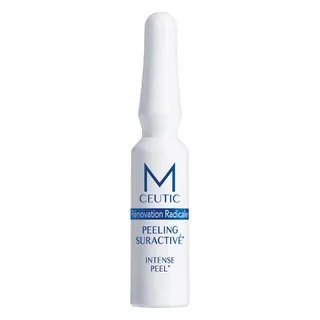
Works for
Evens skin toneAscorbyl glucosideMay help
“3% for a more refined skin texture and a clearer, more even complexion.”
The following ingredient (ingredients) in this product might be helpful, but there is no evidence to confirm that it actually works: ascorbyl glucoside.
ExfoliationPapainNot delivered
“Ideal for those with problematic, breakout-prone skin types, the scientifically advanced face peel delivers enzymatic and chemical exfoliation to unveil a brighter and revitalised complexion.”
This product might help exfoliate the skin with papain, but this ingredient is not the most effective.
Anti-oxidationSide benefit · Ascorbyl glucoside, TocopherolMay help
This product contains antioxidants (ascorbyl glucoside) that can help neutralize free radicals in skin to lessen the damage it gets from the UV light (sun). There is some human evidence for this effect in skin, though it is smaller or less consistent than the evidence for the best antioxidants.
MoisturizingSide benefit · Glycerin, Caprylic/capric triglyceride + 6 moreWorks
This product can help improve hydration of the skin with the two types of ingredients.
The first type is called “humectants”:
these ingredients help attract water.
When humectants are on the surface of the skin, they “pull in” the moisture from the outside environment, or from
within deeper layers of the skin. The following ingredients in this product do the job:
alcaligenes polysaccharides, glycerin.
This product also contains ingredients called “occlusives”. They help reduce the speed with which our skin loses moisture to the outside environment. These ingredients also help soften the upper layer of the skin, so it feels less tight and nicer to the touch. The following ingredients in this product do the job: caprylic/capric triglyceride, alcaligenes polysaccharides.
Anti-agingSide benefit · Ascorbyl glucoside, TocopherolMay help
This product contains ascorbyl glucoside. There is some human evidence that this ingredient helps reduce and prevent fine lines and wrinkles and improve skin elasticity and firmness, though it is smaller or less consistent than the evidence for the best anti-aging ingredients.
Can it cause trouble?
Irritancy10 flagged ingredientsLow risk
Comedogenic2 ingredients rated 2 or more on the 0–5 pore-clogging scale2 flagged
User reviews
Be the first — your take helps the next person decide.
Ingredients
Filter by role to see what each ingredient is doing.
Water~40–60%
Ascorbyl glucoside~5.6–8.4%
- Irritation risk
- Medium
A vitamin C derivative that is more stable but less potent than pure form of vitamin C. Has a potential to boost collagen production, nutralise free radicals and reduce hyperpigmentation, but the required concentration is likely to be much higher than for the pure form of vitamin C, limiting the ingredient's effectiveness in products
More about Ascorbyl glucosideC12-13 alkyl lactate~3.7–5.5%
- Irritation risk
- Low
Glycerin~2.8–4.2%
- Irritation risk
- Low
One of the best moisturizing ingredients. Naturally present in skin. It attracts water to the upper layer of the skin working as a humectant
More about GlycerinCaprylic/capric triglyceride~2.2–3.3%
- Irritation risk
- Medium
A good mix of fatty acids that forms a protective layer on the skin. Improves the shelf life of products. Derived from coconut and glycerin
More about Caprylic/capric triglycerideIsopentyldiol~1.7–2.6%
Pentylene glycol~1.5–2.2%
- Irritation risk
- Medium
Used to preserve products, dissolve other ingredients and create a nice product texture
More about Pentylene glycolLaminaria ochroleuca extract~1.2–1.9%
- Irritation risk
- Low
- Comedogenicity
- 3/5
Helps attract water to the upper layer of the skin
More about Laminaria ochroleuca extractPapain~1–1.5%
- Irritation risk
- High
An enzyme extracted from papaya fruit. Can have an exfoliating effect on the skin. Can be irritating
More about PapainPhenoxyethanol~0.5–1%
- Irritation risk
- Low
A preservative. It helps prevent bacterial growth in cosmetic products
More about PhenoxyethanolHydroxyethylcellulose~0.5–1.2%
- Irritation risk
- Low
Used to thicken product formulations and create gel-like textures
More about HydroxyethylcellulosePolyacrylate crosspolymer-6~0.45–1%
- Irritation risk
- Low
Sodium citrate~0.4–0.9%
- Irritation risk
- Medium
Helps to control the skin's pH level. Maintains the skin's natural film of amino-lactic acids and oils. Helps to preserve products
More about Sodium citrateSodium hydroxide~0.35–0.75%
Chlorphenesin~0.16–0.32%
1,2-hexanediol~0.15–0.5%
Alcaligenes polysaccharides~0.2–0.7%
- Irritation risk
- Low
Help attract water to the upper layer of the skin
More about Alcaligenes polysaccharidesCaprylyl glycol~0.15–0.55%
- Irritation risk
- Medium
Helps preserve products and creates a nice product texture
More about Caprylyl glycolCarbomer~0.1–0.35%
- Irritation risk
- Low
Helps create a thicker or gel-like product texture. It is not a surfactant but can be used in gentle cleansing formulations
More about CarbomerCitric acid~0.1–0.3%
- Irritation risk
- Medium
Can work as an exfoliant but is typically used to adjust the product pH
More about Citric acidAlgin~0.05–0.25%
- Irritation risk
- Low
- Comedogenicity
- 3/5
Used to thicken product formulation. Can help attract water to the upper layer of the skin
More about AlginT-butyl alcohol~0.05–0.2%
- Irritation risk
- Medium
Used to dissolve other ingredients and to improve smell of products. It could be irritating
More about T-butyl alcoholTocopherol~0.05–0.2%
- Irritation risk
- Low
Pure form of vitamin E. Can help moisturise and protect the skin from free radicals. Often used to help stabilise other ingredients or the formula itself
More about TocopherolIngredient list view
Water, Ascorbyl glucoside, C12-13 alkyl lactate, Glycerin, Caprylic/capric triglyceride, Isopentyldiol, Pentylene glycol, Laminaria ochroleuca extract, Papain, Phenoxyethanol, Hydroxyethylcellulose, Polyacrylate crosspolymer-6, Sodium citrate, Sodium hydroxide, Chlorphenesin, 1,2-hexanediol, Alcaligenes polysaccharides, Caprylyl glycol, Carbomer, Citric acid, Algin, T-butyl alcohol, Tocopherol
Compare prices
Retailers ranked by price — lowest first.
Worth comparing, line by line.
Match % combines shared ingredients, the first five ingredients, shared actives and hero ingredients, irritancy (lower counts in the alternative's favour), texture and body area. Only products in the same routine step are compared.
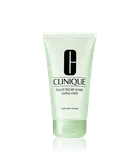
| ThalgoM-ceutic Intensive PeelYOUR PRODUCT | ZiajaonlineZiaja Sensitive Skin Enzyme Peeling | CliniqueLiquid Facial Soap Tube | SothysCosmeceutique RX Glysalac Dermobooster | |
|---|---|---|---|---|
| Match | — | 35% | 29% | 28% |
| Price | — | $7.26 | — | — |
| Shared key ingredients | — | 3 of 5 | 2 of 5 | 2 of 5 |
| Key difference | — | Panthenol | Urea | Salicylic Acid |
| Irritancy | Low | Low | Low | Low |
| Drying alcohol | — | — | — | — |
| View product | Shop | Shop | Shop |



More alternatives: Algotherm Algo Essential Comfort Enzymatic Exfoliating GelLa Mer The Micro Peel
Sources cited in this review
Every concentration estimate and effectiveness label is anchored to one of these 7 studies and safety reviews.
- 1The Roles of Vitamin C in Skin Healthncbi.nlm.nih.gov
- 2
- 3
- 4
- 5
- 6Vitamin E in dermatologyncbi.nlm.nih.gov

Affiliate links · As an Amazon Associate, WIMJ earns from qualifying purchases.