Works for
1 of 1 advertised claim delivered
Moisturizing41 ingredients credited for this claimStrong support
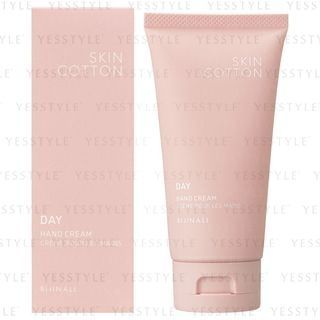
“Day Hand Cream”
This product can help improve hydration of the skin with the two types of ingredients.
The first type is called “humectants”:
these ingredients help attract water.
When humectants are on the surface of the skin, they “pull in” the moisture from the outside environment, or from
within deeper layers of the skin. The following ingredients in this product do the job:
acetamidoethoxyethanol, alanine.
This product also contains ingredients called “occlusives”. They help reduce the speed with which our skin loses moisture to the outside environment. These ingredients also help soften the upper layer of the skin, so it feels less tight and nicer to the touch. The following ingredients in this product do the job: arginine, dilinoleic acid.
The following ingredients in this product are especially good for supporting the skin barrier and helping with the hydration level: ceramide ap, ceramide ng, ceramide np, phytosphingosine
Anti-oxidationNot advertised by the brand · 6 ingredients credited for this claimStrong support
This product contains antioxidants (ubiquinone) that can help neutralize free radicals in skin. By doing so, they can lessen the damage the skin gets from the UV light (sun).
Anti-agingNot advertised by the brand · 7 ingredients credited for this claimModerate support
This product contains aspartic acid, serine, threonine. These ingredients might be able to help reduce and prevent fine lines and wrinkles, improve skin elasticity and firmness, but there is not enough evidence that it actually works.
Can it cause trouble?
Irritancy1 strong irritant: ParfumMedium risk
Comedogenic3 ingredients rated 2 or more on the 0–5 pore-clogging scale3 flagged


User reviews
Be the first — your take helps the next person decide.
Ingredients
Filter by role to see what each ingredient is doing.
Water~45–55%
Butylene glycol~5.8–7.1%
- Irritation risk
- Low
Used to create a nice product texture and help delivery of other ingredients. Might be somewhat helpful in attracting water to the upper layer of the skin
More about Butylene glycolGlycerin~4.1–5%
- Irritation risk
- Low
One of the best moisturizing ingredients. Naturally present in skin. It attracts water to the upper layer of the skin working as a humectant
More about GlycerinCyclohexasiloxane~3.1–3.8%
- Irritation risk
- Low
A silicone that serves as an emollient. Helps create a nice non-greasy feels
More about CyclohexasiloxaneMethylheptyl laurate~2.3–2.8%
- Irritation risk
- Low
Isopentyldiol~1.8–2.2%
Stearyl alcohol~1.5–1.9%
- Irritation risk
- Low
An emollient that helps soften the skin
More about Stearyl alcoholBetaine~1.2–1.5%
- Irritation risk
- Low
Helps attract water to the upper layer of the skin and improves the product texture
More about BetaineArachidyl alcohol~1–1.3%
- Irritation risk
- Low
Used to soften the upper layer of the skin and create a thicker product consistency
More about Arachidyl alcoholAcetamidoethoxyethanol~0.7–1.05%
- Irritation risk
- Low
A new synthetic humectant that, according to the first tests, works better than glycerin in attracting moisture to the skin surface. It might be able to keep attracting water to the upper layer of the skin for longer compared with glycerin. Its texture is also nicer. Because of this, products with it are likely to be less sticky and more pleasant on application. It is unlikely to cause irritation and products with it work for sensitive skin. For best hydration results, it should be used at about 5-10% in a formulation. This ingredient is developed by a supplier Nouryon and is sold to skincare brands under the name Elfamoist AC.
More about AcetamidoethoxyethanolGlyceryl stearate se~0.55–0.8%
- Irritation risk
- Low
- Comedogenicity
- 2/5
Used to stabilize the product formulations and works as an emollient
More about Glyceryl stearate seEthylhexyl palmitate~0.5–0.75%
- Irritation risk
- Low
- Comedogenicity
- 3/5
An emollient that helps soften the skin and create a nice product texture
More about Ethylhexyl palmitateNiacinamide~0.35–0.65%
- Irritation risk
- Low
Is proven to be effective in reducing blemishes, evening out skin tone and helping to improve lines and wrinkles. It helps the skin to repair sun damage, calm down inflammation and keep maintain good levels of moisture. The concentration of about 2% is effective for supporting the skin barrier and evening out the skin tone. Concentration of 4-6% is better for helping with acne and balancing the sebum production
More about NiacinamideGlyceryl glucoside~0.3–0.55%
- Irritation risk
- Low
Can help to restore skin barrier function and soften its upper layer
More about Glyceryl glucosideAscorbyl glucoside~0.25–0.5%
- Irritation risk
- Medium
A vitamin C derivative that is more stable but less potent than pure form of vitamin C. Has a potential to boost collagen production, nutralise free radicals and reduce hyperpigmentation, but the required concentration is likely to be much higher than for the pure form of vitamin C, limiting the ingredient's effectiveness in products
More about Ascorbyl glucosideHydrolyzed hyaluronic acid~0.25–0.5%
- Irritation risk
- Low
One of the best moisturizing ingredients. Attracts water into the upper layer of the skin. A version of it is naturally present in skin
More about Hydrolyzed hyaluronic acidHydroxypropyltrimonium hyaluronate~0.3–0.55%
- Irritation risk
- Low
Sodium hyaluronate~0.2–0.4%
- Irritation risk
- Low
One of the best moisturizing ingredients. Attracts water into the upper layer of the skin
More about Sodium hyaluronateCeramide ng~0.25–0.4%
- Irritation risk
- Low
A type of lipid similar to ceramides naturally present in skin. Helps to soften the upper layer of the skin and supports the skin barrier function to keep it hydrated. Can help to prevent inflammation in skin
More about Ceramide ngCeramide np~0.2–0.4%
- Irritation risk
- Low
A type of lipid similar to ceramides naturally present in skin. Helps to soften the upper layer of the skin and supports the skin barrier function to keep it hydrated. Can help to prevent inflammation in skin
More about Ceramide npCeramide ap~0.15–0.3%
- Irritation risk
- Low
A type of lipid similar to ceramides naturally present in skin. Helps to soften the upper layer of the skin and supports the skin barrier function to keep it hydrated. Can help to prevent inflammation in skin
More about Ceramide apUbiquinone~0.15–0.3%
- Irritation risk
- Low
Coenzyme Q10. It helps neutralize free radicals in skin, improves skin hydration and might be helpful agains fine lines and wrinkles. It can be an allergen
More about UbiquinoneRosa canina fruit extract~0.1–0.2%
- Irritation risk
- Medium
A plant extract that might have some anti-oxidant properties, but evidence is lacking
More about Rosa canina fruit extractFullerenes~0.15–0.25%
- Irritation risk
- Low
Hydrolyzed silk~0.15–0.25%
- Irritation risk
- Medium
Can help attract water to the upper layer of the skin
More about Hydrolyzed silkGlycyrrhizic acid~0.15–0.25%
- Irritation risk
- Low
Phytosphingosine~0.2–0.35%
- Irritation risk
- Low
A type of lipid that is naturally present in skin. It might help in repairing skin barrier function and has anti-bacterial effect
More about PhytosphingosineAllantoin~0.15–0.3%
- Irritation risk
- Low
Helps calm down inflammation in skin and can help reduce itching. Helps to repair the skin barrier and keep skin hydrated
More about AllantoinDilinoleic acid~0.2–0.35%
Stearic acid~0.3–0.55%
- Irritation risk
- Low
Helps oil and water mix together and works as an emollient
More about Stearic acidHydroxystearic acid~0.25–0.5%
Polyglycerin-10~0.15–0.3%
- Irritation risk
- Low
Glycyrrhiza glabra leaf extract~0.15–0.3%
- Irritation risk
- Low
A plant extract that can be effective for calming down inflammation and lightening the skin, but the effectivenss in products can vary significantly based on the extract quality and concentration used
More about Glycyrrhiza glabra leaf extractPhellodendron amurense bark extract~0.15–0.3%
- Irritation risk
- Medium
A plant extract that might have an anti-inflammatory effect
More about Phellodendron amurense bark extractGlycosyl trehalose~0.25–0.4%
Pca~0.2–0.35%
- Irritation risk
- Low
Naturally present in skin and helps to attract water to its upper layer
More about PcaSodium pca~0.2–0.35%
- Irritation risk
- Low
Naturally present in skin and helps to attract water to its upper layer
More about Sodium pcaAlanine~0.2–0.35%
- Irritation risk
- Low
An amino-acid that helps to attract water to the upper layer of the skin and might help to lighten the skin, but solid evidence is lacking
More about AlanineArginine~0.15–0.3%
- Irritation risk
- Low
An amino acid that is naturally present in skin and helps keep it hydrated. When used together with AHAs, it can reduce their irritating effect on the skin
More about ArginineIsoleucine~0.2–0.35%
- Irritation risk
- Low
An amino acid that can help attract water to the upper layer of the skin and support skin's barrier function
More about IsoleucineGlycine~0.2–0.35%
- Irritation risk
- Low
Helps to attract water to the upper layer of the skin and can help restore the skin barrier function
More about GlycineSerine~0.2–0.35%
- Irritation risk
- Low
An amino-acid that helps to attract water to the upper layer of the skin. In combination with other amino-acids, might help to reduce fine lines and wrinkles
More about SerineThreonine~0.2–0.4%
- Irritation risk
- Low
An amino-acid that helps to attract water to the upper layer of the skin. In combination with other amino-acids, might help to reduce fine lines and wrinkles
More about ThreonineValine~0.2–0.35%
- Irritation risk
- Low
Histidine~0.2–0.4%
Phenylalanine~0.25–0.45%
- Irritation risk
- Low
Proline~0.25–0.45%
Aspartic acid~0.25–0.4%
- Irritation risk
- Low
An amino-acid that helps increase skin hydration and might help to slightly improve skin firmness, potentially reducing lines and wrinkles
More about Aspartic acidBentonite~0.25–0.5%
Sunflower seed oil/hydrogenated sunflower seed oil esters~0.25–0.5%
- Irritation risk
- Low
Tocopheryl acetate~0.25–0.45%
- Irritation risk
- Medium
A more stable but less bio-available form of vitamin E compared to Tocopherol. Might help moisturize and protect the skin from free radicals, but mostly used in low concentrations to stabilize other ingredients.
More about Tocopheryl acetateTocopherol~0.25–0.45%
- Irritation risk
- Low
Pure form of vitamin E. Can help moisturise and protect the skin from free radicals. Often used to help stabilise other ingredients or the formula itself
More about TocopherolTriethylhexanoin~0.2–0.35%
- Irritation risk
- Medium
Helps soften the upper layer of the skin
More about TriethylhexanoinCyclopentasiloxane~0.25–0.5%
- Irritation risk
- Low
A silicone that helps improve the product texture and spreadability. Can absorb oil creating a short-term mattifying effect on the skin
More about CyclopentasiloxanePeg-100 hydrogenated castor oil~0.25–0.5%
Glyceryl caprylate~0.3–0.55%
- Irritation risk
- Low
An emollient that can also help water and oil mix together, as well as prevent bacteria growth in products
More about Glyceryl caprylateGlyceryl ricinoleate~0.25–0.5%
- Irritation risk
- Low
Glyceryl undecylenate~0.25–0.5%
- Irritation risk
- Medium
Helps oil and water mix together and helps preserve the product formulation
More about Glyceryl undecylenateArachidyl glucoside~0.25–0.45%
Cetearyl glucoside~0.25–0.45%
- Irritation risk
- Medium
Helps water and oil in the product mix well together and improves product texture
More about Cetearyl glucosideCetearyl alcohol~0.3–0.55%
- Irritation risk
- Low
- Comedogenicity
- 2/5
A non-drying alcohol. Works as an emollient. Helps water and oil mix together and creates a nice product texture
More about Cetearyl alcoholBehenyl alcohol~0.3–0.5%
- Irritation risk
- Low
Non-drying alcohol that helps water and oil mix together. Also serves as an emollient
More about Behenyl alcoholSodium stearoyl lactylate~0.25–0.45%
- Irritation risk
- Medium
Helps oil and water mix together
More about Sodium stearoyl lactylateHydrogenated lecithin~0.25–0.45%
- Irritation risk
- Low
Helps to retain moisture by creating a protective barrier on the skin. Rich in fatty acids. Improves product texture and helps with the penetration of other ingredients.
More about Hydrogenated lecithinPolyglyceryl-10 pentastearate~0.25–0.45%
- Irritation risk
- Low
Pvp~0.25–0.45%
- Irritation risk
- Medium
Helps evenly disperse other ingredients in a formulation and create an even layer on the surface of the skin
More about PvpXanthan gum~0.25–0.4%
- Irritation risk
- Low
Used to create a thicker product consistency
More about Xanthan gumCarbomer~0.2–0.35%
- Irritation risk
- Low
Helps create a thicker or gel-like product texture. It is not a surfactant but can be used in gentle cleansing formulations
More about CarbomerSodium lactate~0.2–0.35%
- Irritation risk
- Medium
Helps attract water to the upper layer of the skin. Is often used to adjust the pH level of the product
More about Sodium lactateCitric acid~0.15–0.3%
- Irritation risk
- Medium
Can work as an exfoliant but is typically used to adjust the product pH
More about Citric acidSodium citrate~0.15–0.3%
- Irritation risk
- Medium
Helps to control the skin's pH level. Maintains the skin's natural film of amino-lactic acids and oils. Helps to preserve products
More about Sodium citratePotassium hydroxide~0.15–0.3%
Phenoxyethanol~0.15–0.3%
- Irritation risk
- Low
A preservative. It helps prevent bacterial growth in cosmetic products
More about PhenoxyethanolParfum~0.1–0.15%
- Irritation risk
- High
An aromatic blend of unspecified and possibly irritating ingredients
More about ParfumIngredient list view
Water, Butylene glycol, Glycerin, Cyclohexasiloxane, Methylheptyl laurate, Isopentyldiol, Stearyl alcohol, Betaine, Arachidyl alcohol, Acetamidoethoxyethanol, Glyceryl stearate se, Ethylhexyl palmitate, Niacinamide, Glyceryl glucoside, Ascorbyl glucoside, Hydrolyzed hyaluronic acid, Hydroxypropyltrimonium hyaluronate, Sodium hyaluronate, Ceramide ng, Ceramide np, Ceramide ap, Ubiquinone, Rosa canina fruit extract, Fullerenes, Hydrolyzed silk, Glycyrrhizic acid, Phytosphingosine, Allantoin, Unknown, Dilinoleic acid, Stearic acid, Hydroxystearic acid, Polyglycerin-10, Glycyrrhiza glabra leaf extract, Unknown, Phellodendron amurense bark extract, Unknown, Glycosyl trehalose, Unknown, Pca, Sodium pca, Alanine, Arginine, Isoleucine, Glycine, Serine, Threonine, Valine, Histidine, Phenylalanine, Proline, Aspartic acid, Bentonite, Sunflower seed oil/hydrogenated sunflower seed oil esters, Tocopheryl acetate, Tocopherol, Triethylhexanoin, Cyclopentasiloxane, Peg-100 hydrogenated castor oil, Glyceryl caprylate, Glyceryl ricinoleate, Glyceryl undecylenate, Arachidyl glucoside, Cetearyl glucoside, Cetearyl alcohol, Behenyl alcohol, Sodium stearoyl lactylate, Hydrogenated lecithin, Polyglyceryl-10 pentastearate, Pvp, Xanthan gum, Carbomer, Sodium lactate, Citric acid, Sodium citrate, Potassium hydroxide, Phenoxyethanol, Parfum
Compare prices
Retailers ranked by price — lowest first.

Affiliate links · prices updated regularly
Worth comparing, line by line.
Match % combines shared ingredients, the first five ingredients, shared actives and hero ingredients, irritancy (lower counts in the alternative's favour), texture and body area. Only products in the same routine step are compared.
| SkincottonDay Hand CreamYOUR PRODUCT | CeraVeTherapeutic Hand Cream | Rephrintense hydration cream 1.0 | Key SoulcareSKIN TRANSFORMATION CREAM FRAGRANCE FREE | |
|---|---|---|---|---|
| Match | — | 79% | 73% | 72% |
| Price | $22.70 | $10.99−$11.71 | — | $34.00+$11.30 |
| Shared key ingredients | — | 6 of 31 | 9 of 31 | 6 of 31 |
| Key difference | — | Ceramide Eop | Adenosine | Bakuchiol |
| Irritancy | Medium | Low | Medium | Low |
| Drying alcohol | — | — | — | — |
| View product | Shop | Shop | Shop |


Product summary
"Skincotton - Day Hand Cream" is a well-rounded moisturizing product. The formulation is based on a combination of good humectants and emollients. Both are needed to increase the skin hydration level. Humectants in this product (acetamidoethoxyethanol, alanine, arginine, aspartic acid and betaine) help to increase the water content in the upper layer of the skin. (These ingredients do so by "capturing" water molecules from the outside air or from within the deeper layers of the skin). Ceramide ng, ceramide np, phytosphingosine, dilinoleic acid and arginine in this product help decrease the water evoporation from the skin, so that it stays hydrated for longer. These ingredients also soften the skin and take away the feeling of tightness and dryness.
Ingredient callouts
- As a plus, this moisturizer also contains Ceramides (phytosphingosine 0.20% - 0.35%, ceramide ap 0.15% - 0.30%, ceramide np 0.20% - 0.40% and ceramide ng 0.25% - 0.40%). Ceramides are a type of lipids that our skin produces itself. They are a building block of the skin's barrier. Ceramides used in skincare are synthetic or extracted from plants. They work well for softening the skin surface and "patch holes" in the skin's barrier.
Irritation risk
This formulation includes some common irritants, including ingredients that do not provide a benefit for the skin. We assess the overall irritancy of this moisturizer to be medium. For a detailed overview of all potential irritants: click here
You can see the detailed formula review with the breakdown of all actives in the product and the full ingredient list with estimated concentrations in the tables below.
Price
The product retails for 22.70$ in the United States.
For a detailed price comparison: click here.
Sources cited in this review
Every concentration estimate and effectiveness label is anchored to one of these 34 studies and safety reviews.
- 1
- 2
- 3ElfaMoist AC humectant (manufacturer's report)krahnnordics.com
- 4
- 5
- 6

Affiliate links · As an Amazon Associate, WIMJ earns from qualifying purchases.