Works for
2 of 2 advertised claims delivered
MoisturizingSodium hyaluronate, Serine + 18 moreGood evidence
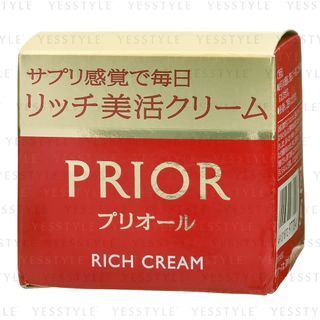
“Prior Rich Cream”
This product can help improve hydration of the skin with the two types of ingredients.
The first type is called “humectants”:
these ingredients help attract water.
When humectants are on the surface of the skin, they “pull in” the moisture from the outside environment, or from
within deeper layers of the skin. The following ingredients in this product do the job:
alanine, glycerin.
This product also contains ingredients called “occlusives”. They help reduce the speed with which our skin loses moisture to the outside environment. These ingredients also help soften the upper layer of the skin, so it feels less tight and nicer to the touch. The following ingredients in this product do the job: dimethicone, squalane.
Anti-agingSerine, Sericin + 1 moreModerate evidence
“This rich cream targets visible signs of aging, such as fine lines and wrinkles, and delivers moisture to aging skin.”
This product contains serine. This ingredient might be able to help reduce and prevent fine lines and wrinkles, improve skin elasticity and firmness, but there is not enough evidence that it actually works.
Anti-oxidationNot advertised by the brand · Camellia sinensis extract, Sericin + 2 moreModerate evidence
This product contains antioxidants (camellia sinensis extract) that might be able to help neutralize free radicals in skin to lessen the damage it gets from the UV light (sun). There is not enough evidence to confirm their effectiveness in skin though.
Can it cause trouble?
Irritancy3 strong irritants: Rosmarinus officinalis extract, Alcohol + 1 more — patch-test recommendedHigh risk
ComedogenicClean of flagged comedogenic ingredientsNone flagged


User reviews
Be the first — your take helps the next person decide.
Ingredients
Filter by role to see what each ingredient is doing.
Water~45–55%
Glycerin~4.5–5.5%
- Irritation risk
- Low
One of the best moisturizing ingredients. Naturally present in skin. It attracts water to the upper layer of the skin working as a humectant
More about GlycerinButylene glycol~4–4.8%
- Irritation risk
- Low
Used to create a nice product texture and help delivery of other ingredients. Might be somewhat helpful in attracting water to the upper layer of the skin
More about Butylene glycolIsohexadecane~3.1–3.8%
- Irritation risk
- Low
Improves the texture of the product and helps soften the skin. Helps oil and water mix together and can be used as a cleansing agent
More about IsohexadecaneDimethicone~2.4–2.9%
- Irritation risk
- Low
A silicone that helps to reduce water loss from the surface of the skin. Can temporarily "fill in" lines and wrinkles, absorb oil, and create a nice product finish
More about DimethiconeDipropylene glycol~1.8–2.2%
- Irritation risk
- Low
Helps to dissolve other ingredients in a formulation. Slows down the rate of product drying
More about Dipropylene glycolHydrogenated polydecene~1.5–1.9%
- Irritation risk
- Low
Helps to soften the upper layer of the skin and create a nice product texture
More about Hydrogenated polydeceneIsododecane~1.5–1.8%
- Irritation risk
- Low
An emollient that helps soften the skin and can decrease moisture loss. Helps create a nice product texture
More about IsododecaneDisteardimonium hectorite~1.2–1.4%
- Irritation risk
- Low
A type of clay that is used to thicken the product consistency
More about Disteardimonium hectoritePeg-9 polydimethylsiloxyethyl dimethicone~0.9–1.15%
- Irritation risk
- Medium
A type of silicone that helps water and oil mix together
More about Peg-9 polydimethylsiloxyethyl dimethiconePeg-400~0.7–1%
- Irritation risk
- Low
Cetyl ethylhexanoate~0.6–0.9%
- Irritation risk
- Medium
An emollient that helps soften the skin and creates a thicker product texture
More about Cetyl ethylhexanoatePetrolatum~0.55–0.8%
- Irritation risk
- Low
One of the most effective and the most studied occlusive ingredients that creates a protective layer on top of the skin preventing moisture loss
More about PetrolatumDiisostearyl malate~0.5–0.75%
- Irritation risk
- Medium
Helps to soften the upper layer of the skin
More about Diisostearyl malatePeg-6~0.45–0.65%
- Irritation risk
- Low
Helps to dissolve other ingredients and attract water to the upper layer of the skin
More about Peg-6Peg-32~0.45–0.65%
- Irritation risk
- Low
Helps dissolve other ingredients and attract water to the upper layer of the skin
More about Peg-32Squalane~0.45–0.7%
- Irritation risk
- Low
An oil naturally present in skin. Works as an emollient to soften the skin and form a protective layer on its surface without a greasy feeling.
More about SqualaneCamellia sinensis extract~0.3–0.6%
- Irritation risk
- Low
Tea extract. Might be helpful in neutralizing free radicals in skin
More about Camellia sinensis extractHordeum vulgare extract~0.35–0.6%
- Irritation risk
- Medium
A plant extract that might have some anti-oxidant properties. Avoid if you are sensitive to gluten
More about Hordeum vulgare extractSodium hyaluronate~0.3–0.5%
- Irritation risk
- Low
One of the best moisturizing ingredients. Attracts water into the upper layer of the skin
More about Sodium hyaluronateRosmarinus officinalis extract~0.25–0.45%
- Irritation risk
- High
Hydrolyzed collagen~0.3–0.55%
- Irritation risk
- Low
A typically plant-derived compound that is supposed mimic human collagen. Cannot penetrate the skin barrier so is not particularly useful in skincare products beyond attracting water to the upper layer of the skin
More about Hydrolyzed collagenRoyal jelly extract~0.25–0.45%
- Irritation risk
- Medium
A compound secreted by bees. Might be able to attract water to the top layer of the skin. Avoid if sensitive to honey and bee products
More about Royal jelly extractSerine~0.25–0.45%
- Irritation risk
- Low
An amino-acid that helps to attract water to the upper layer of the skin. In combination with other amino-acids, might help to reduce fine lines and wrinkles
More about SerineGlycerin~0.3–0.5%
- Irritation risk
- Low
One of the best moisturizing ingredients. Naturally present in skin. It attracts water to the upper layer of the skin working as a humectant
More about GlycerinSericin~0.25–0.45%
Ci 15850~0.25–0.45%
Roe extract~0.25–0.45%
- Irritation risk
- Low
Isostearic acid~0.3–0.6%
- Irritation risk
- Low
Used to create a nice product texture
More about Isostearic acidPeg-8~0.25–0.45%
- Irritation risk
- Medium
Used to create a nice product consistency
More about Peg-8Cellulose gum~0.25–0.5%
- Irritation risk
- Low
Used to create thicker product consistency and stabilize emulsions
More about Cellulose gumPolyvinyl alcohol~0.25–0.5%
Citric acid~0.25–0.45%
- Irritation risk
- Medium
Can work as an exfoliant but is typically used to adjust the product pH
More about Citric acidSodium citrate~0.25–0.45%
- Irritation risk
- Medium
Helps to control the skin's pH level. Maintains the skin's natural film of amino-lactic acids and oils. Helps to preserve products
More about Sodium citrateAlcohol~0.25–0.45%
- Irritation risk
- High
Can be drying and contribute to skin irritation. Used in formulars to dissolve other ingredients, create a thinner product consistency or for its antibacterial properties
More about AlcoholSodium metaphosphate~0.25–0.45%
Edta~0.2–0.4%
Sodium persulfate~0.2–0.4%
- Irritation risk
- Low
Alanine~0.2–0.4%
- Irritation risk
- Low
An amino-acid that helps to attract water to the upper layer of the skin and might help to lighten the skin, but solid evidence is lacking
More about AlanineTocopherol~0.2–0.4%
- Irritation risk
- Low
Pure form of vitamin E. Can help moisturise and protect the skin from free radicals. Often used to help stabilise other ingredients or the formula itself
More about TocopherolPotassium sorbate~0.15–0.3%
Phenoxyethanol~0.15–0.25%
- Irritation risk
- Low
A preservative. It helps prevent bacterial growth in cosmetic products
More about PhenoxyethanolMethylparaben~0.1–0.2%
Ethylparaben~0.15–0.25%
Parfum~0.1–0.25%
- Irritation risk
- High
An aromatic blend of unspecified and possibly irritating ingredients
More about ParfumPotassium oxide~0.1–0.2%
- Irritation risk
- Low
Ingredient list view
Water, Glycerin, Butylene glycol, Isohexadecane, Dimethicone, Dipropylene glycol, Hydrogenated polydecene, Isododecane, Disteardimonium hectorite, Peg-9 polydimethylsiloxyethyl dimethicone, Peg-400, Cetyl ethylhexanoate, Petrolatum, Diisostearyl malate, Peg-6, Peg-32, Squalane, Camellia sinensis extract, Hordeum vulgare extract, Sodium hyaluronate, Rosmarinus officinalis extract, Hydrolyzed collagen, Royal jelly extract, Serine, Glycerin, Sericin, Ci 15850, Roe extract, Unknown, Isostearic acid, Peg-8, Cellulose gum, Polyvinyl alcohol, Citric acid, Sodium citrate, Alcohol, Sodium metaphosphate, Edta, Sodium persulfate, Alanine, Tocopherol, Potassium sorbate, Phenoxyethanol, Methylparaben, Ethylparaben, Parfum, Unknown, Potassium oxide
Compare prices
Retailers ranked by price — lowest first.

Worth comparing, line by line.
Match % combines shared ingredients, the first five ingredients, shared actives and hero ingredients, irritancy (lower counts in the alternative's favour), texture and body area. Only products in the same routine step are compared.
| ShiseidoPrior Rich CreamYOUR PRODUCT | Too FacedHangover Mini Pillow Cream | olive manonShikolive Skin Cream | Paula's choiceMOISTURE BOOST Hydrating Treatment Cream | |
|---|---|---|---|---|
| Match | — | 62% | 60% | 60% |
| Price | $63.70 | $20.02−$43.68 | $14.60−$49.10 | $58.97−$4.73 |
| Shared key ingredients | — | 6 of 10 | 6 of 10 | 6 of 10 |
| Key difference | — | Niacinamide | Sucrose | Niacinamide |
| Irritancy | High | Medium | Low | Medium |
| Drying alcohol | Contains drying alcohol | — | — | — |
| View product | Shop | Shop | Shop |


Sources cited in this review
Every concentration estimate and effectiveness label is anchored to one of these 14 studies and safety reviews.
- 1
- 2
- 3Final Report on the Safety Assessment of Dimethicone Copolyoljournals.sagepub.com
- 4Safety Assessment of Polyene Group as Used in Cosmeticscir-safety.org
- 5
- 6Celiac Disease & Skin Care Productsbadgut.org

Affiliate links · As an Amazon Associate, WIMJ earns from qualifying purchases.