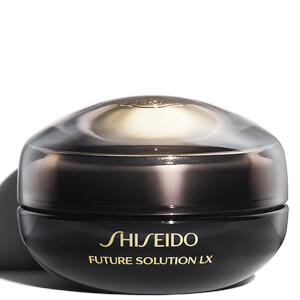
Shiseido Future Solution LX Eye and Lip Contour Regenerating Cream
Works for
1 of 2 advertised claims delivered
Moisturizing16 ingredients credited for this claimStrong support
“Future Solution LX Eye and Lip Contour Regenerating Cream”
This product can help improve hydration of the skin with the two types of ingredients.
The first type is called “humectants”:
these ingredients help attract water.
When humectants are on the surface of the skin, they “pull in” the moisture from the outside environment, or from
within deeper layers of the skin. The following ingredients in this product do the job:
glycerin, trehalose.
This product also contains ingredients called “occlusives”. They help reduce the speed with which our skin loses moisture to the outside environment. These ingredients also help soften the upper layer of the skin, so it feels less tight and nicer to the touch. The following ingredients in this product do the job: cera microcristallina, dimethicone.
The following ingredients in this product are especially good for supporting the skin barrier and helping with the hydration level: paraffinum liquidum
Anti-aging1 ingredient credited for this claimLimited support
“With essential nutrients, skin looks renewed from within as wrinkles and dark circles become less visible.”
This product does not contain ingredients that are able to reduce fine lines and wrinkles or help with skin elasticity, but it can improve the look of the skin temporarily through moisturization. Well-moisturized skin might also be able to repair the sun damage better.
Can it cause trouble?
Irritancy8 strong irritants: Parfum, Linalool + 6 more — patch-test recommendedHigh risk
Comedogenic3 ingredients rated 2 or more on the 0–5 pore-clogging scale3 flagged

User reviews
Be the first — your take helps the next person decide.
Ingredients
Filter by role to see what each ingredient is doing.
Water~45–55%
Glycerin~4.7–5.7%
- Irritation risk
- Low
One of the best moisturizing ingredients. Naturally present in skin. It attracts water to the upper layer of the skin working as a humectant
More about GlycerinDimethicone~4.6–5.6%
- Irritation risk
- Low
A silicone that helps to reduce water loss from the surface of the skin. Can temporarily "fill in" lines and wrinkles, absorb oil, and create a nice product finish
More about DimethiconeDipropylene glycol~3.2–4%
- Irritation risk
- Low
Helps to dissolve other ingredients in a formulation. Slows down the rate of product drying
More about Dipropylene glycolParaffinum liquidum~2.8–3.4%
- Irritation risk
- Low
Mineral oil. One of the most effective and well studied occlusive and emollient moisturizing ingredients. Helps reduce moisture loss in skin and repair skin barrier function
More about Paraffinum liquidumButylene glycol~2.3–2.8%
- Irritation risk
- Low
Used to create a nice product texture and help delivery of other ingredients. Might be somewhat helpful in attracting water to the upper layer of the skin
More about Butylene glycolTrehalose~2–2.4%
- Irritation risk
- Low
A sugar that attracts water to the upper layer of the skin
More about TrehaloseDiisostearyl malate~1.9–2.3%
- Irritation risk
- Medium
Helps to soften the upper layer of the skin
More about Diisostearyl malateMyristyl myristate~1.7–2.1%
- Irritation risk
- Medium
- Comedogenicity
- 3/5
An emollient. Is not recommended for acne-prone skin as it can be comedogenic
More about Myristyl myristateHdi/trimethylol hexyllactone crosspolymer~1.3–1.6%
- Irritation risk
- Low
Used to create a silky product texture and add volume to products
More about Hdi/trimethylol hexyllactone crosspolymerDimethicone crosspolymer~1.2–1.4%
- Irritation risk
- Low
Used to create a thicker product texture. Helps soften the upper layer of the skin and might be able to prevent moisture loss from its surface
More about Dimethicone crosspolymerBehenyl alcohol~1–1.2%
- Irritation risk
- Low
Non-drying alcohol that helps water and oil mix together. Also serves as an emollient
More about Behenyl alcoholGlyceryl stearate se~0.75–1.15%
- Irritation risk
- Low
- Comedogenicity
- 2/5
Used to stabilize the product formulations and works as an emollient
More about Glyceryl stearate seSilica~1.1–1.3%
Stearyl alcohol~0.75–1.15%
- Irritation risk
- Low
An emollient that helps soften the skin
More about Stearyl alcoholPentaerythrityl tetraethylhexanoate~0.75–1.15%
- Irritation risk
- Low
Used to create a nice product consistency while softening the upper layer of the skin
More about Pentaerythrityl tetraethylhexanoatePentaerythrityl tetrabehenate/benzoate/ethylhexanoate~0.75–1.1%
- Irritation risk
- Low
Piperidinepropionic acid~0.65–1%
- Irritation risk
- Low
Batyl alcohol~0.65–1%
- Irritation risk
- Low
Non-drying alcohol. Used to stabilize other ingredients and is an emollient
More about Batyl alcoholIsododecane~0.6–0.9%
- Irritation risk
- Low
An emollient that helps soften the skin and can decrease moisture loss. Helps create a nice product texture
More about IsododecaneMicrocrystalline wax~0.6–0.9%
Cera microcristallina~0.65–0.95%
- Irritation risk
- Low
Helps to soften the upper layer of the skin, reduce water loss from its surface and create a thicker product consistency
More about Cera microcristallinaPeg-40 stearate~0.6–0.9%
Phenoxyethanol~0.6–0.85%
- Irritation risk
- Low
A preservative. It helps prevent bacterial growth in cosmetic products
More about PhenoxyethanolTitanium dioxide~0.65–1%
- Irritation risk
- Low
Works as a UV filter when used in high concentrations. It is photostable and is effective mostly against the UVB light, with some protection in the UVA range. In small concentrations, used for its ability to improve the color of cosmetic products. Is usually well tolerated by the skin
More about Titanium dioxideCi 77891~0.55–0.85%
- Irritation risk
- Low
Dimethylacrylamide/sodium acryloyldimethyltaurate crosspolymer~0.55–0.85%
- Irritation risk
- Low
Paraffin~0.5–0.75%
- Irritation risk
- Low
Prevents water loss from the skin surface and thickens the product consistency
More about ParaffinPolyisobutene~0.6–0.9%
Parfum~0.55–0.8%
- Irritation risk
- High
An aromatic blend of unspecified and possibly irritating ingredients
More about ParfumSorbitan tristearate~0.6–0.85%
- Irritation risk
- Medium
Helps oil and water mix together
More about Sorbitan tristearateTocopheryl acetate~0.5–0.75%
- Irritation risk
- Medium
A more stable but less bio-available form of vitamin E compared to Tocopherol. Might help moisturize and protect the skin from free radicals, but mostly used in low concentrations to stabilize other ingredients.
More about Tocopheryl acetateAcrylates/steareth-20 methacrylate copolymer~0.55–0.85%
- Irritation risk
- Low
Sodium citrate~0.55–0.85%
- Irritation risk
- Medium
Helps to control the skin's pH level. Maintains the skin's natural film of amino-lactic acids and oils. Helps to preserve products
More about Sodium citrateBht~0.45–0.7%
Mica~0.55–0.85%
- Irritation risk
- Low
Creates an illusion of smoother and more radiant skin tone. Adds shimmer to the skin by reflecting light
More about Mica2-o-ethyl ascorbic acid~0.55–0.8%
- Irritation risk
- Low
Peg-240/hdi copolymer bis-decyltetradeceth-20 ether~0.55–0.85%
- Irritation risk
- Medium
Helps create a gel-like product texture
More about Peg-240/hdi copolymer bis-decyltetradeceth-20 etherBarium sulfate~0.6–0.85%
- Irritation risk
- Low
Sodium metabisulfite~0.1–0.2%
Trisodium edta~0.55–0.85%
Aluminum hydroxide~0.6–0.9%
- Irritation risk
- Low
Is used to add opaque (non-transparent) appearance to formulations. Can be used to coat other ingredients for even dispersion. This is a different ingredient compared to the ones used in antipersperants (aluminium chloride and aluminium chlorohydrate)
More about Aluminum hydroxidePotassium hydroxide~0.55–0.85%
Iron oxides~0.55–0.8%
- Irritation risk
- Low
An umbrella term for the following three colorants: CI 77491, CI 77492, CI 77499. They might be able to offer some protection against visible light, but the degree of the protection is not clear
More about Iron oxidesCi 77492~0.55–0.85%
Sodium metaphosphate~0.55–0.85%
Citric acid~0.55–0.85%
- Irritation risk
- Medium
Can work as an exfoliant but is typically used to adjust the product pH
More about Citric acidLinalool~0.55–0.8%
Alcohol~0.55–0.85%
- Irritation risk
- High
Can be drying and contribute to skin irritation. Used in formulars to dissolve other ingredients, create a thinner product consistency or for its antibacterial properties
More about AlcoholLimonene~0.55–0.8%
- Irritation risk
- High
A common frangrance that can easily irritate skin, especially if exposed to air, light or heat
More about LimoneneCitronellol~0.55–0.8%
Geraniol~0.55–0.8%
Alpha-isomethyl ionone~0.55–0.8%
- Irritation risk
- High
A fragrance. Potential allergen and can be irritating
More about Alpha-isomethyl iononeBenzyl benzoate~0.55–0.8%
- Irritation risk
- High
Fragrance with sweet balsamic smell. Help to preserve products and dissolve other ingredients. Could trigger allergic reactions and be irritating
More about Benzyl benzoatePrunus speciosa leaf extract~0.55–0.8%
- Irritation risk
- Low
Iron oxides~0.55–0.8%
- Irritation risk
- Low
An umbrella term for the following three colorants: CI 77491, CI 77492, CI 77499. They might be able to offer some protection against visible light, but the degree of the protection is not clear
More about Iron oxidesCi 77491~0.55–0.8%
- Irritation risk
- Low
A red colorant made of iron oxide. Typically is not irritating
More about Ci 77491Angelica acutiloba root extract~0.55–0.8%
- Irritation risk
- Low
Isodonis japonicus leaf/stalk extract~0.5–0.75%
- Irritation risk
- Low
Alumina~0.6–0.9%
- Irritation risk
- Low
The same compound that is used safely in dental implants and bone cements. In cosmetics, it is used to improve the consistency of products
More about AluminaSodium lauryl sulfate~0.75–1.1%
- Irritation risk
- High
- Comedogenicity
- 3/5
A cleansing agent (SLS). It can be irritating
More about Sodium lauryl sulfatePolymethyl methacrylate~0.5–0.75%
- Irritation risk
- Low
Is used to enhance product texture and can help to optically mask skin imperfections
More about Polymethyl methacrylateHibiscus esculentus fruit extract~0.45–0.7%
- Irritation risk
- High
A plant extract that might help to neutralize free radicals. It can be irritating
More about Hibiscus esculentus fruit extractCamellia sinensis leaf extract~0.3–0.55%
- Irritation risk
- Low
Can contain potent anti-oxidant compounds (abbreviated ECG, GCG, EGC, and EGCG) that might help protect the skin from free radicals. Can help calm down inflammation and has some anti-bacterial properties. Unfortunately, these antioxidants are unstable and lose their effectiveness very quickly in products. The concentration of the antioxidant compounds in the extract also tends to be low to be effective in topical formulation
More about Camellia sinensis leaf extractHouttuynia cordata extract~0.3–0.55%
- Irritation risk
- Low
Ingredient list view
Water, Glycerin, Dimethicone, Dipropylene glycol, Paraffinum liquidum, Butylene glycol, Trehalose, Diisostearyl malate, Myristyl myristate, Hdi/trimethylol hexyllactone crosspolymer, Dimethicone crosspolymer, Behenyl alcohol, Glyceryl stearate se, Silica, Stearyl alcohol, Pentaerythrityl tetraethylhexanoate, Pentaerythrityl tetrabehenate/benzoate/ethylhexanoate, Piperidinepropionic acid, Batyl alcohol, Isododecane, Microcrystalline wax, Cera microcristallina, Peg-40 stearate, Phenoxyethanol, Titanium dioxide, Ci 77891, Dimethylacrylamide/sodium acryloyldimethyltaurate crosspolymer, Paraffin, Polyisobutene, Parfum, Sorbitan tristearate, Tocopheryl acetate, Acrylates/steareth-20 methacrylate copolymer, Sodium citrate, Bht, Mica, 2-o-ethyl ascorbic acid, Peg-240/hdi copolymer bis-decyltetradeceth-20 ether, Barium sulfate, Sodium metabisulfite, Trisodium edta, Aluminum hydroxide, Potassium hydroxide, Iron oxides, Ci 77492, Sodium metaphosphate, Citric acid, Linalool, Alcohol, Limonene, Citronellol, Geraniol, Alpha-isomethyl ionone, Benzyl benzoate, Prunus speciosa leaf extract, Iron oxides, Ci 77491, Angelica acutiloba root extract, Isodonis japonicus leaf/stalk extract, Alumina, Sodium lauryl sulfate, Polymethyl methacrylate, Hibiscus esculentus fruit extract, Camellia sinensis leaf extract, Houttuynia cordata extract
Compare prices
Retailers ranked by price — lowest first.

Worth comparing, line by line.
Match % combines shared ingredients, the first five ingredients, shared actives and hero ingredients, irritancy (lower counts in the alternative's favour), texture and body area. Only products in the same routine step are compared.
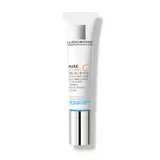
| ShiseidoFuture Solution LX Eye and Lip Contour Regenerating CreamYOUR PRODUCT | La Roche-Posayredermic vitamin canti-ageing eye cream | KracieHadabisei One Wrinkle Care Eye Cream | Naturally RadiantSuperdrug Naturally Radiant Brightening Eye cream | |
|---|---|---|---|---|
| Match | — | 60% | 60% | 58% |
| Price | $125.13 | $64.71−$60.42 | $10.72−$114.41 | $5.27−$119.86 |
| Shared key ingredients | — | 4 of 8 | 3 of 8 | 3 of 8 |
| Key difference | — | Vitamin C | Retinyl Palmitate | Butyrospermum Parkii Butter |
| Irritancy | High | Low | Medium | Medium |
| Drying alcohol | Contains drying alcohol | — | — | — |
| View product | Shop | Shop | Shop |


Product summary
"Shiseido - Future Solution LX Eye and Lip Contour Regenerating Cream" is effective for: Moisturizing
Price
The product retails from 94.65£ up to 989.00£ in the United Kingdom, from 172.84CA$ up to 200.00CA$ in Canada, for 197.21A$ in Australia and from 71.80$ up to 153.00$ in the United States.
For a detailed price comparison: click here.
Sources cited in this review
Every concentration estimate and effectiveness label is anchored to one of these 14 studies and safety reviews.
- 1
- 2
- 3Final Report on the Safety Assessment of Dimethicone Copolyoljournals.sagepub.com
- 4A review on the extensive skin benefits of mineral oilncbi.nlm.nih.gov
- 5
- 6Safety Assessment of Pentaerythrityl Tetraesters as Used in Cosmeticsjournals.sagepub.com

Affiliate links · As an Amazon Associate, WIMJ earns from qualifying purchases.