Works for
1 of 2 advertised claims delivered
Moisturizing11 ingredients credited for this claimGood support
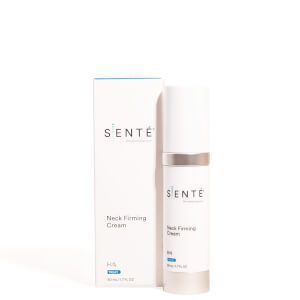
“Neck Firming Cream”
This product can help improve hydration of the skin with the two types of ingredients.
The first type is called “humectants”:
these ingredients help attract water.
When humectants are on the surface of the skin, they “pull in” the moisture from the outside environment, or from
within deeper layers of the skin. The following ingredients in this product do the job:
glycerin, butylene glycol.
This product also contains ingredients called “occlusives”. They help reduce the speed with which our skin loses moisture to the outside environment. These ingredients also help soften the upper layer of the skin, so it feels less tight and nicer to the touch. The following ingredients in this product do the job: caprylic/capric triglyceride, dimethicone.
Anti-aging2 ingredients credited for this claimWeak support
“A deeply hydrating and firming cream to improve the appearance of crepey skin and horizontal neck lines on the neck and décolleté area.”
Effective ingredients missing or their concentration is too low.
Can it cause trouble?
Irritancy15 flagged ingredientsLow risk
Comedogenic2 ingredients rated 2 or more on the 0–5 pore-clogging scale2 flagged
User reviews
Be the first — your take helps the next person decide.
Ingredients
Filter by role to see what each ingredient is doing.
Water~45–55%
Caprylic/capric triglyceride~6.1–7.4%
- Irritation risk
- Medium
A good mix of fatty acids that forms a protective layer on the skin. Improves the shelf life of products. Derived from coconut and glycerin
More about Caprylic/capric triglycerideTricaprylin~4.5–5.5%
- Irritation risk
- Low
An emollient that helps soften the skin. Can increase penetration of other ingredients
More about TricaprylinGlycerin~3.5–4.2%
- Irritation risk
- Low
One of the best moisturizing ingredients. Naturally present in skin. It attracts water to the upper layer of the skin working as a humectant
More about GlycerinCetyl esters~2.9–3.5%
- Irritation risk
- Low
Helps soften upper layer of the skin and can enhance penetration of other ingredients into the upper layer of the skin
More about Cetyl estersSqualane~2.5–3%
- Irritation risk
- Low
An oil naturally present in skin. Works as an emollient to soften the skin and form a protective layer on its surface without a greasy feeling.
More about SqualaneButylene glycol~2–2.4%
- Irritation risk
- Low
Used to create a nice product texture and help delivery of other ingredients. Might be somewhat helpful in attracting water to the upper layer of the skin
More about Butylene glycolGlyceryl stearate citrate~1.7–2.1%
- Irritation risk
- Low
Helps oil and water mix together while softening the upper layer of the skin
More about Glyceryl stearate citrateDimethicone~1.6–1.9%
- Irritation risk
- Low
A silicone that helps to reduce water loss from the surface of the skin. Can temporarily "fill in" lines and wrinkles, absorb oil, and create a nice product finish
More about DimethiconeGlyceryl stearate~1.3–1.5%
- Irritation risk
- Low
An emollient that softens the skin and forms a protective layer on its surface. Helps water and oil mix together
More about Glyceryl stearatePeg-100 stearate~1.1–1.3%
- Irritation risk
- Low
Helps oil and water mix togehter and creates a nice product texture
More about Peg-100 stearateCetearyl alcohol~1–1.2%
- Irritation risk
- Low
- Comedogenicity
- 2/5
A non-drying alcohol. Works as an emollient. Helps water and oil mix together and creates a nice product texture
More about Cetearyl alcoholCetearyl glucoside~0.8–1.15%
- Irritation risk
- Medium
Helps water and oil in the product mix well together and improves product texture
More about Cetearyl glucosideHeparan sulfate~0.75–1.15%
- Irritation risk
- Low
Lauryl lactate~0.7–1.1%
- Irritation risk
- Low
Methylsilanol mannuronate~0.65–1%
- Irritation risk
- Low
Siloxanetriol alginate~0.6–0.9%
- Irritation risk
- Low
Leuconostoc/radish root ferment filtrate~0.6–0.9%
- Irritation risk
- Medium
A preservative that comes from radishes fermented by a bacteria. New research suggests that the preservation properties in the ingredient come from an ammonium salt that is not present naturally in radish root but used in its cultivation. Is problematic because the exact amount of the preservative agents is difficult to determine
More about Leuconostoc/radish root ferment filtrateAcmella oleracea extract~0.55–0.85%
- Irritation risk
- Low
Tocopheryl acetate~0.55–0.8%
- Irritation risk
- Medium
A more stable but less bio-available form of vitamin E compared to Tocopherol. Might help moisturize and protect the skin from free radicals, but mostly used in low concentrations to stabilize other ingredients.
More about Tocopheryl acetateCaffeine~0.5–0.7%
- Irritation risk
- Medium
Might be helpful in neutralizing free radicals. Can have a dehydration effect that might somewhat decrease the look of puffy eyes
More about CaffeineTetrahexyldecyl ascorbate~0.4–0.6%
- Irritation risk
- Medium
Being a lipid soluble form of vitamin C, it is more stable than ascorbic acid, but still degrades quickly and needs to be stabilized in a formulation with another ingredient. It is claimed to penetrate skin better than pure vitamin C and have the the similar benefits, but solid studies of its effectiveness are lacking. Is likely to require a higher concentration in a product than pure vitamin C to be effective. It might be able to help reduce pore clogging.
More about Tetrahexyldecyl ascorbateXymenynic acid~0.35–0.65%
- Irritation risk
- Low
Tocopherol~0.3–0.6%
- Irritation risk
- Low
Pure form of vitamin E. Can help moisturise and protect the skin from free radicals. Often used to help stabilise other ingredients or the formula itself
More about TocopherolSteareth-20~0.45–0.65%
Xanthan gum~0.3–0.55%
- Irritation risk
- Low
Used to create a thicker product consistency
More about Xanthan gumHydroxyethyl acrylate/sodium acryloyldimethyl taurate copolymer~0.3–0.5%
- Irritation risk
- Medium
A gelling agent that thickens the product consistency and leaves the skin with a velvety finish
More about Hydroxyethyl acrylate/sodium acryloyldimethyl taurate copolymerPolysorbate 60~0.25–0.5%
Acrylates/c10-30 alkyl acrylate crosspolymer~0.25–0.45%
- Irritation risk
- Medium
Maintains the texture of skincare products. Allows the product to spread evenly. Helps oil and water mix together
More about Acrylates/c10-30 alkyl acrylate crosspolymerAminomethyl propanol~0.25–0.4%
Steareth-10~0.25–0.4%
- Irritation risk
- Medium
- Comedogenicity
- 3/5
Helps oil and water mix together
More about Steareth-10Sorbitan isostearate~0.2–0.4%
- Irritation risk
- Low
Helps oil and water mix together
More about Sorbitan isostearateChlorphenesin~0.15–0.25%
Benzoic acid~0.15–0.3%
Sorbic acid~0.15–0.25%
Phenoxyethanol~0.15–0.25%
- Irritation risk
- Low
A preservative. It helps prevent bacterial growth in cosmetic products
More about PhenoxyethanolDisodium edta~0.05–0.1%
Ingredient list view
Water, Caprylic/capric triglyceride, Tricaprylin, Glycerin, Cetyl esters, Squalane, Butylene glycol, Glyceryl stearate citrate, Dimethicone, Glyceryl stearate, Peg-100 stearate, Cetearyl alcohol, Cetearyl glucoside, Heparan sulfate, Lauryl lactate, Methylsilanol mannuronate, Siloxanetriol alginate, Leuconostoc/radish root ferment filtrate, Acmella oleracea extract, Tocopheryl acetate, Caffeine, Tetrahexyldecyl ascorbate, Xymenynic acid, Tocopherol, Steareth-20, Xanthan gum, Hydroxyethyl acrylate/sodium acryloyldimethyl taurate copolymer, Polysorbate 60, Acrylates/c10-30 alkyl acrylate crosspolymer, Aminomethyl propanol, Steareth-10, Sorbitan isostearate, Chlorphenesin, Benzoic acid, Sorbic acid, Phenoxyethanol, Disodium edta
Compare prices
Retailers ranked by price — lowest first.

Sources cited in this review
Every concentration estimate and effectiveness label is anchored to one of these 9 studies and safety reviews.
- 1
- 2
- 3
- 4
- 5Final Report on the Safety Assessment of Dimethicone Copolyoljournals.sagepub.com
- 6

Affiliate links · As an Amazon Associate, WIMJ earns from qualifying purchases.