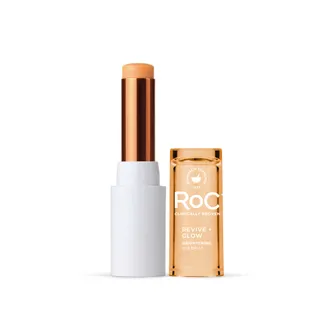
RoC Skincare Revive + Glow Eye Balm

RoC Skincare Revive + Glow Eye Balm

Efficacy0/100IrritancyMedium

Works for

Evens skin tone
Tetrahexyldecyl ascorbate ~1.2–1.8%, below the ~4% it needs + 1 more
Under-dosed
What the product description says
“A brightening Vitamin C powered eye balm that glides on clear with a unique touchless application to brighten and reduce the look of dark circles.”
Source: RoC Skincare

Effective ingredients missing or their concentration is too low

Tetrahexyldecyl ascorbateUnder-dosedBeing a lipid soluble form of vitamin C, it is more stable than ascorbic acid, but still degrades quickly and needs to be stabilized in a formulation with another ingredient. It is claimed to penetrate skin better than pure vitamin C and have the the similar benefits, but solid studies of its effectiveness are lacking. Is likely to require a higher concentration in a product than pure vitamin C to be effective. It might be able to help reduce pore clogging.~1.2–1.8%
GluconolactoneUnder-dosedA polyhydroxy acid (PHA) that helps shed the dead cells from the skin surface revealing smoother skin. Is believed to be genter than AHAs. It helps attract water to the upper layer of the skin and can stimulate production of skin's own hyaluronic acid resulting in improved hydration levels. It has been shown to be helpful against acne and clogged pores if used consistently (e.g over a period of 12 weeks) in high enough concentration. It can help reduce fine lines and wrinkles and improve skin tone with long-term application. Can help neutralize free radicals~0.3–0.75%
Moisturizing
Side benefit · Palmitoyl hexapeptide-12, Helianthus annuus seed wax + 12 more
Works well

This product can help improve hydration of the skin with the two types of ingredients.

The first type is called “humectants”:
these ingredients help attract water. When humectants are on the surface of the skin, they “pull in” the moisture from the outside environment, or from within deeper layers of the skin. The following ingredients in this product do the job: sodium pca, butylene glycol.

This product also contains ingredients called “occlusives”. They help reduce the speed with which our skin loses moisture to the outside environment. These ingredients also help soften the upper layer of the skin, so it feels less tight and nicer to the touch. The following ingredients in this product do the job: helianthus annuus seed oil unsaponifiables, helianthus annuus seed wax.

The following ingredients in this product are especially good for supporting the skin barrier and helping with the hydration level: palmitoyl hexapeptide-12

Palmitoyl hexapeptide-12HeroEffect: HighA type of peptide. Peptides are excellent moisturizers and might be able support collagen production reducing fine lines and wrinkles~0.05–0.15%
Helianthus annuus seed waxKey active· EmollientEffect: HighHelps soften the upper layer of the skin and support skin's barrier function while creating a thicker product consistency~3.7–5.6%
Helianthus annuus seed oil unsaponifiablesKey active· EmollientEffect: HighA great emollient due to its high linoleic acid content. One of the most effective plant oils in helping skin hydration and repairing skin barrier function~0.4–1%
Diisostearyl malateKey active· EmollientEffect: MediumHelps to soften the upper layer of the skin~0.4–0.9%
Sodium pcaKey active· HumectantEffect: HighNaturally present in skin and helps to attract water to its upper layer~0.15–0.65%
Cocoglycerides· EmollientEffect: LowHelp soften the upper layer of the skin and make it easier for oil and water mix together. Recently, a rising number of allergic reactions to cocoglycerides and other coconut-derived surfactants has been reported. As there is a significant overlap between frequent irritants and allergens, we flag this ingredient for attention of those with very sensitive, reactive skin~4.1–6.2%
Butylene glycol· HumectantEffect: LowUsed to create a nice product texture and help delivery of other ingredients. Might be somewhat helpful in attracting water to the upper layer of the skin~2.5–3.8%
Calcium gluconate· HumectantEffect: LowHelps attract water to the upper layer of the skin and helps to improve appearance of the product~0.15–0.55%
Octyldodecanol· EmollientEffect: LowAn emollient that helps to soften the skin and create a pleasant product texture and stabilize the formulation~0.15–0.55%
Propylene carbonateEffect: LowIs used to dissolve other ingredients and create nice product texture~0.1–0.35%
TocopherolEffect: Low, below effective dosePure form of vitamin E. Can help moisturise and protect the skin from free radicals. Often used to help stabilise other ingredients or the formula itself~0.1–0.35%
GluconolactoneUnder-dosedA polyhydroxy acid (PHA) that helps shed the dead cells from the skin surface revealing smoother skin. Is believed to be genter than AHAs. It helps attract water to the upper layer of the skin and can stimulate production of skin's own hyaluronic acid resulting in improved hydration levels. It has been shown to be helpful against acne and clogged pores if used consistently (e.g over a period of 12 weeks) in high enough concentration. It can help reduce fine lines and wrinkles and improve skin tone with long-term application. Can help neutralize free radicals~0.3–0.75%
Caprylic/capric triglycerideUnder-dosedA good mix of fatty acids that forms a protective layer on the skin. Improves the shelf life of products. Derived from coconut and glycerin~0.1–0.45%
Anti-aging
Side benefit · Astaxanthin, Palmitoyl hexapeptide-12 + 3 more
Works well

This product can help reduce and prevent fine lines and wrinkles, improve skin elasticity and firmness because it contains palmitoyl hexapeptide-12.

These ingredients in the product can also be helpful, even though there is less evidence for their effectiveness: astaxanthin.

Keep in mind that it typically takes at least 6 weeks to notice any results because the changes that are needed to improve fine lines and elasticity happen in the deeper layers of the skin. No topical anti-aging product can “erase” wrinkles or fully reverse signs of aging.

AstaxanthinKey activeEffect: MediumHelps neutralize free radicals in skin and might help to calm down inflammation~0.1–0.45%
Palmitoyl hexapeptide-12Key activeEffect: HighA type of peptide. Peptides are excellent moisturizers and might be able support collagen production reducing fine lines and wrinkles~0.05–0.15%
TocopherolEffect: Low, below effective dosePure form of vitamin E. Can help moisturise and protect the skin from free radicals. Often used to help stabilise other ingredients or the formula itself~0.1–0.35%
Tetrahexyldecyl ascorbateUnder-dosedBeing a lipid soluble form of vitamin C, it is more stable than ascorbic acid, but still degrades quickly and needs to be stabilized in a formulation with another ingredient. It is claimed to penetrate skin better than pure vitamin C and have the the similar benefits, but solid studies of its effectiveness are lacking. Is likely to require a higher concentration in a product than pure vitamin C to be effective. It might be able to help reduce pore clogging.~1.2–1.8%
GluconolactoneUnder-dosedA polyhydroxy acid (PHA) that helps shed the dead cells from the skin surface revealing smoother skin. Is believed to be genter than AHAs. It helps attract water to the upper layer of the skin and can stimulate production of skin's own hyaluronic acid resulting in improved hydration levels. It has been shown to be helpful against acne and clogged pores if used consistently (e.g over a period of 12 weeks) in high enough concentration. It can help reduce fine lines and wrinkles and improve skin tone with long-term application. Can help neutralize free radicals~0.3–0.75%
Anti-oxidation
Side benefit · Astaxanthin, Haematococcus pluvialis extract + 4 more
Works well

This product contains antioxidants (astaxanthin) that can help neutralize free radicals in skin. By doing so, they can lessen the damage the skin gets from the UV light (sun).

The following ingredients - haematococcus pluvialis extract also can have an antioxidant effect, but there is less evidence to confirm their effectiveness in skin.

AstaxanthinKey activeEffect: HighHelps neutralize free radicals in skin and might help to calm down inflammation~0.1–0.45%
Haematococcus pluvialis extractKey activeEffect: MediumGreen algae extract that might contain antioxidant astaxanthin~0.1–0.45%
Tocopheryl acetateEffect: Low, below effective doseA more stable but less bio-available form of vitamin E compared to Tocopherol. Might help moisturize and protect the skin from free radicals, but mostly used in low concentrations to stabilize other ingredients.~0.3–0.75%
Tetrahexyldecyl ascorbateUnder-dosedBeing a lipid soluble form of vitamin C, it is more stable than ascorbic acid, but still degrades quickly and needs to be stabilized in a formulation with another ingredient. It is claimed to penetrate skin better than pure vitamin C and have the the similar benefits, but solid studies of its effectiveness are lacking. Is likely to require a higher concentration in a product than pure vitamin C to be effective. It might be able to help reduce pore clogging.~1.2–1.8%
GluconolactoneUnder-dosedA polyhydroxy acid (PHA) that helps shed the dead cells from the skin surface revealing smoother skin. Is believed to be genter than AHAs. It helps attract water to the upper layer of the skin and can stimulate production of skin's own hyaluronic acid resulting in improved hydration levels. It has been shown to be helpful against acne and clogged pores if used consistently (e.g over a period of 12 weeks) in high enough concentration. It can help reduce fine lines and wrinkles and improve skin tone with long-term application. Can help neutralize free radicals~0.3–0.75%
TocopherolUnder-dosedPure form of vitamin E. Can help moisturise and protect the skin from free radicals. Often used to help stabilise other ingredients or the formula itself~0.1–0.35%

Can it cause trouble?

Irritancy
13 flagged ingredients
Medium risk
We flagged 13 ingredients with irritancy potential. Severity depends on your sensitivity threshold; the table lists the worst offenders first.
IngredientFunctionIrritationEst. amount
CocoglyceridesHelp soften the upper layer of the skin and make it easier for oil and water mix together. Recently, a rising number of allergic reactions to cocoglycerides and other coconut-derived surfactants has been reported. As there is a significant overlap between frequent irritants and allergens, we flag this ingredient for attention of those with very sensitive, reactive skinHigh~4.1–6.2%est.
Acrylates crosspolymerHelps create a nicer product textureMedium~1.8–2.7%est.
Polyhydroxystearic acidUsed to create a thicker product consistency and stabilize the formulationMedium~1.4–2.1%est.
Tetrahexyldecyl ascorbateBeing a lipid soluble form of vitamin C, it is more stable than ascorbic acid, but still degrades quickly and needs to be stabilized in a formulation with another ingredient. It is claimed to penetrate skin better than pure vitamin C and have the the similar benefits, but solid studies of its effectiveness are lacking. Is likely to require a higher concentration in a product than pure vitamin C to be effective. It might be able to help reduce pore clogging.Medium~1.2–1.8%est.
Polyglyceryl-4 oleateHelps oil and water mix togetherMedium~0.9–1.3%est.
Diisostearyl malateHelps to soften the upper layer of the skinMedium~0.4–0.9%est.
GluconolactoneA polyhydroxy acid (PHA) that helps shed the dead cells from the skin surface revealing smoother skin. Is believed to be genter than AHAs. It helps attract water to the upper layer of the skin and can stimulate production of skin's own hyaluronic acid resulting in improved hydration levels. It has been shown to be helpful against acne and clogged pores if used consistently (e.g over a period of 12 weeks) in high enough concentration. It can help reduce fine lines and wrinkles and improve skin tone with long-term application. Can help neutralize free radicalsMedium~0.3–0.75%est.
Tocopheryl acetateA more stable but less bio-available form of vitamin E compared to Tocopherol. Might help moisturize and protect the skin from free radicals, but mostly used in low concentrations to stabilize other ingredients.Medium~0.3–0.75%est.
Haematococcus pluvialis extractGreen algae extract that might contain antioxidant astaxanthinMedium~0.1–0.45%est.
Pentaerythrityl tetraisostearateUsed to create a thicker product consistencyMedium~0.15–0.65%est.
AstaxanthinHelps neutralize free radicals in skin and might help to calm down inflammationMedium~0.1–0.45%est.
Caprylic/capric triglycerideA good mix of fatty acids that forms a protective layer on the skin. Improves the shelf life of products. Derived from coconut and glycerinMedium~0.1–0.45%est.
Comedogenic
Clean of flagged comedogenic ingredients
None flagged

User reviews

Would you recommend?
No community reviews yet.

Be the first — your take helps the next person decide.

Ingredients

Filter by role to see what each ingredient is doing.

C13-15 alkane~23–35%
Formula
Irritation risk
Low

Helps dissolve other ingredients in the formula

More about C13-15 alkane
Water~12–18%
Formula
Irritation risk
Low

Plain old water

More about Water
Cocoglycerides~4.1–6.2%
Irritant · high
Irritation risk
High
Works for
CleansingMoisturizing

Help soften the upper layer of the skin and make it easier for oil and water mix together. Recently, a rising number of allergic reactions to cocoglycerides and other coconut-derived surfactants has been reported. As there is a significant overlap between frequent irritants and allergens, we flag this ingredient for attention of those with very sensitive, reactive skin

More about Cocoglycerides
Helianthus annuus seed wax~3.7–5.6%
Key active
Irritation risk
Low
Works for
Moisturizing

Helps soften the upper layer of the skin and support skin's barrier function while creating a thicker product consistency

More about Helianthus annuus seed wax
Butylene glycol~2.5–3.8%
Formula
Irritation risk
Low
Works for
Moisturizing

Used to create a nice product texture and help delivery of other ingredients. Might be somewhat helpful in attracting water to the upper layer of the skin

More about Butylene glycol
Acrylates crosspolymer~1.8–2.7%
Irritant · medium
Irritation risk
Medium

Helps create a nicer product texture

More about Acrylates crosspolymer
Polyhydroxystearic acid~1.4–2.1%
Irritant · medium
Irritation risk
Medium
Works for
Cleansing

Used to create a thicker product consistency and stabilize the formulation

More about Polyhydroxystearic acid
Tetrahexyldecyl ascorbate~1.2–1.8%
Under-dosedIrritant · medium
Irritation risk
Medium
Works for
Anti-oxidationEvens skin toneAnti-aging

Being a lipid soluble form of vitamin C, it is more stable than ascorbic acid, but still degrades quickly and needs to be stabilized in a formulation with another ingredient. It is claimed to penetrate skin better than pure vitamin C and have the the similar benefits, but solid studies of its effectiveness are lacking. Is likely to require a higher concentration in a product than pure vitamin C to be effective. It might be able to help reduce pore clogging.

More about Tetrahexyldecyl ascorbate
Bis-behenyl/isostearyl/phytosteryl dimer dilinoleyl dimer dilinoleate~1.1–1.7%
Irritant · high
Polyglyceryl-4 oleate~0.9–1.3%
Irritant · medium
Irritation risk
Medium
Works for
Cleansing

Helps oil and water mix together

More about Polyglyceryl-4 oleate
Cetearyl olivate~0.55–1.25%
Formula
Irritation risk
Low
Works for
Cleansing

Helps oil and water mix together

More about Cetearyl olivate
Polyglyceryl-6 oleate~0.45–1.05%
Formula
Irritation risk
Low
Works for
Cleansing
More about Polyglyceryl-6 oleate
Helianthus annuus seed oil unsaponifiables~0.4–1%
Key active
Irritation risk
Low
Works for
Moisturizing

A great emollient due to its high linoleic acid content. One of the most effective plant oils in helping skin hydration and repairing skin barrier function

More about Helianthus annuus seed oil unsaponifiables
Diisostearyl malate~0.4–0.9%
Key activeIrritant · medium
Irritation risk
Medium
Works for
CleansingMoisturizing

Helps to soften the upper layer of the skin

More about Diisostearyl malate
Sorbitan olivate~0.35–0.8%
Formula
Irritation risk
Low
Works for
Cleansing

Helps oil and water mix together

More about Sorbitan olivate
Gluconolactone~0.3–0.75%
Under-dosedIrritant · medium
Irritation risk
Medium
Works for
ExfoliationEvens skin toneAnti-agingMoisturizingAnti-blemishAnti-oxidation

A polyhydroxy acid (PHA) that helps shed the dead cells from the skin surface revealing smoother skin. Is believed to be genter than AHAs. It helps attract water to the upper layer of the skin and can stimulate production of skin's own hyaluronic acid resulting in improved hydration levels. It has been shown to be helpful against acne and clogged pores if used consistently (e.g over a period of 12 weeks) in high enough concentration. It can help reduce fine lines and wrinkles and improve skin tone with long-term application. Can help neutralize free radicals

More about Gluconolactone
Tocopheryl acetate~0.3–0.75%
Irritant · medium
Irritation risk
Medium
Works for
Anti-oxidation

A more stable but less bio-available form of vitamin E compared to Tocopherol. Might help moisturize and protect the skin from free radicals, but mostly used in low concentrations to stabilize other ingredients.

More about Tocopheryl acetate
Sodium benzoate~0.25–0.5%
Formula
Irritation risk
Low

A preservative

More about Sodium benzoate
Sodium pca~0.15–0.65%
Key active
Irritation risk
Low
Works for
Moisturizing

Naturally present in skin and helps to attract water to its upper layer

More about Sodium pca
Troxerutin~0.15–0.6%
Formula
Irritation risk
Low
More about Troxerutin
Maltodextrin~0.15–0.7%
Formula
Irritation risk
Low
Works for
Mattifying

Used to stabilize the product formulation and can help absorb oil

More about Maltodextrin
Octyldodecanol~0.15–0.55%
Formula
Irritation risk
Low
Works for
Moisturizing

An emollient that helps to soften the skin and create a pleasant product texture and stabilize the formulation

More about Octyldodecanol
Haematococcus pluvialis extract~0.1–0.45%
Key activeIrritant · medium
Irritation risk
Medium
Works for
Anti-oxidation

Green algae extract that might contain antioxidant astaxanthin

More about Haematococcus pluvialis extract
Cistus monspeliensis flower/leaf/stem extract~0.1–0.4%
Formula
Calcium gluconate~0.15–0.55%
Formula
Irritation risk
Low
Works for
Moisturizing

Helps attract water to the upper layer of the skin and helps to improve appearance of the product

More about Calcium gluconate
Malic acid~0.1–0.45%
Formula
Irritation risk
Low

Helps adjust the product pH

More about Malic acid
Pentaerythrityl tetraisostearate~0.15–0.65%
Irritant · medium
Irritation risk
Medium
Works for
Cleansing

Used to create a thicker product consistency

More about Pentaerythrityl tetraisostearate
Astaxanthin~0.1–0.45%
Key activeIrritant · medium
Irritation risk
Medium
Works for
Anti-oxidationAnti-inflammatoryAnti-aging

Helps neutralize free radicals in skin and might help to calm down inflammation

More about Astaxanthin
Tocopherol~0.1–0.35%
Under-dosed
Irritation risk
Low
Works for
Anti-oxidationAnti-agingAnti-inflammatoryMoisturizing

Pure form of vitamin E. Can help moisturise and protect the skin from free radicals. Often used to help stabilise other ingredients or the formula itself

More about Tocopherol
Caprylic/capric triglyceride~0.1–0.45%
Under-dosedIrritant · medium
Irritation risk
Medium
Works for
Moisturizing

A good mix of fatty acids that forms a protective layer on the skin. Improves the shelf life of products. Derived from coconut and glycerin

More about Caprylic/capric triglyceride
Propylene carbonate~0.1–0.35%
Formula
Irritation risk
Low
Works for
Moisturizing

Is used to dissolve other ingredients and create nice product texture

More about Propylene carbonate
Stearalkonium hectorite~0.05–0.2%
Formula
Irritation risk
Low

Used to create an even product consistency

More about Stearalkonium hectorite
Palmitoyl hexapeptide-12~0.05–0.15%
Hero · Moisturizing
Irritation risk
Low
Works for
Anti-agingMoisturizing

A type of peptide. Peptides are excellent moisturizers and might be able support collagen production reducing fine lines and wrinkles

More about Palmitoyl hexapeptide-12
Ci 77491~0.05–0.15%
Formula
Irritation risk
Low

A red colorant made of iron oxide. Typically is not irritating

More about Ci 77491
Ingredient list view

C13-15 alkane, Water, Cocoglycerides, Helianthus annuus seed wax, Butylene glycol, Acrylates crosspolymer, Polyhydroxystearic acid, Tetrahexyldecyl ascorbate, Bis-behenyl/isostearyl/phytosteryl dimer dilinoleyl dimer dilinoleate, Polyglyceryl-4 oleate, Cetearyl olivate, Polyglyceryl-6 oleate, Helianthus annuus seed oil unsaponifiables, Diisostearyl malate, Sorbitan olivate, Gluconolactone, Tocopheryl acetate, Sodium benzoate, Sodium pca, Troxerutin, Maltodextrin, Octyldodecanol, Haematococcus pluvialis extract, Cistus monspeliensis flower/leaf/stem extract, Calcium gluconate, Malic acid, Pentaerythrityl tetraisostearate, Astaxanthin, Tocopherol, Caprylic/capric triglyceride, Propylene carbonate, Stearalkonium hectorite, Palmitoyl hexapeptide-12, Ci 77491

Compare prices

Retailers ranked by price — lowest first.

RoC Skincare
$26.99
Buy

Affiliate links · As an Amazon Associate, WIMJ earns from qualifying purchases.

Worth comparing, line by line.

Match % combines shared ingredients, the first five ingredients, shared actives and hero ingredients, irritancy (lower counts in the alternative's favour), texture and body area. Only products in the same routine step are compared.

Side-by-side comparison of this product against its closest alternatives
RoC SkincareRevive + Glow Eye BalmYOUR PRODUCTAnnayakeUltratime Anti-Wrinkle Eye LiftPeter Thomas RothPotent-C Vitamin C Power Eye CreamAntipodesExclusive Triple Pack - Kiwi Seed Oil Eye Cream
Match—34%32%32%
Price$26.99$102.82+$75.83$45.11+$18.12$52.91+$25.92
Shared key ingredients—1 of 84 of 80 of 8
Key difference—Mineral OilFerulic AcidBorago Officinalis Seed Oil
Irritancy Medium Low Medium Low
Drying alcohol————
View product Shop Shop Shop

More alternatives: Geologie Dark & Puffy Under Eye CreamNEOSTRATA Eye Cream - PHA 4

Cheaper alternatives? See how this stacks up against similar formulas.
We compare ingredient profiles across our catalog — pick the closest match for your budget.
Open dupe finder

Sources cited in this review

Every concentration estimate and effectiveness label is anchored to one of these 23 studies and safety reviews.

  1. 1
  2. 2
  3. 3
  4. 4
  5. 5
  6. 6
RoC Skincare Revive + Glow Eye Balm
RoC SkincareRevive + Glow Eye Balm

Affiliate links · As an Amazon Associate, WIMJ earns from qualifying purchases.

As an Amazon Associate, WIMJ earns from qualifying purchases.