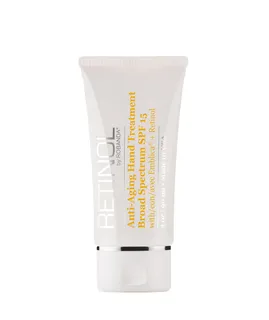
Robanda International, Inc Anti-Aging Hand Treatment

Robanda International, Inc Anti-Aging Hand Treatment

SPF 15Efficacy81/100IrritancyHigh·5 UV filters

Works for

Sun protection
SPF 15 · 5 UV filters · Broad spectrum
Weak protectionSPF under 30
SPF 15Broad spectrumChemical filters

This product offers broad spectrum sun protection, but it is weak. We recommend to use a broad spectrum sunscreen with at least SPF 30.

UV spectrum
UVB290–320 nmUVA II320–340 nmUVA I340–400 nm
Octinoxate
Octisalate
Oxybenzone
Titanium Dioxide
Avobenzone
FilterCoverageWhat it doesEst. amount
OctinoxateEthylhexyl MethoxycinnamateUVBOctinoxate. When used in higher concentrations, works as a sunscreen protecting the skin from UVB rays. When used in lower concentration, helps to preserve the product formulation. Is shown to be harmful to coral reefs - consider avoiding bathing in coral reef areas when wearing a product with this ingredient. It can be irritating~6.1–7.5%
OctisalateEthylhexyl SalicylateUVBOctisalate. A UV filter. It offers some protection against the sun rays that cause sunburn (UVB), but does not protect against the most aging sun rays (UVA). It loses its effectiveness quickly when exposed to sunlight. It is an organic, or so called "chemical" sunscreen~3.7–4.5%
OxybenzoneBenzophenone-3UVBUVA2Same as oxybenzone. Protects in the UVB and short UVA range. In small concentrations, used to stabilize product formulation. Can be irritating. Is shown to be harmful to coral reefs - consider avoiding bathing in coral reef areas when wearing a product with this ingredient. It can penetrate the skin and get absorbed into bloodstream faster than other popular filters available in the US. The study that produced this finding did not address any potential health effects of the absorption~4.8–5.8%
Titanium Dioxide Mineral UVBUVA2 Photo-stable Works as a UV filter when used in high concentrations. It is photostable and is effective mostly against the UVB light, with some protection in the UVA range. In small concentrations, used for its ability to improve the color of cosmetic products. Is usually well tolerated by the skin~0.45–0.65%
AvobenzoneButyl MethoxydibenzoylmethaneUVA1Avobenzone. An organic, or so-called "chemical" UV filter. Protects against both UVA and UVB rays. Needs to be combined with other filters in a formulation to be stable.~1.7–2.1%
~ marks concentrations estimated from label position and typical use levels
Anti-aging
Retinol, Phyllanthus emblica fruit extract + 3 more
Works well
What the product description says
“Anti-Aging Hand Treatment”
Source: Robanda

This product can help reduce and prevent fine lines and wrinkles, improve skin elasticity and firmness because it contains retinol.

Keep in mind that it typically takes at least 6 weeks to notice any results because the changes that are needed to improve fine lines and elasticity happen in the deeper layers of the skin. No topical anti-aging product can “erase” wrinkles or fully reverse signs of aging.

RetinolHeroEffect: HighTwo steps removed from the active form of vitamin A - retinoic acid. Once converted to the retinoic acid in the skin, retinol is proven to be effective against all signs of aging. It improves skin cell turnover, helps fight blemishes and clogged pores, can regulate excess oil production and even skin tone. It can, however, be quite irritating~0.15–0.25%
Phyllanthus emblica fruit extractEffect: Low, below effective doseA plant extract that might be helpful in neutralizing free radicals and have a skin lightening effect if used in high enough concentrations~0.4–0.6%
TocopherolEffect: Low, below effective dosePure form of vitamin E. Can help moisturise and protect the skin from free radicals. Often used to help stabilise other ingredients or the formula itself~0.2–0.4%
Butyrospermum parkii butterEffect: Low, below effective doseA great moisturising ingredient that softens the skin and reduces water loss from its upper layer. It also can be helpful in protecting skin from free radicals~0.2–0.35%
Retinyl palmitateUnder-dosedThree steps removed from the active form of vitamin A - retinoic acid. To have an effect in the skin, it first needs to be converted twice to become the retinoic acid. This means it is less potent than retinol, but could also be less irritating. Once converted to the retinoic acid in the skin, it helps against all signs of aging, improves skin cell turnover and helps fight blemishes and clogged pores. However, in many cosmetic formulations, it is used in a concentration that is too low to have the full effect~0.15–0.3%
Evens skin tone
Retinol, Phyllanthus emblica fruit extract + 1 more
Works well
What the product description says
“A nourishing, protecting Anti-Aging Hand Treatment formulated with Emblica ® to help brighten age spots, freckles and hyper-pigmentation.”
Source: Robanda

This product can help reduce hypepigmentation and even out the skin tone because it contains the following effective ingredients: retinol.

Keep in mind that you would need to apply any topical skincare targetted at hypigmentation consistently for a couple of months to get a result. No topical skincare product can help get rid of hyperpigmentation (including post-acne marks and age spots) instantly.

This product can also help with skin tone because it offers sun protection. Sun damage is the main factor causing age spots, darkening of post-acne marks and other discolorations. This is why sun protection is the best strategy for maintaining an even skin tone. We, however, do not recommend using this product as a sunscreen because the protection it offers is not strong enough).

RetinolHeroEffect: HighTwo steps removed from the active form of vitamin A - retinoic acid. Once converted to the retinoic acid in the skin, retinol is proven to be effective against all signs of aging. It improves skin cell turnover, helps fight blemishes and clogged pores, can regulate excess oil production and even skin tone. It can, however, be quite irritating~0.15–0.25%
Phyllanthus emblica fruit extractEffect: Low, below effective doseA plant extract that might be helpful in neutralizing free radicals and have a skin lightening effect if used in high enough concentrations~0.4–0.6%
Retinyl palmitateUnder-dosedThree steps removed from the active form of vitamin A - retinoic acid. To have an effect in the skin, it first needs to be converted twice to become the retinoic acid. This means it is less potent than retinol, but could also be less irritating. Once converted to the retinoic acid in the skin, it helps against all signs of aging, improves skin cell turnover and helps fight blemishes and clogged pores. However, in many cosmetic formulations, it is used in a concentration that is too low to have the full effect~0.15–0.3%
Moisturizing
Dimethicone, Glycerin + 6 more
Works
What the product description says
“A nourishing, protecting Anti-Aging Hand Treatment formulated with Emblica ® to help brighten age spots, freckles and hyper-pigmentation.”
Source: Robanda

This product can help improve hydration of the skin with the two types of ingredients.

The first type is called “humectants”:
these ingredients help attract water. When humectants are on the surface of the skin, they “pull in” the moisture from the outside environment, or from within deeper layers of the skin. The following ingredients in this product do the job: glycerin.

This product also contains ingredients called “occlusives”. They help reduce the speed with which our skin loses moisture to the outside environment. These ingredients also help soften the upper layer of the skin, so it feels less tight and nicer to the touch. The following ingredients in this product do the job: dimethicone, c12-15 alkyl benzoate.

DimethiconeKey active· Emollient, OcclusiveEffect: HighA silicone that helps to reduce water loss from the surface of the skin. Can temporarily "fill in" lines and wrinkles, absorb oil, and create a nice product finish~2.6–3.1%
GlycerinKey active· HumectantEffect: HighOne of the best moisturizing ingredients. Naturally present in skin. It attracts water to the upper layer of the skin working as a humectant~2.1–2.6%
C12-15 alkyl benzoateKey active· EmollientEffect: MediumEnhances the product texture and makes it more spreadable. Helps reduce water loss from the outer layer of skin. Extands the shelf life by preventing bacteria growth~1.8–2.1%
Cetyl alcoholKey active· EmollientEffect: MediumA non-drying alcohol that works to soften the skin and stabilize product formulations helping oil and water mix together~0.7–1.05%
Stearic acid· EmollientEffect: LowHelps oil and water mix together and works as an emollient~1.7–2.1%
Glyceryl stearate· EmollientEffect: LowAn emollient that softens the skin and forms a protective layer on its surface. Helps water and oil mix together~1–1.3%
TocopherolEffect: Low, below effective dosePure form of vitamin E. Can help moisturise and protect the skin from free radicals. Often used to help stabilise other ingredients or the formula itself~0.2–0.4%
Butyrospermum parkii butterUnder-dosedA great moisturising ingredient that softens the skin and reduces water loss from its upper layer. It also can be helpful in protecting skin from free radicals~0.2–0.35%
Exfoliation
Not advertised by the brand · Retinol, Retinyl palmitate
Works well

This product can help exfoliate the skin. In other words, it helps break down the bonds between dead cells on the surface of the skin and speed up the skin turnover. Skin often appears softer and brighter after exfoliation, but overdoing it can result in disrupted skin barrier. The following ingredient is doing the exfoliating job in this product: retinol.

RetinolKey activeEffect: HighTwo steps removed from the active form of vitamin A - retinoic acid. Once converted to the retinoic acid in the skin, retinol is proven to be effective against all signs of aging. It improves skin cell turnover, helps fight blemishes and clogged pores, can regulate excess oil production and even skin tone. It can, however, be quite irritating~0.15–0.25%
Retinyl palmitateEffect: Low, below effective doseThree steps removed from the active form of vitamin A - retinoic acid. To have an effect in the skin, it first needs to be converted twice to become the retinoic acid. This means it is less potent than retinol, but could also be less irritating. Once converted to the retinoic acid in the skin, it helps against all signs of aging, improves skin cell turnover and helps fight blemishes and clogged pores. However, in many cosmetic formulations, it is used in a concentration that is too low to have the full effect~0.15–0.3%
Anti-oxidation
Not advertised by the brand · Retinol, Tocopheryl acetate + 3 more
Works well

This product contains antioxidants (retinol) that can help neutralize free radicals in skin. By doing so, they can lessen the damage the skin gets from the UV light (sun).

RetinolKey activeEffect: HighTwo steps removed from the active form of vitamin A - retinoic acid. Once converted to the retinoic acid in the skin, retinol is proven to be effective against all signs of aging. It improves skin cell turnover, helps fight blemishes and clogged pores, can regulate excess oil production and even skin tone. It can, however, be quite irritating~0.15–0.25%
Tocopheryl acetateEffect: Low, below effective doseA more stable but less bio-available form of vitamin E compared to Tocopherol. Might help moisturize and protect the skin from free radicals, but mostly used in low concentrations to stabilize other ingredients.~0.25–0.45%
Butyrospermum parkii butterEffect: Low, below effective doseA great moisturising ingredient that softens the skin and reduces water loss from its upper layer. It also can be helpful in protecting skin from free radicals~0.2–0.35%
Phyllanthus emblica fruit extractUnder-dosedA plant extract that might be helpful in neutralizing free radicals and have a skin lightening effect if used in high enough concentrations~0.4–0.6%
TocopherolUnder-dosedPure form of vitamin E. Can help moisturise and protect the skin from free radicals. Often used to help stabilise other ingredients or the formula itself~0.2–0.4%

Can it cause trouble?

Irritancy
4 strong irritants: Benzophenone-3, Parfum + 2 more — patch-test recommended
High risk
We flagged 15 ingredients with irritancy potential. Severity depends on your sensitivity threshold; the table lists the worst offenders first.
IngredientFunctionIrritationEst. amount
Ethylhexyl methoxycinnamateOctinoxate. When used in higher concentrations, works as a sunscreen protecting the skin from UVB rays. When used in lower concentration, helps to preserve the product formulation. Is shown to be harmful to coral reefs - consider avoiding bathing in coral reef areas when wearing a product with this ingredient. It can be irritatingHigh~6.1–7.5%est.
Benzophenone-3Same as oxybenzone. Protects in the UVB and short UVA range. In small concentrations, used to stabilize product formulation. Can be irritating. Is shown to be harmful to coral reefs - consider avoiding bathing in coral reef areas when wearing a product with this ingredient. It can penetrate the skin and get absorbed into bloodstream faster than other popular filters available in the US. The study that produced this finding did not address any potential health effects of the absorptionHigh~4.8–5.8%est.
ParfumAn aromatic blend of unspecified and possibly irritating ingredientsHigh~0.65–1%est.
Retinyl palmitateThree steps removed from the active form of vitamin A - retinoic acid. To have an effect in the skin, it first needs to be converted twice to become the retinoic acid. This means it is less potent than retinol, but could also be less irritating. Once converted to the retinoic acid in the skin, it helps against all signs of aging, improves skin cell turnover and helps fight blemishes and clogged pores. However, in many cosmetic formulations, it is used in a concentration that is too low to have the full effectHigh~0.15–0.3%est.
RetinolTwo steps removed from the active form of vitamin A - retinoic acid. Once converted to the retinoic acid in the skin, retinol is proven to be effective against all signs of aging. It improves skin cell turnover, helps fight blemishes and clogged pores, can regulate excess oil production and even skin tone. It can, however, be quite irritatingHigh~0.15–0.25%est.
Ci 19140A yellow dyeHigh~0.1–0.15%est.
Ci 16035A red dyeHigh~0.1–0.15%est.
Butyl methoxydibenzoylmethaneAvobenzone. An organic, or so-called "chemical" UV filter. Protects against both UVA and UVB rays. Needs to be combined with other filters in a formulation to be stable.Medium~1.7–2.1%est.
Hydroxyethyl acrylate/sodium acryloyldimethyl taurate copolymerA gelling agent that thickens the product consistency and leaves the skin with a velvety finishMedium~0.45–0.7%est.
TriethanolamineUsed to adjust pH of the product and can help improve the product's smellMedium~0.45–0.65%est.
Phyllanthus emblica fruit extractA plant extract that might be helpful in neutralizing free radicals and have a skin lightening effect if used in high enough concentrationsMedium~0.4–0.6%est.
EthylhexylglycerinA preservativeMedium~0.25–0.45%est.
Polysorbate 60Helps oil and water mix togetherMedium~0.25–0.5%est.
Tocopheryl acetateA more stable but less bio-available form of vitamin E compared to Tocopherol. Might help moisturize and protect the skin from free radicals, but mostly used in low concentrations to stabilize other ingredients.Medium~0.25–0.45%est.
Disodium edtaStabilizes the product formulationMedium~0.15–0.3%est.
Comedogenic
2 ingredients rated 2 or more on the 0–5 pore-clogging scale
2 flagged
These ingredients have a comedogenic rating of 2 or more on a 0–5 scale; the table shows each one's rating. In leave-on products they can clog pores in acne-prone skin.
IngredientFunctionRatingEst. amount
Butyrospermum parkii butterA great moisturising ingredient that softens the skin and reduces water loss from its upper layer. It also can be helpful in protecting skin from free radicals3/5~0.2–0.35%est.
Ci 16035A red dye3/5~0.1–0.15%est.

User reviews

Would you recommend?
No community reviews yet.

Be the first — your take helps the next person decide.

Ingredients

Filter by role to see what each ingredient is doing.

Water~45–55%
Formula
Irritation risk
Low

Plain old water

More about Water
Ethylhexyl methoxycinnamate~6.1–7.5%
UV filterKey activeIrritant · high
Irritation risk
High
Works for
Sun protection

Octinoxate. When used in higher concentrations, works as a sunscreen protecting the skin from UVB rays. When used in lower concentration, helps to preserve the product formulation. Is shown to be harmful to coral reefs - consider avoiding bathing in coral reef areas when wearing a product with this ingredient. It can be irritating

More about Ethylhexyl methoxycinnamate
Benzophenone-3~4.8–5.8%
UV filterKey activeIrritant · high
Irritation risk
High
Works for
Sun protection

Same as oxybenzone. Protects in the UVB and short UVA range. In small concentrations, used to stabilize product formulation. Can be irritating. Is shown to be harmful to coral reefs - consider avoiding bathing in coral reef areas when wearing a product with this ingredient. It can penetrate the skin and get absorbed into bloodstream faster than other popular filters available in the US. The study that produced this finding did not address any potential health effects of the absorption

More about Benzophenone-3
Ethylhexyl salicylate~3.7–4.5%
UV filter
Irritation risk
Low
Works for
Sun protection

Octisalate. A UV filter. It offers some protection against the sun rays that cause sunburn (UVB), but does not protect against the most aging sun rays (UVA). It loses its effectiveness quickly when exposed to sunlight. It is an organic, or so called "chemical" sunscreen

More about Ethylhexyl salicylate
Dimethicone~2.6–3.1%
Key active
Irritation risk
Low
Works for
MoisturizingMattifying

A silicone that helps to reduce water loss from the surface of the skin. Can temporarily "fill in" lines and wrinkles, absorb oil, and create a nice product finish

More about Dimethicone
Glycerin~2.1–2.6%
Key active
Irritation risk
Low
Works for
Moisturizing

One of the best moisturizing ingredients. Naturally present in skin. It attracts water to the upper layer of the skin working as a humectant

More about Glycerin
C12-15 alkyl benzoate~1.8–2.1%
Key active
Irritation risk
Low
Works for
Moisturizing

Enhances the product texture and makes it more spreadable. Helps reduce water loss from the outer layer of skin. Extands the shelf life by preventing bacteria growth

More about C12-15 alkyl benzoate
Stearic acid~1.7–2.1%
Formula
Irritation risk
Low
Works for
CleansingMoisturizing

Helps oil and water mix together and works as an emollient

More about Stearic acid
Butyl methoxydibenzoylmethane~1.7–2.1%
UV filterKey activeIrritant · medium
Irritation risk
Medium
Works for
Sun protection

Avobenzone. An organic, or so-called "chemical" UV filter. Protects against both UVA and UVB rays. Needs to be combined with other filters in a formulation to be stable.

More about Butyl methoxydibenzoylmethane
Glyceryl stearate~1–1.3%
Formula
Irritation risk
Low
Works for
CleansingMoisturizing

An emollient that softens the skin and forms a protective layer on its surface. Helps water and oil mix together

More about Glyceryl stearate
Parfum~0.65–1%
Irritant · high
Irritation risk
High

An aromatic blend of unspecified and possibly irritating ingredients

More about Parfum
Cetyl alcohol~0.7–1.05%
Key active
Irritation risk
Low
Works for
CleansingMoisturizing

A non-drying alcohol that works to soften the skin and stabilize product formulations helping oil and water mix together

More about Cetyl alcohol
Dimethyl capramide~0.55–0.8%
Formula
Irritation risk
Low

Helps to dissolve other ingredients, especially sunscreens

More about Dimethyl capramide
Peg-100 stearate~0.65–1%
Formula
Irritation risk
Low
Works for
Cleansing

Helps oil and water mix togehter and creates a nice product texture

More about Peg-100 stearate
Hydroxyethyl acrylate/sodium acryloyldimethyl taurate copolymer~0.45–0.7%
Irritant · medium
Irritation risk
Medium

A gelling agent that thickens the product consistency and leaves the skin with a velvety finish

More about Hydroxyethyl acrylate/sodium acryloyldimethyl taurate copolymer
Phenoxyethanol~0.45–0.7%
Formula
Irritation risk
Low

A preservative. It helps prevent bacterial growth in cosmetic products

More about Phenoxyethanol
Triethanolamine~0.45–0.65%
Irritant · medium
Irritation risk
Medium
Works for
Cleansing

Used to adjust pH of the product and can help improve the product's smell

More about Triethanolamine
Phyllanthus emblica fruit extract~0.4–0.6%
Under-dosedIrritant · medium
Irritation risk
Medium
Works for
Anti-oxidationEvens skin toneAnti-aging

A plant extract that might be helpful in neutralizing free radicals and have a skin lightening effect if used in high enough concentrations

More about Phyllanthus emblica fruit extract
Hydroxylated soy lecithin
Not recognized
Carbomer~0.3–0.6%
Formula
Irritation risk
Low
Works for
Cleansing

Helps create a thicker or gel-like product texture. It is not a surfactant but can be used in gentle cleansing formulations

More about Carbomer
Titanium dioxide~0.45–0.65%
UV filterUnder-dosed
Irritation risk
Low
Works for
Sun protection

Works as a UV filter when used in high concentrations. It is photostable and is effective mostly against the UVB light, with some protection in the UVA range. In small concentrations, used for its ability to improve the color of cosmetic products. Is usually well tolerated by the skin

More about Titanium dioxide
Ethylhexylglycerin~0.25–0.45%
Irritant · medium
Irritation risk
Medium

A preservative

More about Ethylhexylglycerin
Polysorbate 60~0.25–0.5%
Irritant · medium
Irritation risk
Medium
Works for
Cleansing

Helps oil and water mix together

More about Polysorbate 60
Tocopheryl acetate~0.25–0.45%
Irritant · medium
Irritation risk
Medium
Works for
Anti-oxidation

A more stable but less bio-available form of vitamin E compared to Tocopherol. Might help moisturize and protect the skin from free radicals, but mostly used in low concentrations to stabilize other ingredients.

More about Tocopheryl acetate
Tocopherol~0.2–0.4%
Under-dosed
Irritation risk
Low
Works for
Anti-oxidationMoisturizingAnti-inflammatoryAnti-aging

Pure form of vitamin E. Can help moisturise and protect the skin from free radicals. Often used to help stabilise other ingredients or the formula itself

More about Tocopherol
Disodium edta~0.15–0.3%
Irritant · medium
Irritation risk
Medium

Stabilizes the product formulation

More about Disodium edta
Retinyl palmitate~0.15–0.3%
Under-dosedIrritant · high
Irritation risk
High
Works for
Anti-agingEvens skin toneAnti-blemishExfoliation

Three steps removed from the active form of vitamin A - retinoic acid. To have an effect in the skin, it first needs to be converted twice to become the retinoic acid. This means it is less potent than retinol, but could also be less irritating. Once converted to the retinoic acid in the skin, it helps against all signs of aging, improves skin cell turnover and helps fight blemishes and clogged pores. However, in many cosmetic formulations, it is used in a concentration that is too low to have the full effect

More about Retinyl palmitate
Retinol~0.15–0.25%
Hero · Anti-aging, Evens skin toneIrritant · high
Irritation risk
High
Works for
Anti-oxidationEvens skin toneAnti-blemishMattifyingExfoliationAnti-aging

Two steps removed from the active form of vitamin A - retinoic acid. Once converted to the retinoic acid in the skin, retinol is proven to be effective against all signs of aging. It improves skin cell turnover, helps fight blemishes and clogged pores, can regulate excess oil production and even skin tone. It can, however, be quite irritating

More about Retinol
Butyrospermum parkii butter~0.2–0.35%
Under-dosedComedogenic 3/5
Irritation risk
Low
Comedogenicity
3/5
Works for
MoisturizingAnti-oxidationAnti-aging

A great moisturising ingredient that softens the skin and reduces water loss from its upper layer. It also can be helpful in protecting skin from free radicals

More about Butyrospermum parkii butter
Ci 19140~0.1–0.15%
Irritant · high
Irritation risk
High

A yellow dye

More about Ci 19140
Ci 16035~0.1–0.15%
Comedogenic 3/5Irritant · high
Irritation risk
High
Comedogenicity
3/5

A red dye

More about Ci 16035
Ingredient list view

Water, Ethylhexyl methoxycinnamate, Benzophenone-3, Ethylhexyl salicylate, Dimethicone, Glycerin, C12-15 alkyl benzoate, Stearic acid, Butyl methoxydibenzoylmethane, Glyceryl stearate, Parfum, Cetyl alcohol, Dimethyl capramide, Peg-100 stearate, Hydroxyethyl acrylate/sodium acryloyldimethyl taurate copolymer, Phenoxyethanol, Triethanolamine, Phyllanthus emblica fruit extract, Unknown, Carbomer, Titanium dioxide, Ethylhexylglycerin, Polysorbate 60, Tocopheryl acetate, Tocopherol, Disodium edta, Retinyl palmitate, Retinol, Butyrospermum parkii butter, Ci 19140, Ci 16035

Compare prices

Retailers ranked by price — lowest first.

Amazon USPrice as of 11/6 12:23 GMT
$29.99
Buy

Affiliate links · As an Amazon Associate, WIMJ earns from qualifying purchases.

Worth comparing, line by line.

Match % combines shared ingredients, the first five ingredients, shared actives and hero ingredients, irritancy (lower counts in the alternative's favour), texture and body area. Only products in the same routine step are compared.

Side-by-side comparison of this product against its closest alternatives
Robanda International, IncAnti-Aging Hand TreatmentYOUR PRODUCTExuvianceAge Reverse Day Repair SPF 30NEOSTRATASkin Active Matrix Support SPF 30Exuviance ProfessionalTotal Correct Day SPF 30
Match—80%80%78%
Price$29.99$40.99+$11.00$69.60+$39.61—
Shared key ingredients—6 of 116 of 116 of 11
Key difference—Acetyl GlucosamineAcetyl GlucosamineAcetyl Glucosamine
Irritancy High Medium Medium Medium
SPFSPF 15SPF 30SPF 30SPF 30
Drying alcohol————
View product Shop Shop Shop

More alternatives: Neutrogena Men's Anti-Wrinkle Age Fighter Moisturizer, SPF 15StriVectin Advanced Retinol Day Lotion SPF 30

Cheaper alternatives? See how this stacks up against similar formulas.
We compare ingredient profiles across our catalog — pick the closest match for your budget.
Open dupe finder

Product summary

"Robanda International, Inc - Anti-Aging Hand Treatment" offers broad spectrum protection. It means that it protects from both UVA and UVB rays (you can remember UVB as "burning" sunlight - they cause sunburn. You can remember UVA rays as "aging" - they do not lead to sunburn, but they cause photodamage and contribute to early signs of skin aging and hyperpigmentation). On the negative side, the SPF of this product is not high enough. We recommend to use a sunscreen with at least SPF 30 daily.

This sunscreen should also be hydrating enough to use without an additional moisturizer during the day. Like all broad-spectrum sunscreens, this product has an anti-aging benefit.

Sunscreen filters

This is a so-called "chemical" sunscreen. It means that it uses organic UV filters. They typically offer good sun protection and rarely leave a white cast, but they can be irritating for some people with sensitive skin. These are the sun protection ingredients in this sunscreen: oxybenzone 4.80% - 5.80%, avobenzone 1.70% - 2.10%, octinoxate 6.10% - 7.50% and octisalate 3.70% - 4.50%.

Irritation risk

This sunscreen contains some common irritants, including those without a benefit for the skin. We assess the overall irritancy of it to be high. For a detailed overview of all potential irritants: click here

You can see the detailed formula review with the breakdown of all actives in the product and the full ingredient list with estimated concentrations in the tables below.

Price

The product retails for 54.53A$ in Australia and from 21.00$ up to 27.99$ in the United States.

For a detailed price comparison: click here.

Robanda International, Inc Anti-Aging Hand Treatment
Robanda International, IncAnti-Aging Hand Treatment

Affiliate links · As an Amazon Associate, WIMJ earns from qualifying purchases.

As an Amazon Associate, WIMJ earns from qualifying purchases.