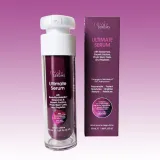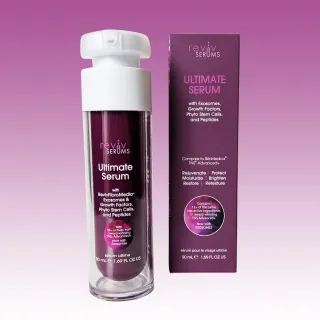
RevivSerums Ultimate Serum

RevivSerums Ultimate Serum

Efficacy87/100IrritancyHigh

Works for

Evens skin tone
Alpha-arbutin, Alanine + 1 more
Works well
What the product description says
“Reduce age spots & uneven tone”
Source: RevivSerums

This product can help reduce hypepigmentation and even out the skin tone because it contains the following effective ingredients: alpha-arbutin

The following ingredient (ingredients) in this product might be helpful, but there is no evidence to confirm that it actually can help even out the skin tone: alanine.

Keep in mind that you would need to apply any topical skincare targetted at hypigmentation consistently for a couple of months to get a result. No topical skincare product can help get rid of hyperpigmentation (including post-acne marks and age spots) instantly.

Alpha-arbutinKey activeEffect: HighMight help reduce hyperpigmentation when used regularly over a long period of time. Is more effective than beta-arbutin~0.25–0.45%
AlanineEffect: LowAn amino-acid that helps to attract water to the upper layer of the skin and might help to lighten the skin, but solid evidence is lacking~0.25–0.5%
Tetrahexyldecyl ascorbateUnder-dosedBeing a lipid soluble form of vitamin C, it is more stable than ascorbic acid, but still degrades quickly and needs to be stabilized in a formulation with another ingredient. It is claimed to penetrate skin better than pure vitamin C and have the the similar benefits, but solid studies of its effectiveness are lacking. Is likely to require a higher concentration in a product than pure vitamin C to be effective. It might be able to help reduce pore clogging.~0.3–0.5%
Anti-aging
Threonine, Centella asiatica extract + 12 more
May help
What the product description says
“Lessen lines & wrinkles”
Source: RevivSerums

This product contains aspartic acid, centella asiatica extract, palmitoyl dipeptide-5 diaminobutyroyl hydroxythreonine, palmitoyl tetrapeptide-7, palmitoyl tripeptide-5, serine, sh-polypeptide-11, sh-polypeptide-9, threonine. There is some human evidence that these ingredients help reduce and prevent fine lines and wrinkles and improve skin elasticity and firmness, though it is smaller or less consistent than the evidence for the best anti-aging ingredients.

ThreonineKey activeEffect: MediumAn amino-acid that helps to attract water to the upper layer of the skin. In combination with other amino-acids, might help to reduce fine lines and wrinkles~0.3–0.5%
Centella asiatica extractKey activeEffect: MediumA plant extract that has been shown to be able to reduce inflammation in skin, support restoration of skin barrier function, as well as support collagen production. Contains active compounds called centelloids: asiaticoside, madecasosside, asiatic acid and madecassic acid. Might be helpful in preventing stretch marks. It can be itself be irritating though.~0.3–0.6%
Palmitoyl tetrapeptide-7Key activeEffect: MediumA type of peptide. Peptides are excellent moisturizers and might be able support collagen production reducing fine lines and wrinkles~0.3–0.55%
Sh-polypeptide-11Key activeEffect: MediumA type of peptide. Peptides are excellent moisturizers and might be able support collagen production reducing fine lines and wrinkles~0.25–0.5%
Sh-polypeptide-9Key activeEffect: MediumA type of peptide. Peptides are excellent moisturizers and might be able support collagen production reducing fine lines and wrinkles~0.25–0.5%
Aspartic acidKey activeEffect: MediumAn amino-acid that helps increase skin hydration and might help to slightly improve skin firmness, potentially reducing lines and wrinkles~0.25–0.5%
Palmitoyl dipeptide-5 diaminobutyroyl hydroxythreonineKey activeEffect: Medium~0.25–0.5%
Palmitoyl tripeptide-5Key activeEffect: MediumA type of peptide. Peptides are excellent moisturizers and might be able support collagen production reducing fine lines and wrinkles~0.25–0.5%
SerineKey activeEffect: MediumAn amino-acid that helps to attract water to the upper layer of the skin. In combination with other amino-acids, might help to reduce fine lines and wrinkles~0.25–0.5%
Lactococcus ferment lysateEffect: LowConsists of remains of dead bacteria cells. Is likely helpful in attracting water to the upper layer of the skin. Might be helpful in reducing inflammation and neutralizing free radicals in skin~2.3–2.8%
UbiquinoneEffect: LowCoenzyme Q10. It helps neutralize free radicals in skin, improves skin hydration and might be helpful agains fine lines and wrinkles. It can be an allergen~0.3–0.5%
Dipalmitoyl hydroxyprolineEffect: LowIs claimed to stimulate collagen and elastin production, as well as work as an anti-oxidant. There is however not enough evidence for its effectiveness~0.25–0.45%
Aloe barbadensis leaf juiceEffect: Low, below effective doseTraditionally used to treat sunburns, dermatitis and inflammation, but evidence for its effectiveness is lacking. The extract can contain humectants that help attract water into the skin~0.25–0.5%
Tetrahexyldecyl ascorbateUnder-dosedBeing a lipid soluble form of vitamin C, it is more stable than ascorbic acid, but still degrades quickly and needs to be stabilized in a formulation with another ingredient. It is claimed to penetrate skin better than pure vitamin C and have the the similar benefits, but solid studies of its effectiveness are lacking. Is likely to require a higher concentration in a product than pure vitamin C to be effective. It might be able to help reduce pore clogging.~0.3–0.5%
Moisturizing
Side benefit · Palmitoyl tetrapeptide-7, Palmitoyl dipeptide-5 diaminobutyroyl hydroxythreonine + 34 more
Works well

This product can help improve hydration of the skin with the two types of ingredients.

The first type is called “humectants”:
these ingredients help attract water. When humectants are on the surface of the skin, they “pull in” the moisture from the outside environment, or from within deeper layers of the skin. The following ingredients in this product do the job: alanine, arginine.

This product also contains ingredients called “occlusives”. They help reduce the speed with which our skin loses moisture to the outside environment. These ingredients also help soften the upper layer of the skin, so it feels less tight and nicer to the touch. The following ingredients in this product do the job: arginine, chondrus crispus extract.

The following ingredients in this product are especially good for supporting the skin barrier and helping with the hydration level: palmitoyl dipeptide-5 diaminobutyroyl hydroxythreonine, palmitoyl tetrapeptide-7, palmitoyl tripeptide-5, sh-polypeptide-1, sh-polypeptide-11, sh-polypeptide-9

Palmitoyl tetrapeptide-7Hero· EmollientEffect: HighA type of peptide. Peptides are excellent moisturizers and might be able support collagen production reducing fine lines and wrinkles~0.3–0.55%
Palmitoyl tripeptide-5HeroEffect: HighA type of peptide. Peptides are excellent moisturizers and might be able support collagen production reducing fine lines and wrinkles~0.25–0.5%
Sh-polypeptide-11HeroEffect: HighA type of peptide. Peptides are excellent moisturizers and might be able support collagen production reducing fine lines and wrinkles~0.25–0.5%
Sh-polypeptide-9HeroEffect: HighA type of peptide. Peptides are excellent moisturizers and might be able support collagen production reducing fine lines and wrinkles~0.25–0.5%
Lactococcus ferment lysateKey activeEffect: HighConsists of remains of dead bacteria cells. Is likely helpful in attracting water to the upper layer of the skin. Might be helpful in reducing inflammation and neutralizing free radicals in skin~2.3–2.8%
Chlorella vulgaris extractKey activeEffect: MediumA plant extract that can help to attract water to the upper layer of the skin and might have some anti-oxidant and anti-inflammatory properties~1.9–2.3%
Saccharide isomerateKey active· HumectantEffect: HighHelps attract water to the upper layer of the skin~1.6–1.9%
ThreonineKey activeEffect: HighAn amino-acid that helps to attract water to the upper layer of the skin. In combination with other amino-acids, might help to reduce fine lines and wrinkles~0.3–0.5%
UbiquinoneKey activeEffect: HighCoenzyme Q10. It helps neutralize free radicals in skin, improves skin hydration and might be helpful agains fine lines and wrinkles. It can be an allergen~0.3–0.5%
Chondrus crispus extractKey active· OcclusiveEffect: HighRed algae extract that helps attract water to the upper layer of the skin and create a nicer product consistency~0.3–0.55%
Centella asiatica extractKey activeEffect: HighA plant extract that has been shown to be able to reduce inflammation in skin, support restoration of skin barrier function, as well as support collagen production. Contains active compounds called centelloids: asiaticoside, madecasosside, asiatic acid and madecassic acid. Might be helpful in preventing stretch marks. It can be itself be irritating though.~0.3–0.6%
ProlineKey activeEffect: Medium~0.3–0.55%
GlycerinKey active· HumectantEffect: HighOne of the best moisturizing ingredients. Naturally present in skin. It attracts water to the upper layer of the skin working as a humectant~0.25–0.5%
Cassia angustifolia seed polysaccharideKey activeEffect: HighHelps attract water to the upper layer of the skin. Is sometimes referred to as "natural" hyaluronic acid (even though hyaluronic acid is not unnatural and is present in human skin)~0.25–0.5%
GlycineKey active· HumectantEffect: HighHelps to attract water to the upper layer of the skin and can help restore the skin barrier function~0.25–0.5%
HistidineKey active· HumectantEffect: High~0.25–0.5%
IsoleucineKey activeEffect: HighAn amino acid that can help attract water to the upper layer of the skin and support skin's barrier function~0.25–0.5%
Aspartic acidKey active· HumectantEffect: HighAn amino-acid that helps increase skin hydration and might help to slightly improve skin firmness, potentially reducing lines and wrinkles~0.25–0.5%
PcaKey active· HumectantEffect: HighNaturally present in skin and helps to attract water to its upper layer~0.25–0.45%
ArginineKey active· Humectant, OcclusiveEffect: HighAn amino acid that is naturally present in skin and helps keep it hydrated. When used together with AHAs, it can reduce their irritating effect on the skin~0.25–0.45%
DextranKey active· HumectantEffect: HighHelps attract water to the most upper layer of the skin. Derived from sugar~0.25–0.5%
AlanineKey active· HumectantEffect: HighAn amino-acid that helps to attract water to the upper layer of the skin and might help to lighten the skin, but solid evidence is lacking~0.25–0.5%
Saccharomyces ferment lysate filtrateKey activeEffect: HighHelps attract water to the upper layer of the skin~0.25–0.5%
SerineKey activeEffect: HighAn amino-acid that helps to attract water to the upper layer of the skin. In combination with other amino-acids, might help to reduce fine lines and wrinkles~0.25–0.5%
Sodium pcaKey active· HumectantEffect: HighNaturally present in skin and helps to attract water to its upper layer~0.25–0.45%
Dipalmitoyl hydroxyprolineKey activeEffect: MediumIs claimed to stimulate collagen and elastin production, as well as work as an anti-oxidant. There is however not enough evidence for its effectiveness~0.25–0.45%
Spirulina platensis extractKey activeEffect: MediumAn algae extract. Might help to attract water to the upper layer of the skin and have an anti-oxidant effect~0.25–0.5%
Sodium lactateKey active· HumectantEffect: HighHelps attract water to the upper layer of the skin. Is often used to adjust the pH level of the product~0.2–0.4%
Pentylene glycol· EmollientEffect: LowUsed to preserve products, dissolve other ingredients and create a nice product texture~5.3–6.5%
Butylene glycol· HumectantEffect: LowUsed to create a nice product texture and help delivery of other ingredients. Might be somewhat helpful in attracting water to the upper layer of the skin~0.3–0.6%
Sh-polypeptide-1Effect: LowA lab-made copy of human basic fibroblast growth factor (bFGF), a protein that tells skin cells to multiply. It speeds up wound healing as a prescription drug, but it is too large to pass through intact skin easily, and there is no good evidence it reduces wrinkles in skincare.~0.25–0.5%
LecithinEffect: Low, below effective doseUsed mostly for creating emulsions - helping oil and water mix together. Helps soften the upper layer of the skin~0.45–0.7%
Aloe barbadensis leaf juiceEffect: Low, below effective doseTraditionally used to treat sunburns, dermatitis and inflammation, but evidence for its effectiveness is lacking. The extract can contain humectants that help attract water into the skin~0.25–0.5%
Pyrus malus fruit extractUnder-dosedCan have some moisturizing properties due to its sugar content~0.65–0.95%
Simmondsia chinensis seed oilUnder-dosedSoftens the upper layer of skin and helps restore the healthy skin barrier. Has shown to help calm down inflammation in skin. It is a stable oil, meaning that it retains its properties even when exposed to air.~0.3–0.6%
Anti-oxidation
Side benefit · Ubiquinone, Centella asiatica extract + 9 more
Works well

This product contains antioxidants (ubiquinone) that can help neutralize free radicals in skin. By doing so, they can lessen the damage the skin gets from the UV light (sun).

The following ingredients - centella asiatica extract also can have an antioxidant effect, but there is less evidence to confirm their effectiveness in skin.

UbiquinoneKey activeEffect: HighCoenzyme Q10. It helps neutralize free radicals in skin, improves skin hydration and might be helpful agains fine lines and wrinkles. It can be an allergen~0.3–0.5%
Centella asiatica extractKey activeEffect: MediumA plant extract that has been shown to be able to reduce inflammation in skin, support restoration of skin barrier function, as well as support collagen production. Contains active compounds called centelloids: asiaticoside, madecasosside, asiatic acid and madecassic acid. Might be helpful in preventing stretch marks. It can be itself be irritating though.~0.3–0.6%
Lactococcus ferment lysateEffect: LowConsists of remains of dead bacteria cells. Is likely helpful in attracting water to the upper layer of the skin. Might be helpful in reducing inflammation and neutralizing free radicals in skin~2.3–2.8%
Chlorella vulgaris extractEffect: LowA plant extract that can help to attract water to the upper layer of the skin and might have some anti-oxidant and anti-inflammatory properties~1.9–2.3%
Dipalmitoyl hydroxyprolineEffect: LowIs claimed to stimulate collagen and elastin production, as well as work as an anti-oxidant. There is however not enough evidence for its effectiveness~0.25–0.45%
Spirulina platensis extractEffect: LowAn algae extract. Might help to attract water to the upper layer of the skin and have an anti-oxidant effect~0.25–0.5%
Taraxacum officinale root extractEffect: LowA plant extract that might help neutralize free radicals in skin. Can be irritating~0.25–0.5%
Pyrus malus fruit extractEffect: Low, below effective doseCan have some moisturizing properties due to its sugar content~0.65–0.95%
Tocopheryl acetateEffect: Low, below effective doseA more stable but less bio-available form of vitamin E compared to Tocopherol. Might help moisturize and protect the skin from free radicals, but mostly used in low concentrations to stabilize other ingredients.~0.5–0.75%
Tetrahexyldecyl ascorbateUnder-dosedBeing a lipid soluble form of vitamin C, it is more stable than ascorbic acid, but still degrades quickly and needs to be stabilized in a formulation with another ingredient. It is claimed to penetrate skin better than pure vitamin C and have the the similar benefits, but solid studies of its effectiveness are lacking. Is likely to require a higher concentration in a product than pure vitamin C to be effective. It might be able to help reduce pore clogging.~0.3–0.5%
ErgothioneineUnder-dosedCan help neutralize free radicals in skin. Preliminary studies show that it can be more effective than coenzyme Q10 but studies on effective concentration for topical applications are lacking~0.25–0.5%

Can it cause trouble?

Irritancy
5 strong irritants: Hamamelis virginiana extract, Equisetum arvense extract + 3 more — patch-test recommended
High risk
We flagged 25 ingredients with irritancy potential. Severity depends on your sensitivity threshold; the table lists the worst offenders first.
IngredientFunctionIrritationEst. amount
PullulanCreates a thin drying film on the skin resulting in a short-term tightening effectHigh~0.4–0.65%est.
Hamamelis virginiana extractA plant extract that can help calm down inflammation in skin. Can, however, itself be irritatingHigh~0.25–0.4%est.
Equisetum arvense extractA plant extract that might have anti-oxidant properties. Can be irritatingHigh~0.3–0.55%est.
Geranium maculatum extractContains an essential oil. Can be irritatingHigh~0.25–0.5%est.
Taraxacum officinale root extractA plant extract that might help neutralize free radicals in skin. Can be irritatingHigh~0.25–0.5%est.
Achillea millefolium flower extractA plant extract that is used as a fragrance. Its main fragrant compound is linaloolHigh~0.25–0.5%est.
AlcoholCan be drying and contribute to skin irritation. Used in formulars to dissolve other ingredients, create a thinner product consistency or for its antibacterial propertiesHigh~0.15–0.25%est.
Pentylene glycolUsed to preserve products, dissolve other ingredients and create a nice product textureMedium~5.3–6.5%est.
EthoxydiglycolHelps to improve the product consistencyMedium~2.8–3.4%est.
Chlorella vulgaris extractA plant extract that can help to attract water to the upper layer of the skin and might have some anti-oxidant and anti-inflammatory propertiesMedium~1.9–2.3%est.
Pyrus malus fruit extractCan have some moisturizing properties due to its sugar contentMedium~0.65–0.95%est.
HydroxyacetophenoneUsed to increase effectiveness of preservativesMedium~0.55–0.8%est.
Tocopheryl acetateA more stable but less bio-available form of vitamin E compared to Tocopherol. Might help moisturize and protect the skin from free radicals, but mostly used in low concentrations to stabilize other ingredients.Medium~0.5–0.75%est.
Sodium citrateHelps to control the skin's pH level. Maintains the skin's natural film of amino-lactic acids and oils. Helps to preserve productsMedium~0.3–0.55%est.
Disodium edtaStabilizes the product formulationMedium~0.25–0.45%est.
EthylhexylglycerinA preservativeMedium~0.25–0.45%est.
Alpha-arbutinMight help reduce hyperpigmentation when used regularly over a long period of time. Is more effective than beta-arbutinMedium~0.25–0.45%est.
Tetrahexyldecyl ascorbateBeing a lipid soluble form of vitamin C, it is more stable than ascorbic acid, but still degrades quickly and needs to be stabilized in a formulation with another ingredient. It is claimed to penetrate skin better than pure vitamin C and have the the similar benefits, but solid studies of its effectiveness are lacking. Is likely to require a higher concentration in a product than pure vitamin C to be effective. It might be able to help reduce pore clogging.Medium~0.3–0.5%est.
Centella asiatica extractA plant extract that has been shown to be able to reduce inflammation in skin, support restoration of skin barrier function, as well as support collagen production. Contains active compounds called centelloids: asiaticoside, madecasosside, asiatic acid and madecassic acid. Might be helpful in preventing stretch marks. It can be itself be irritating though.Medium~0.3–0.6%est.
Aloe barbadensis leaf juiceTraditionally used to treat sunburns, dermatitis and inflammation, but evidence for its effectiveness is lacking. The extract can contain humectants that help attract water into the skinMedium~0.25–0.5%est.
Cassia angustifolia seed polysaccharideHelps attract water to the upper layer of the skin. Is sometimes referred to as "natural" hyaluronic acid (even though hyaluronic acid is not unnatural and is present in human skin)Medium~0.25–0.5%est.
Simmondsia chinensis seed oilSoftens the upper layer of skin and helps restore the healthy skin barrier. Has shown to help calm down inflammation in skin. It is a stable oil, meaning that it retains its properties even when exposed to air.Medium~0.3–0.6%est.
Sodium lactateHelps attract water to the upper layer of the skin. Is often used to adjust the pH level of the productMedium~0.2–0.4%est.
Acrylates/c10-30 alkyl acrylate crosspolymerMaintains the texture of skincare products. Allows the product to spread evenly. Helps oil and water mix togetherMedium~0.15–0.25%est.
Potassium sorbateA preservativeMedium~0.1–0.2%est.
Comedogenic
3 ingredients rated 2 or more on the 0–5 pore-clogging scale
3 flagged
These ingredients have a comedogenic rating of 2 or more on a 0–5 scale; the table shows each one's rating. In leave-on products they can clog pores in acne-prone skin.
IngredientFunctionRatingEst. amount
Chlorella vulgaris extractA plant extract that can help to attract water to the upper layer of the skin and might have some anti-oxidant and anti-inflammatory properties3/5~1.9–2.3%est.
Chondrus crispus extractRed algae extract that helps attract water to the upper layer of the skin and create a nicer product consistency3/5~0.3–0.55%est.
Spirulina platensis extractAn algae extract. Might help to attract water to the upper layer of the skin and have an anti-oxidant effect3/5~0.25–0.5%est.
Did this help you decide?

User reviews

Would you recommend?
No community reviews yet.

Be the first — your take helps the next person decide.

Ingredients

Filter by role to see what each ingredient is doing.

Water~45–55%
Formula
Irritation risk
Low

Plain old water

More about Water
Pentylene glycol~5.3–6.5%
Irritant · medium
Irritation risk
Medium
Works for
Moisturizing

Used to preserve products, dissolve other ingredients and create a nice product texture

More about Pentylene glycol
Human fibroblast derived stem cell conditioned media
Not recognized
Glycereth-7 triacetate~4.2–5.1%
Formula
Ethoxydiglycol~2.8–3.4%
Irritant · medium
Irritation risk
Medium

Helps to improve the product consistency

More about Ethoxydiglycol
Lactococcus ferment lysate~2.3–2.8%
Key active
Irritation risk
Low
Works for
MoisturizingAnti-oxidationAnti-agingAnti-inflammatory

Consists of remains of dead bacteria cells. Is likely helpful in attracting water to the upper layer of the skin. Might be helpful in reducing inflammation and neutralizing free radicals in skin

More about Lactococcus ferment lysate
Chlorella vulgaris extract~1.9–2.3%
Key activeComedogenic 3/5Irritant · medium
Irritation risk
Medium
Comedogenicity
3/5
Works for
MoisturizingAnti-oxidationAnti-inflammatory

A plant extract that can help to attract water to the upper layer of the skin and might have some anti-oxidant and anti-inflammatory properties

More about Chlorella vulgaris extract
Saccharide isomerate~1.6–1.9%
Key active
Irritation risk
Low
Works for
Moisturizing

Helps attract water to the upper layer of the skin

More about Saccharide isomerate
Tripeptide-2~1.3–1.6%
Formula
Irritation risk
Low
More about Tripeptide-2
Dimer tripeptide-43~1.1–1.4%
Formula
Vitis vinifera flower cell extract~0.8–1.2%
Formula
Pyrus malus fruit extract~0.65–0.95%
Under-dosedIrritant · medium
Irritation risk
Medium
Works for
MoisturizingAnti-oxidation

Can have some moisturizing properties due to its sugar content

More about Pyrus malus fruit extract
Hydroxyacetophenone~0.55–0.8%
Irritant · medium
Irritation risk
Medium

Used to increase effectiveness of preservatives

More about Hydroxyacetophenone
Tocopheryl acetate~0.5–0.75%
Irritant · medium
Irritation risk
Medium
Works for
Anti-oxidation

A more stable but less bio-available form of vitamin E compared to Tocopherol. Might help moisturize and protect the skin from free radicals, but mostly used in low concentrations to stabilize other ingredients.

More about Tocopheryl acetate
Propanediol~0.45–0.7%
Formula
Irritation risk
Low

Acts as a solvent for other ingredients. Speeds up the absorption of other ingredients into the skin

More about Propanediol
Xanthan gum~0.45–0.65%
Formula
Irritation risk
Low
Works for
Cleansing

Used to create a thicker product consistency

More about Xanthan gum
Lecithin~0.45–0.7%
Formula
Irritation risk
Low
Works for
CleansingMoisturizing

Used mostly for creating emulsions - helping oil and water mix together. Helps soften the upper layer of the skin

More about Lecithin
Pullulan~0.4–0.65%
Irritant · high
Irritation risk
High
Works for
Mattifying

Creates a thin drying film on the skin resulting in a short-term tightening effect

More about Pullulan
Butylene glycol~0.3–0.6%
Formula
Irritation risk
Low
Works for
Moisturizing

Used to create a nice product texture and help delivery of other ingredients. Might be somewhat helpful in attracting water to the upper layer of the skin

More about Butylene glycol
Sodium citrate~0.3–0.55%
Irritant · medium
Irritation risk
Medium

Helps to control the skin's pH level. Maintains the skin's natural film of amino-lactic acids and oils. Helps to preserve products

More about Sodium citrate
Polysorbate 20~0.3–0.55%
Formula
Irritation risk
Low
Works for
Cleansing

Helps oil and water mix together

More about Polysorbate 20
Dextran~0.25–0.5%
Key active
Irritation risk
Low
Works for
Moisturizing

Helps attract water to the most upper layer of the skin. Derived from sugar

More about Dextran
Disodium edta~0.25–0.45%
Irritant · medium
Irritation risk
Medium

Stabilizes the product formulation

More about Disodium edta
Phenoxyethanol~0.25–0.45%
Formula
Irritation risk
Low

A preservative. It helps prevent bacterial growth in cosmetic products

More about Phenoxyethanol
Ethylhexylglycerin~0.25–0.45%
Irritant · medium
Irritation risk
Medium

A preservative

More about Ethylhexylglycerin
Hamamelis virginiana extract~0.25–0.4%
Irritant · high
Irritation risk
High
Works for
Anti-inflammatory

A plant extract that can help calm down inflammation in skin. Can, however, itself be irritating

More about Hamamelis virginiana extract
Glycerin~0.25–0.5%
Key active
Irritation risk
Low
Works for
Moisturizing

One of the best moisturizing ingredients. Naturally present in skin. It attracts water to the upper layer of the skin working as a humectant

More about Glycerin
Dimethyl sulfone~0.25–0.45%
Formula
Irritation risk
Low

Helps dissolve other ingredients

More about Dimethyl sulfone
Human (bone marrow derived) mesenchymal stem cell exosomes
Not recognized
Alpha-arbutin~0.25–0.45%
Key activeIrritant · medium
Irritation risk
Medium
Works for
Evens skin tone

Might help reduce hyperpigmentation when used regularly over a long period of time. Is more effective than beta-arbutin

More about Alpha-arbutin
Palmitoyl tripeptide-5~0.25–0.5%
Hero · Moisturizing
Irritation risk
Low
Works for
MoisturizingAnti-aging

A type of peptide. Peptides are excellent moisturizers and might be able support collagen production reducing fine lines and wrinkles

More about Palmitoyl tripeptide-5
Ergothioneine~0.25–0.5%
Under-dosed
Irritation risk
Low
Works for
Anti-oxidation

Can help neutralize free radicals in skin. Preliminary studies show that it can be more effective than coenzyme Q10 but studies on effective concentration for topical applications are lacking

More about Ergothioneine
Dipalmitoyl hydroxyproline~0.25–0.45%
Key active
Irritation risk
Low
Works for
MoisturizingAnti-oxidationAnti-aging

Is claimed to stimulate collagen and elastin production, as well as work as an anti-oxidant. There is however not enough evidence for its effectiveness

More about Dipalmitoyl hydroxyproline
Ubiquinone~0.3–0.5%
Key active
Irritation risk
Low
Works for
MoisturizingAnti-oxidationAnti-aging

Coenzyme Q10. It helps neutralize free radicals in skin, improves skin hydration and might be helpful agains fine lines and wrinkles. It can be an allergen

More about Ubiquinone
Saccharomyces ferment lysate filtrate~0.25–0.5%
Key active
Irritation risk
Low
Works for
Moisturizing

Helps attract water to the upper layer of the skin

More about Saccharomyces ferment lysate filtrate
Tetrahexyldecyl ascorbate~0.3–0.5%
Under-dosedIrritant · medium
Irritation risk
Medium
Works for
Anti-agingEvens skin toneAnti-oxidation

Being a lipid soluble form of vitamin C, it is more stable than ascorbic acid, but still degrades quickly and needs to be stabilized in a formulation with another ingredient. It is claimed to penetrate skin better than pure vitamin C and have the the similar benefits, but solid studies of its effectiveness are lacking. Is likely to require a higher concentration in a product than pure vitamin C to be effective. It might be able to help reduce pore clogging.

More about Tetrahexyldecyl ascorbate
Rh-oligopeptide-1~0.25–0.45%
Formula
Rh-polypeptide-3~0.25–0.45%
Formula
Sh-polypeptide-9~0.25–0.5%
Hero · Moisturizing
Irritation risk
Low
Works for
MoisturizingAnti-aging

A type of peptide. Peptides are excellent moisturizers and might be able support collagen production reducing fine lines and wrinkles

More about Sh-polypeptide-9
Sh-polypeptide-1~0.25–0.5%
Formula
Irritation risk
Low
Works for
Moisturizing

A lab-made copy of human basic fibroblast growth factor (bFGF), a protein that tells skin cells to multiply. It speeds up wound healing as a prescription drug, but it is too large to pass through intact skin easily, and there is no good evidence it reduces wrinkles in skincare.

More about Sh-polypeptide-1
Sh-polypeptide-11~0.25–0.5%
Hero · Moisturizing
Irritation risk
Low
Works for
MoisturizingAnti-aging

A type of peptide. Peptides are excellent moisturizers and might be able support collagen production reducing fine lines and wrinkles

More about Sh-polypeptide-11
Tetradecyl aminobutyroylvalylaminobutyric urea acetate
Not recognized
Palmitoyl dipeptide-5 diaminobutyroyl hydroxythreonine~0.25–0.5%
Hero · Moisturizing
Irritation risk
Low
Works for
MoisturizingAnti-aging
More about Palmitoyl dipeptide-5 diaminobutyroyl hydroxythreonine
Palmitoyl tetrapeptide-7~0.3–0.55%
Hero · Moisturizing
Irritation risk
Low
Works for
MoisturizingAnti-aging

A type of peptide. Peptides are excellent moisturizers and might be able support collagen production reducing fine lines and wrinkles

More about Palmitoyl tetrapeptide-7
Acetyl hexapeptide-51 amide~0.25–0.5%
Formula
Nannochloropsis oculata extract~0.25–0.5%
Formula
Irritation risk
Low

A microalgae extract that helps to attact water to the upper layer of the skin

More about Nannochloropsis oculata extract
Centella asiatica extract~0.3–0.6%
Key activeIrritant · medium
Irritation risk
Medium
Works for
Reduces irritationAnti-inflammatoryReduces rednessMoisturizingAnti-agingAnti-oxidationAnti-blemish

A plant extract that has been shown to be able to reduce inflammation in skin, support restoration of skin barrier function, as well as support collagen production. Contains active compounds called centelloids: asiaticoside, madecasosside, asiatic acid and madecassic acid. Might be helpful in preventing stretch marks. It can be itself be irritating though.

More about Centella asiatica extract
Chondrus crispus extract~0.3–0.55%
Key activeComedogenic 3/5
Irritation risk
Low
Comedogenicity
3/5
Works for
Moisturizing

Red algae extract that helps attract water to the upper layer of the skin and create a nicer product consistency

More about Chondrus crispus extract
Equisetum arvense extract~0.3–0.55%
Irritant · high
Irritation risk
High

A plant extract that might have anti-oxidant properties. Can be irritating

More about Equisetum arvense extract
Geranium maculatum extract~0.25–0.5%
Irritant · high
Irritation risk
High

Contains an essential oil. Can be irritating

More about Geranium maculatum extract
Taraxacum officinale root extract~0.25–0.5%
Irritant · high
Irritation risk
High
Works for
Anti-oxidation

A plant extract that might help neutralize free radicals in skin. Can be irritating

More about Taraxacum officinale root extract
Achillea millefolium flower extract~0.25–0.5%
Irritant · high
Irritation risk
High

A plant extract that is used as a fragrance. Its main fragrant compound is linalool

More about Achillea millefolium flower extract
Curcuma longa rhizome (tumeric) callus extract
Not recognized
Spirulina platensis extract~0.25–0.5%
Key activeComedogenic 3/5
Irritation risk
Low
Comedogenicity
3/5
Works for
MoisturizingAnti-oxidation

An algae extract. Might help to attract water to the upper layer of the skin and have an anti-oxidant effect

More about Spirulina platensis extract
Aloe barbadensis leaf juice~0.25–0.5%
Irritant · medium
Irritation risk
Medium
Works for
MoisturizingAntibacterialReduces irritationReduces rednessAnti-inflammatoryAnti-blemishAnti-aging

Traditionally used to treat sunburns, dermatitis and inflammation, but evidence for its effectiveness is lacking. The extract can contain humectants that help attract water into the skin

More about Aloe barbadensis leaf juice
Cassia angustifolia seed polysaccharide~0.25–0.5%
Key activeIrritant · medium
Irritation risk
Medium
Works for
Moisturizing

Helps attract water to the upper layer of the skin. Is sometimes referred to as "natural" hyaluronic acid (even though hyaluronic acid is not unnatural and is present in human skin)

More about Cassia angustifolia seed polysaccharide
Simmondsia chinensis seed oil~0.3–0.6%
Under-dosedIrritant · medium
Irritation risk
Medium
Works for
Moisturizing

Softens the upper layer of skin and helps restore the healthy skin barrier. Has shown to help calm down inflammation in skin. It is a stable oil, meaning that it retains its properties even when exposed to air.

More about Simmondsia chinensis seed oil
Arginine~0.25–0.45%
Key active
Irritation risk
Low
Works for
Moisturizing

An amino acid that is naturally present in skin and helps keep it hydrated. When used together with AHAs, it can reduce their irritating effect on the skin

More about Arginine
Aspartic acid~0.25–0.5%
Key active
Irritation risk
Low
Works for
MoisturizingAnti-aging

An amino-acid that helps increase skin hydration and might help to slightly improve skin firmness, potentially reducing lines and wrinkles

More about Aspartic acid
Glycine~0.25–0.5%
Key active
Irritation risk
Low
Works for
Moisturizing

Helps to attract water to the upper layer of the skin and can help restore the skin barrier function

More about Glycine
Alanine~0.25–0.5%
Key active
Irritation risk
Low
Works for
MoisturizingEvens skin tone

An amino-acid that helps to attract water to the upper layer of the skin and might help to lighten the skin, but solid evidence is lacking

More about Alanine
Serine~0.25–0.5%
Key active
Irritation risk
Low
Works for
MoisturizingAnti-aging

An amino-acid that helps to attract water to the upper layer of the skin. In combination with other amino-acids, might help to reduce fine lines and wrinkles

More about Serine
Valine~0.25–0.5%
Formula
Irritation risk
Low
More about Valine
Isoleucine~0.25–0.5%
Key active
Irritation risk
Low
Works for
Moisturizing

An amino acid that can help attract water to the upper layer of the skin and support skin's barrier function

More about Isoleucine
Proline~0.3–0.55%
Key active
Irritation risk
Low
Works for
Moisturizing
More about Proline
Threonine~0.3–0.5%
Key active
Irritation risk
Low
Works for
MoisturizingAnti-aging

An amino-acid that helps to attract water to the upper layer of the skin. In combination with other amino-acids, might help to reduce fine lines and wrinkles

More about Threonine
Histidine~0.25–0.5%
Key active
Irritation risk
Low
Works for
Moisturizing
More about Histidine
Phenylalanine~0.25–0.5%
Formula
Irritation risk
Low
More about Phenylalanine
Pca~0.25–0.45%
Key active
Irritation risk
Low
Works for
Moisturizing

Naturally present in skin and helps to attract water to its upper layer

More about Pca
Sodium pca~0.25–0.45%
Key active
Irritation risk
Low
Works for
Moisturizing

Naturally present in skin and helps to attract water to its upper layer

More about Sodium pca
Sodium lactate~0.2–0.4%
Key activeIrritant · medium
Irritation risk
Medium
Works for
Moisturizing

Helps attract water to the upper layer of the skin. Is often used to adjust the pH level of the product

More about Sodium lactate
Sodium chloride~0.25–0.45%
Formula
Irritation risk
Low

Used to stabilize mixtures of oil and water, and create thicker, gel-like product textures

More about Sodium chloride
Carbomer~0.15–0.3%
Formula
Irritation risk
Low
Works for
Cleansing

Helps create a thicker or gel-like product texture. It is not a surfactant but can be used in gentle cleansing formulations

More about Carbomer
Alcohol~0.15–0.25%
Irritant · high
Irritation risk
High
Works for
Antibacterial

Can be drying and contribute to skin irritation. Used in formulars to dissolve other ingredients, create a thinner product consistency or for its antibacterial properties

More about Alcohol
Hydroxyethylcellulose~0.15–0.25%
Formula
Irritation risk
Low

Used to thicken product formulations and create gel-like textures

More about Hydroxyethylcellulose
Acrylates/c10-30 alkyl acrylate crosspolymer~0.15–0.25%
Irritant · medium
Irritation risk
Medium

Maintains the texture of skincare products. Allows the product to spread evenly. Helps oil and water mix together

More about Acrylates/c10-30 alkyl acrylate crosspolymer
Sodium hydroxide~0.15–0.25%
Formula
Irritation risk
Low

Used to adjust the product's pH

More about Sodium hydroxide
Potassium sorbate~0.1–0.2%
Irritant · medium
Irritation risk
Medium

A preservative

More about Potassium sorbate
Sodium benzoate~0.1–0.2%
Formula
Irritation risk
Low

A preservative

More about Sodium benzoate
Ingredient list view

Water, Pentylene glycol, Unknown, Glycereth-7 triacetate, Ethoxydiglycol, Lactococcus ferment lysate, Chlorella vulgaris extract, Saccharide isomerate, Tripeptide-2, Dimer tripeptide-43, Vitis vinifera flower cell extract, Pyrus malus fruit extract, Hydroxyacetophenone, Tocopheryl acetate, Propanediol, Xanthan gum, Lecithin, Pullulan, Butylene glycol, Sodium citrate, Polysorbate 20, Dextran, Disodium edta, Phenoxyethanol, Ethylhexylglycerin, Hamamelis virginiana extract, Glycerin, Dimethyl sulfone, Unknown, Alpha-arbutin, Palmitoyl tripeptide-5, Ergothioneine, Dipalmitoyl hydroxyproline, Ubiquinone, Saccharomyces ferment lysate filtrate, Tetrahexyldecyl ascorbate, Rh-oligopeptide-1, Rh-polypeptide-3, Sh-polypeptide-9, Sh-polypeptide-1, Sh-polypeptide-11, Unknown, Palmitoyl dipeptide-5 diaminobutyroyl hydroxythreonine, Palmitoyl tetrapeptide-7, Acetyl hexapeptide-51 amide, Nannochloropsis oculata extract, Centella asiatica extract, Chondrus crispus extract, Equisetum arvense extract, Geranium maculatum extract, Taraxacum officinale root extract, Achillea millefolium flower extract, Unknown, Spirulina platensis extract, Aloe barbadensis leaf juice, Cassia angustifolia seed polysaccharide, Simmondsia chinensis seed oil, Arginine, Aspartic acid, Glycine, Alanine, Serine, Valine, Isoleucine, Proline, Threonine, Histidine, Phenylalanine, Pca, Sodium pca, Sodium lactate, Sodium chloride, Carbomer, Alcohol, Hydroxyethylcellulose, Acrylates/c10-30 alkyl acrylate crosspolymer, Sodium hydroxide, Potassium sorbate, Sodium benzoate

Compare prices

Retailers ranked by price — lowest first.

RevivSerums
$99.00
Buy

Affiliate links · As an Amazon Associate, WIMJ earns from qualifying purchases.

Worth comparing, line by line.

Match % combines shared ingredients, the first five ingredients, shared actives and hero ingredients, irritancy (lower counts in the alternative's favour), texture and body area. Only products in the same routine step are compared.

Side-by-side comparison of this product against its closest alternatives
RevivSerumsUltimate SerumYOUR PRODUCTEighth Day 2.0The Regenerative SerumBootsFirming Peptides and Beta Glucan SerumNiche Beauty labDERMA - PEPTIDES 22% Multi-Peptide Treatment
Match—53%45%44%
Price—$225.00$7.94—
Shared key ingredients—12 of 3014 of 307 of 30
Key difference—Tripeptide-1Hexapeptide-9N-Prolyl Palmitoyl Tripeptide-56 Acetate
Irritancy High Medium Medium Medium
Drying alcohol Contains drying alcohol ———
View product Shop Shop Shop

More alternatives: Theramid DERMA - PEPTIDES 35%Angela Caglia Cell Forté Serum

Cheaper alternatives? See how this stacks up against similar formulas.
We compare ingredient profiles across our catalog — pick the closest match for your budget.
Open dupe finder

Product summary

"reviv SERUMS - Ultimate Serum" is effective for: Evens skin tone and Moisturizing

This product could be helpful for: Anti-aging, but its actives are not the most effective or are not well-studied.

Ingredient callouts

  • Peptides (palmitoyl tetrapeptide-7 0.50% - 0.80%, palmitoyl tripeptide-1 0.50% - 0.80%, palmitoyl dipeptide-5 diaminobutyroyl hydroxythreonine 0.45% - 0.70%, sh-polypeptide-11 0.50% - 0.75%, sh-polypeptide-1 0.45% - 0.70%, sh-polypeptide-9 0.45% - 0.70% and palmitoyl tripeptide-5 0.45% - 0.65%). There are many different kind of Peptides and they are naturally present in our skin. They all are a combination of aminoacids. Some of them work as natural antibiotics, promote wound-healing and production of collagen. The science is still not settled on how effective Peptides are in skincare, but it is very likely that they have a benefit. They might help restore the skin barrier and fight the signs of aging. At the very least, Peptides work as humectants: they attract water to the upper layer of the skin and improve its hydration.
  • Humectants (sodium lactate 0.20% - 0.40%, sodium pca 0.25% - 0.45%, pca 0.30% - 0.55%, histidine 0.30% - 0.55%, alanine 0.45% - 0.70%, glycine 0.45% - 0.70%, aspartic acid 0.45% - 0.70%, arginine 0.45% - 0.70%, glycerin 0.50% - 0.70%, dextran 0.45% - 0.70% and saccharide isomerate 1.50% - 1.80%). These ingredients help attract water to the upper layer of the skin and improve the skin hydration.

Sources cited in this review

Every concentration estimate and effectiveness label is anchored to one of these 35 studies and safety reviews.

  1. 1
  2. 2
  3. 3
  4. 4
  5. 5
  6. 6
RevivSerums Ultimate Serum
RevivSerumsUltimate Serum

Affiliate links · As an Amazon Associate, WIMJ earns from qualifying purchases.

As an Amazon Associate, WIMJ earns from qualifying purchases.