Works for
3 of 3 advertised claims delivered
Anti-agingNiacinamide, Oligopeptide-24 + 3 moreStrong evidence
“Key Benefits Works to minimise the appearance of fine lines and wrinkles Helps moisturise and hydrate the skin Contributes to improved skin texture and reduces redness Works to calm and soothe skin Leaves skin feeling softer and refreshed UK200031995”
This product can help reduce and prevent fine lines and wrinkles, improve skin elasticity and firmness because it contains niacinamide.
These ingredients in the product can also be helpful, even though there is less evidence for their effectiveness: oligopeptide-24.
Keep in mind that it typically takes at least 6 weeks to notice any results because the changes that are needed to improve fine lines and elasticity happen in the deeper layers of the skin. No topical anti-aging product can “erase” wrinkles or fully reverse signs of aging.
MoisturizingOligopeptide-24, Niacinamide + 23 moreStrong evidence
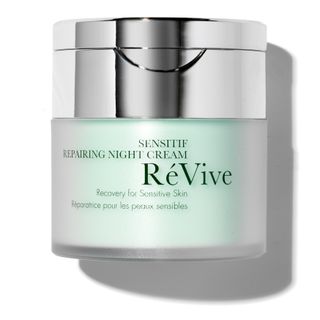
“Sensitif Repairing Night Cream”
This product can help improve hydration of the skin with the two types of ingredients.
The first type is called “humectants”:
these ingredients help attract water.
When humectants are on the surface of the skin, they “pull in” the moisture from the outside environment, or from
within deeper layers of the skin. The following ingredients in this product do the job:
fructose, glycerin.
This product also contains ingredients called “occlusives”. They help reduce the speed with which our skin loses moisture to the outside environment. These ingredients also help soften the upper layer of the skin, so it feels less tight and nicer to the touch. The following ingredients in this product do the job: caprylic/capric triglyceride, dimethicone.
The following ingredients in this product are especially good for supporting the skin barrier and helping with the hydration level: niacinamide, oligopeptide-24
Evens skin toneNiacinamide, Glycyrrhiza glabra root extract + 1 moreStrong evidence
“Niacinamide helps improve the appearance of uneven skin tone, fine lines and wrinkles, while skin-soothing ingredients like licorice extract, cucumber and chamomile help calm the skin.”
This product can help reduce hypepigmentation and even out the skin tone because it contains the following effective ingredients: niacinamide
The following ingredient (ingredients) in this product might be helpful, but there is no evidence to confirm that it actually can help even out the skin tone: glycyrrhiza glabra root extract.
Keep in mind that you would need to apply any topical skincare targetted at hypigmentation consistently for a couple of months to get a result. No topical skincare product can help get rid of hyperpigmentation (including post-acne marks and age spots) instantly.
Anti-blemishNot advertised by the brand · Niacinamide, Melia azadirachta leaf extract + 2 moreStrong evidence
This product can help reduce breakouts and clogged pores because it contains the following ingredient: niacinamide. This ingredient is used for treating acne and can have a noticeable effect.
Can it cause trouble?
Irritancy5 strong irritants: Jasminum sambac leaf cell extract, Withania somnifera root extract + 3 more — patch-test recommendedHigh risk
Comedogenic2 ingredients rated 2 or more on the 0–5 pore-clogging scale2 flagged


User reviews
Be the first — your take helps the next person decide.
Ingredients
Filter by role to see what each ingredient is doing.
Water~45–55%
Propanediol~4.5–5.5%
- Irritation risk
- Low
Acts as a solvent for other ingredients. Speeds up the absorption of other ingredients into the skin
More about PropanediolGlycerin~3.8–4.6%
- Irritation risk
- Low
One of the best moisturizing ingredients. Naturally present in skin. It attracts water to the upper layer of the skin working as a humectant
More about GlycerinDimethicone~3–3.7%
- Irritation risk
- Low
A silicone that helps to reduce water loss from the surface of the skin. Can temporarily "fill in" lines and wrinkles, absorb oil, and create a nice product finish
More about DimethiconePhytosteryl/isostearyl/cetyl/stearyl/behenyl dimer dilinoleate~2.3–2.8%
- Irritation risk
- Low
Helps soften the upper layer of the skin and create a nice product consistency
More about Phytosteryl/isostearyl/cetyl/stearyl/behenyl dimer dilinoleateTridecyl trimellitate~1.9–2.3%
- Irritation risk
- Medium
Used to create a thicker product consistency and soften the upper layer of the skin
More about Tridecyl trimellitateNiacinamide~1.5–1.9%
- Irritation risk
- Low
Is proven to be effective in reducing blemishes, evening out skin tone and helping to improve lines and wrinkles. It helps the skin to repair sun damage, calm down inflammation and keep maintain good levels of moisture. The concentration of about 2% is effective for supporting the skin barrier and evening out the skin tone. Concentration of 4-6% is better for helping with acne and balancing the sebum production
More about NiacinamideCaprylic/capric triglyceride~1.4–1.7%
- Irritation risk
- Medium
A good mix of fatty acids that forms a protective layer on the skin. Improves the shelf life of products. Derived from coconut and glycerin
More about Caprylic/capric triglyceride1,2-hexanediol~0.65–0.95%
Oligopeptide-24~0.8–1.15%
- Irritation risk
- Low
A type of peptide. Peptides are excellent moisturizers and might be able support collagen production reducing fine lines and wrinkles
More about Oligopeptide-24Bisabolol~0.6–0.9%
- Irritation risk
- Low
An active component of chamomile plant that historically has been used to calm down irritated skin. A recent study shows that bisabolol indeed can have some anti-inflammatory effect on skin, even though conclusive data is lacking. Bisabolol has a sweet floral scent and can be added to products for its aromatic properties
More about BisabololTocopherol~0.6–0.85%
- Irritation risk
- Low
Pure form of vitamin E. Can help moisturise and protect the skin from free radicals. Often used to help stabilise other ingredients or the formula itself
More about TocopherolSqualane~0.6–0.9%
- Irritation risk
- Low
An oil naturally present in skin. Works as an emollient to soften the skin and form a protective layer on its surface without a greasy feeling.
More about SqualaneCaffeine~0.5–0.75%
- Irritation risk
- Medium
Might be helpful in neutralizing free radicals. Can have a dehydration effect that might somewhat decrease the look of puffy eyes
More about CaffeineSelaginella lepidophylla extract~0.5–0.75%
- Irritation risk
- Medium
A plant extract that might be able to attract water to the upper layer of the skin, soften it and have some antioxidant effect, but evidence of effectiveness in skin is lacking
More about Selaginella lepidophylla extractJasminum sambac leaf cell extract~0.45–0.65%
Polymnia sonchifolia root juice~0.45–0.65%
- Irritation risk
- High
A plant extract that helps attract water to the upper layer of the skin and might have some anti-oxidant properties
More about Polymnia sonchifolia root juiceTamarindus indica seed gum~0.4–0.6%
- Irritation risk
- Medium
Helps to attract water to the upper layer of the skin and create a nice product finish on the skin
More about Tamarindus indica seed gumWithania somnifera root extract~0.3–0.6%
- Irritation risk
- High
Alpha-glucan oligosaccharide~0.4–0.6%
- Irritation risk
- Low
Helps attract water to the upper layer of the skin
More about Alpha-glucan oligosaccharideCurcuma longa root extract~0.3–0.5%
- Irritation risk
- High
A plant extract that can contain an active compound curcumin, that may have some anti-inflammatory properties when applied to the skin, but solid research is lacking and the typical concentration used in skincare products is too low. Can be an irritant
More about Curcuma longa root extractPoria cocos extract~0.3–0.55%
- Irritation risk
- Low
Phragmites communis extract~0.25–0.5%
- Irritation risk
- Low
Cucumis sativus fruit extract~0.25–0.5%
- Irritation risk
- Medium
Might be somewhat helpful in reducing hyperpigmentation and neutralizing free radicals but its typical concentration in a product is too low for having an effect
More about Cucumis sativus fruit extractCamellia sinensis leaf extract~0.3–0.55%
- Irritation risk
- Low
Can contain potent anti-oxidant compounds (abbreviated ECG, GCG, EGC, and EGCG) that might help protect the skin from free radicals. Can help calm down inflammation and has some anti-bacterial properties. Unfortunately, these antioxidants are unstable and lose their effectiveness very quickly in products. The concentration of the antioxidant compounds in the extract also tends to be low to be effective in topical formulation
More about Camellia sinensis leaf extractAgastache mexicana flower/leaf/stem extract~0.25–0.5%
- Irritation risk
- Low
Melia azadirachta leaf extract~0.25–0.5%
- Irritation risk
- High
A plant extract that has anti-bacterial properties. Can be used to preserve the product. Can be irritating
More about Melia azadirachta leaf extractMelia azadirachta flower extract~0.25–0.5%
- Irritation risk
- Medium
A plant extract that might be helpful to neutralize free radicals in skin
More about Melia azadirachta flower extractCoccinia indica fruit extract~0.25–0.5%
- Irritation risk
- Medium
A plant extract that might have some anti-oxidant effect helping neutralize free radicals in skin
More about Coccinia indica fruit extractSolanum melongena fruit extract~0.25–0.5%
- Irritation risk
- Medium
Eggplant fruit extract. Might have some anti-oxidant effect
More about Solanum melongena fruit extractCorallina officinalis extract~0.25–0.5%
- Irritation risk
- Low
- Comedogenicity
- 3/5
Red algae extract that helps attract water to the upper layer of the skin and might contain antioxidants
More about Corallina officinalis extractOcimum sanctum leaf extract~0.25–0.5%
- Irritation risk
- High
A plant extract that is rich in a fragrance compound eugenol that is a frequent allergen and can be irritating. It might also contain anti-oxidants to help neutralize free radicals
More about Ocimum sanctum leaf extractGlycyrrhiza glabra root extract~0.25–0.45%
- Irritation risk
- Medium
A plant extract that can help lighten the skin and calm down inflammation. Might be helpful in neutralizing free radicals
More about Glycyrrhiza glabra root extractAloe barbadensis leaf juice~0.25–0.5%
- Irritation risk
- Medium
Traditionally used to treat sunburns, dermatitis and inflammation, but evidence for its effectiveness is lacking. The extract can contain humectants that help attract water into the skin
More about Aloe barbadensis leaf juiceAloe barbadensis flower extract~0.3–0.55%
- Irritation risk
- High
A plant extract that might have some anti-oxidant effect
More about Aloe barbadensis flower extractSodium oleate~0.7–1.05%
- Irritation risk
- Medium
Helps oil and water mix together and create a thicker product consistency
More about Sodium oleateGlycine soja oil~0.3–0.55%
- Irritation risk
- Medium
- Comedogenicity
- 2/5
A good emollient that helps soften the skin and helps repair its barrier function. It can clog pores if used in high concentrations.
More about Glycine soja oilCitrus aurantium dulcis peel oil~0.25–0.5%
- Irritation risk
- High
An essentil oil from orange peel. Potential allergen and can be irritating
More about Citrus aurantium dulcis peel oilHydrogenated lecithin~0.3–0.55%
- Irritation risk
- Low
Helps to retain moisture by creating a protective barrier on the skin. Rich in fatty acids. Improves product texture and helps with the penetration of other ingredients.
More about Hydrogenated lecithinDiisostearyl malate~0.3–0.55%
- Irritation risk
- Medium
Helps to soften the upper layer of the skin
More about Diisostearyl malateHydroxyacetophenone~0.25–0.5%
Polysorbate 60~0.3–0.55%
Sodium phytate~0.25–0.5%
Maltodextrin~0.3–0.5%
- Irritation risk
- Low
Used to stabilize the product formulation and can help absorb oil
More about MaltodextrinIsostearyl alcohol~0.3–0.55%
- Irritation risk
- Low
Helps soften the upper layer of the skin
More about Isostearyl alcoholSodium citrate~0.25–0.5%
- Irritation risk
- Medium
Helps to control the skin's pH level. Maintains the skin's natural film of amino-lactic acids and oils. Helps to preserve products
More about Sodium citrateBis-diglyceryl polyacyladipate-1~0.3–0.55%
- Irritation risk
- Low
Sodium acrylate/acryloyldimethyltaurate/dimethylacrylamide crosspolymer~0.3–0.55%
Fructose~0.25–0.5%
- Irritation risk
- Low
Helps attract water to the upper layer of the skin
More about FructoseIsohexadecane~0.4–0.6%
- Irritation risk
- Low
Improves the texture of the product and helps soften the skin. Helps oil and water mix together and can be used as a cleansing agent
More about IsohexadecaneAcrylates/c10-30 alkyl acrylate crosspolymer~0.25–0.5%
- Irritation risk
- Medium
Maintains the texture of skincare products. Allows the product to spread evenly. Helps oil and water mix together
More about Acrylates/c10-30 alkyl acrylate crosspolymerPentylene glycol~0.3–0.55%
- Irritation risk
- Medium
Used to preserve products, dissolve other ingredients and create a nice product texture
More about Pentylene glycolSorbitan isostearate~0.25–0.45%
- Irritation risk
- Low
Helps oil and water mix together
More about Sorbitan isostearateLactobacillus ferment~0.2–0.4%
- Irritation risk
- Low
A fermentation product created by bacteria Lactobacillus. The fermented product has anti-bacterial properties and might be helpful in calming down inflammation, but studies are lacking. Helps attract water to the upper layer of the skin. Can be used as a preservative
More about Lactobacillus fermentLactobacillus~0.2–0.35%
- Irritation risk
- Low
A non-living ingredient made by fermentation with the bacteria Lactobacillus. It can help attract water to the upper layer of the skin and might help reduce inflammation
More about LactobacillusMalic acid~0.15–0.3%
Sodium benzoate~0.1–0.2%
Phenoxyethanol~0.1–0.2%
- Irritation risk
- Low
A preservative. It helps prevent bacterial growth in cosmetic products
More about PhenoxyethanolDisodium edta~0.15–0.25%
Citric acid~0.1–0.2%
- Irritation risk
- Medium
Can work as an exfoliant but is typically used to adjust the product pH
More about Citric acidLimonene~0.05–0.1%
- Irritation risk
- High
A common frangrance that can easily irritate skin, especially if exposed to air, light or heat
More about LimonenePotassium hydroxide~0.1–0.15%
Ingredient list view
Water, Propanediol, Glycerin, Dimethicone, Phytosteryl/isostearyl/cetyl/stearyl/behenyl dimer dilinoleate, Tridecyl trimellitate, Niacinamide, Caprylic/capric triglyceride, 1,2-hexanediol, Oligopeptide-24, Bisabolol, Tocopherol, Squalane, Caffeine, Selaginella lepidophylla extract, Jasminum sambac leaf cell extract, Polymnia sonchifolia root juice, Tamarindus indica seed gum, Withania somnifera root extract, Alpha-glucan oligosaccharide, Curcuma longa root extract, Poria cocos extract, Phragmites communis extract, Cucumis sativus fruit extract, Camellia sinensis leaf extract, Agastache mexicana flower/leaf/stem extract, Melia azadirachta leaf extract, Melia azadirachta flower extract, Coccinia indica fruit extract, Solanum melongena fruit extract, Corallina officinalis extract, Ocimum sanctum leaf extract, Glycyrrhiza glabra root extract, Aloe barbadensis leaf juice, Aloe barbadensis flower extract, Sodium oleate, Glycine soja oil, Citrus aurantium dulcis peel oil, Hydrogenated lecithin, Diisostearyl malate, Hydroxyacetophenone, Polysorbate 60, Sodium phytate, Maltodextrin, Isostearyl alcohol, Sodium citrate, Bis-diglyceryl polyacyladipate-1, Sodium acrylate/acryloyldimethyltaurate/dimethylacrylamide crosspolymer, Fructose, Isohexadecane, Acrylates/c10-30 alkyl acrylate crosspolymer, Pentylene glycol, Sorbitan isostearate, Lactobacillus ferment, Lactobacillus, Malic acid, Sodium benzoate, Phenoxyethanol, Disodium edta, Citric acid, Limonene, Potassium hydroxide
Compare prices
Retailers ranked by price — lowest first.


Worth comparing, line by line.
Match % combines shared ingredients, the first five ingredients, shared actives and hero ingredients, irritancy (lower counts in the alternative's favour), texture and body area. Only products in the same routine step are compared.
| RéViveSensitif Repairing Night CreamYOUR PRODUCT | SCINICProbiotics Barrier Cream | MISSHATime Revolution Immortal Youth Cream | QirinessCaresse Éclat Parfait Global Antioxidant & Unifying Anti-Marks Cream | |
|---|---|---|---|---|
| Match | — | 80% | 80% | 79% |
| Price | $225.00 | $22.10−$202.90 | $26.24−$198.76 | $68.58−$156.42 |
| Shared key ingredients | — | 7 of 17 | 9 of 17 | 6 of 17 |
| Key difference | — | Adenosine | Adenosine | Sea Daffodil Plant Extract |
| Irritancy | High | Medium | Medium | Medium |
| Drying alcohol | — | — | — | — |
| View product | Shop | Shop | Shop |


Product summary
"RéVive - Sensitif Repairing Night Cream" has a good moisturizing formula. The formulation is based on a combination of good humectants and emollients. Both are needed to increase the skin hydration level. Fructose, glycerin, lactobacillus ferment and selaginella lepidophylla extract in this product (humectants) attract water molecules to the upper layer of the skin (the water comes from the outside air or from the deeper layers of the skin if the air is dry). Emollients in this formulation (glycine soja oil, caprylic/capric triglyceride, dimethicone, squalane and diisostearyl malate) help to reduce the moisture loss from the skin. They also soften the skin surface and relieve the feeling of dryness and tightness.
Ingredient callouts
- This moisturizer also contains Peptides (oligopeptide-24 0.80% - 1.15%). Peptides are a very big group of ingredients. They all consist of a different combination of aminoacids. Our skin produces Peptides naturally. Some of them work as natural antibiotics, promote wound-healing and production of collagen. The scientists are still studying how effective the topical application of Peptides is, but it is very likely that they are helpful. Peptides might be able to support skin barrier restoration and even have an anti-aging benefit. At the very least, they certainly help attract water to the skin and support the hydration in this way.
Irritation risk
There are quite a few common irritants in this product, including ingredients without particular skin benefits. We would not recommend it for sensitive skin. We assess the overall irritancy of this moisturizer to be high. For a detailed overview of all potential irritants: click here
You can see the detailed formula review with the breakdown of all actives in the product and the full ingredient list with estimated concentrations in the tables below.
Price
The product retails for 225.00$ in the United States and from 173.25£ up to 1290.00£ in the United Kingdom.
For a detailed price comparison: click here.
Sources cited in this review
Every concentration estimate and effectiveness label is anchored to one of these 18 studies and safety reviews.
- 1
- 2
- 3Final Report on the Safety Assessment of Dimethicone Copolyoljournals.sagepub.com
- 4
- 5
- 6

Affiliate links · As an Amazon Associate, WIMJ earns from qualifying purchases.