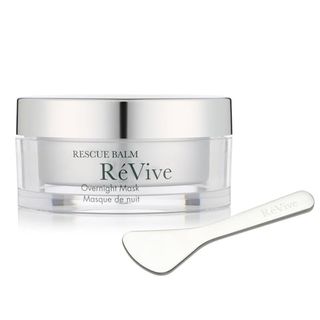
Works for
1 of 2 advertised claims delivered
Moisturizing34 ingredients credited for this claimStrong support
“Powered by a blend of peptides, adaptogens, and superfoods, the deeply moisturizing and restorative formula works to help nourish and rebuild a damaged skin barrier.”
This product can help improve hydration of the skin with the two types of ingredients.
The first type is called “humectants”:
these ingredients help attract water.
When humectants are on the surface of the skin, they “pull in” the moisture from the outside environment, or from
within deeper layers of the skin. The following ingredients in this product do the job:
glycerin, polyglycerin-3.
This product also contains ingredients called “occlusives”. They help reduce the speed with which our skin loses moisture to the outside environment. These ingredients also help soften the upper layer of the skin, so it feels less tight and nicer to the touch. The following ingredients in this product do the job: butyrospermum parkii butter, copernicia cerifera wax.
The following ingredients in this product are especially good for supporting the skin barrier and helping with the hydration level: ceramide ng, ceramide np, ceramide ns, hexapeptide-9, linoleic acid, urea
Evens skin tone2 ingredients credited for this claimWeak support
“Clinically proven to increase moisture, improve a damaged skin barrier, and improve skin texture and tone in only 2 weeks.”
Effective ingredients missing or their concentration is too low
Anti-agingNot advertised by the brand · 5 ingredients credited for this claimModerate support
This product contains hexapeptide-9. This ingredient might be able to help reduce and prevent fine lines and wrinkles, improve skin elasticity and firmness, but there is not enough evidence that it actually works.
Can it cause trouble?
Irritancy4 strong irritants: Lavandula angustifolia flower extract, Parfum + 2 more — patch-test recommendedHigh risk
Comedogenic5 ingredients rated 2 or more on the 0–5 pore-clogging scale5 flagged
User reviews
Be the first — your take helps the next person decide.
Ingredients
Filter by role to see what each ingredient is doing.
Water~45–55%
Propanediol~4.2–5.2%
- Irritation risk
- Low
Acts as a solvent for other ingredients. Speeds up the absorption of other ingredients into the skin
More about PropanediolButyrospermum parkii butter~4.1–5%
- Irritation risk
- Low
- Comedogenicity
- 3/5
A great moisturising ingredient that softens the skin and reduces water loss from its upper layer. It also can be helpful in protecting skin from free radicals
More about Butyrospermum parkii butterOctyldodecanol~3.1–3.7%
- Irritation risk
- Low
An emollient that helps to soften the skin and create a pleasant product texture and stabilize the formulation
More about OctyldodecanolCetearyl alcohol~2.4–2.9%
- Irritation risk
- Low
- Comedogenicity
- 2/5
A non-drying alcohol. Works as an emollient. Helps water and oil mix together and creates a nice product texture
More about Cetearyl alcoholGlycerin~2–2.5%
- Irritation risk
- Low
One of the best moisturizing ingredients. Naturally present in skin. It attracts water to the upper layer of the skin working as a humectant
More about GlycerinCetearyl olivate~1.6–2%
Sorbitan olivate~1.4–1.7%
Cetearyl ethylhexanoate~1.2–1.5%
- Irritation risk
- Low
An emollient that helps soften the skin
More about Cetearyl ethylhexanoateRicinus communis seed oil~1–1.2%
- Irritation risk
- Medium
A plant oil that can help soften the skin. It might be helpful in calming down inflammation, but solid research is lacking. Is often used in lip products to create the needed product consistency
More about Ricinus communis seed oilJojoba esters~0.75–1.1%
- Irritation risk
- Medium
An emollient made of jojoba oil. Helps soften the skin and support its barrier function
More about Jojoba estersPalmitic acid~0.65–1%
- Irritation risk
- Low
An emollient that is naturally present in skin and helps soften it
More about Palmitic acidUrea~0.55–0.8%
- Irritation risk
- Low
Naturally present in skin (urea makes up about 7% of natural moisturizing factors in skin). Attracts water to the upper layer of the skin. Also has a positive effect on the skin barrier beyond the humectant action. Can enhance penetration of other ingredients. Is an exfoliating ingredient when used in high concentrations
More about UreaIsododecane~0.5–0.8%
- Irritation risk
- Low
An emollient that helps soften the skin and can decrease moisture loss. Helps create a nice product texture
More about IsododecaneHexapeptide-9~0.45–0.7%
- Irritation risk
- Low
A type of peptide. Peptides are excellent moisturizers and might be able support collagen production reducing fine lines and wrinkles
More about Hexapeptide-9Olea europaea fruit extract~0.5–0.75%
- Irritation risk
- Low
An emollient that helps soften the skin but is not effective for restoring its barrier function. Might be helpful to calm down inflammation
More about Olea europaea fruit extractCeramide ns~0.5–0.75%
- Irritation risk
- Low
A type of lipid similar to ceramides naturally present in skin. Helps to soften the upper layer of the skin and supports the skin barrier function to keep it hydrated. Can help to prevent inflammation in skin
More about Ceramide nsCeramide ng~0.45–0.7%
- Irritation risk
- Low
A type of lipid similar to ceramides naturally present in skin. Helps to soften the upper layer of the skin and supports the skin barrier function to keep it hydrated. Can help to prevent inflammation in skin
More about Ceramide ngCeramide np~0.45–0.65%
- Irritation risk
- Low
A type of lipid similar to ceramides naturally present in skin. Helps to soften the upper layer of the skin and supports the skin barrier function to keep it hydrated. Can help to prevent inflammation in skin
More about Ceramide npSqualane~0.45–0.65%
- Irritation risk
- Low
An oil naturally present in skin. Works as an emollient to soften the skin and form a protective layer on its surface without a greasy feeling.
More about SqualaneBrassica oleracea acephala leaf extract~0.3–0.6%
- Irritation risk
- Medium
Might be helpful in neutralizing free radicals in skin but solid research is lacking. Helps attract water to the upper layer of the skin
More about Brassica oleracea acephala leaf extractAloe barbadensis leaf juice~0.3–0.55%
- Irritation risk
- Medium
Traditionally used to treat sunburns, dermatitis and inflammation, but evidence for its effectiveness is lacking. The extract can contain humectants that help attract water into the skin
More about Aloe barbadensis leaf juiceLavandula angustifolia flower extract~0.35–0.6%
- Irritation risk
- High
Essential oil that can be irritating
More about Lavandula angustifolia flower extractPapaver rhoeas flower extract~0.25–0.5%
- Irritation risk
- Low
Helianthus annuus seed wax~0.3–0.55%
- Irritation risk
- Low
Helps soften the upper layer of the skin and support skin's barrier function while creating a thicker product consistency
More about Helianthus annuus seed waxEuphorbia cerifera wax~0.3–0.55%
- Irritation risk
- Low
Copernicia cerifera wax~0.45–0.7%
- Irritation risk
- Low
Helps to soften the upper layer of the skin and create a nice product consistency
More about Copernicia cerifera waxAcacia decurrens flower wax~0.3–0.5%
Lentinus edodes extract~0.25–0.5%
- Irritation risk
- Low
Trametes versicolor extract~0.25–0.5%
- Irritation risk
- Medium
A mushroom extract that might have some skin-lightening and moisturizing properties, but solid research is lacking. It is unlikely to be effective in the concentration used in skincare products
More about Trametes versicolor extractCrithmum maritimum extract~0.25–0.5%
- Irritation risk
- Low
- Comedogenicity
- 3/5
An algae extract that might have anti-oxidant properties
More about Crithmum maritimum extractStearic acid~0.45–0.65%
- Irritation risk
- Low
Helps oil and water mix together and works as an emollient
More about Stearic acidIsopropyl myristate~0.3–0.6%
- Irritation risk
- Low
- Comedogenicity
- 3/5
An emollient that helps soften the skin. Could be comedogenic
More about Isopropyl myristate1,2-hexanediol~0.25–0.5%
Caprylyl glycol~0.3–0.55%
- Irritation risk
- Medium
Helps preserve products and creates a nice product texture
More about Caprylyl glycolCetearyl glucoside~0.3–0.55%
- Irritation risk
- Medium
Helps water and oil in the product mix well together and improves product texture
More about Cetearyl glucosideMaltodextrin~0.3–0.55%
- Irritation risk
- Low
Used to stabilize the product formulation and can help absorb oil
More about MaltodextrinPeg-10 hydrogenated castor oil~0.35–0.6%
Butylene glycol~0.3–0.5%
- Irritation risk
- Low
Used to create a nice product texture and help delivery of other ingredients. Might be somewhat helpful in attracting water to the upper layer of the skin
More about Butylene glycolDisodium edta~0.3–0.5%
Gluconolactone~0.25–0.5%
- Irritation risk
- Medium
A polyhydroxy acid (PHA) that helps shed the dead cells from the skin surface revealing smoother skin. Is believed to be genter than AHAs. It helps attract water to the upper layer of the skin and can stimulate production of skin's own hyaluronic acid resulting in improved hydration levels. It has been shown to be helpful against acne and clogged pores if used consistently (e.g over a period of 12 weeks) in high enough concentration. It can help reduce fine lines and wrinkles and improve skin tone with long-term application. Can help neutralize free radicals
More about GluconolactoneTocopheryl acetate~0.3–0.55%
- Irritation risk
- Medium
A more stable but less bio-available form of vitamin E compared to Tocopherol. Might help moisturize and protect the skin from free radicals, but mostly used in low concentrations to stabilize other ingredients.
More about Tocopheryl acetatePolyglycerin-3~0.3–0.55%
- Irritation risk
- Low
Helps to attract water to the upper layer of the skin
More about Polyglycerin-3Xanthan gum~0.3–0.55%
- Irritation risk
- Low
Used to create a thicker product consistency
More about Xanthan gumGlyceryl behenate~0.35–0.6%
- Irritation risk
- Medium
Used to create a thicker product consistency and help soften the upper layer of the skin
More about Glyceryl behenatePolyglyceryl-4 isostearate~0.3–0.55%
- Irritation risk
- Medium
Helps water and oil mix together
More about Polyglyceryl-4 isostearateLecithin~0.3–0.6%
- Irritation risk
- Low
Used mostly for creating emulsions - helping oil and water mix together. Helps soften the upper layer of the skin
More about LecithinMyristic acid~0.3–0.6%
- Irritation risk
- Medium
- Comedogenicity
- 3/5
Helps oil and water mix together. Could be comedogenic
More about Myristic acidTocopherol~0.3–0.5%
- Irritation risk
- Low
Pure form of vitamin E. Can help moisturise and protect the skin from free radicals. Often used to help stabilise other ingredients or the formula itself
More about TocopherolLinoleic acid~0.45–0.65%
- Irritation risk
- Low
An excellent emollient. Helps soften the skin, restore its barrier function, and can help to calm down inflammation. It can be helpful to prevent blemishes and clogged pores
More about Linoleic acidOleic acid~0.3–0.6%
- Irritation risk
- Medium
Helps soften the upper layer of the skin. At the same time, it can weaken the skin's barrier enhancing penetration of other ingredients and increasing the risk of skin dryness
More about Oleic acidBeta-sitosterol~0.3–0.55%
- Irritation risk
- Low
A phytosterol that can support skin's barrier function and help the skin stay hydrated
More about Beta-sitosterolLinolenic acid~0.3–0.6%
- Irritation risk
- Medium
An emollient that helps soften the skin and calm down inflammation
More about Linolenic acidCitric acid~0.25–0.45%
- Irritation risk
- Medium
Can work as an exfoliant but is typically used to adjust the product pH
More about Citric acidSodium hydroxide~0.25–0.45%
Potassium sorbate~0.2–0.4%
Sodium benzoate~0.2–0.35%
Ethylhexylglycerin~0.15–0.3%
Phenoxyethanol~0.15–0.25%
- Irritation risk
- Low
A preservative. It helps prevent bacterial growth in cosmetic products
More about PhenoxyethanolParfum~0.1–0.2%
- Irritation risk
- High
An aromatic blend of unspecified and possibly irritating ingredients
More about ParfumCi 17200~0.15–0.25%
Ci 60730~0.15–0.25%
- Irritation risk
- Low
Benzyl salicylate~0.05–0.15%
Limonene~0.05–0.15%
- Irritation risk
- High
A common frangrance that can easily irritate skin, especially if exposed to air, light or heat
More about LimoneneIngredient list view
Water, Propanediol, Butyrospermum parkii butter, Octyldodecanol, Cetearyl alcohol, Glycerin, Cetearyl olivate, Sorbitan olivate, Cetearyl ethylhexanoate, Ricinus communis seed oil, Jojoba esters, Palmitic acid, Urea, Isododecane, Hexapeptide-9, Olea europaea fruit extract, Ceramide ns, Ceramide ng, Ceramide np, Squalane, Brassica oleracea acephala leaf extract, Aloe barbadensis leaf juice, Lavandula angustifolia flower extract, Papaver rhoeas flower extract, Helianthus annuus seed wax, Euphorbia cerifera wax, Copernicia cerifera wax, Acacia decurrens flower wax, Lentinus edodes extract, Trametes versicolor extract, Crithmum maritimum extract, Stearic acid, Isopropyl myristate, 1,2-hexanediol, Caprylyl glycol, Cetearyl glucoside, Maltodextrin, Peg-10 hydrogenated castor oil, Butylene glycol, Disodium edta, Gluconolactone, Tocopheryl acetate, Polyglycerin-3, Xanthan gum, Glyceryl behenate, Polyglyceryl-4 isostearate, Lecithin, Myristic acid, Unknown, Tocopherol, Linoleic acid, Oleic acid, Beta-sitosterol, Linolenic acid, Citric acid, Sodium hydroxide, Potassium sorbate, Sodium benzoate, Ethylhexylglycerin, Phenoxyethanol, Parfum, Ci 17200, Ci 60730, Benzyl salicylate, Limonene
Compare prices
Retailers ranked by price — lowest first.

Worth comparing, line by line.
Match % combines shared ingredients, the first five ingredients, shared actives and hero ingredients, irritancy (lower counts in the alternative's favour), texture and body area. Only products in the same routine step are compared.
| RéViveRescue Balm / Overnight MaskYOUR PRODUCT | RéVive SkincareRenewal Rescue Overnight Mask | |
|---|---|---|
| Match | — | 55% |
| Price | $215.00 | $215.00 |
| Shared key ingredients | — | 18 of 19 |
| Key difference | — | Arginine |
| Irritancy | High | High |
| Drying alcohol | — | — |
| View product | Shop |
Sources cited in this review
Every concentration estimate and effectiveness label is anchored to one of these 34 studies and safety reviews.
- 1
- 2
- 3
- 4
- 5Topical urea in skincare: A reviewpubmed.ncbi.nlm.nih.gov
- 6

Affiliate links · As an Amazon Associate, WIMJ earns from qualifying purchases.