Works for
Anti-agingPalmitoyl pentapeptide-4, Camellia sinensis leaf extract + 3 moreMay help
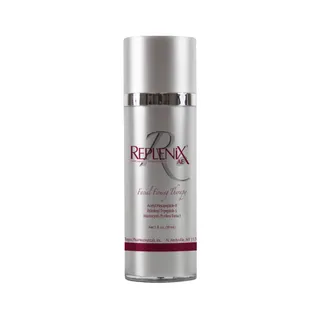
“Replenix AE Dermal Restructuring Therapy is a luxurious serum designed to relax fine lines and wrinkles while stimulating collagen production for a firmer skin texture.”
This product contains palmitoyl pentapeptide-4. This ingredient might be able to help reduce and prevent fine lines and wrinkles, improve skin elasticity and firmness, but there is not enough evidence that it actually works.
Anti-oxidationNot advertised by the brand · Disodium lauriminodipropionate tocopheryl phosphates, Camellia sinensis leaf extract + 7 moreWorks well
This product contains antioxidants (disodium lauriminodipropionate tocopheryl phosphates, superoxide dismutase, ubiquinone) that can help neutralize free radicals in skin. By doing so, they can lessen the damage the skin gets from the UV light (sun).
The following ingredients - camellia sinensis leaf extract, rubus idaeus seed oil also can have an antioxidant effect, but there is less evidence to confirm their effectiveness in skin.
MoisturizingSide benefit the brand mentions · Palmitoyl pentapeptide-4, Ceramide 2 + 18 moreWorks well
“Macrocystis Pyrifera Extract extracted from Giant Sea Kelp provides immediate tightening and toning action while Hyaluronic Acid offers powerful moisture replenishment, leaving skin taut, firm and hydrated.”
This product can help improve hydration of the skin with the two types of ingredients.
The first type is called “humectants”:
these ingredients help attract water.
When humectants are on the surface of the skin, they “pull in” the moisture from the outside environment, or from
within deeper layers of the skin. The following ingredients in this product do the job:
glycerin, saccharomyces lysate extract.
This product also contains ingredients called “occlusives”. They help reduce the speed with which our skin loses moisture to the outside environment. These ingredients also help soften the upper layer of the skin, so it feels less tight and nicer to the touch. The following ingredients in this product do the job: dimethicone, squalane.
The following ingredients in this product are especially good for supporting the skin barrier and helping with the hydration level: ceramide 2, palmitoyl pentapeptide-4
Can it cause trouble?
Irritancy3 strong irritants: Retinyl palmitate, Imidazolidinyl urea + 1 more — patch-test recommendedHigh risk
Comedogenic1 ingredient rated 2 or more on the 0–5 pore-clogging scale1 flagged

User reviews
Be the first — your take helps the next person decide.
Ingredients
Filter by role to see what each ingredient is doing.
Water~45–55%
Glycerin~4.7–5.8%
- Irritation risk
- Low
One of the best moisturizing ingredients. Naturally present in skin. It attracts water to the upper layer of the skin working as a humectant
More about GlycerinCetearyl alcohol~3.6–4.4%
- Irritation risk
- Low
- Comedogenicity
- 2/5
A non-drying alcohol. Works as an emollient. Helps water and oil mix together and creates a nice product texture
More about Cetearyl alcoholPpg-2 myristyl ether propionate~2.8–3.4%
- Irritation risk
- Low
Squalane~2.3–2.9%
- Irritation risk
- Low
An oil naturally present in skin. Works as an emollient to soften the skin and form a protective layer on its surface without a greasy feeling.
More about SqualaneCetyl alcohol~1.9–2.3%
- Irritation risk
- Low
A non-drying alcohol that works to soften the skin and stabilize product formulations helping oil and water mix together
More about Cetyl alcoholPadina pavonica extract~1.5–1.9%
- Irritation risk
- Low
An algae extract. Helps attract water to the upper layer of the skin
More about Padina pavonica extractDisodium lauriminodipropionate tocopheryl phosphates~1.4–1.7%
- Irritation risk
- Low
A form of Vitamin E. In concentrations 1-3%, it can help neutralize free radicals in skin and support photodamage repair
More about Disodium lauriminodipropionate tocopheryl phosphatesPhyllanthus emblica extract~1.1–1.3%
- Irritation risk
- Low
Camellia sinensis polyphenols~0.95–1.15%
- Irritation risk
- Low
Palmitoyl pentapeptide-4~0.6–0.9%
- Irritation risk
- Low
A type of peptide. Peptides are excellent moisturizers and might be able support collagen production reducing fine lines and wrinkles
More about Palmitoyl pentapeptide-4Camellia sinensis leaf extract~0.55–0.8%
- Irritation risk
- Low
Can contain potent anti-oxidant compounds (abbreviated ECG, GCG, EGC, and EGCG) that might help protect the skin from free radicals. Can help calm down inflammation and has some anti-bacterial properties. Unfortunately, these antioxidants are unstable and lose their effectiveness very quickly in products. The concentration of the antioxidant compounds in the extract also tends to be low to be effective in topical formulation
More about Camellia sinensis leaf extractDimethicone~0.5–0.8%
- Irritation risk
- Low
A silicone that helps to reduce water loss from the surface of the skin. Can temporarily "fill in" lines and wrinkles, absorb oil, and create a nice product finish
More about DimethiconeEctoin~0.4–0.6%
- Irritation risk
- Low
Softens the upper layer of the skin and can support skin barrier function
More about EctoinBisabolol~0.3–0.6%
- Irritation risk
- Low
An active component of chamomile plant that historically has been used to calm down irritated skin. A recent study shows that bisabolol indeed can have some anti-inflammatory effect on skin, even though conclusive data is lacking. Bisabolol has a sweet floral scent and can be added to products for its aromatic properties
More about BisabololSodium hyaluronate~0.35–0.6%
- Irritation risk
- Low
One of the best moisturizing ingredients. Attracts water into the upper layer of the skin
More about Sodium hyaluronateRubus idaeus seed oil~0.4–0.6%
- Irritation risk
- Medium
A plant oil that might be able to help neutralize free radicals in skin
More about Rubus idaeus seed oilSea whip extract~0.3–0.5%
- Irritation risk
- Low
Might help neutrlize free radicals, calm down inflammation, and attract water to the upper layer of the skin
More about Sea whip extractPhospholipids~0.25–0.5%
- Irritation risk
- Low
Emollients that are naturaly present in skin. In addition, they help water and oil mix together in the product
More about PhospholipidsSaccharomyces lysate extract~0.25–0.45%
- Irritation risk
- Low
Helps attract water to the upper layer of the skin. Can have some anti-inflammatory effect
More about Saccharomyces lysate extractAscorbyl palmitate~0.2–0.4%
- Irritation risk
- Medium
Being a lipid soluble form of vitamin C, it is more stable and can penetrate the skin better than L-Ascorbic acid. It is effective in protecting the skin from free radicals, as well as evening the skin tone, but is less effective in stimulating collagen production compared to L-Ascorbic acid.
More about Ascorbyl palmitateTocopheryl acetate~0.25–0.45%
- Irritation risk
- Medium
A more stable but less bio-available form of vitamin E compared to Tocopherol. Might help moisturize and protect the skin from free radicals, but mostly used in low concentrations to stabilize other ingredients.
More about Tocopheryl acetateRetinyl palmitate~0.2–0.35%
- Irritation risk
- High
Three steps removed from the active form of vitamin A - retinoic acid. To have an effect in the skin, it first needs to be converted twice to become the retinoic acid. This means it is less potent than retinol, but could also be less irritating. Once converted to the retinoic acid in the skin, it helps against all signs of aging, improves skin cell turnover and helps fight blemishes and clogged pores. However, in many cosmetic formulations, it is used in a concentration that is too low to have the full effect
More about Retinyl palmitateCaprylic/capric triglyceride~0.25–0.5%
- Irritation risk
- Medium
A good mix of fatty acids that forms a protective layer on the skin. Improves the shelf life of products. Derived from coconut and glycerin
More about Caprylic/capric triglycerideButylene glycol~0.2–0.4%
- Irritation risk
- Low
Used to create a nice product texture and help delivery of other ingredients. Might be somewhat helpful in attracting water to the upper layer of the skin
More about Butylene glycolPolysorbate 20~0.25–0.45%
Ceramide 2~0.25–0.4%
- Irritation risk
- Low
A type of lipid similar to ceramides naturally present in skin. Helps to soften the upper layer of the skin and supports the skin barrier function to keep it hydrated. Can help to prevent inflammation in skin
More about Ceramide 2Carbomer~0.2–0.4%
- Irritation risk
- Low
Helps create a thicker or gel-like product texture. It is not a surfactant but can be used in gentle cleansing formulations
More about CarbomerHydrogenated polydecene~0.2–0.35%
- Irritation risk
- Low
Helps to soften the upper layer of the skin and create a nice product texture
More about Hydrogenated polydeceneTrideceth-6~0.2–0.4%
Sodium polyacrylate~0.25–0.45%
- Irritation risk
- Low
Used to create a gel-like product texture, as well as to stabilize emulsions
More about Sodium polyacrylateSuperoxide dismutase~0.2–0.35%
- Irritation risk
- Low
An antioxidant enzyme that is naturally present in skin. It can help support skin barrier function and reduce inflammation in skin. It is used in topical medications for inflammatory skin conditions including atopic dermatitis (eczema) and psoriasis. There are three types of natural Superoxide Dismutase in human skin. The compound used in topical treatments and cosmetics are mimics of typically one of these natural variants
More about Superoxide dismutaseUbiquinone~0.2–0.35%
- Irritation risk
- Low
Coenzyme Q10. It helps neutralize free radicals in skin, improves skin hydration and might be helpful agains fine lines and wrinkles. It can be an allergen
More about UbiquinoneLecithin~0.25–0.45%
- Irritation risk
- Low
Used mostly for creating emulsions - helping oil and water mix together. Helps soften the upper layer of the skin
More about LecithinTriethanolamine~0.2–0.35%
- Irritation risk
- Medium
Used to adjust pH of the product and can help improve the product's smell
More about TriethanolaminePolysorbate 60~0.15–0.3%
Methylparaben~0.1–0.15%
Propylparaben~0.1–0.2%
Imidazolidinyl urea~0.1–0.15%
- Irritation risk
- High
A preservative. Is more irritating than many other preservatives available
More about Imidazolidinyl ureaDisodium edta~0.05%
Parfum~0.05–0.1%
- Irritation risk
- High
An aromatic blend of unspecified and possibly irritating ingredients
More about ParfumIngredient list view
Water, Glycerin, Cetearyl alcohol, Ppg-2 myristyl ether propionate, Squalane, Cetyl alcohol, Padina pavonica extract, Disodium lauriminodipropionate tocopheryl phosphates, Phyllanthus emblica extract, Camellia sinensis polyphenols, Palmitoyl pentapeptide-4, Camellia sinensis leaf extract, Dimethicone, Ectoin, Bisabolol, Sodium hyaluronate, Rubus idaeus seed oil, Sea whip extract, Phospholipids, Saccharomyces lysate extract, Ascorbyl palmitate, Tocopheryl acetate, Retinyl palmitate, Caprylic/capric triglyceride, Butylene glycol, Polysorbate 20, Ceramide 2, Carbomer, Hydrogenated polydecene, Trideceth-6, Sodium polyacrylate, Superoxide dismutase, Ubiquinone, Lecithin, Triethanolamine, Polysorbate 60, Methylparaben, Propylparaben, Imidazolidinyl urea, Disodium edta, Parfum
Compare prices
Retailers ranked by price — lowest first.

Worth comparing, line by line.
Match % combines shared ingredients, the first five ingredients, shared actives and hero ingredients, irritancy (lower counts in the alternative's favour), texture and body area. Only products in the same routine step are compared.
| ReplenixAE Facial Firming TherapyYOUR PRODUCT | Jan MariniAge Intervention Regeneration Booster | Elizabeth GrantSuprême Cell Vitality Renewal Night Serum | MEDI-PEELDerma Maison Time Wrinkle Perfect Serum | |
|---|---|---|---|---|
| Match | — | 57% | 57% | 48% |
| Price | — | $235.00 | $44.00 | $44.30 |
| Shared key ingredients | — | 6 of 19 | 7 of 19 | 6 of 19 |
| Key difference | — | Myristoyl Pentapeptide-8 | Niacinamide | Anhydroxylitol |
| Irritancy | High | Low | Medium | Medium |
| Drying alcohol | — | — | Contains drying alcohol | — |
| View product | Shop | Shop | Shop |


More alternatives: Thank You Farmer Miracle Age Repair SerumFarm Stay Black Snail & Peptide9 Perfect Serum
Product summary
"Replenix - AE Facial Firming Therapy" is a well-rounded moisturizing product.
Ingredient callouts
- This moistruizer also contains peptides (palmitoyl tripeptide-38 0.95% - 1.40%, acetyl hexapeptide-8 6.80% - 10.10% and acetyl dipeptide-1 cetyl ester 1.20% - 1.70%). Peptides is a very big group of ingredients. They all consist of a different combination of amino-acids. Our skin produces peptides naturally. Some of them work as natural anti-biotics, promote wound-healing and production of collagen. The scientists are still studying how effective the topical application of peptides is, but it is very likely that peptides in skincare are helpful. They might be able to support skin barrier restoration and even have an anti-aging benefit. At the very least, they certainly help attract water to the skin and support the hydration in this way.
Irritation risk
There are actives in this product that can be irritating. We assess the overall irritancy of this moisturizer to be low. For a detailed overview of all potential irritants: click here
You can see the detailed formula review with the breakdown of all actives in the product and the full ingredient list with estimated concentrations in the tables below.
Price
The product retails for 140.00$ in the United States.
For a detailed price comparison: click here.
Sources cited in this review
Every concentration estimate and effectiveness label is anchored to one of these 17 studies and safety reviews.
- 1
- 2
- 3Final Report on the Safety Assessment of Dimethicone Copolyoljournals.sagepub.com
- 4
- 5Hyaluronic acid: A key molecule in skin agingncbi.nlm.nih.gov
- 6

Affiliate links · As an Amazon Associate, WIMJ earns from qualifying purchases.