Works for
1 of 1 advertised claim delivered
Moisturizing13 ingredients credited for this claimGood support
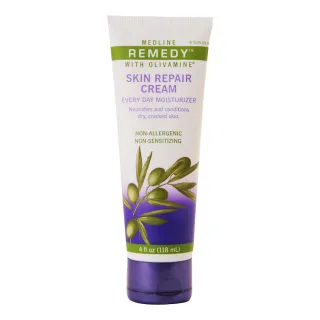
“Skin Repair Cream”
This product contains good ingredients to attract water to the upper layer of the skin. These ingredients are called "humectants": glycerin, glycine.
When humectants are on the surface of the skin, they “pull in” the moisture from the outside environment, or from within deeper layers of the skin. If the air is dry, humectants can speed up the moisture loss from the skin. This is why it is a good idea to use another product on top of this one to help "seal in" the moisture (look for ingredients like dimethicone, squalane, oils and butters).
Anti-oxidationNot advertised by the brand · 5 ingredients credited for this claimStrong support
This product contains antioxidants (ascorbic acid) that can help neutralize free radicals in skin. By doing so, they can lessen the damage the skin gets from the UV light (sun).
Anti-agingNot advertised by the brand · 6 ingredients credited for this claimStrong support
This product can help reduce and prevent fine lines and wrinkles, improve skin elasticity and firmness because it contains ascorbic acid.
Keep in mind that it typically takes at least 6 weeks to notice any results because the changes that are needed to improve fine lines and elasticity happen in the deeper layers of the skin. No topical anti-aging product can “erase” wrinkles or fully reverse signs of aging.
Evens skin toneNot advertised by the brand · 4 ingredients credited for this claimStrong support
This product can help reduce hypepigmentation and even out the skin tone because it contains the following effective ingredients: ascorbic acid.
Keep in mind that you would need to apply any topical skincare targetted at hypigmentation consistently for a couple of months to get a result. No topical skincare product can help get rid of hyperpigmentation (including post-acne marks and age spots) instantly.
Can it cause trouble?
Irritancy5 strong irritants: Citrus aurantium dulcis peel oil, Citrus grandis peel oil + 3 more — patch-test recommendedHigh risk
Comedogenic2 ingredients rated 2 or more on the 0–5 pore-clogging scale2 flagged


User reviews
Be the first — your take helps the next person decide.
Ingredients
Filter by role to see what each ingredient is doing.
Aloe barbadensis leaf juice~23–34%
- Irritation risk
- Medium
Traditionally used to treat sunburns, dermatitis and inflammation, but evidence for its effectiveness is lacking. The extract can contain humectants that help attract water into the skin
More about Aloe barbadensis leaf juiceAscorbic acid~5.1–7.6%
- Irritation risk
- High
The most well-researched antioxidant that works in skin. Helps neutralize free radicals supporting collagen production, helping to even out the skin tone and preventing early signs of aging
More about Ascorbic acidAscorbyl palmitate~4.6–6.8%
- Irritation risk
- Medium
Being a lipid soluble form of vitamin C, it is more stable and can penetrate the skin better than L-Ascorbic acid. It is effective in protecting the skin from free radicals, as well as evening the skin tone, but is less effective in stimulating collagen production compared to L-Ascorbic acid.
More about Ascorbyl palmitateCanola oil~4.1–6.2%
- Irritation risk
- Medium
A plant oil that can help soften the upper layer of the skin
More about Canola oilCetyl alcohol~3.1–4.7%
- Irritation risk
- Low
A non-drying alcohol that works to soften the skin and stabilize product formulations helping oil and water mix together
More about Cetyl alcoholCitric acid~2.2–3.3%
- Irritation risk
- Medium
Can work as an exfoliant but is typically used to adjust the product pH
More about Citric acidCitrus aurantium dulcis peel oil~1.8–2.7%
- Irritation risk
- High
An essentil oil from orange peel. Potential allergen and can be irritating
More about Citrus aurantium dulcis peel oilCitrus grandis peel oil~1.4–2.1%
- Irritation risk
- High
A plant oil with high content of volatile compounds that, especially when exposed to air, can cause allergic reactions and irritate the skin
More about Citrus grandis peel oilCitrus tangerina peel oil~1.3–2%
- Irritation risk
- High
Essential oil that can be irritating. Can lead to photosensitivity
More about Citrus tangerina peel oilDiazolidinyl urea~0.25–0.5%
- Irritation risk
- High
A preservative. Works by releasing formaldehyde. Can be irritating
More about Diazolidinyl ureaGlycerin~1–1.5%
- Irritation risk
- Low
One of the best moisturizing ingredients. Naturally present in skin. It attracts water to the upper layer of the skin working as a humectant
More about GlycerinGlyceryl stearate se~0.9–1.35%
- Irritation risk
- Low
- Comedogenicity
- 2/5
Used to stabilize the product formulations and works as an emollient
More about Glyceryl stearate seGlycine~0.8–1.2%
- Irritation risk
- Low
Helps to attract water to the upper layer of the skin and can help restore the skin barrier function
More about GlycineHydroxytyrosol~0.6–1.35%
- Irritation risk
- Low
Proline~0.55–1.35%
Taurine~0.55–1.3%
- Irritation risk
- Medium
Could be helpful in reducing inflammation in skin, evening out the skin tone and neutralizing free radicals, but more research is needed to confirm its effectiveness
More about TaurineMethylparaben~0.15–0.3%
Dimethyl sulfone~0.5–1.2%
Acetyl cysteine~0.45–1.1%
- Irritation risk
- Low
Niacinamide~0.5–1.1%
- Irritation risk
- Low
Is proven to be effective in reducing blemishes, evening out skin tone and helping to improve lines and wrinkles. It helps the skin to repair sun damage, calm down inflammation and keep maintain good levels of moisture. The concentration of about 2% is effective for supporting the skin barrier and evening out the skin tone. Concentration of 4-6% is better for helping with acne and balancing the sebum production
More about NiacinamideOlea europaea fruit oil~0.5–1.15%
- Irritation risk
- Medium
An emollient that helps soften the skin but is not effective for restoring its barrier function. Might be helpful to calm down inflammation
More about Olea europaea fruit oilPeg-8~0.45–1.1%
- Irritation risk
- Medium
Used to create a nice product consistency
More about Peg-8Peg-100 stearate~0.55–1.3%
- Irritation risk
- Low
Helps oil and water mix togehter and creates a nice product texture
More about Peg-100 stearatePropylene glycol~0.45–1%
- Irritation risk
- High
Helps oil and water mix together and can enhance the penetration of other ingredients into the skin. It can be irritating
More about Propylene glycolPropylparaben~0.2–0.4%
Pyridoxine hcl~0.45–1.05%
- Irritation risk
- Medium
Might help neutralize free radicals in skin
More about Pyridoxine hclRetinyl palmitate~0.4–0.95%
- Irritation risk
- High
Three steps removed from the active form of vitamin A - retinoic acid. To have an effect in the skin, it first needs to be converted twice to become the retinoic acid. This means it is less potent than retinol, but could also be less irritating. Once converted to the retinoic acid in the skin, it helps against all signs of aging, improves skin cell turnover and helps fight blemishes and clogged pores. However, in many cosmetic formulations, it is used in a concentration that is too low to have the full effect
More about Retinyl palmitateStearic acid~0.6–1.35%
- Irritation risk
- Low
Helps oil and water mix together and works as an emollient
More about Stearic acidStearyl alcohol~0.45–1.1%
- Irritation risk
- Low
An emollient that helps soften the skin
More about Stearyl alcoholTetrasodium edta~0.35–0.75%
Tocopherol~0.3–0.75%
- Irritation risk
- Low
Pure form of vitamin E. Can help moisturise and protect the skin from free radicals. Often used to help stabilise other ingredients or the formula itself
More about TocopherolTriethanolamine~0.2–0.8%
- Irritation risk
- Medium
Used to adjust pH of the product and can help improve the product's smell
More about TriethanolamineVanillin~0.2–0.75%
- Irritation risk
- Low
Water~0.2–0.7%
Zea mays oil~0.15–0.6%
- Irritation risk
- Low
- Comedogenicity
- 3/5
A good moisturizing plant oil. Due to the high linoleic acid content, it helps soften the upper layer of the skin, reduce water loss and support skin barrier function
More about Zea mays oilIngredient list view
Aloe barbadensis leaf juice, Ascorbic acid, Ascorbyl palmitate, Canola oil, Cetyl alcohol, Citric acid, Citrus aurantium dulcis peel oil, Citrus grandis peel oil, Citrus tangerina peel oil, Diazolidinyl urea, Glycerin, Glyceryl stearate se, Glycine, Hydroxytyrosol, Proline, Taurine, Methylparaben, Dimethyl sulfone, Acetyl cysteine, Niacinamide, Olea europaea fruit oil, Peg-8, Peg-100 stearate, Propylene glycol, Propylparaben, Pyridoxine hcl, Retinyl palmitate, Stearic acid, Stearyl alcohol, Tetrasodium edta, Tocopherol, Triethanolamine, Vanillin, Water, Zea mays oil
Compare prices
Retailers ranked by price — lowest first.

Worth comparing, line by line.
Match % combines shared ingredients, the first five ingredients, shared actives and hero ingredients, irritancy (lower counts in the alternative's favour), texture and body area. Only products in the same routine step are compared.
| RemedySkin Repair CreamYOUR PRODUCT | AhavaTime To Smooth Age Control Even Tone Moisturizer | SkinCeuticalsAnti-Aging System | RejuvenatedH3O Night Repair | |
|---|---|---|---|---|
| Match | — | 83% | 78% | 77% |
| Price | $9.99 | $85.00+$75.01 | $104.00+$94.01 | $39.66+$29.67 |
| Shared key ingredients | — | 3 of 7 | 4 of 7 | 2 of 7 |
| Key difference | — | Salicylic Acid | Ferulic Acid | Hyaluronic Acid |
| Irritancy | High | High | High | Medium |
| Drying alcohol | — | — | Contains drying alcohol | — |
| View product | Shop | Shop | Shop |


Sources cited in this review
Every concentration estimate and effectiveness label is anchored to one of these 15 studies and safety reviews.
- 1Canola Oilsciencedirect.com
- 2Biological Activities and Safety of Citrus spp. Essential Oilsncbi.nlm.nih.gov
- 3
- 4
- 5Functional glycine receptor in cultured human keratinocytesonlinelibrary.wiley.com
- 6Cosmeceuttical Critigue: Taurinemdedge.com

Affiliate links · As an Amazon Associate, WIMJ earns from qualifying purchases.