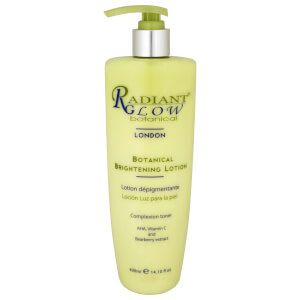
Radiant Glow Botanical Brightening Lotion

Radiant Glow Botanical Brightening Lotion

Efficacy100/100IrritancyHigh
Edit

Works for

3 of 3 advertised claims delivered

Moisturizing
Niacinamide, Saccharum officinarum extract + 10 more
Strong evidence
What the product description says
“Absorbing quickly into skin, the Radiant Glow Botanical Brightening Lotion is an effective, non-greasy solution to keeping your complexion hydrated.”
Source: Lookfantastic

This product can help improve hydration of the skin with the two types of ingredients.

The first type is called “humectants”:
these ingredients help attract water. When humectants are on the surface of the skin, they “pull in” the moisture from the outside environment, or from within deeper layers of the skin. The following ingredients in this product do the job: glycerin.

This product also contains ingredients called “occlusives”. They help reduce the speed with which our skin loses moisture to the outside environment. These ingredients also help soften the upper layer of the skin, so it feels less tight and nicer to the touch. The following ingredients in this product do the job: cocos nucifera oil, cocos nucifera fruit extract.

The following ingredients in this product are especially good for supporting the skin barrier and helping with the hydration level: niacinamide

NiacinamideHeroEffect: HighIs proven to be effective in reducing blemishes, evening out skin tone and helping to improve lines and wrinkles. It helps the skin to repair sun damage, calm down inflammation and keep maintain good levels of moisture. The concentration of about 2% is effective for supporting the skin barrier and evening out the skin tone. Concentration of 4-6% is better for helping with acne and balancing the sebum production~1.9–2.3%
Saccharum officinarum extractKey activeEffect: HighSugar extract that helps attract water to the upper layer of the skin~0.25–0.5%
GlycerinKey active· HumectantEffect: HighOne of the best moisturizing ingredients. Naturally present in skin. It attracts water to the upper layer of the skin working as a humectant~0.45–0.7%
Cocos nucifera oilKey active· Emollient, OcclusiveEffect: HighAn emollient. Found to be as effective as a moisturizer for dry skin as mineral oil. Could be comedogenic~2.4–2.9%
Cocos nucifera fruit extractKey active· EmollientEffect: HighAn emollient. Found to be as effective as a moisturizer for dry skin as mineral oil. Could be comedogenic~0.25–0.5%
Cetearyl alcoholKey active· EmollientEffect: MediumA non-drying alcohol. Works as an emollient. Helps water and oil mix together and creates a nice product texture~1.6–2%
Glyceryl stearate seKey activeEffect: MediumUsed to stabilize the product formulations and works as an emollient~4.5–5.5%
Stearic acid· EmollientEffect: LowHelps oil and water mix together and works as an emollient~1.3–1.5%
Isopropyl palmitate· EmollientEffect: LowHelps soften the upper layer of the skin and create a thicker product consistency~3–3.7%
PanthenolUnder-dosedEffect: HighHelps attract water to the upper layer of the skin and can help improve skin barrier function~0.25–0.45%
TocopherolEffect: Low, below effective dosePure form of vitamin E. Can help moisturise and protect the skin from free radicals. Often used to help stabilise other ingredients or the formula itself~0.25–0.45%
Camellia sinensis leaf extractEffect: Low, below effective doseCan contain potent anti-oxidant compounds (abbreviated ECG, GCG, EGC, and EGCG) that might help protect the skin from free radicals. Can help calm down inflammation and has some anti-bacterial properties. Unfortunately, these antioxidants are unstable and lose their effectiveness very quickly in products. The concentration of the antioxidant compounds in the extract also tends to be low to be effective in topical formulation~0.35–0.65%
Anti-blemish
Niacinamide, Glycolic acid + 3 more
Strong evidence
What the product description says
“The lotion is packed with antioxidants as well as anti-inflammatory ingredients, which helps to diminish the look of imperfections and blemishes while leaving your complexion more comfortable throughout the day.”
Source: Lookfantastic

This product can help reduce breakouts and clogged pores because it contains the following ingredient: niacinamide. This ingredient is used for treating acne and can have a noticeable effect.

The following ingredient (ingredients) in this product might be helpful, but there is no evidence to confirm that it actually works: glycolic acid

NiacinamideHeroEffect: HighIs proven to be effective in reducing blemishes, evening out skin tone and helping to improve lines and wrinkles. It helps the skin to repair sun damage, calm down inflammation and keep maintain good levels of moisture. The concentration of about 2% is effective for supporting the skin barrier and evening out the skin tone. Concentration of 4-6% is better for helping with acne and balancing the sebum production~1.9–2.3%
Glycolic acidKey activeEffect: MediumAn alpha-hydroxy acid (AHA) that helps to remove the dead skin cells on the surface of the skin reveling a more even, smoother complexation. It is also able to stimulate collagen production with long-term use. Could help to reduce pore congestion. It can be irritating to the skin. Apply sunscreen daily if using products with glycolic acid~0.3–0.55%
Sodium ascorbyl phosphateUnder-dosedEffect: HighA stable derivative of vitamin C. It is oil-soluble which means it is more likely to penetrate the skin compared to the pure form of vitamin C (which is water-soluble), but it is less bio-available and is way less effective in stimulating collagen and reducing wrinkles compared to the pure form of vitamin C (L-ascorbic acid) and its other derivatives (for example, magnesium ascorbyl phosphate). At the same time, this vitamin C derivative has been shown in studies to be effective in reducing acne, blemishes and clogged pores. It is less irritating then the pure form of vitamin C~0.25–0.45%
Retinyl palmitateUnder-dosedEffect: MediumThree steps removed from the active form of vitamin A - retinoic acid. To have an effect in the skin, it first needs to be converted twice to become the retinoic acid. This means it is less potent than retinol, but could also be less irritating. Once converted to the retinoic acid in the skin, it helps against all signs of aging, improves skin cell turnover and helps fight blemishes and clogged pores. However, in many cosmetic formulations, it is used in a concentration that is too low to have the full effect~0.2–0.4%
Camellia sinensis leaf extractEffect: Low, below effective doseCan contain potent anti-oxidant compounds (abbreviated ECG, GCG, EGC, and EGCG) that might help protect the skin from free radicals. Can help calm down inflammation and has some anti-bacterial properties. Unfortunately, these antioxidants are unstable and lose their effectiveness very quickly in products. The concentration of the antioxidant compounds in the extract also tends to be low to be effective in topical formulation~0.35–0.65%
Evens skin tone
Glycolic acid, Niacinamide + 3 more
Strong evidence
What the product description says
“Potent botanicals work to combat unwanted hyperpigmentation, which can be caused by both sun exposure and ageing.”
Source: Lookfantastic

This product can help reduce hypepigmentation and even out the skin tone because it contains the following effective ingredients: glycolic acid, niacinamide

The following ingredient (ingredients) in this product might be helpful, but there is no evidence to confirm that it actually can help even out the skin tone: arbutin.

Keep in mind that you would need to apply any topical skincare targetted at hypigmentation consistently for a couple of months to get a result. No topical skincare product can help get rid of hyperpigmentation (including post-acne marks and age spots) instantly.

Glycolic acidKey activeEffect: HighAn alpha-hydroxy acid (AHA) that helps to remove the dead skin cells on the surface of the skin reveling a more even, smoother complexation. It is also able to stimulate collagen production with long-term use. Could help to reduce pore congestion. It can be irritating to the skin. Apply sunscreen daily if using products with glycolic acid~0.3–0.55%
NiacinamideKey activeEffect: HighIs proven to be effective in reducing blemishes, evening out skin tone and helping to improve lines and wrinkles. It helps the skin to repair sun damage, calm down inflammation and keep maintain good levels of moisture. The concentration of about 2% is effective for supporting the skin barrier and evening out the skin tone. Concentration of 4-6% is better for helping with acne and balancing the sebum production~1.9–2.3%
ArbutinKey activeEffect: MediumBeta-arbutin. Can help to reduce hyperpigmentation and has an anti-oxidant effect when used in high enough concentration. Is less effective compared to alpha-arbutin~0.25–0.45%
Retinyl palmitateUnder-dosedEffect: MediumThree steps removed from the active form of vitamin A - retinoic acid. To have an effect in the skin, it first needs to be converted twice to become the retinoic acid. This means it is less potent than retinol, but could also be less irritating. Once converted to the retinoic acid in the skin, it helps against all signs of aging, improves skin cell turnover and helps fight blemishes and clogged pores. However, in many cosmetic formulations, it is used in a concentration that is too low to have the full effect~0.2–0.4%
Camellia sinensis leaf extractEffect: Low, below effective doseCan contain potent anti-oxidant compounds (abbreviated ECG, GCG, EGC, and EGCG) that might help protect the skin from free radicals. Can help calm down inflammation and has some anti-bacterial properties. Unfortunately, these antioxidants are unstable and lose their effectiveness very quickly in products. The concentration of the antioxidant compounds in the extract also tends to be low to be effective in topical formulation~0.35–0.65%
Anti-aging
Not advertised by the brand · Niacinamide, Glycolic acid + 4 more
Strong evidence

This product can help reduce and prevent fine lines and wrinkles, improve skin elasticity and firmness because it contains glycolic acid, niacinamide.

Keep in mind that it typically takes at least 6 weeks to notice any results because the changes that are needed to improve fine lines and elasticity happen in the deeper layers of the skin. No topical anti-aging product can “erase” wrinkles or fully reverse signs of aging.

NiacinamideKey activeEffect: HighIs proven to be effective in reducing blemishes, evening out skin tone and helping to improve lines and wrinkles. It helps the skin to repair sun damage, calm down inflammation and keep maintain good levels of moisture. The concentration of about 2% is effective for supporting the skin barrier and evening out the skin tone. Concentration of 4-6% is better for helping with acne and balancing the sebum production~1.9–2.3%
Glycolic acidKey activeEffect: HighAn alpha-hydroxy acid (AHA) that helps to remove the dead skin cells on the surface of the skin reveling a more even, smoother complexation. It is also able to stimulate collagen production with long-term use. Could help to reduce pore congestion. It can be irritating to the skin. Apply sunscreen daily if using products with glycolic acid~0.3–0.55%
Retinyl palmitateUnder-dosedEffect: MediumThree steps removed from the active form of vitamin A - retinoic acid. To have an effect in the skin, it first needs to be converted twice to become the retinoic acid. This means it is less potent than retinol, but could also be less irritating. Once converted to the retinoic acid in the skin, it helps against all signs of aging, improves skin cell turnover and helps fight blemishes and clogged pores. However, in many cosmetic formulations, it is used in a concentration that is too low to have the full effect~0.2–0.4%
TocopherolEffect: Low, below effective dosePure form of vitamin E. Can help moisturise and protect the skin from free radicals. Often used to help stabilise other ingredients or the formula itself~0.25–0.45%
Sodium ascorbyl phosphateEffect: Low, below effective doseA stable derivative of vitamin C. It is oil-soluble which means it is more likely to penetrate the skin compared to the pure form of vitamin C (which is water-soluble), but it is less bio-available and is way less effective in stimulating collagen and reducing wrinkles compared to the pure form of vitamin C (L-ascorbic acid) and its other derivatives (for example, magnesium ascorbyl phosphate). At the same time, this vitamin C derivative has been shown in studies to be effective in reducing acne, blemishes and clogged pores. It is less irritating then the pure form of vitamin C~0.25–0.45%
Camellia sinensis leaf extractEffect: Low, below effective doseCan contain potent anti-oxidant compounds (abbreviated ECG, GCG, EGC, and EGCG) that might help protect the skin from free radicals. Can help calm down inflammation and has some anti-bacterial properties. Unfortunately, these antioxidants are unstable and lose their effectiveness very quickly in products. The concentration of the antioxidant compounds in the extract also tends to be low to be effective in topical formulation~0.35–0.65%
Exfoliation
Not advertised by the brand · Glycolic acid, Retinyl palmitate
Strong evidence

This product can help exfoliate the skin. In other words, it helps break down the bonds between dead cells on the surface of the skin and speed up the skin turnover. Skin often appears softer and brighter after exfoliation, but overdoing it can result in disrupted skin barrier. The following ingredient is doing the exfoliating job in this product: glycolic acid.

Glycolic acidKey activeEffect: HighAn alpha-hydroxy acid (AHA) that helps to remove the dead skin cells on the surface of the skin reveling a more even, smoother complexation. It is also able to stimulate collagen production with long-term use. Could help to reduce pore congestion. It can be irritating to the skin. Apply sunscreen daily if using products with glycolic acid~0.3–0.55%
Retinyl palmitateEffect: Low, below effective doseThree steps removed from the active form of vitamin A - retinoic acid. To have an effect in the skin, it first needs to be converted twice to become the retinoic acid. This means it is less potent than retinol, but could also be less irritating. Once converted to the retinoic acid in the skin, it helps against all signs of aging, improves skin cell turnover and helps fight blemishes and clogged pores. However, in many cosmetic formulations, it is used in a concentration that is too low to have the full effect~0.2–0.4%
Anti-oxidation
Not advertised by the brand · Arbutin, Punica granatum fruit extract + 4 more
Moderate evidence

This product contains antioxidants (arbutin) that might be able to help neutralize free radicals in skin to lessen the damage it gets from the UV light (sun). There is not enough evidence to confirm their effectiveness in skin though.

ArbutinKey activeEffect: MediumBeta-arbutin. Can help to reduce hyperpigmentation and has an anti-oxidant effect when used in high enough concentration. Is less effective compared to alpha-arbutin~0.25–0.45%
Punica granatum fruit extractEffect: LowA fruit extract that is used to add a fragrance to the product. It might have some antioxidant properties~0.25–0.5%
TocopherolUnder-dosedEffect: HighPure form of vitamin E. Can help moisturise and protect the skin from free radicals. Often used to help stabilise other ingredients or the formula itself~0.25–0.45%
Camellia sinensis leaf extractUnder-dosedEffect: MediumCan contain potent anti-oxidant compounds (abbreviated ECG, GCG, EGC, and EGCG) that might help protect the skin from free radicals. Can help calm down inflammation and has some anti-bacterial properties. Unfortunately, these antioxidants are unstable and lose their effectiveness very quickly in products. The concentration of the antioxidant compounds in the extract also tends to be low to be effective in topical formulation~0.35–0.65%
Sodium ascorbyl phosphateUnder-dosedEffect: MediumA stable derivative of vitamin C. It is oil-soluble which means it is more likely to penetrate the skin compared to the pure form of vitamin C (which is water-soluble), but it is less bio-available and is way less effective in stimulating collagen and reducing wrinkles compared to the pure form of vitamin C (L-ascorbic acid) and its other derivatives (for example, magnesium ascorbyl phosphate). At the same time, this vitamin C derivative has been shown in studies to be effective in reducing acne, blemishes and clogged pores. It is less irritating then the pure form of vitamin C~0.25–0.45%
Tocopheryl acetateEffect: Low, below effective doseA more stable but less bio-available form of vitamin E compared to Tocopherol. Might help moisturize and protect the skin from free radicals, but mostly used in low concentrations to stabilize other ingredients.~0.25–0.45%

Can it cause trouble?

Irritancy
7 strong irritants: Rosa damascena extract, Benzophenone-3 + 5 more — patch-test recommended
High risk
We flagged 20 ingredients with irritancy potential. Severity depends on your sensitivity threshold; the table lists the worst offenders first.
IngredientFunctionIrritationEst. amount
Rosa damascena extractOil of a very fragrant pink rose used as fragrance in cosmetics. Extensive research has shown it has mixed benefits. In the pro column, inhaling this flower’s scent seems to have relaxing properties and the plant’s petals contain skin-soothing and antioxidant compounds that can benefit skin. On the flipside, the numerous chemicals that create this rose’s distinctive fragrance pose a risk of causing skin aggravation.High~0.9–1.1%est.
Benzophenone-3Same as oxybenzone. Protects in the UVB and short UVA range. In small concentrations, used to stabilize product formulation. Can be irritating. Is shown to be harmful to coral reefs - consider avoiding bathing in coral reef areas when wearing a product with this ingredient. It can penetrate the skin and get absorbed into bloodstream faster than other popular filters available in the US. The study that produced this finding did not address any potential health effects of the absorptionHigh~0.65–1%est.
Carica papaya fruit extract—High~0.4–0.6%est.
Chamomilla recutita extractPlant extract that can have healing and anti-inflammatory properties. It is a potential allergen and can be irritatingHigh~0.35–0.65%est.
Glycolic acidAn alpha-hydroxy acid (AHA) that helps to remove the dead skin cells on the surface of the skin reveling a more even, smoother complexation. It is also able to stimulate collagen production with long-term use. Could help to reduce pore congestion. It can be irritating to the skin. Apply sunscreen daily if using products with glycolic acidHigh~0.3–0.55%est.
Punica granatum fruit extractA fruit extract that is used to add a fragrance to the product. It might have some antioxidant propertiesHigh~0.25–0.5%est.
Retinyl palmitateThree steps removed from the active form of vitamin A - retinoic acid. To have an effect in the skin, it first needs to be converted twice to become the retinoic acid. This means it is less potent than retinol, but could also be less irritating. Once converted to the retinoic acid in the skin, it helps against all signs of aging, improves skin cell turnover and helps fight blemishes and clogged pores. However, in many cosmetic formulations, it is used in a concentration that is too low to have the full effectHigh~0.2–0.4%est.
Hexyl cinnamalA fragrance with jasmine smell. A likely irritantHigh~0.15–0.25%est.
LimoneneA common frangrance that can easily irritate skin, especially if exposed to air, light or heatHigh~0.15–0.25%est.
LinaloolA fragrance. Can be irritatingHigh~0.1–0.15%est.
Isopropyl palmitateHelps soften the upper layer of the skin and create a thicker product consistencyMedium~3–3.7%est.
EthylhexylglycerinA preservativeMedium~0.55–0.85%est.
ArbutinBeta-arbutin. Can help to reduce hyperpigmentation and has an anti-oxidant effect when used in high enough concentration. Is less effective compared to alpha-arbutinMedium~0.25–0.45%est.
Tocopheryl acetateA more stable but less bio-available form of vitamin E compared to Tocopherol. Might help moisturize and protect the skin from free radicals, but mostly used in low concentrations to stabilize other ingredients.Medium~0.25–0.45%est.
Sodium ascorbyl phosphateA stable derivative of vitamin C. It is oil-soluble which means it is more likely to penetrate the skin compared to the pure form of vitamin C (which is water-soluble), but it is less bio-available and is way less effective in stimulating collagen and reducing wrinkles compared to the pure form of vitamin C (L-ascorbic acid) and its other derivatives (for example, magnesium ascorbyl phosphate). At the same time, this vitamin C derivative has been shown in studies to be effective in reducing acne, blemishes and clogged pores. It is less irritating then the pure form of vitamin CMedium~0.25–0.45%est.
Acrylates/c10-30 alkyl acrylate crosspolymerMaintains the texture of skincare products. Allows the product to spread evenly. Helps oil and water mix togetherMedium~0.25–0.45%est.
EdtaHelp to stabilize the product formulationMedium~0.25–0.4%est.
TriethanolamineUsed to adjust pH of the product and can help improve the product's smellMedium~0.25–0.4%est.
Potassium sorbateA preservativeMedium~0.2–0.4%est.
Peg-40 hydrogenated castor oilHelps oil and water mix togetherMedium~0.2–0.35%est.
Comedogenic
7 ingredients rated 2 or more on the 0–5 pore-clogging scale
7 flagged
These ingredients have a comedogenic rating of 2 or more on a 0–5 scale; the table shows each one's rating. In leave-on products they can clog pores in acne-prone skin.
IngredientFunctionRatingEst. amount
Cocos nucifera fruit extractAn emollient. Found to be as effective as a moisturizer for dry skin as mineral oil. Could be comedogenic3/5~4.2–5.1%est.
Isopropyl palmitateHelps soften the upper layer of the skin and create a thicker product consistency3/5~3–3.7%est.
Cocos nucifera oilAn emollient. Found to be as effective as a moisturizer for dry skin as mineral oil. Could be comedogenic3/5~2.4–2.9%est.
Cocos nucifera fruit extractAn emollient. Found to be as effective as a moisturizer for dry skin as mineral oil. Could be comedogenic3/5~1.4–1.8%est.
Cocos nucifera fruit extractAn emollient. Found to be as effective as a moisturizer for dry skin as mineral oil. Could be comedogenic3/5~0.25–0.5%est.
Glyceryl stearate seUsed to stabilize the product formulations and works as an emollient2/5~4.5–5.5%est.
Cetearyl alcoholA non-drying alcohol. Works as an emollient. Helps water and oil mix together and creates a nice product texture2/5~1.6–2%est.
Edit

User reviews

Would you recommend?
No community reviews yet.

Be the first — your take helps the next person decide.

Write a review · ~30s

Ingredients

Filter by role to see what each ingredient is doing.

Water~45–55%
Formula
Irritation risk
Low

Plain old water

More about Water
Glyceryl stearate se~4.5–5.5%
Key activeComedogenic 2/5
Irritation risk
Low
Comedogenicity
2/5
Works for
CleansingMoisturizing

Used to stabilize the product formulations and works as an emollient

More about Glyceryl stearate se
Cocos nucifera fruit extract~4.2–5.1%
Key activeComedogenic 3/5
Irritation risk
Low
Comedogenicity
3/5
Works for
Moisturizing

An emollient. Found to be as effective as a moisturizer for dry skin as mineral oil. Could be comedogenic

More about Cocos nucifera fruit extract
Isopropyl palmitate~3–3.7%
Comedogenic 3/5Irritant · medium
Irritation risk
Medium
Comedogenicity
3/5
Works for
Moisturizing

Helps soften the upper layer of the skin and create a thicker product consistency

More about Isopropyl palmitate
Cocos nucifera oil~2.4–2.9%
Key activeComedogenic 3/5
Irritation risk
Low
Comedogenicity
3/5
Works for
Moisturizing

An emollient. Found to be as effective as a moisturizer for dry skin as mineral oil. Could be comedogenic

More about Cocos nucifera oil
Oil
Not recognized
Niacinamide~1.9–2.3%
Hero · Moisturizing, Anti-blemish
Irritation risk
Low
Works for
Evens skin toneAnti-agingMoisturizingAnti-blemishReduces irritationAntibacterialAnti-inflammatoryReduces redness

Is proven to be effective in reducing blemishes, evening out skin tone and helping to improve lines and wrinkles. It helps the skin to repair sun damage, calm down inflammation and keep maintain good levels of moisture. The concentration of about 2% is effective for supporting the skin barrier and evening out the skin tone. Concentration of 4-6% is better for helping with acne and balancing the sebum production

More about Niacinamide
Cetearyl alcohol~1.6–2%
Key activeComedogenic 2/5
Irritation risk
Low
Comedogenicity
2/5
Works for
CleansingMoisturizing

A non-drying alcohol. Works as an emollient. Helps water and oil mix together and creates a nice product texture

More about Cetearyl alcohol
Cocos nucifera fruit extract~1.4–1.8%
Key activeComedogenic 3/5
Irritation risk
Low
Comedogenicity
3/5
Works for
Moisturizing

An emollient. Found to be as effective as a moisturizer for dry skin as mineral oil. Could be comedogenic

More about Cocos nucifera fruit extract
Stearic acid~1.3–1.5%
Formula
Irritation risk
Low
Works for
CleansingMoisturizing

Helps oil and water mix together and works as an emollient

More about Stearic acid
Rosa damascena extract~0.9–1.1%
Irritant · high
Irritation risk
High

Oil of a very fragrant pink rose used as fragrance in cosmetics. Extensive research has shown it has mixed benefits. In the pro column, inhaling this flower’s scent seems to have relaxing properties and the plant’s petals contain skin-soothing and antioxidant compounds that can benefit skin. On the flipside, the numerous chemicals that create this rose’s distinctive fragrance pose a risk of causing skin aggravation.

More about Rosa damascena extract
Phenoxyethanol~0.65–0.95%
Formula
Irritation risk
Low

A preservative. It helps prevent bacterial growth in cosmetic products

More about Phenoxyethanol
Ethylhexylglycerin~0.55–0.85%
Irritant · medium
Irritation risk
Medium

A preservative

More about Ethylhexylglycerin
Glycerin~0.55–0.8%
Key active
Irritation risk
Low
Works for
Moisturizing

One of the best moisturizing ingredients. Naturally present in skin. It attracts water to the upper layer of the skin working as a humectant

More about Glycerin
Benzophenone-3~0.65–1%
Irritant · high
Irritation risk
High
Works for
Sun protection

Same as oxybenzone. Protects in the UVB and short UVA range. In small concentrations, used to stabilize product formulation. Can be irritating. Is shown to be harmful to coral reefs - consider avoiding bathing in coral reef areas when wearing a product with this ingredient. It can penetrate the skin and get absorbed into bloodstream faster than other popular filters available in the US. The study that produced this finding did not address any potential health effects of the absorption

More about Benzophenone-3
Glycerin~0.45–0.7%
Key active
Irritation risk
Low
Works for
Moisturizing

One of the best moisturizing ingredients. Naturally present in skin. It attracts water to the upper layer of the skin working as a humectant

More about Glycerin
Carica papaya fruit extract~0.4–0.6%
Irritant · high
Chamomilla recutita extract~0.35–0.65%
Irritant · high
Irritation risk
High
Works for
Anti-inflammatory

Plant extract that can have healing and anti-inflammatory properties. It is a potential allergen and can be irritating

More about Chamomilla recutita extract
Camellia sinensis leaf extract~0.35–0.65%
Under-dosed
Irritation risk
Low
Works for
AntibacterialAnti-oxidationAnti-agingAnti-blemishEvens skin toneMoisturizing

Can contain potent anti-oxidant compounds (abbreviated ECG, GCG, EGC, and EGCG) that might help protect the skin from free radicals. Can help calm down inflammation and has some anti-bacterial properties. Unfortunately, these antioxidants are unstable and lose their effectiveness very quickly in products. The concentration of the antioxidant compounds in the extract also tends to be low to be effective in topical formulation

More about Camellia sinensis leaf extract
Glycolic acid~0.3–0.55%
Key activeIrritant · high
Irritation risk
High
Works for
Anti-agingExfoliationEvens skin toneAnti-blemish

An alpha-hydroxy acid (AHA) that helps to remove the dead skin cells on the surface of the skin reveling a more even, smoother complexation. It is also able to stimulate collagen production with long-term use. Could help to reduce pore congestion. It can be irritating to the skin. Apply sunscreen daily if using products with glycolic acid

More about Glycolic acid
Saccharum officinarum extract~0.25–0.5%
Key active
Irritation risk
Low
Works for
Moisturizing

Sugar extract that helps attract water to the upper layer of the skin

More about Saccharum officinarum extract
Punica granatum fruit extract~0.25–0.5%
Irritant · high
Irritation risk
High
Works for
Anti-oxidation

A fruit extract that is used to add a fragrance to the product. It might have some antioxidant properties

More about Punica granatum fruit extract
Arbutin~0.25–0.45%
Key activeIrritant · medium
Irritation risk
Medium
Works for
Evens skin toneAnti-oxidation

Beta-arbutin. Can help to reduce hyperpigmentation and has an anti-oxidant effect when used in high enough concentration. Is less effective compared to alpha-arbutin

More about Arbutin
Rosa damascena extract~0.25–0.45%
Irritant · high
Irritation risk
High

Oil of a very fragrant pink rose used as fragrance in cosmetics. Extensive research has shown it has mixed benefits. In the pro column, inhaling this flower’s scent seems to have relaxing properties and the plant’s petals contain skin-soothing and antioxidant compounds that can benefit skin. On the flipside, the numerous chemicals that create this rose’s distinctive fragrance pose a risk of causing skin aggravation.

More about Rosa damascena extract
Tocopheryl acetate~0.25–0.45%
Irritant · medium
Irritation risk
Medium
Works for
Anti-oxidation

A more stable but less bio-available form of vitamin E compared to Tocopherol. Might help moisturize and protect the skin from free radicals, but mostly used in low concentrations to stabilize other ingredients.

More about Tocopheryl acetate
Tocopherol~0.25–0.45%
Under-dosed
Irritation risk
Low
Works for
Anti-oxidationAnti-agingAnti-inflammatoryMoisturizing

Pure form of vitamin E. Can help moisturise and protect the skin from free radicals. Often used to help stabilise other ingredients or the formula itself

More about Tocopherol
Panthenol~0.25–0.45%
Under-dosed
Irritation risk
Low
Works for
MoisturizingReduces rednessReduces irritation

Helps attract water to the upper layer of the skin and can help improve skin barrier function

More about Panthenol
Sodium ascorbyl phosphate~0.25–0.45%
Under-dosedIrritant · medium
Irritation risk
Medium
Works for
Anti-blemishAnti-oxidationAnti-aging

A stable derivative of vitamin C. It is oil-soluble which means it is more likely to penetrate the skin compared to the pure form of vitamin C (which is water-soluble), but it is less bio-available and is way less effective in stimulating collagen and reducing wrinkles compared to the pure form of vitamin C (L-ascorbic acid) and its other derivatives (for example, magnesium ascorbyl phosphate). At the same time, this vitamin C derivative has been shown in studies to be effective in reducing acne, blemishes and clogged pores. It is less irritating then the pure form of vitamin C

More about Sodium ascorbyl phosphate
Retinyl palmitate~0.2–0.4%
Under-dosedIrritant · high
Irritation risk
High
Works for
Evens skin toneAnti-blemishAnti-agingExfoliation

Three steps removed from the active form of vitamin A - retinoic acid. To have an effect in the skin, it first needs to be converted twice to become the retinoic acid. This means it is less potent than retinol, but could also be less irritating. Once converted to the retinoic acid in the skin, it helps against all signs of aging, improves skin cell turnover and helps fight blemishes and clogged pores. However, in many cosmetic formulations, it is used in a concentration that is too low to have the full effect

More about Retinyl palmitate
Prunus persica kernel extract~0.25–0.45%
Formula
Cocos nucifera fruit extract~0.25–0.5%
Key activeComedogenic 3/5
Irritation risk
Low
Comedogenicity
3/5
Works for
Moisturizing

An emollient. Found to be as effective as a moisturizer for dry skin as mineral oil. Could be comedogenic

More about Cocos nucifera fruit extract
Acrylates/c10-30 alkyl acrylate crosspolymer~0.25–0.45%
Irritant · medium
Irritation risk
Medium

Maintains the texture of skincare products. Allows the product to spread evenly. Helps oil and water mix together

More about Acrylates/c10-30 alkyl acrylate crosspolymer
Edta~0.25–0.4%
Irritant · medium
Irritation risk
Medium

Help to stabilize the product formulation

More about Edta
Sodium benzoate~0.25–0.45%
Formula
Irritation risk
Low

A preservative

More about Sodium benzoate
Rosa damascena extract~0.2–0.4%
Irritant · high
Irritation risk
High

Oil of a very fragrant pink rose used as fragrance in cosmetics. Extensive research has shown it has mixed benefits. In the pro column, inhaling this flower’s scent seems to have relaxing properties and the plant’s petals contain skin-soothing and antioxidant compounds that can benefit skin. On the flipside, the numerous chemicals that create this rose’s distinctive fragrance pose a risk of causing skin aggravation.

More about Rosa damascena extract
Triethanolamine~0.25–0.4%
Irritant · medium
Irritation risk
Medium
Works for
Cleansing

Used to adjust pH of the product and can help improve the product's smell

More about Triethanolamine
Potassium sorbate~0.2–0.4%
Irritant · medium
Irritation risk
Medium

A preservative

More about Potassium sorbate
Rosa damascena extract~0.2–0.35%
Irritant · high
Irritation risk
High

Oil of a very fragrant pink rose used as fragrance in cosmetics. Extensive research has shown it has mixed benefits. In the pro column, inhaling this flower’s scent seems to have relaxing properties and the plant’s petals contain skin-soothing and antioxidant compounds that can benefit skin. On the flipside, the numerous chemicals that create this rose’s distinctive fragrance pose a risk of causing skin aggravation.

More about Rosa damascena extract
Peg-40 hydrogenated castor oil~0.2–0.35%
Irritant · medium
Irritation risk
Medium
Works for
Cleansing

Helps oil and water mix together

More about Peg-40 hydrogenated castor oil
Dipropylene glycol~0.1–0.25%
Formula
Irritation risk
Low

Helps to dissolve other ingredients in a formulation. Slows down the rate of product drying

More about Dipropylene glycol
Hexyl cinnamal~0.15–0.25%
Irritant · high
Irritation risk
High

A fragrance with jasmine smell. A likely irritant

More about Hexyl cinnamal
Limonene~0.15–0.25%
Irritant · high
Irritation risk
High

A common frangrance that can easily irritate skin, especially if exposed to air, light or heat

More about Limonene
Linalool~0.1–0.15%
Irritant · high
Irritation risk
High

A fragrance. Can be irritating

More about Linalool
Ingredient list view

Water, Glyceryl stearate se, Cocos nucifera fruit extract, Isopropyl palmitate, Cocos nucifera oil, Unknown, Niacinamide, Cetearyl alcohol, Cocos nucifera fruit extract, Stearic acid, Rosa damascena extract, Phenoxyethanol, Ethylhexylglycerin, Glycerin, Benzophenone-3, Glycerin, Carica papaya fruit extract, Chamomilla recutita extract, Camellia sinensis leaf extract, Glycolic acid, Saccharum officinarum extract, Punica granatum fruit extract, Arbutin, Rosa damascena extract, Tocopheryl acetate, Tocopherol, Panthenol, Sodium ascorbyl phosphate, Retinyl palmitate, Prunus persica kernel extract, Cocos nucifera fruit extract, Acrylates/c10-30 alkyl acrylate crosspolymer, Edta, Sodium benzoate, Rosa damascena extract, Triethanolamine, Potassium sorbate, Rosa damascena extract, Peg-40 hydrogenated castor oil, Dipropylene glycol, Hexyl cinnamal, Limonene, Linalool

Compare prices

Retailers ranked by price — lowest first.

Lookfantastic
≈ $29.40
Buy
Amazon UK
Price unavailable
Check

Affiliate links · prices updated regularly · As an Amazon Associate, WIMJ earns from qualifying purchases.

Worth comparing, line by line.

Match % combines shared ingredients, the first five ingredients, shared actives and hero ingredients, irritancy (lower counts in the alternative's favour), texture and body area. Only products in the same routine step are compared.

Side-by-side comparison of this product against its closest alternatives
Radiant Glow BotanicalBrightening LotionYOUR PRODUCTBABORLIFTING RX Dual Eye SolutionLieracMésolift Remineralising Anti-Fatigue CreamNaturiumBio-Lipid Restoring Body Lotion
Match—70%69%69%
Price$29.40$110.00+$80.60—$14.88−$14.52
Shared key ingredients—4 of 125 of 126 of 12
Key difference—Palmitoyl Tripeptide-5Lactic AcidCaprylic/Capric Triglyceride
Irritancy High Medium Medium Medium
Drying alcohol————
View product Shop Shop Shop
Cheaper alternatives? See how this stacks up against similar formulas.
We compare ingredient profiles across our catalog — pick the closest match for your budget.
Open dupe finder

Product summary

Based on the ingredient list, "Radiant Glow Botanical - Brightening Lotion" can work well for skin moisturization. As we expect from a proper moisturizer, the formula includes a combo of effective humectants and emollients. These are the two different types of ingredients that are essential for improving the skin hydration and supporting a healthy skin barrier. Glycerin in this product (humectants) attract water molecules to the upper layer of the skin (the water comes from the outside air or from the deeper layers of the skin if the air is dry). Emollients in this formulation (cocos nucifera fruit extract, cocos nucifera oil, cetearyl alcohol, isopropyl palmitate and stearic acid) help to reduce the moisture loss from the skin. They also soften the skin surface and relieve the feeling of dryness and tightness.

Ingredient callouts

  • We particularly like that there is a good concentration of Niacinamide (1.90% - 2.30%) in this moisturizer. Niacinamide is a well-studied multi-tasking active. It is a great ingredient to have in a moisturizer. It is stable, and can work well in almost any hydrating formulation. There is solid evidence that Niacinamide can help support skin barrier, regulate oil production and reduce acne and clogged pores. It also helps to fight photodamage and help improve the skin tone, reducing pigmentation marks.
  • This moisturizer includes a form of Retinoids (vitamin A) - retinyl palmitate 0.20% - 0.40%, but this type of vitamin A is not very effective. It could in theory help with fine lines and wrinkles, but the effect is most likely minimal.
This product contains ingredients that could be beneficial, but their concentrations are too low in this formulation: sodium ascorbyl phosphate and vitamin e

Irritation risk

There are quite a few common irritants in this product, including ingredients without particular skin benefits. We would not recommend it for sensitive skin. We assess the overall irritancy of this moisturizer to be high. For a detailed overview of all potential irritants: click here

You can see the detailed formula review with the breakdown of all actives in the product and the full ingredient list with estimated concentrations in the tables below.

Price

The product retails from 24.00$ up to 30.40$ in the United States, from 19.86£ up to 21.99£ in the United Kingdom and for 38.50CA$ in Canada.

For a detailed price comparison: click here.

Sources cited in this review

Every concentration estimate and effectiveness label is anchored to one of these 24 studies and safety reviews.

  1. 1
  2. 2
  3. 3
  4. 4
  5. 5
  6. 6
Radiant Glow Botanical Brightening Lotion
Radiant Glow BotanicalBrightening Lotion

Affiliate links · As an Amazon Associate, WIMJ earns from qualifying purchases.

As an Amazon Associate, WIMJ earns from qualifying purchases.