Works for
1 of 1 advertised claim delivered
Moisturizing13 ingredients credited for this claimGood support
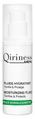
“Men Moisturizing Fluid”
This product can help improve hydration of the skin with the two types of ingredients.
The first type is called “humectants”:
these ingredients help attract water.
When humectants are on the surface of the skin, they “pull in” the moisture from the outside environment, or from
within deeper layers of the skin. The following ingredients in this product do the job:
glycerin, sodium hyaluronate.
This product also contains ingredients called “occlusives”. They help reduce the speed with which our skin loses moisture to the outside environment. These ingredients also help soften the upper layer of the skin, so it feels less tight and nicer to the touch. The following ingredients in this product do the job: caprylic/capric triglyceride, dimethicone.
Anti-oxidationNot advertised by the brand · 4 ingredients credited for this claimModerate support
This product contains antioxidants (ginkgo biloba leaf extract) that might be able to help neutralize free radicals in skin to lessen the damage it gets from the UV light (sun). There is not enough evidence to confirm their effectiveness in skin though.
Can it cause trouble?
Irritancy6 strong irritants: Alcohol denat., Alcohol + 4 more — patch-test recommendedHigh risk
ComedogenicClean of flagged comedogenic ingredientsNone flagged
User reviews
Be the first — your take helps the next person decide.
Ingredients
Filter by role to see what each ingredient is doing.
Water~45–55%
Butylene glycol~6.1–7.4%
- Irritation risk
- Low
Used to create a nice product texture and help delivery of other ingredients. Might be somewhat helpful in attracting water to the upper layer of the skin
More about Butylene glycolAlcohol denat.~4.1–5%
- Irritation risk
- High
Produces temporary toning effect. Can help dissolve other ingredients or preserve products
More about Alcohol denat.Glycerin~3–3.7%
- Irritation risk
- Low
One of the best moisturizing ingredients. Naturally present in skin. It attracts water to the upper layer of the skin working as a humectant
More about GlycerinCaprylic/capric triglyceride~2.4–2.9%
- Irritation risk
- Medium
A good mix of fatty acids that forms a protective layer on the skin. Improves the shelf life of products. Derived from coconut and glycerin
More about Caprylic/capric triglycerideDimethicone~1.9–2.4%
- Irritation risk
- Low
A silicone that helps to reduce water loss from the surface of the skin. Can temporarily "fill in" lines and wrinkles, absorb oil, and create a nice product finish
More about DimethiconeOctyldodecanol~1.5–1.8%
- Irritation risk
- Low
An emollient that helps to soften the skin and create a pleasant product texture and stabilize the formulation
More about OctyldodecanolBetula alba juice~1.3–1.5%
- Irritation risk
- Low
Sodium hyaluronate~1.1–1.3%
- Irritation risk
- Low
One of the best moisturizing ingredients. Attracts water into the upper layer of the skin
More about Sodium hyaluronateMoringa pterygosperma seed extract~0.8–1.15%
- Irritation risk
- Low
Might help attract water to the upper layer of the skin
More about Moringa pterygosperma seed extractGinkgo biloba leaf extract~0.6–0.9%
- Irritation risk
- High
A plant extract that might help neutralize free radicals and reduce inflammation in skin. It can be irritating
More about Ginkgo biloba leaf extractTerminalia ferdinandiana fruit extract~0.55–0.8%
- Irritation risk
- Medium
A plant extract that might have some anti-oxidant effect in skin, but evidence is lacking
More about Terminalia ferdinandiana fruit extractOlus oil~0.5–0.75%
- Irritation risk
- Low
An oil from a mixture of different vegetables. Helps soften the upper layer of the skin
More about Olus oilVegetable oil~0.45–0.7%
- Irritation risk
- Low
An oil from a mixture of different vegetables. Helps soften the upper layer of the skin
More about Vegetable oilVitex agnus castus extract~0.35–0.65%
- Irritation risk
- Low
Cetearyl olivate~0.4–0.6%
Phenoxyethanol~0.35–0.65%
- Irritation risk
- Low
A preservative. It helps prevent bacterial growth in cosmetic products
More about PhenoxyethanolDimethicone/vinyl dimethicone crosspolymer~0.3–0.55%
- Irritation risk
- Low
Used to stabilize product formulations and create a nice product texture
More about Dimethicone/vinyl dimethicone crosspolymerPhenyl trimethicone~0.3–0.55%
- Irritation risk
- Low
A type of silicone that can decrease loss of moisture from the skin surface. It helps create a nice product texture
More about Phenyl trimethiconeSorbitan olivate~0.25–0.5%
Ethylhexylglycerin~0.25–0.45%
Acrylates/c10-30 alkyl acrylate crosspolymer~0.25–0.45%
- Irritation risk
- Medium
Maintains the texture of skincare products. Allows the product to spread evenly. Helps oil and water mix together
More about Acrylates/c10-30 alkyl acrylate crosspolymerCarbomer~0.2–0.35%
- Irritation risk
- Low
Helps create a thicker or gel-like product texture. It is not a surfactant but can be used in gentle cleansing formulations
More about CarbomerDisodium edta~0.2–0.35%
Sodium hydroxide~0.2–0.35%
Maltodextrin~0.2–0.35%
- Irritation risk
- Low
Used to stabilize the product formulation and can help absorb oil
More about MaltodextrinPropanediol~0.2–0.4%
- Irritation risk
- Low
Acts as a solvent for other ingredients. Speeds up the absorption of other ingredients into the skin
More about PropanediolAlcohol~0.2–0.35%
- Irritation risk
- High
Can be drying and contribute to skin irritation. Used in formulars to dissolve other ingredients, create a thinner product consistency or for its antibacterial properties
More about AlcoholLecithin~0.25–0.45%
- Irritation risk
- Low
Used mostly for creating emulsions - helping oil and water mix together. Helps soften the upper layer of the skin
More about LecithinPotassium sorbate~0.2–0.4%
Tocopherol~0.2–0.35%
- Irritation risk
- Low
Pure form of vitamin E. Can help moisturise and protect the skin from free radicals. Often used to help stabilise other ingredients or the formula itself
More about TocopherolAscorbyl tetraisopalmitate~0.25–0.4%
- Irritation risk
- Medium
A vitamin C derivative. Studies show that is might be effective in reducing hyperpigmentation, but there are no studies confirming that it is effectively converted into the bioavailable form of Vitamin C in skin. It is not clear how this derivative compares in effectiveness to the topical application of bioavailable form of vitamin C (L-ascorbic acid)
More about Ascorbyl tetraisopalmitateCyclodextrin~0.15–0.3%
- Irritation risk
- Low
A type of sugar that is used to support delivery of active ingredients and can enhance their penetration into the skin without disrupting the skin's barrier
More about CyclodextrinCitric acid~0.15–0.3%
- Irritation risk
- Medium
Can work as an exfoliant but is typically used to adjust the product pH
More about Citric acidParfum~0.15–0.25%
- Irritation risk
- High
An aromatic blend of unspecified and possibly irritating ingredients
More about ParfumLimonene~0.15–0.25%
- Irritation risk
- High
A common frangrance that can easily irritate skin, especially if exposed to air, light or heat
More about LimoneneLinalool~0.15–0.25%
Citronellol~0.1–0.2%
Ci 19140~0.1–0.15%
Ci 42090~0.05–0.15%
Ingredient list view
Water, Butylene glycol, Alcohol denat., Glycerin, Caprylic/capric triglyceride, Dimethicone, Octyldodecanol, Betula alba juice, Sodium hyaluronate, Moringa pterygosperma seed extract, Ginkgo biloba leaf extract, Terminalia ferdinandiana fruit extract, Olus oil, Vegetable oil, Vitex agnus castus extract, Cetearyl olivate, Phenoxyethanol, Dimethicone/vinyl dimethicone crosspolymer, Phenyl trimethicone, Sorbitan olivate, Ethylhexylglycerin, Acrylates/c10-30 alkyl acrylate crosspolymer, Carbomer, Disodium edta, Sodium hydroxide, Maltodextrin, Propanediol, Alcohol, Lecithin, Potassium sorbate, Tocopherol, Ascorbyl tetraisopalmitate, Cyclodextrin, Citric acid, Parfum, Limonene, Linalool, Citronellol, Ci 19140, Ci 42090
Compare prices
Retailers ranked by price — lowest first.

Affiliate links · prices updated regularly
Sources cited in this review
Every concentration estimate and effectiveness label is anchored to one of these 16 studies and safety reviews.
- 1
- 2
- 3Final Report on the Safety Assessment of Dimethicone Copolyoljournals.sagepub.com
- 4Hyaluronic acid: A key molecule in skin agingncbi.nlm.nih.gov
- 5
- 6

Affiliate links · As an Amazon Associate, WIMJ earns from qualifying purchases.