Works for
1 of 1 advertised claim delivered
Moisturizing10 ingredients credited for this claimGood support
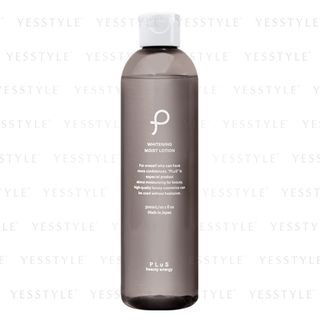
“Whitening Moist Lotion”
This product can help improve hydration of the skin with the two types of ingredients.
The first type is called “humectants”:
these ingredients help attract water.
When humectants are on the surface of the skin, they “pull in” the moisture from the outside environment, or from
within deeper layers of the skin. The following ingredients in this product do the job:
dipotassium glycyrrhizate, glycerin.
This product also contains ingredients called “occlusives”. They help reduce the speed with which our skin loses moisture to the outside environment. These ingredients also help soften the upper layer of the skin, so it feels less tight and nicer to the touch. The following ingredients in this product do the job: ricinus communis seed oil, mel.
Anti-oxidationNot advertised by the brand · 2 ingredients credited for this claimModerate support
This product contains antioxidants (ascorbyl glucoside) that might be able to help neutralize free radicals in skin to lessen the damage it gets from the UV light (sun). There is not enough evidence to confirm their effectiveness in skin though.
Anti-agingNot advertised by the brand · 1 ingredient credited for this claimModerate support
This product contains ascorbyl glucoside. This ingredient might be able to help reduce and prevent fine lines and wrinkles, improve skin elasticity and firmness, but there is not enough evidence that it actually works.
Evens skin toneNot advertised by the brand · 2 ingredients credited for this claimModerate support
The following ingredient (ingredients) in this product might be helpful, but there is no evidence to confirm that it actually works: ascorbyl glucoside, dipotassium glycyrrhizate.
Can it cause trouble?
Irritancy5 strong irritants: Rosmarinus officinalis extract, Citrus grandis extract + 3 more — patch-test recommendedHigh risk
ComedogenicClean of flagged comedogenic ingredientsNone flagged
User reviews
Be the first — your take helps the next person decide.
Ingredients
Filter by role to see what each ingredient is doing.
Ascorbyl glucoside~22–34%
- Irritation risk
- Medium
A vitamin C derivative that is more stable but less potent than pure form of vitamin C. Has a potential to boost collagen production, nutralise free radicals and reduce hyperpigmentation, but the required concentration is likely to be much higher than for the pure form of vitamin C, limiting the ingredient's effectiveness in products
More about Ascorbyl glucosideDipotassium glycyrrhizate~4.6–6.9%
- Irritation risk
- Low
A salt derived from licorice. Works as an emollient to soften the upper layer of the skin and can help calm down inflammation. Might be helpful for skin lightening
More about Dipotassium glycyrrhizateWater~4.3–6.5%
Glycerin~3–4.5%
- Irritation risk
- Low
One of the best moisturizing ingredients. Naturally present in skin. It attracts water to the upper layer of the skin working as a humectant
More about GlycerinDipropylene glycol~2.1–3.2%
- Irritation risk
- Low
Helps to dissolve other ingredients in a formulation. Slows down the rate of product drying
More about Dipropylene glycolButylene glycol~1.7–2.6%
- Irritation risk
- Low
Used to create a nice product texture and help delivery of other ingredients. Might be somewhat helpful in attracting water to the upper layer of the skin
More about Butylene glycolPhenoxyethanol~0.5–1%
- Irritation risk
- Low
A preservative. It helps prevent bacterial growth in cosmetic products
More about PhenoxyethanolSodium citrate~1.3–2%
- Irritation risk
- Medium
Helps to control the skin's pH level. Maintains the skin's natural film of amino-lactic acids and oils. Helps to preserve products
More about Sodium citrateSodium hydroxide~1.2–1.8%
Polyethylene~1.2–1.9%
Ricinus communis seed oil~0.95–1.4%
- Irritation risk
- Medium
A plant oil that can help soften the skin. It might be helpful in calming down inflammation, but solid research is lacking. Is often used in lip products to create the needed product consistency
More about Ricinus communis seed oilHoney~0.6–1.35%
- Irritation risk
- Low
Helps attract water to the skin and might have some anti-bacterial properties. Can be an allergen
More about HoneyMel~0.6–1.35%
- Irritation risk
- Low
Helps to soften the upper layer of the skin and attract water to it
More about MelSaxifraga sarmentosa extract~0.5–1.2%
- Irritation risk
- Low
Rosmarinus officinalis extract~0.5–1.15%
- Irritation risk
- High
Soluble collagen~0.55–1.25%
- Irritation risk
- Low
A typically plant-derived compound that is supposed mimic human collagen. Cannot penetrate the skin barrier so is not particularly useful in skincare products beyond attracting water to the upper layer of the skin
More about Soluble collagenCitric acid~0.4–0.9%
- Irritation risk
- Medium
Can work as an exfoliant but is typically used to adjust the product pH
More about Citric acidChamomilla recutita extract~0.4–0.9%
- Irritation risk
- High
Plant extract that can have healing and anti-inflammatory properties. It is a potential allergen and can be irritating
More about Chamomilla recutita extractGlycine soja extract~0.35–0.8%
- Irritation risk
- Low
Royal jelly extract~0.3–0.7%
- Irritation risk
- Medium
A compound secreted by bees. Might be able to attract water to the top layer of the skin. Avoid if sensitive to honey and bee products
More about Royal jelly extractMalus domestica fruit extract~0.2–0.7%
- Irritation risk
- Medium
Helps attract water to the upper layer of the skin
More about Malus domestica fruit extractCitrus grandis extract~0.15–0.6%
- Irritation risk
- High
Citrus aurantifolia juice~0.15–0.65%
Citrus aurantium dulcis juice~0.15–0.5%
- Irritation risk
- High
Sodium hyaluronate~0.1–0.4%
- Irritation risk
- Low
One of the best moisturizing ingredients. Attracts water into the upper layer of the skin
More about Sodium hyaluronateCitrus limon juice~0.1–0.35%
- Irritation risk
- High
Xanthan gum~0.1–0.35%
- Irritation risk
- Low
Used to create a thicker product consistency
More about Xanthan gumIngredient list view
Ascorbyl glucoside, Dipotassium glycyrrhizate, Water, Glycerin, Dipropylene glycol, Butylene glycol, Phenoxyethanol, Sodium citrate, Sodium hydroxide, Polyethylene, Ricinus communis seed oil, Unknown, Honey, Unknown, Mel, Saxifraga sarmentosa extract, Rosmarinus officinalis extract, Soluble collagen, Citric acid, Unknown, Chamomilla recutita extract, Glycine soja extract, Royal jelly extract, Malus domestica fruit extract, Citrus grandis extract, Citrus aurantifolia juice, Citrus aurantium dulcis juice, Sodium hyaluronate, Citrus limon juice, Xanthan gum
Compare prices
Retailers ranked by price — lowest first.

Affiliate links · prices updated regularly
Sources cited in this review
Every concentration estimate and effectiveness label is anchored to one of these 10 studies and safety reviews.
- 1The Roles of Vitamin C in Skin Healthncbi.nlm.nih.gov
- 2
- 3
- 4
- 5
- 6

Affiliate links · As an Amazon Associate, WIMJ earns from qualifying purchases.