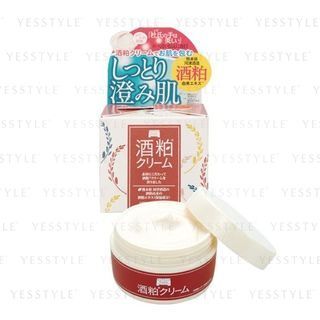
Works for
1 of 1 advertised claim delivered
MoisturizingTriethylhexanoin, Hydrolyzed yeast extract + 11 moreGood evidence
“Carefully selected beautiful skin support help moisturize your skin even further.”
This product can help improve hydration of the skin with the two types of ingredients.
The first type is called “humectants”:
these ingredients help attract water.
When humectants are on the surface of the skin, they “pull in” the moisture from the outside environment, or from
within deeper layers of the skin. The following ingredients in this product do the job:
arginine, glycerin.
This product also contains ingredients called “occlusives”. They help reduce the speed with which our skin loses moisture to the outside environment. These ingredients also help soften the upper layer of the skin, so it feels less tight and nicer to the touch. The following ingredients in this product do the job: arginine, dimethicone.
Can it cause trouble?
Irritancy4 strong irritants: Alcohol, Citrus junos seed extract + 2 more — patch-test recommendedHigh risk
Comedogenic1 ingredient rated 2 or more on the 0–5 pore-clogging scale1 flagged
User reviews
Be the first — your take helps the next person decide.
Ingredients
Filter by role to see what each ingredient is doing.
Water~45–55%
Propanediol~4.6–5.7%
- Irritation risk
- Low
Acts as a solvent for other ingredients. Speeds up the absorption of other ingredients into the skin
More about PropanediolGlycerin~4–4.9%
- Irritation risk
- Low
One of the best moisturizing ingredients. Naturally present in skin. It attracts water to the upper layer of the skin working as a humectant
More about GlycerinTriethylhexanoin~2.9–3.5%
- Irritation risk
- Medium
Helps soften the upper layer of the skin
More about TriethylhexanoinHydrogenated rapeseed oil~2.5–3.1%
- Irritation risk
- Low
Alcohol~2.1–2.6%
- Irritation risk
- High
Can be drying and contribute to skin irritation. Used in formulars to dissolve other ingredients, create a thinner product consistency or for its antibacterial properties
More about AlcoholSqualane~1.8–2.2%
- Irritation risk
- Low
An oil naturally present in skin. Works as an emollient to soften the skin and form a protective layer on its surface without a greasy feeling.
More about SqualaneGlyceryl stearate se~1.4–1.8%
- Irritation risk
- Low
- Comedogenicity
- 2/5
Used to stabilize the product formulations and works as an emollient
More about Glyceryl stearate sePolysorbate 60~1.2–1.5%
Oryza sativa~1–1.2%
- Irritation risk
- Low
Hydrolyzed yeast extract~0.7–1.05%
- Irritation risk
- Low
Helps attract water to the upper layer of the skin and might have some anti-oxidant and skin lightening properties
More about Hydrolyzed yeast extractCucumis sativus fruit extract~0.6–0.9%
- Irritation risk
- Medium
Might be somewhat helpful in reducing hyperpigmentation and neutralizing free radicals but its typical concentration in a product is too low for having an effect
More about Cucumis sativus fruit extractOryza sativa~0.6–0.9%
- Irritation risk
- Low
Glycol~0.55–0.8%
- Irritation risk
- Low
Citrus junos seed extract~0.5–0.75%
- Irritation risk
- High
Malus domestica fruit extract~0.5–0.75%
- Irritation risk
- Medium
Helps attract water to the upper layer of the skin
More about Malus domestica fruit extractSaccharide isomerate~0.5–0.7%
- Irritation risk
- Low
Helps attract water to the upper layer of the skin
More about Saccharide isomerateHydrogenated lecithin~0.45–0.7%
- Irritation risk
- Low
Helps to retain moisture by creating a protective barrier on the skin. Rich in fatty acids. Improves product texture and helps with the penetration of other ingredients.
More about Hydrogenated lecithinLysolecithin~0.45–0.65%
- Irritation risk
- Low
Lecithin derivative. It helps oil and water mix together and can enhance penetration of other ingredients. It helps soften the upper layer of the skin
More about LysolecithinButylene glycol~0.4–0.6%
- Irritation risk
- Low
Used to create a nice product texture and help delivery of other ingredients. Might be somewhat helpful in attracting water to the upper layer of the skin
More about Butylene glycolStearic acid~0.5–0.75%
- Irritation risk
- Low
Helps oil and water mix together and works as an emollient
More about Stearic acidAlcohol~0.35–0.65%
- Irritation risk
- High
Can be drying and contribute to skin irritation. Used in formulars to dissolve other ingredients, create a thinner product consistency or for its antibacterial properties
More about AlcoholDimethicone~0.4–0.65%
- Irritation risk
- Low
A silicone that helps to reduce water loss from the surface of the skin. Can temporarily "fill in" lines and wrinkles, absorb oil, and create a nice product finish
More about DimethiconeSodium caprylate~0.35–0.6%
Carbomer~0.3–0.55%
- Irritation risk
- Low
Helps create a thicker or gel-like product texture. It is not a surfactant but can be used in gentle cleansing formulations
More about CarbomerBenzophenone-3~0.5–0.75%
- Irritation risk
- High
Same as oxybenzone. Protects in the UVB and short UVA range. In small concentrations, used to stabilize product formulation. Can be irritating. Is shown to be harmful to coral reefs - consider avoiding bathing in coral reef areas when wearing a product with this ingredient. It can penetrate the skin and get absorbed into bloodstream faster than other popular filters available in the US. The study that produced this finding did not address any potential health effects of the absorption
More about Benzophenone-3Ammonium polyacrylate~0.25–0.5%
Citric acid~0.25–0.45%
- Irritation risk
- Medium
Can work as an exfoliant but is typically used to adjust the product pH
More about Citric acidArginine~0.2–0.35%
- Irritation risk
- Low
An amino acid that is naturally present in skin and helps keep it hydrated. When used together with AHAs, it can reduce their irritating effect on the skin
More about ArginineSodium hydroxide~0.2–0.35%
Titanium dioxide~0.25–0.5%
- Irritation risk
- Low
Works as a UV filter when used in high concentrations. It is photostable and is effective mostly against the UVB light, with some protection in the UVA range. In small concentrations, used for its ability to improve the color of cosmetic products. Is usually well tolerated by the skin
More about Titanium dioxideCaramel~0.15–0.25%
- Irritation risk
- Low
Phenoxyethanol~0.1–0.25%
- Irritation risk
- Low
A preservative. It helps prevent bacterial growth in cosmetic products
More about PhenoxyethanolMethylparaben~0.1–0.2%
Parfum~0.05–0.1%
- Irritation risk
- High
An aromatic blend of unspecified and possibly irritating ingredients
More about ParfumIngredient list view
Water, Propanediol, Glycerin, Triethylhexanoin, Hydrogenated rapeseed oil, Alcohol, Squalane, Glyceryl stearate se, Polysorbate 60, Unknown, Oryza sativa, Hydrolyzed yeast extract, Cucumis sativus fruit extract, Oryza sativa, Glycol, Citrus junos seed extract, Malus domestica fruit extract, Saccharide isomerate, Hydrogenated lecithin, Lysolecithin, Butylene glycol, Stearic acid, Alcohol, Dimethicone, Sodium caprylate, Carbomer, Benzophenone-3, Ammonium polyacrylate, Citric acid, Arginine, Sodium hydroxide, Titanium dioxide, Caramel, Phenoxyethanol, Methylparaben, Parfum
Compare prices
Retailers ranked by price — lowest first.

Affiliate links · prices updated regularly
Sources cited in this review
Every concentration estimate and effectiveness label is anchored to one of these 9 studies and safety reviews.
- 1
- 2
- 3
- 4
- 5
- 6Final Report on the Safety Assessment of Dimethicone Copolyoljournals.sagepub.com

Affiliate links · As an Amazon Associate, WIMJ earns from qualifying purchases.