Works for
CleansingSodium c14-16 olefin sulfonate, Cocamidopropyl betaine + 2 moreCleanses gently
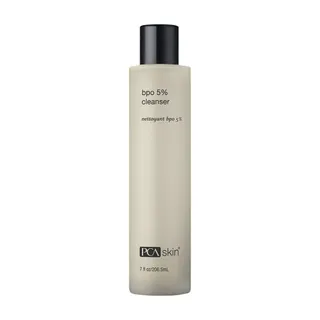
“BPO 5% Cleanser”
This product works by removing dirt and oil from the surface of the skin. It uses a combination of mild cleansing agents (cocamidopropyl betaine, hexylene glycol, polysorbate 20, sodium c14-16 olefin sulfonate) and should be able to cleanse the skin gently. Still keep in mind that any cleansing can disrupt the skin barrier, and most people do not need to cleanse their skin more than once per day.
Even though this formulation is mild, the following cleansing agents could trigger an irritation or allergy for some people: cocamidopropyl betaine, sodium c14-16 olefin sulfonate
Anti-blemishGluconolactone, Allantoin + 1 moreNot delivered
“This powerful 5% liquid benzoyl peroxide daily cleanser calms and soothes irritated acneic skin while helping to eliminate and prevent future breakouts.”
This product contains ingredients (gluconolactone) that could help reduce blemishes and clogged pores in theory, but there is not enough evidence that they actually work.
ExfoliationNot advertised by the brand · Gluconolactone, AllantoinWorks well
This product can help exfoliate the skin. In other words, it helps break down the bonds between dead cells on the surface of the skin and speed up the skin turnover. Skin often appears softer and brighter after exfoliation, but overdoing it can result in disrupted skin barrier. The following ingredient is doing the exfoliating job in this product: gluconolactone.
Can it cause trouble?
Irritancy2 strong irritants: Citrus grandis peel oil, Arnica montana flower extractMedium risk
Comedogenic2 ingredients rated 2 or more on the 0–5 pore-clogging scale2 flagged

User reviews
Be the first — your take helps the next person decide.
Ingredients
Filter by role to see what each ingredient is doing.
Water~45–55%
Gluconolactone~5.3–6.5%
- Irritation risk
- Medium
A polyhydroxy acid (PHA) that helps shed the dead cells from the skin surface revealing smoother skin. Is believed to be genter than AHAs. It helps attract water to the upper layer of the skin and can stimulate production of skin's own hyaluronic acid resulting in improved hydration levels. It has been shown to be helpful against acne and clogged pores if used consistently (e.g over a period of 12 weeks) in high enough concentration. It can help reduce fine lines and wrinkles and improve skin tone with long-term application. Can help neutralize free radicals
More about GluconolactoneSodium c14-16 olefin sulfonate~5.8–7.1%
- Irritation risk
- High
Helps oil and water mix together and used as a cleansing agent. Can be irritating and is better avoided for sensitive skin
More about Sodium c14-16 olefin sulfonateAminomethyl propanol~3.1–3.8%
Glycerin~2.4–2.9%
- Irritation risk
- Low
One of the best moisturizing ingredients. Naturally present in skin. It attracts water to the upper layer of the skin working as a humectant
More about GlycerinCocamidopropyl betaine~2.5–3%
- Irritation risk
- High
Helps water and oil mix together. Used as a cleansing ingredient. Could be an allergen
More about Cocamidopropyl betaineAcrylates/c10-30 alkyl acrylate crosspolymer~1.6–2%
- Irritation risk
- Medium
Maintains the texture of skincare products. Allows the product to spread evenly. Helps oil and water mix together
More about Acrylates/c10-30 alkyl acrylate crosspolymerPhenoxyethanol~0.5–1%
- Irritation risk
- Low
A preservative. It helps prevent bacterial growth in cosmetic products
More about PhenoxyethanolPolyacrylate-13~1.2–1.5%
- Irritation risk
- Low
Used to create a thicker product consistency and stabilize the product formulation
More about Polyacrylate-13Citrus grandis peel oil~0.9–1.1%
- Irritation risk
- High
A plant oil with high content of volatile compounds that, especially when exposed to air, can cause allergic reactions and irritate the skin
More about Citrus grandis peel oilPolyisobutene~0.75–1.1%
Caprylyl glycol~0.6–0.9%
- Irritation risk
- Medium
Helps preserve products and creates a nice product texture
More about Caprylyl glycolEthylhexylglycerin~0.5–0.75%
Hexylene glycol~0.45–0.65%
- Irritation risk
- Medium
Helps create a more spreadable product texture
More about Hexylene glycolAllantoin~0.35–0.65%
- Irritation risk
- Low
Helps calm down inflammation in skin and can help reduce itching. Helps to repair the skin barrier and keep skin hydrated
More about AllantoinSimmondsia chinensis seed oil~0.45–0.7%
- Irritation risk
- Medium
Softens the upper layer of skin and helps restore the healthy skin barrier. Has shown to help calm down inflammation in skin. It is a stable oil, meaning that it retains its properties even when exposed to air.
More about Simmondsia chinensis seed oilTocopheryl acetate~0.35–0.65%
- Irritation risk
- Medium
A more stable but less bio-available form of vitamin E compared to Tocopherol. Might help moisturize and protect the skin from free radicals, but mostly used in low concentrations to stabilize other ingredients.
More about Tocopheryl acetateTriticum vulgare germ oil~0.35–0.65%
- Irritation risk
- Low
- Comedogenicity
- 3/5
A good emoillient. Contains vitamin E which can help neutralise free radicals, however the oil is unstable. Avoid if you have gluten or wheat sensitivity (including food allergies).
More about Triticum vulgare germ oilAloe barbadensis leaf juice~0.25–0.5%
- Irritation risk
- Medium
Traditionally used to treat sunburns, dermatitis and inflammation, but evidence for its effectiveness is lacking. The extract can contain humectants that help attract water into the skin
More about Aloe barbadensis leaf juicePanthenol~0.2–0.4%
- Irritation risk
- Low
Helps attract water to the upper layer of the skin and can help improve skin barrier function
More about PanthenolSodium pca~0.2–0.35%
- Irritation risk
- Low
Naturally present in skin and helps to attract water to its upper layer
More about Sodium pcaPolysorbate 20~0.2–0.4%
Butylene glycol~0.15–0.3%
- Irritation risk
- Low
Used to create a nice product texture and help delivery of other ingredients. Might be somewhat helpful in attracting water to the upper layer of the skin
More about Butylene glycolPhytic acid~0.15–0.25%
- Irritation risk
- Medium
An alpha-hydroxy acid (AHA), but is mostly used to stabilize product formulations in cosmetics
More about Phytic acidAlgae extract~0.2–0.35%
- Irritation risk
- Low
- Comedogenicity
- 3/5
Plant extract that helps the skin to attract water and make it more smooth for touch. Also shows promise of anti-aging properties, but research is not extensive yet
More about Algae extractAnthemis nobilis flower extract~0.1–0.15%
- Irritation risk
- High
A plant extract that one one hand, can contain compounds that can help calm down skin irritation, but, on the other hand, its other compounds (especially fragrant ones) can themselves be irritating
More about Anthemis nobilis flower extractArnica montana flower extract~0.05–0.1%
- Irritation risk
- High
A plant extract that can be irritating. It can have some anti-bacterial properties, but there are no evidence of a beneficial effect for skin
More about Arnica montana flower extractCucumis sativus fruit extract~0.05–0.1%
- Irritation risk
- Medium
Might be somewhat helpful in reducing hyperpigmentation and neutralizing free radicals but its typical concentration in a product is too low for having an effect
More about Cucumis sativus fruit extractVitis vinifera seed extract~0.05–0.1%
- Irritation risk
- Low
A plant extract that contains resveratrol and other anti-oxidant compounds that can help neutralize free radicals, reduce inflammation in skin and even out its tone. Can be also used to stabilize the product formulation
More about Vitis vinifera seed extractIngredient list view
Water, Gluconolactone, Sodium c14-16 olefin sulfonate, Aminomethyl propanol, Glycerin, Cocamidopropyl betaine, Acrylates/c10-30 alkyl acrylate crosspolymer, Phenoxyethanol, Polyacrylate-13, Citrus grandis peel oil, Polyisobutene, Caprylyl glycol, Ethylhexylglycerin, Hexylene glycol, Allantoin, Simmondsia chinensis seed oil, Tocopheryl acetate, Triticum vulgare germ oil, Aloe barbadensis leaf juice, Panthenol, Sodium pca, Polysorbate 20, Butylene glycol, Phytic acid, Algae extract, Anthemis nobilis flower extract, Arnica montana flower extract, Cucumis sativus fruit extract, Vitis vinifera seed extract
Compare prices
Retailers ranked by price — lowest first.
Affiliate links · As an Amazon Associate, WIMJ earns from qualifying purchases.
Worth comparing, line by line.
Match % combines shared ingredients, the first five ingredients, shared actives and hero ingredients, irritancy (lower counts in the alternative's favour), texture and body area. Only products in the same routine step are compared.
| PCA SKINBPO 5% CleanserYOUR PRODUCT | Spotles SKNJelly Cleanser | Estelle and ThildEstelle Thild BioCleanse Micellar Cleansing Water | ReviumAnti Redness Sensitive Face Wash Gel | |
|---|---|---|---|---|
| Match | — | 50% | 50% | 48% |
| Price | — | $8.90 | $20.39 | $30.80 |
| Shared key ingredients | — | 4 of 13 | 2 of 13 | 3 of 13 |
| Key difference | — | Betaine | Polyglyceryl-4 Caprate | Polysorbate 80 |
| Irritancy | Medium | Low | Medium | Low |
| Drying alcohol | — | — | — | — |
| View product | Shop | Shop | Shop |


More alternatives: Skinfix Barrier+ Foaming Oil CleanserSkingredients PreProbiotic Cleanse
Sources cited in this review
Every concentration estimate and effectiveness label is anchored to one of these 26 studies and safety reviews.
- 1
- 2
- 3
- 4
- 5
- 6

Affiliate links · As an Amazon Associate, WIMJ earns from qualifying purchases.