Works for
1 of 3 advertised claims delivered
Moisturizing18 ingredients credited for this claimGood support
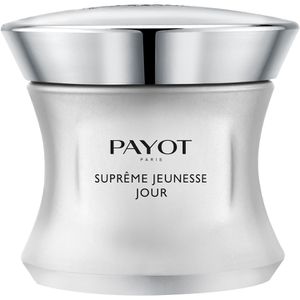
“1 x Day Cream 50ml”
This product can help improve hydration of the skin with the two types of ingredients.
The first type is called “humectants”:
these ingredients help attract water.
When humectants are on the surface of the skin, they “pull in” the moisture from the outside environment, or from
within deeper layers of the skin. The following ingredients in this product do the job:
algae extract, biosaccharide gum-1.
This product also contains ingredients called “occlusives”. They help reduce the speed with which our skin loses moisture to the outside environment. These ingredients also help soften the upper layer of the skin, so it feels less tight and nicer to the touch. The following ingredients in this product do the job: butyrospermum parkii butter, dimethicone.
Anti-aging4 ingredients credited for this claimLimited support
“Supreme Anti-Ageing Day Care”
This product does not contain ingredients that are able to reduce fine lines and wrinkles or help with skin elasticity, but it can improve the look of the skin temporarily through moisturization. Well-moisturized skin might also be able to repair the sun damage better.These ingredients - butyrospermum parkii butter, decarboxy carnosine hcl - could be helpful for preventing or repairing signs of aging in theory, but there is no evidence that it actually works.
This ingredient decarboxy carnosine hcl might be able to help neutralize free radicals in skin and help it fight off some of the sun damage.
Evens skin tone1 ingredient credited for this claimWeak support
“It combats signs of aging to diminish and smooth away the appearance of wrinkles, remodel facial contours and attenuate dark spots, while restoring radiance and comfort.”
Effective ingredients missing or their concentration is too low
Anti-oxidationNot advertised by the brand · 5 ingredients credited for this claimModerate support
This product contains antioxidants (decarboxy carnosine hcl) that might be able to help neutralize free radicals in skin to lessen the damage it gets from the UV light (sun). There is not enough evidence to confirm their effectiveness in skin though.
Can it cause trouble?
Irritancy1 strong irritant: ParfumMedium risk
Comedogenic4 ingredients rated 2 or more on the 0–5 pore-clogging scale4 flagged
User reviews
Be the first — your take helps the next person decide.
Ingredients
Filter by role to see what each ingredient is doing.
Water~45–55%
Glycerin~4.4–5.4%
- Irritation risk
- Low
One of the best moisturizing ingredients. Naturally present in skin. It attracts water to the upper layer of the skin working as a humectant
More about GlycerinButyrospermum parkii butter~4.2–5.1%
- Irritation risk
- Low
- Comedogenicity
- 3/5
A great moisturising ingredient that softens the skin and reduces water loss from its upper layer. It also can be helpful in protecting skin from free radicals
More about Butyrospermum parkii butterEthylhexyl palmitate~3.1–3.8%
- Irritation risk
- Low
- Comedogenicity
- 3/5
An emollient that helps soften the skin and create a nice product texture
More about Ethylhexyl palmitateIsohexadecane~2.4–2.9%
- Irritation risk
- Low
Improves the texture of the product and helps soften the skin. Helps oil and water mix together and can be used as a cleansing agent
More about IsohexadecaneBis-peg-18 methyl ether dimethyl silane~1.9–2.4%
- Irritation risk
- Low
A type of silicone that helps soften the upper layer of the skin and create a nice product texture
More about Bis-peg-18 methyl ether dimethyl silaneDimethicone~1.7–2%
- Irritation risk
- Low
A silicone that helps to reduce water loss from the surface of the skin. Can temporarily "fill in" lines and wrinkles, absorb oil, and create a nice product finish
More about DimethiconeIsodecyl neopentanoate~1.5–1.8%
- Irritation risk
- Low
An emollient that helps soften the skin. It also forms a protective on its surface to reduce water loss.
More about Isodecyl neopentanoateButylene glycol~1.2–1.4%
- Irritation risk
- Low
Used to create a nice product texture and help delivery of other ingredients. Might be somewhat helpful in attracting water to the upper layer of the skin
More about Butylene glycolPolymethylsilsesquioxane~1–1.3%
- Irritation risk
- Low
A silicone that improves product texture and helps dissolve other ingredients. Can form a non-greasy film on the skin to prevent moisture loss
More about PolymethylsilsesquioxaneAmmonium acryloyldimethyltaurate/vp copolymer~0.7–1%
- Irritation risk
- Low
Increases thickness of a product. Texture enhancer for oil-in-water emulsions
More about Ammonium acryloyldimethyltaurate/vp copolymerCetearyl alcohol~0.65–1%
- Irritation risk
- Low
- Comedogenicity
- 2/5
A non-drying alcohol. Works as an emollient. Helps water and oil mix together and creates a nice product texture
More about Cetearyl alcoholCetearyl glucoside~0.5–0.75%
- Irritation risk
- Medium
Helps water and oil in the product mix well together and improves product texture
More about Cetearyl glucosidePentaerythrityl distearate~0.5–0.7%
Caprylic/capric triglyceride~0.5–0.75%
- Irritation risk
- Medium
A good mix of fatty acids that forms a protective layer on the skin. Improves the shelf life of products. Derived from coconut and glycerin
More about Caprylic/capric triglycerideParfum~0.35–0.65%
- Irritation risk
- High
An aromatic blend of unspecified and possibly irritating ingredients
More about ParfumSynthetic fluorphlogopite~0.45–0.65%
- Irritation risk
- Low
A mineral that is used as an optical filter (makes the skin looks nicer through light reflection) and to improve the texture of cosmetic products
More about Synthetic fluorphlogopitePhenoxyethanol~0.35–0.6%
- Irritation risk
- Low
A preservative. It helps prevent bacterial growth in cosmetic products
More about PhenoxyethanolSodium stearoyl glutamate~0.35–0.65%
- Irritation risk
- Medium
Helps oil and water mix together
More about Sodium stearoyl glutamateChlorphenesin~0.16–0.32%
Ethylhexyl stearate~0.3–0.55%
- Irritation risk
- Low
Helps soften the upper layer of the skin
More about Ethylhexyl stearateCi 77891~0.25–0.45%
- Irritation risk
- Low
Titanium dioxide~0.3–0.6%
- Irritation risk
- Low
Works as a UV filter when used in high concentrations. It is photostable and is effective mostly against the UVB light, with some protection in the UVA range. In small concentrations, used for its ability to improve the color of cosmetic products. Is usually well tolerated by the skin
More about Titanium dioxideAscorbyl tetraisopalmitate~0.25–0.5%
- Irritation risk
- Medium
A vitamin C derivative. Studies show that is might be effective in reducing hyperpigmentation, but there are no studies confirming that it is effectively converted into the bioavailable form of Vitamin C in skin. It is not clear how this derivative compares in effectiveness to the topical application of bioavailable form of vitamin C (L-ascorbic acid)
More about Ascorbyl tetraisopalmitateTocopheryl acetate~0.25–0.45%
- Irritation risk
- Medium
A more stable but less bio-available form of vitamin E compared to Tocopherol. Might help moisturize and protect the skin from free radicals, but mostly used in low concentrations to stabilize other ingredients.
More about Tocopheryl acetateDecarboxy carnosine hcl~0.25–0.45%
- Irritation risk
- Low
Might be able to protect the skin from free radicals, but further evidence of effectiveness is needed
More about Decarboxy carnosine hclO-cymen-5-ol~0.05–0.1%
Tetrasodium edta~0.25–0.45%
Citric acid~0.25–0.45%
- Irritation risk
- Medium
Can work as an exfoliant but is typically used to adjust the product pH
More about Citric acidAlgae extract~0.3–0.55%
- Irritation risk
- Low
- Comedogenicity
- 3/5
Plant extract that helps the skin to attract water and make it more smooth for touch. Also shows promise of anti-aging properties, but research is not extensive yet
More about Algae extractPolyglyceryl-4 diisostearate/polyhydroxystearate/sebacate~0.25–0.45%
- Irritation risk
- Medium
Helps water and oil mix together
More about Polyglyceryl-4 diisostearate/polyhydroxystearate/sebacateSodium hyaluronate crosspolymer~0.2–0.4%
- Irritation risk
- Medium
Attracts water into the upper layer of the skin
More about Sodium hyaluronate crosspolymerSodium isostearate~0.3–0.55%
Biosaccharide gum-1~0.2–0.35%
- Irritation risk
- Low
Helps attract water to the upper layer of the skin and is claimed to provide a longer-lasting hydration because of its ability to create a water-binding film on the surface of the skin
More about Biosaccharide gum-1Sodium hyaluronate~0.15–0.3%
- Irritation risk
- Low
One of the best moisturizing ingredients. Attracts water into the upper layer of the skin
More about Sodium hyaluronateUndaria pinnatifida extract~0.15–0.3%
- Irritation risk
- Low
A seaweed extract that helps attract water to the upper layer of the skin and might have an anti-oxidant effect
More about Undaria pinnatifida extractTin oxide~0.25–0.45%
- Irritation risk
- Low
A colorant that can add a pearl-like appearance to the formulation
More about Tin oxideBht~0.1–0.15%
Magnolol~0.1–0.15%
- Irritation risk
- Low
Orchid extract~0.05–0.15%
Ingredient list view
Water, Glycerin, Butyrospermum parkii butter, Ethylhexyl palmitate, Isohexadecane, Bis-peg-18 methyl ether dimethyl silane, Dimethicone, Isodecyl neopentanoate, Butylene glycol, Polymethylsilsesquioxane, Ammonium acryloyldimethyltaurate/vp copolymer, Cetearyl alcohol, Cetearyl glucoside, Pentaerythrityl distearate, Caprylic/capric triglyceride, Parfum, Synthetic fluorphlogopite, Phenoxyethanol, Sodium stearoyl glutamate, Chlorphenesin, Ethylhexyl stearate, Ci 77891, Titanium dioxide, Ascorbyl tetraisopalmitate, Tocopheryl acetate, Decarboxy carnosine hcl, O-cymen-5-ol, Tetrasodium edta, Citric acid, Algae extract, Polyglyceryl-4 diisostearate/polyhydroxystearate/sebacate, Sodium hyaluronate crosspolymer, Sodium isostearate, Biosaccharide gum-1, Sodium hyaluronate, Undaria pinnatifida extract, Tin oxide, Bht, Magnolol, Orchid extract
Compare prices
Retailers ranked by price — lowest first.

.png)
Sources cited in this review
Every concentration estimate and effectiveness label is anchored to one of these 13 studies and safety reviews.
- 1
- 2
- 3Final Report on the Safety Assessment of Dimethicone Copolyoljournals.sagepub.com
- 4
- 5
- 6

Affiliate links · As an Amazon Associate, WIMJ earns from qualifying purchases.