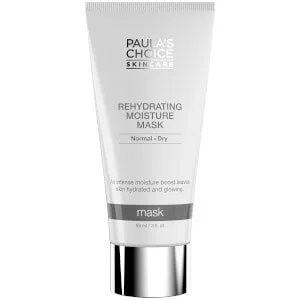
Paula's choice Rehydrating Moisture Mask
Works for
MoisturizingLinoleic acid, Glycerin + 34 moreWorks well
“Rehydrating Moisture Mask”
This product can help improve hydration of the skin with the two types of ingredients.
The first type is called “humectants”:
these ingredients help attract water.
When humectants are on the surface of the skin, they “pull in” the moisture from the outside environment, or from
within deeper layers of the skin. The following ingredients in this product do the job:
alanine, algae extract.
This product also contains ingredients called “occlusives”. They help reduce the speed with which our skin loses moisture to the outside environment. These ingredients also help soften the upper layer of the skin, so it feels less tight and nicer to the touch. The following ingredients in this product do the job: arginine, caprylic/capric triglyceride.
The following ingredients in this product are especially good for supporting the skin barrier and helping with the hydration level: linoleic acid
Anti-agingSide benefit the brand mentions · Serine, Aspartic acid + 5 moreMay help
“Dry, distressed skin is left feeling soft, smooth and youthful. Suitable for normal to dry skin.”
This product contains aspartic acid, serine, threonine. There is some human evidence that these ingredients help reduce and prevent fine lines and wrinkles and improve skin elasticity and firmness, though it is smaller or less consistent than the evidence for the best anti-aging ingredients.
Can it cause trouble?
Irritancy14 flagged ingredientsMedium risk
Comedogenic3 ingredients rated 2 or more on the 0–5 pore-clogging scale3 flagged
User reviews
Be the first — your take helps the next person decide.
Ingredients
Filter by role to see what each ingredient is doing.
Water~45–55%
Neopentyl glycol diheptanoate~4.3–5.2%
- Irritation risk
- Low
Helps soften the upper layer of the skin and create a nice product consistency
More about Neopentyl glycol diheptanoateGlycerin~4–4.9%
- Irritation risk
- Low
One of the best moisturizing ingredients. Naturally present in skin. It attracts water to the upper layer of the skin working as a humectant
More about GlycerinGlyceryl stearate~2.8–3.4%
- Irritation risk
- Low
An emollient that softens the skin and forms a protective layer on its surface. Helps water and oil mix together
More about Glyceryl stearateNeopentyl glycol dicaprylate/dicaprate~2.4–2.9%
- Irritation risk
- Low
Cetearyl alcohol~2–2.4%
- Irritation risk
- Low
- Comedogenicity
- 2/5
A non-drying alcohol. Works as an emollient. Helps water and oil mix together and creates a nice product texture
More about Cetearyl alcoholCaprylic/capric triglyceride~1.7–2.1%
- Irritation risk
- Medium
A good mix of fatty acids that forms a protective layer on the skin. Improves the shelf life of products. Derived from coconut and glycerin
More about Caprylic/capric triglyceridePropanediol~1.5–1.8%
- Irritation risk
- Low
Acts as a solvent for other ingredients. Speeds up the absorption of other ingredients into the skin
More about PropanediolPolyglyceryl-3 rice branate~1.2–1.5%
Dimethicone~1.1–1.3%
- Irritation risk
- Low
A silicone that helps to reduce water loss from the surface of the skin. Can temporarily "fill in" lines and wrinkles, absorb oil, and create a nice product finish
More about DimethiconeGlyceryl behenate/eicosadioate~0.8–1.15%
Borago officinalis seed oil~0.65–0.95%
- Irritation risk
- Low
A plant oil that is effective in reducing irritation in skin, restore the barrier function and support its hydration
More about Borago officinalis seed oilOenothera biennis oil~0.6–0.9%
- Irritation risk
- Medium
Helps soften the upper layer of the skin and can support skin barrier function
More about Oenothera biennis oilPrunus armeniaca kernel oil~0.55–0.85%
- Irritation risk
- Medium
An emollient that helps soften the skin
More about Prunus armeniaca kernel oilAlgae extract~0.55–0.85%
- Irritation risk
- Low
- Comedogenicity
- 3/5
Plant extract that helps the skin to attract water and make it more smooth for touch. Also shows promise of anti-aging properties, but research is not extensive yet
More about Algae extractCocos nucifera fruit extract~0.5–0.8%
- Irritation risk
- Low
- Comedogenicity
- 3/5
An emollient. Found to be as effective as a moisturizer for dry skin as mineral oil. Could be comedogenic
More about Cocos nucifera fruit extractOlea europaea fruit oil~0.5–0.75%
- Irritation risk
- Medium
An emollient that helps soften the skin but is not effective for restoring its barrier function. Might be helpful to calm down inflammation
More about Olea europaea fruit oilRhodiola rosea root extract~0.5–0.75%
- Irritation risk
- Low
Vaccinium angustifolium fruit extract~0.35–0.65%
- Irritation risk
- Medium
A plant extract tha can have anti-oxidant properties, but evidence of effectiveness in skin is lacking
More about Vaccinium angustifolium fruit extractSimmondsia chinensis seed oil~0.45–0.7%
- Irritation risk
- Medium
Softens the upper layer of skin and helps restore the healthy skin barrier. Has shown to help calm down inflammation in skin. It is a stable oil, meaning that it retains its properties even when exposed to air.
More about Simmondsia chinensis seed oilLinoleic acid~0.5–0.75%
- Irritation risk
- Low
An excellent emollient. Helps soften the skin, restore its barrier function, and can help to calm down inflammation. It can be helpful to prevent blemishes and clogged pores
More about Linoleic acidPhospholipids~0.3–0.6%
- Irritation risk
- Low
Emollients that are naturaly present in skin. In addition, they help water and oil mix together in the product
More about PhospholipidsAloe barbadensis leaf juice~0.3–0.55%
- Irritation risk
- Medium
Traditionally used to treat sunburns, dermatitis and inflammation, but evidence for its effectiveness is lacking. The extract can contain humectants that help attract water into the skin
More about Aloe barbadensis leaf juiceAllantoin~0.3–0.55%
- Irritation risk
- Low
Helps calm down inflammation in skin and can help reduce itching. Helps to repair the skin barrier and keep skin hydrated
More about AllantoinHydrogenated lecithin~0.3–0.6%
- Irritation risk
- Low
Helps to retain moisture by creating a protective barrier on the skin. Rich in fatty acids. Improves product texture and helps with the penetration of other ingredients.
More about Hydrogenated lecithinTocopherol~0.3–0.6%
- Irritation risk
- Low
Pure form of vitamin E. Can help moisturise and protect the skin from free radicals. Often used to help stabilise other ingredients or the formula itself
More about TocopherolTocopheryl acetate~0.3–0.6%
- Irritation risk
- Medium
A more stable but less bio-available form of vitamin E compared to Tocopherol. Might help moisturize and protect the skin from free radicals, but mostly used in low concentrations to stabilize other ingredients.
More about Tocopheryl acetateSodium pca~0.3–0.55%
- Irritation risk
- Low
Naturally present in skin and helps to attract water to its upper layer
More about Sodium pcaArginine~0.3–0.55%
- Irritation risk
- Low
An amino acid that is naturally present in skin and helps keep it hydrated. When used together with AHAs, it can reduce their irritating effect on the skin
More about ArginineAspartic acid~0.3–0.55%
- Irritation risk
- Low
An amino-acid that helps increase skin hydration and might help to slightly improve skin firmness, potentially reducing lines and wrinkles
More about Aspartic acidTetrahexyldecyl ascorbate~0.3–0.6%
- Irritation risk
- Medium
Being a lipid soluble form of vitamin C, it is more stable than ascorbic acid, but still degrades quickly and needs to be stabilized in a formulation with another ingredient. It is claimed to penetrate skin better than pure vitamin C and have the the similar benefits, but solid studies of its effectiveness are lacking. Is likely to require a higher concentration in a product than pure vitamin C to be effective. It might be able to help reduce pore clogging.
More about Tetrahexyldecyl ascorbatePca~0.3–0.55%
- Irritation risk
- Low
Naturally present in skin and helps to attract water to its upper layer
More about PcaSodium hyaluronate~0.3–0.55%
- Irritation risk
- Low
One of the best moisturizing ingredients. Attracts water into the upper layer of the skin
More about Sodium hyaluronateGlycine~0.3–0.55%
- Irritation risk
- Low
Helps to attract water to the upper layer of the skin and can help restore the skin barrier function
More about GlycineAlanine~0.3–0.55%
- Irritation risk
- Low
An amino-acid that helps to attract water to the upper layer of the skin and might help to lighten the skin, but solid evidence is lacking
More about AlanineSerine~0.3–0.55%
- Irritation risk
- Low
An amino-acid that helps to attract water to the upper layer of the skin. In combination with other amino-acids, might help to reduce fine lines and wrinkles
More about SerineHectorite~0.3–0.6%
- Irritation risk
- Low
Palmitic acid~0.4–0.6%
- Irritation risk
- Low
An emollient that is naturally present in skin and helps soften it
More about Palmitic acidSclerotium gum~0.3–0.55%
- Irritation risk
- Low
Used to create gel-like formulas and stabilize emulsions
More about Sclerotium gumDimethicone/vinyl dimethicone crosspolymer~0.3–0.55%
- Irritation risk
- Low
Used to stabilize product formulations and create a nice product texture
More about Dimethicone/vinyl dimethicone crosspolymerCaprylyl glycol~0.35–0.6%
- Irritation risk
- Medium
Helps preserve products and creates a nice product texture
More about Caprylyl glycolCetearyl glucoside~0.3–0.6%
- Irritation risk
- Medium
Helps water and oil in the product mix well together and improves product texture
More about Cetearyl glucosideGlycine soja sterols~0.35–0.6%
- Irritation risk
- Low
An emollient that helps soften the skin
More about Glycine soja sterolsValine~0.3–0.5%
- Irritation risk
- Low
Isoleucine~0.3–0.5%
- Irritation risk
- Low
An amino acid that can help attract water to the upper layer of the skin and support skin's barrier function
More about IsoleucineProline~0.3–0.55%
Threonine~0.25–0.5%
- Irritation risk
- Low
An amino-acid that helps to attract water to the upper layer of the skin. In combination with other amino-acids, might help to reduce fine lines and wrinkles
More about ThreonineHistidine~0.25–0.45%
Phenylalanine~0.25–0.45%
- Irritation risk
- Low
Sodium lactate~0.2–0.35%
- Irritation risk
- Medium
Helps attract water to the upper layer of the skin. Is often used to adjust the pH level of the product
More about Sodium lactateSodium citrate~0.15–0.3%
- Irritation risk
- Medium
Helps to control the skin's pH level. Maintains the skin's natural film of amino-lactic acids and oils. Helps to preserve products
More about Sodium citrateXylitylglucoside~0.15–0.3%
- Irritation risk
- Low
Helps attract water to the upper layer of the skin and repair the skin barrier function
More about XylitylglucosideAnhydroxylitol~0.15–0.3%
- Irritation risk
- Low
Helps attract water to the upper layer of the skin and repair the skin barrir function
More about AnhydroxylitolXylitol~0.15–0.3%
- Irritation risk
- Low
Helps attract water to the upper layer of the skin and repair the skin barrier function
More about XylitolPhenoxyethanol~0.15–0.25%
- Irritation risk
- Low
A preservative. It helps prevent bacterial growth in cosmetic products
More about PhenoxyethanolSorbic acid~0.15–0.25%
Ingredient list view
Water, Neopentyl glycol diheptanoate, Glycerin, Glyceryl stearate, Neopentyl glycol dicaprylate/dicaprate, Cetearyl alcohol, Caprylic/capric triglyceride, Propanediol, Polyglyceryl-3 rice branate, Dimethicone, Glyceryl behenate/eicosadioate, Borago officinalis seed oil, Oenothera biennis oil, Prunus armeniaca kernel oil, Algae extract, Cocos nucifera fruit extract, Olea europaea fruit oil, Rhodiola rosea root extract, Vaccinium angustifolium fruit extract, Simmondsia chinensis seed oil, Linoleic acid, Phospholipids, Aloe barbadensis leaf juice, Allantoin, Hydrogenated lecithin, Tocopherol, Tocopheryl acetate, Sodium pca, Arginine, Aspartic acid, Tetrahexyldecyl ascorbate, Pca, Sodium hyaluronate, Glycine, Alanine, Serine, Hectorite, Palmitic acid, Sclerotium gum, Dimethicone/vinyl dimethicone crosspolymer, Caprylyl glycol, Cetearyl glucoside, Glycine soja sterols, Valine, Isoleucine, Proline, Threonine, Histidine, Phenylalanine, Sodium lactate, Sodium citrate, Xylitylglucoside, Anhydroxylitol, Xylitol, Phenoxyethanol, Sorbic acid
Compare prices
Retailers ranked by price — lowest first.
Worth comparing, line by line.
Match % combines shared ingredients, the first five ingredients, shared actives and hero ingredients, irritancy (lower counts in the alternative's favour), texture and body area. Only products in the same routine step are compared.
| Paula's choiceRehydrating Moisture MaskYOUR PRODUCT | MEDIHEALD.N.A Hydrating Protein Sheet Mask | DEARPACKERWater Beam Mask | BCLLumina Skin Glow Serum Mask | |
|---|---|---|---|---|
| Match | — | 42% | 42% | 40% |
| Price | — | — | — | $28.30 |
| Shared key ingredients | — | 16 of 27 | 9 of 27 | 13 of 27 |
| Key difference | — | Copper Tripeptide-1 | Niacinamide | Ceramide As |
| Irritancy | Medium | Medium | Medium | Medium |
| Drying alcohol | — | — | — | — |
| View product | Shop | Shop | Shop |

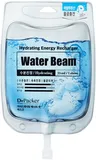

More alternatives: Image skincare The Max Stem Cell MasqueROUND LAB 1025 Dokdo Hydrating Water Gel Mask
Product summary
"Paula's choice - Rehydrating Moisture Mask" could be helpful for: Anti-aging and Moisturizing, but its actives are not the most effective or are not well-studied.
Ingredient callouts
- Humectants (anhydroxylitol 0.20% - 0.40%, xylitylglucoside 0.25% - 0.45%, sodium lactate 0.30% - 0.55%, histidine 0.30% - 0.55%, sodium pca 0.25% - 0.50%, aspartic acid 0.25% - 0.50%, arginine 0.25% - 0.50%, alanine 0.30% - 0.55%, glycine 0.30% - 0.55%, sodium hyaluronate 0.30% - 0.55%, pca 0.30% - 0.55%, algae extract 0.55% - 0.80% and glycerin 4.00% - 4.90%). These ingredients help attract water to the upper layer of the skin and improve the skin hydration.
About the brand
According to Cruelty-Free Kitty "Paula's choice" is cruelty free, but its parent company is not.
Sources cited in this review
Every concentration estimate and effectiveness label is anchored to one of these 25 studies and safety reviews.
- 1
- 2
- 3Final Report on the Safety Assessment of Dimethicone Copolyoljournals.sagepub.com
- 4
- 5
- 6Use of “natural” oils for moisturization: Review of olive, coconut, and sunflower seed oilonlinelibrary.wiley.com

Affiliate links · As an Amazon Associate, WIMJ earns from qualifying purchases.