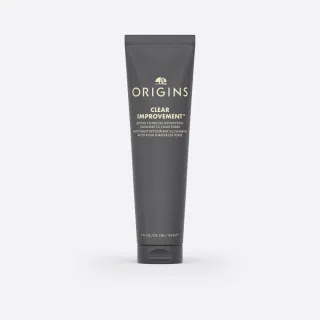
Works for
2 of 2 advertised claims delivered
Anti-blemishSalicylic acid, Zinc pcaStrong evidence
“Our acne moisturizer clears and prevents breakouts and helps target issues associated with acne-prone skin like dryness and visible redness.”
This product can help reduce breakouts and clogged pores because it contains the following ingredient: salicylic acid. This ingredient is used for treating acne and can have a noticeable effect.
The following ingredient (ingredients) in this product might be helpful, but there is no evidence to confirm that it actually works: zinc pca
MoisturizingSodium pca, Sucrose + 15 moreGood evidence
“Our acne moisturizer clears and prevents breakouts and helps target issues associated with acne-prone skin like dryness and visible redness.”
This product can help improve hydration of the skin with the two types of ingredients.
The first type is called “humectants”:
these ingredients help attract water.
When humectants are on the surface of the skin, they “pull in” the moisture from the outside environment, or from
within deeper layers of the skin. The following ingredients in this product do the job:
algae extract, glycerin.
This product also contains ingredients called “occlusives”. They help reduce the speed with which our skin loses moisture to the outside environment. These ingredients also help soften the upper layer of the skin, so it feels less tight and nicer to the touch. The following ingredients in this product do the job: algae extract, glycine soja oil.
ExfoliationNot advertised by the brand · Salicylic acidStrong evidence
This product can help exfoliate the skin. In other words, it helps break down the bonds between dead cells on the surface of the skin and speed up the skin turnover. Skin often appears softer and brighter after exfoliation, but overdoing it can result in disrupted skin barrier. The following ingredient is doing the exfoliating job in this product: salicylic acid.
Can it cause trouble?
Irritancy13 strong irritants: Hamamelis virginiana water, Lavandula angustifolia oil + 11 more — patch-test recommendedHigh risk
Comedogenic3 ingredients rated 2 or more on the 0–5 pore-clogging scale3 flagged


User reviews
Be the first — your take helps the next person decide.
Ingredients
Filter by role to see what each ingredient is doing.
Salicylic acid1.5%
- Irritation risk
- High
Used for skin exfoliation. It has an anti-inflammatory and anti-bacterial effect, helps to unclog pores, prevent blemishes and speed up healing of the existing ones. Sometimes referred to as a BHA (beta-hydroxy acid)
More about Salicylic acidWater~45–55%
Glycerin~6.6–8.1%
- Irritation risk
- Low
One of the best moisturizing ingredients. Naturally present in skin. It attracts water to the upper layer of the skin working as a humectant
More about GlycerinOctyldodecanol~5.4–6.6%
- Irritation risk
- Low
An emollient that helps to soften the skin and create a pleasant product texture and stabilize the formulation
More about OctyldodecanolButylene glycol~3.2–3.9%
- Irritation risk
- Low
Used to create a nice product texture and help delivery of other ingredients. Might be somewhat helpful in attracting water to the upper layer of the skin
More about Butylene glycolDicaprylyl carbonate~2.5–3.1%
- Irritation risk
- Low
Helps products spread more easily and works as an emollient to soften skin
More about Dicaprylyl carbonateHamamelis virginiana water~1.9–2.3%
- Irritation risk
- High
A plant extract that can help calm down inflammation in skin. Can, however, itself be irritating
More about Hamamelis virginiana waterCetearyl olivate~1.5–1.9%
Sodium polyacryloyldimethyl taurate~1.3–1.6%
- Irritation risk
- Medium
Helps oil and water mix together
More about Sodium polyacryloyldimethyl taurateSorbitan olivate~1.2–1.4%
Charcoal powder~1.2–1.5%
Saccharomyces/zinc ferment~0.6–0.95%
- Irritation risk
- Low
Yeast extract that contains zinc. Can help to attract water to the upper layer of the skin. Evidence of effectiveness for other benefits is missing
More about Saccharomyces/zinc fermentZinc pca~0.55–0.8%
- Irritation risk
- Low
A compound that combines zinc with a hydrating ingredient PCA. Might to be helpful against acne and clogged pores. Can help calm down inflammation in skin. Could be helpful in reducing the formation of free radicals in skin. Might help to reduce fine lines in wrinkles, but solid evidence is missing
More about Zinc pcaSodium hyaluronate~0.45–0.7%
- Irritation risk
- Low
One of the best moisturizing ingredients. Attracts water into the upper layer of the skin
More about Sodium hyaluronateAlgae extract~0.5–0.75%
- Irritation risk
- Low
- Comedogenicity
- 3/5
Plant extract that helps the skin to attract water and make it more smooth for touch. Also shows promise of anti-aging properties, but research is not extensive yet
More about Algae extractLaminaria saccharina extract~0.35–0.65%
- Irritation risk
- Low
- Comedogenicity
- 3/5
A seaweed extract that contains sugars and can be helpful in attracting water to the upper layers of the skin if used in high enough concentrations
More about Laminaria saccharina extractLactobacillus ferment~0.35–0.65%
- Irritation risk
- Low
A fermentation product created by bacteria Lactobacillus. The fermented product has anti-bacterial properties and might be helpful in calming down inflammation, but studies are lacking. Helps attract water to the upper layer of the skin. Can be used as a preservative
More about Lactobacillus fermentSodium pca~0.35–0.65%
- Irritation risk
- Low
Naturally present in skin and helps to attract water to its upper layer
More about Sodium pcaDipotassium glycyrrhizate~0.3–0.55%
- Irritation risk
- Low
A salt derived from licorice. Works as an emollient to soften the upper layer of the skin and can help calm down inflammation. Might be helpful for skin lightening
More about Dipotassium glycyrrhizateGlycine soja seed extract~0.35–0.65%
- Irritation risk
- Medium
An emollient that helps soften the skin. Might be somewhat helpful in evening the skin tone.
More about Glycine soja seed extractGlycine soja oil~0.3–0.5%
- Irritation risk
- Medium
- Comedogenicity
- 2/5
A good emollient that helps soften the skin and helps repair its barrier function. It can clog pores if used in high concentrations.
More about Glycine soja oilCaffeine~0.25–0.5%
- Irritation risk
- Medium
Might be helpful in neutralizing free radicals. Can have a dehydration effect that might somewhat decrease the look of puffy eyes
More about CaffeineSucrose~0.2–0.4%
- Irritation risk
- Low
Can help attract water to the upper layer of the skin. In crystal form, it can work as a gentle exfoliant, gentler than the salt scrub. Helps stabilize the emulsion
More about SucroseTocopherol~0.2–0.4%
- Irritation risk
- Low
Pure form of vitamin E. Can help moisturise and protect the skin from free radicals. Often used to help stabilise other ingredients or the formula itself
More about TocopherolLauroyl lysine~0.2–0.4%
- Irritation risk
- Low
Helps soften the upper layer of the skin and creates a nice product texture
More about Lauroyl lysineXanthan gum~0.2–0.4%
- Irritation risk
- Low
Used to create a thicker product consistency
More about Xanthan gumSodium phytate~0.2–0.4%
Sodium citrate~0.2–0.4%
- Irritation risk
- Medium
Helps to control the skin's pH level. Maintains the skin's natural film of amino-lactic acids and oils. Helps to preserve products
More about Sodium citrateSodium hydroxide~0.2–0.4%
Lavandula angustifolia oil~0.2–0.4%
- Irritation risk
- High
An essential oil. Potential allergen and can be irritating. It has some anti-bacterial properties
More about Lavandula angustifolia oilCitrus limon peel oil~0.15–0.3%
Mentha viridis leaf oil~0.2–0.35%
Gaultheria procumbens leaf oil~0.15–0.3%
Cananga odorata flower oil~0.15–0.3%
Eugenia caryophyllus bud oil~0.15–0.3%
Rosmarinus officinalis leaf oil~0.2–0.35%
- Irritation risk
- High
A plant oil with high content of volatile compounds that can irritate the skin. Can be used as a fragrance. Has anti-bacterial properties and might help neutralize free radicals on the surface of the skin
More about Rosmarinus officinalis leaf oilLinalool~0.15–0.3%
Citral~0.15–0.3%
Limonene~0.15–0.3%
- Irritation risk
- High
A common frangrance that can easily irritate skin, especially if exposed to air, light or heat
More about LimoneneEugenol~0.15–0.25%
Geraniol~0.15–0.25%
Silica~0.3–0.6%
Phenoxyethanol~0.1–0.2%
- Irritation risk
- Low
A preservative. It helps prevent bacterial growth in cosmetic products
More about PhenoxyethanolPotassium sorbate~0.1–0.2%
Sodium benzoate~0.1–0.25%
Benzoic acid~0.15–0.25%
Ingredient list view
Salicylic acid, Water, Glycerin, Octyldodecanol, Butylene glycol, Dicaprylyl carbonate, Hamamelis virginiana water, Cetearyl olivate, Sodium polyacryloyldimethyl taurate, Sorbitan olivate, Charcoal powder, Saccharomyces/zinc ferment, Zinc pca, Sodium hyaluronate, Algae extract, Laminaria saccharina extract, Lactobacillus ferment, Sodium pca, Dipotassium glycyrrhizate, Glycine soja seed extract, Glycine soja oil, Caffeine, Sucrose, Tocopherol, Lauroyl lysine, Xanthan gum, Sodium phytate, Sodium citrate, Sodium hydroxide, Lavandula angustifolia oil, Citrus limon peel oil, Mentha viridis leaf oil, Gaultheria procumbens leaf oil, Cananga odorata flower oil, Eugenia caryophyllus bud oil, Rosmarinus officinalis leaf oil, Linalool, Citral, Limonene, Eugenol, Geraniol, Silica, Phenoxyethanol, Potassium sorbate, Sodium benzoate, Benzoic acid
Compare prices
Retailers ranked by price — lowest first.
Worth comparing, line by line.
Match % combines shared ingredients, the first five ingredients, shared actives and hero ingredients, irritancy (lower counts in the alternative's favour), texture and body area. Only products in the same routine step are compared.
| OriginsClear ImprovementYOUR PRODUCT | Tom FordResearch Crème | Paula's choiceProbiotic Nutrient Moisturizer | VichyNormaderm Phytosolution Double Correction Daily Care Moisturiser | |
|---|---|---|---|---|
| Match | — | 85% | 83% | 83% |
| Price | $29.81 | $244.44+$214.63 | $42.00+$12.19 | $23.06−$6.75 |
| Shared key ingredients | — | 9 of 14 | 4 of 14 | 3 of 14 |
| Key difference | — | Retinyl Palmitate | Niacinamide | Ascorbyl Glucoside |
| Irritancy | High | Medium | Medium | Medium |
| Drying alcohol | — | — | — | — |
| View product | Shop | Shop | Shop |

Sources cited in this review
Every concentration estimate and effectiveness label is anchored to one of these 25 studies and safety reviews.
- 1Salicylic acid as a peeling agent: a comprehensive reviewncbi.nlm.nih.gov
- 2Beta Hydroxy Acidsfda.gov
- 3A review of toxicity from topical salicylic acid preparationssciencedirect.com
- 4
- 5
- 6

Affiliate links · As an Amazon Associate, WIMJ earns from qualifying purchases.