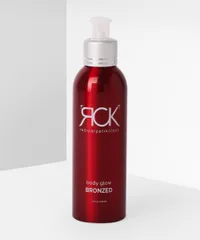
Works for:
based on ingredients and %- Moisturizing
- Anti-oxidation
Doesn't work for:
based on ingredients and %- Anti-aging
- Evens skin tone
Can it cause trouble?
- Irritation risk: medium
- Comedogenic risk ingredients: 1
Key actives

Product Summary
"OFRA - RCK Body Glow Bronzed" is effective for: Anti-inflammatory and Moisturizing
Ingredient callouts
- this product includes a form of Retinoids (vitamin A) - retinyl palmitate 0.15% - 0.25%, but this type of vitamin A is not very effective. It could in theory help with fine lines and wrinkles, but the effect is most likely minimal.
- Humectants (hyaluronic acid 0.20% - 0.40%, glycerin 0.70% - 1.05% and panthenol 0.40% - 0.60%). These ingredients help attract water to the upper layer of the skin and improve the skin hydration.
Moisturizing
This product can help improve hydration of the skin with the two types of ingredients.
The first type is called “humectants”:
these ingredients help attract water.
When humectants are on the surface of the skin, they “pull in” the moisture from the outside environment, or from
within deeper layers of the skin. The following ingredients in this product do the job:
glycerin, hyaluronic acid.
This product also contains ingredients called “occlusives”. They help reduce the speed with which our skin loses moisture to the outside environment. These ingredients also help soften the upper layer of the skin, so it feels less tight and nicer to the touch. The following ingredients in this product do the job: dimethicone, methicone.
The following ingredients in this product are especially good for supporting the skin barrier and helping with the hydration level: panthenol
A silicone that helps to reduce water loss from the surface of the skin. Can temporarily "fill in" lines and wrinkles, absorb oil, and create a nice product finish
One of the best moisturizing ingredients. Attracts water into the upper layer of the skin. Naturally present in skin. Typically has large molecule size unless advertised otherwise on the product label. Helps support skin's barrier function and may help to reduce inflammation
Helps attract water to the upper layer of the skin and can help improve skin barrier function
A type of silicone that helps soften the upper layer of the skin and reduces the water loss from the skin surface
An oil naturally present in skin. Works as an emollient to soften the skin and form a protective layer on its surface without a greasy feeling.
One of the best moisturizing ingredients. Naturally present in skin. It attracts water to the upper layer of the skin working as a humectant
A plant oil that can help soften the upper layer of the skin
An emollient that softens the skin
A silicone that helps improve the product texture and spreadability. Can absorb oil creating a short-term mattifying effect on the skin
An emollient that helps soften the skin and create a nice product texture
An emollient that softens the skin and forms a protective layer on its surface. Helps water and oil mix together
A silicone that serves as an emollient. Helps create a nice non-greasy feels
Helps oil and water mix together and works as an emollient
Helps calm down inflammation in skin and can help reduce itching. Helps to repair the skin barrier and keep skin hydrated
Anti-oxidation
This product contains antioxidants (malpighia punicifolia fruit extract) that might be able to help neutralize free radicals in skin to lessen the damage it gets from the UV light (sun). There is not enough evidence to confirm their effectiveness in skin though.
A fruit extract that might help neutralize free radicals. The concentrations typically used in cosmetics are too small to have an effect
Plant extract. Might have some anti-oxidant properties. Can be irritating
An emollient that softens the skin
A more stable but less bio-available form of vitamin E compared to Tocopherol. Might help moisturize and protect the skin from free radicals, but mostly used in low concentrations to stabilize other ingredients.
Being a lipid soluble form of vitamin C, it is more stable and can penetrate the skin better than L-Ascorbic acid. It is effective in protecting the skin from free radicals, as well as evening the skin tone, but is less effective in stimulating collagen production compared to L-Ascorbic acid.
Anti-aging
What does the product description say?
Instantly promoting healthy, younger-looking skin, RCK Body Glow provides all-over coverage for imperfections such as pigmentation, cellulite, stretch marks, age spots and visible veins.
Source: Beauty Bay
This product does not contain ingredients that are able to reduce fine lines and wrinkles or help with skin elasticity, but it can improve the look of the skin temporarily through moisturization. Well-moisturized skin might also be able to repair the sun damage better.This ingredient - hyaluronic acid - could be helpful for preventing or repairing signs of aging in theory, but there is no evidence that it actually works.
This ingredient malpighia punicifolia fruit extract might be able to help neutralize free radicals in skin and help it fight off some of the sun damage.
One of the best moisturizing ingredients. Attracts water into the upper layer of the skin. Naturally present in skin. Typically has large molecule size unless advertised otherwise on the product label. Helps support skin's barrier function and may help to reduce inflammation
An emollient that softens the skin
Three steps removed from the active form of vitamin A - retinoic acid. To have an effect in the skin, it first needs to be converted twice to become the retinoic acid. This means it is less potent than retinol, but could also be less irritating. Once converted to the retinoic acid in the skin, it helps against all signs of aging, improves skin cell turnover and helps fight blemishes and clogged pores. However, in many cosmetic formulations, it is used in a concentration that is too low to have the full effect
Being a lipid soluble form of vitamin C, it is more stable and can penetrate the skin better than L-Ascorbic acid. It is effective in protecting the skin from free radicals, as well as evening the skin tone, but is less effective in stimulating collagen production compared to L-Ascorbic acid.
Evens skin tone
What does the product description say?
Instantly promoting healthy, younger-looking skin, RCK Body Glow provides all-over coverage for imperfections such as pigmentation, cellulite, stretch marks, age spots and visible veins.
Source: Beauty Bay
Effective ingredients missing or their concentration is too low
Three steps removed from the active form of vitamin A - retinoic acid. To have an effect in the skin, it first needs to be converted twice to become the retinoic acid. This means it is less potent than retinol, but could also be less irritating. Once converted to the retinoic acid in the skin, it helps against all signs of aging, improves skin cell turnover and helps fight blemishes and clogged pores. However, in many cosmetic formulations, it is used in a concentration that is too low to have the full effect
How honest is this product?
| Promise | Can it deliver? |
|---|---|
| Anti-aging | |
| Evens skin tone |
Total Promises Fulfilled score: 25/100.
We receive a small commission for purchases made through these links at no cost for you. Thank you for your support! Learn more
Affiliate link · supports WIMJ at no cost to you
Potential irritants
Comedogenic ingredients
User reviews (0)
Averages from community submissions.
No reviews yet for this product.
Be the first to share your experience!
Tried this product?
Help capture what the ingredient list can't—texture, finish, pilling, scent, and more. Answer what you can, skip the rest.
Takes ~30 seconds.
Reviews are shown in aggregate. No personal details.
| Product | Similarity | Price | Irritancy |
|---|---|---|---|
 OFRA RCK Body Glow Bronzed | Current | ≈ $68.65 | |
Vita Liberata Body Blur Instant HD Skin Finish | 54% | ≈ $39.37 | |
James Read Tan James Read Sleep Mask Tan Body | 53% | ≈ $47.30 | |
 SKIN&LAB Barrierderm Intensive Cream MINI | 52% | $21.88 | |
 James Read Sleep Mask Tan Body | 51% | ≈ $49.06 | |
 Maruderm Hyaluronic Acid Moisturizer Face & Body Cream | 51% | $21.99 |
Key Actives
Helps calm down inflammation in skin and can help reduce itching. Helps to repair the skin barrier and keep skin hydrated
Three steps removed from the active form of vitamin A - retinoic acid. To have an effect in the skin, it first needs to be converted twice to become the retinoic acid. This means it is less potent than retinol, but could also be less irritating. Once converted to the retinoic acid in the skin, it helps against all signs of aging, improves skin cell turnover and helps fight blemishes and clogged pores. However, in many cosmetic formulations, it is used in a concentration that is too low to have the full effect
Helps attract water to the upper layer of the skin and can help improve skin barrier function
One of the best moisturizing ingredients. Attracts water into the upper layer of the skin. Naturally present in skin. Typically has large molecule size unless advertised otherwise on the product label. Helps support skin's barrier function and may help to reduce inflammation
A silicone that helps improve the product texture and spreadability. Can absorb oil creating a short-term mattifying effect on the skin
A silicone that helps to reduce water loss from the surface of the skin. Can temporarily "fill in" lines and wrinkles, absorb oil, and create a nice product finish
An oil naturally present in skin. Works as an emollient to soften the skin and form a protective layer on its surface without a greasy feeling.
One of the best moisturizing ingredients. Naturally present in skin. It attracts water to the upper layer of the skin working as a humectant
Octinoxate. When used in higher concentrations, works as a sunscreen protecting the skin from UVB rays. When used in lower concentration, helps to preserve the product formulation. Is shown to be harmful to coral reefs - consider avoiding bathing in coral reef areas when wearing a product with this ingredient. It can be irritating
A type of silicone that helps soften the upper layer of the skin and reduces the water loss from the skin surface
A fruit extract that might help neutralize free radicals. The concentrations typically used in cosmetics are too small to have an effect
Potential irritants
Octinoxate. When used in higher concentrations, works as a sunscreen protecting the skin from UVB rays. When used in lower concentration, helps to preserve the product formulation. Is shown to be harmful to coral reefs - consider avoiding bathing in coral reef areas when wearing a product with this ingredient. It can be irritating
Plant extract. Might have some anti-oxidant properties. Can be irritating
A preservative. Is more irritating than many other preservatives available
Three steps removed from the active form of vitamin A - retinoic acid. To have an effect in the skin, it first needs to be converted twice to become the retinoic acid. This means it is less potent than retinol, but could also be less irritating. Once converted to the retinoic acid in the skin, it helps against all signs of aging, improves skin cell turnover and helps fight blemishes and clogged pores. However, in many cosmetic formulations, it is used in a concentration that is too low to have the full effect
A more stable but less bio-available form of vitamin E compared to Tocopherol. Might help moisturize and protect the skin from free radicals, but mostly used in low concentrations to stabilize other ingredients.
Being a lipid soluble form of vitamin C, it is more stable and can penetrate the skin better than L-Ascorbic acid. It is effective in protecting the skin from free radicals, as well as evening the skin tone, but is less effective in stimulating collagen production compared to L-Ascorbic acid.
Used to adjust pH of the product and can help improve the product's smell
Comedogenic ingredients
An emollient that helps soften the skin and create a nice product texture
All ingredients
Helps oil and water mix togehter and creates a nice product texture
A silicone that helps improve the product texture and spreadability. Can absorb oil creating a short-term mattifying effect on the skin
A silicone that helps to reduce water loss from the surface of the skin. Can temporarily "fill in" lines and wrinkles, absorb oil, and create a nice product finish
A silicone that serves as an emollient. Helps create a nice non-greasy feels
Creates an illusion of smoother and more radiant skin tone. Adds shimmer to the skin by reflecting light
An oil naturally present in skin. Works as an emollient to soften the skin and form a protective layer on its surface without a greasy feeling.
One of the best moisturizing ingredients. Naturally present in skin. It attracts water to the upper layer of the skin working as a humectant
Octinoxate. When used in higher concentrations, works as a sunscreen protecting the skin from UVB rays. When used in lower concentration, helps to preserve the product formulation. Is shown to be harmful to coral reefs - consider avoiding bathing in coral reef areas when wearing a product with this ingredient. It can be irritating
An emollient that helps soften the skin and create a nice product texture
A type of silicone that helps soften the upper layer of the skin and reduces the water loss from the skin surface
A more stable but less bio-available form of vitamin E compared to Tocopherol. Might help moisturize and protect the skin from free radicals, but mostly used in low concentrations to stabilize other ingredients.
An emollient that softens the skin and forms a protective layer on its surface. Helps water and oil mix together
Being a lipid soluble form of vitamin C, it is more stable and can penetrate the skin better than L-Ascorbic acid. It is effective in protecting the skin from free radicals, as well as evening the skin tone, but is less effective in stimulating collagen production compared to L-Ascorbic acid.
Helps attract water to the upper layer of the skin and can help improve skin barrier function
A type of silicone that helps oil and water mix well together. Helps to disperse other ingredients, e.g. pigments, evenly in a formulation
Helps create a thicker or gel-like product texture. It is not a surfactant but can be used in gentle cleansing formulations
Used to adjust pH of the product and can help improve the product's smell
A fruit extract that might help neutralize free radicals. The concentrations typically used in cosmetics are too small to have an effect
Plant extract. Might have some anti-oxidant properties. Can be irritating
Helps calm down inflammation in skin and can help reduce itching. Helps to repair the skin barrier and keep skin hydrated
A type of sugar that is used to support delivery of active ingredients and can enhance their penetration into the skin without disrupting the skin's barrier
One of the best moisturizing ingredients. Attracts water into the upper layer of the skin. Naturally present in skin. Typically has large molecule size unless advertised otherwise on the product label. Helps support skin's barrier function and may help to reduce inflammation
A preservative. It helps prevent bacterial growth in cosmetic products
A preservative. Is more irritating than many other preservatives available
Three steps removed from the active form of vitamin A - retinoic acid. To have an effect in the skin, it first needs to be converted twice to become the retinoic acid. This means it is less potent than retinol, but could also be less irritating. Once converted to the retinoic acid in the skin, it helps against all signs of aging, improves skin cell turnover and helps fight blemishes and clogged pores. However, in many cosmetic formulations, it is used in a concentration that is too low to have the full effect
Ingredient list view
Water, Peg-100 stearate, Cyclopentasiloxane, Canola oil, Stearic acid, Dimethicone, Cyclohexasiloxane, Mica, Prunus amygdalus dulcis oil, Squalane, Glycerin, Ethylhexyl methoxycinnamate, Ethylhexyl palmitate, Methicone, Tocopheryl acetate, Glyceryl stearate, Ascorbyl palmitate, Panthenol, Triethoxycaprylylsilane, Carbomer, Triethanolamine, Malpighia punicifolia fruit extract, Aesculus hippocastanum seed extract, Allantoin, Cyclodextrin, Disodium edta, Hyaluronic acid, Phenoxyethanol, Imidazolidinyl urea, Retinyl palmitate, Cyclotrisiloxane, Cyclohexane, Ci 77492, Ci 77491, Ci 77499
- Canola Oil
- Dimethicone as a protective ingredient in topical medications
- Final Report on the Safety Assessment of Dimethicone Copolyol
- Anti-Inflammatory and Skin Barrier Repair Effects of Topical Application of Some Plant Oils
- Glycerol and the skin: holistic approach to its origin and functions
- Skin moisturizing effects of panthenol-based formulations
- Safety Assessment of Panthenol, Pantothenic Acid, and Derivatives as Used in Cosmetics
- Acerola, an untapped functional superfruit: a review on latest frontiers
- Contact dermatitis as an adverse reaction to some topically used European herbal medicinal products – part 1: Achillea millefolium–Curcuma longa
- Profile of wound healing process induced by allantoin
- Cyclodextrins: new drug delivery systems in dermatology
- Efficacy of a New Topical Nano-hyaluronic Acid in Humans
- Physiochemical properties and application of hyaluronic acid: a systematic review