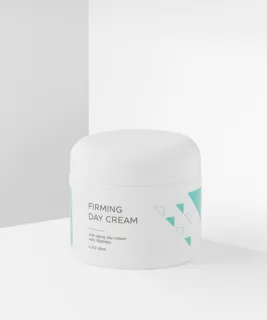
OFRA Firming Day Cream

OFRA Firming Day Cream

Efficacy87/100IrritancyMedium

Works for

Moisturizing
Panthenol, Glycerin + 9 more
Works well
What the product description says
“Protect your skin from the sun while keeping it nourished and hydrated with OFRA’s Firming Day Cream.”
Source: Beauty Bay

This product can help improve hydration of the skin with the two types of ingredients.

The first type is called “humectants”:
these ingredients help attract water. When humectants are on the surface of the skin, they “pull in” the moisture from the outside environment, or from within deeper layers of the skin. The following ingredients in this product do the job: glycerin.

This product also contains ingredients called “occlusives”. They help reduce the speed with which our skin loses moisture to the outside environment. These ingredients also help soften the upper layer of the skin, so it feels less tight and nicer to the touch. The following ingredients in this product do the job: dimethicone, squalane.

The following ingredients in this product are especially good for supporting the skin barrier and helping with the hydration level: panthenol

PanthenolHero· HumectantEffect: HighHelps attract water to the upper layer of the skin and can help improve skin barrier function~0.2–0.8%
GlycerinKey active· HumectantEffect: HighOne of the best moisturizing ingredients. Naturally present in skin. It attracts water to the upper layer of the skin working as a humectant~22–33%
DimethiconeKey active· Emollient, OcclusiveEffect: HighA silicone that helps to reduce water loss from the surface of the skin. Can temporarily "fill in" lines and wrinkles, absorb oil, and create a nice product finish~5.1–7.6%
Ethylhexyl palmitateKey active· EmollientEffect: MediumAn emollient that helps soften the skin and create a nice product texture~1.5–2.2%
Prunus amygdalus dulcis oilKey active· EmollientEffect: MediumAn emollient that softens the skin~1.1–1.7%
Canola oilKey active· EmollientEffect: MediumA plant oil that can help soften the upper layer of the skin~0.9–1.35%
SqualaneKey active· Emollient, OcclusiveEffect: HighAn oil naturally present in skin. Works as an emollient to soften the skin and form a protective layer on its surface without a greasy feeling.~0.55–1.3%
Centella asiatica extractKey activeEffect: HighA plant extract that has been shown to be able to reduce inflammation in skin, support restoration of skin barrier function, as well as support collagen production. Contains active compounds called centelloids: asiaticoside, madecasosside, asiatic acid and madecassic acid. Might be helpful in preventing stretch marks. It can be itself be irritating though.~0.3–0.7%
Stearic acid· EmollientEffect: LowHelps oil and water mix together and works as an emollient~2.9–4.3%
Glyceryl stearate· EmollientEffect: LowAn emollient that softens the skin and forms a protective layer on its surface. Helps water and oil mix together~2.4–3.7%
AllantoinUnder-dosedHelps calm down inflammation in skin and can help reduce itching. Helps to repair the skin barrier and keep skin hydrated~0.2–0.8%
Anti-aging
Centella asiatica extract, Retinyl palmitate + 2 more
May help
What the product description says
“An anti-aging day cream with SPF.”
Source: Beauty Bay

This product contains centella asiatica extract, retinyl palmitate. There is some human evidence that these ingredients help reduce and prevent fine lines and wrinkles and improve skin elasticity and firmness, though it is smaller or less consistent than the evidence for the best anti-aging ingredients.

Centella asiatica extractKey activeEffect: MediumA plant extract that has been shown to be able to reduce inflammation in skin, support restoration of skin barrier function, as well as support collagen production. Contains active compounds called centelloids: asiaticoside, madecasosside, asiatic acid and madecassic acid. Might be helpful in preventing stretch marks. It can be itself be irritating though.~0.3–0.7%
Retinyl palmitateKey activeEffect: MediumThree steps removed from the active form of vitamin A - retinoic acid. To have an effect in the skin, it first needs to be converted twice to become the retinoic acid. This means it is less potent than retinol, but could also be less irritating. Once converted to the retinoic acid in the skin, it helps against all signs of aging, improves skin cell turnover and helps fight blemishes and clogged pores. However, in many cosmetic formulations, it is used in a concentration that is too low to have the full effect~0.3–0.75%
Prunus amygdalus dulcis oilEffect: LowAn emollient that softens the skin~1.1–1.7%
Ascorbyl palmitateEffect: Low, below effective doseBeing a lipid soluble form of vitamin C, it is more stable and can penetrate the skin better than L-Ascorbic acid. It is effective in protecting the skin from free radicals, as well as evening the skin tone, but is less effective in stimulating collagen production compared to L-Ascorbic acid.~0.35–0.8%
Anti-oxidation
Side benefit · Centella asiatica extract, Prunus amygdalus dulcis oil + 3 more
May help

This product contains antioxidants (centella asiatica extract) that can help neutralize free radicals in skin to lessen the damage it gets from the UV light (sun). There is some human evidence for this effect in skin, though it is smaller or less consistent than the evidence for the best antioxidants.

Centella asiatica extractKey activeEffect: MediumA plant extract that has been shown to be able to reduce inflammation in skin, support restoration of skin barrier function, as well as support collagen production. Contains active compounds called centelloids: asiaticoside, madecasosside, asiatic acid and madecassic acid. Might be helpful in preventing stretch marks. It can be itself be irritating though.~0.3–0.7%
Prunus amygdalus dulcis oilEffect: LowAn emollient that softens the skin~1.1–1.7%
Malpighia glabra fruit extractEffect: LowA plant extract that might help neutralize free radicals in skin, but research on its effectiveness is lacking~0.2–0.7%
Tocopheryl acetateEffect: Low, below effective doseA more stable but less bio-available form of vitamin E compared to Tocopherol. Might help moisturize and protect the skin from free radicals, but mostly used in low concentrations to stabilize other ingredients.~0.4–0.9%
Ascorbyl palmitateEffect: Low, below effective doseBeing a lipid soluble form of vitamin C, it is more stable and can penetrate the skin better than L-Ascorbic acid. It is effective in protecting the skin from free radicals, as well as evening the skin tone, but is less effective in stimulating collagen production compared to L-Ascorbic acid.~0.35–0.8%
Evens skin tone
Side benefit · Retinyl palmitate
May help

The following ingredient (ingredients) in this product might be helpful, but there is no evidence to confirm that it actually works: retinyl palmitate.

Retinyl palmitateKey activeEffect: MediumThree steps removed from the active form of vitamin A - retinoic acid. To have an effect in the skin, it first needs to be converted twice to become the retinoic acid. This means it is less potent than retinol, but could also be less irritating. Once converted to the retinoic acid in the skin, it helps against all signs of aging, improves skin cell turnover and helps fight blemishes and clogged pores. However, in many cosmetic formulations, it is used in a concentration that is too low to have the full effect~0.3–0.75%

Can it cause trouble?

Irritancy
1 strong irritant: Retinyl palmitate
Medium risk
We flagged 13 ingredients with irritancy potential. Severity depends on your sensitivity threshold; the table lists the worst offenders first.
IngredientFunctionIrritationEst. amount
Ethylhexyl methoxycinnamateOctinoxate. When used in higher concentrations, works as a sunscreen protecting the skin from UVB rays. When used in lower concentration, helps to preserve the product formulation. Is shown to be harmful to coral reefs - consider avoiding bathing in coral reef areas when wearing a product with this ingredient. It can be irritatingHigh~1.7–2.5%est.
Retinyl palmitateThree steps removed from the active form of vitamin A - retinoic acid. To have an effect in the skin, it first needs to be converted twice to become the retinoic acid. This means it is less potent than retinol, but could also be less irritating. Once converted to the retinoic acid in the skin, it helps against all signs of aging, improves skin cell turnover and helps fight blemishes and clogged pores. However, in many cosmetic formulations, it is used in a concentration that is too low to have the full effectHigh~0.3–0.75%est.
Ci 19140A yellow dyeHigh~0.05–0.3%est.
Ci 16035A red dyeHigh~0.05–0.2%est.
Canola oilA plant oil that can help soften the upper layer of the skinMedium~0.9–1.35%est.
PolyacrylamideUsed to improve product texture and help oil and water mix togetherMedium~0.5–1.15%est.
Tocopheryl acetateA more stable but less bio-available form of vitamin E compared to Tocopherol. Might help moisturize and protect the skin from free radicals, but mostly used in low concentrations to stabilize other ingredients.Medium~0.4–0.9%est.
Ascorbyl palmitateBeing a lipid soluble form of vitamin C, it is more stable and can penetrate the skin better than L-Ascorbic acid. It is effective in protecting the skin from free radicals, as well as evening the skin tone, but is less effective in stimulating collagen production compared to L-Ascorbic acid.Medium~0.35–0.8%est.
Malpighia glabra fruit extractA plant extract that might help neutralize free radicals in skin, but research on its effectiveness is lackingMedium~0.2–0.7%est.
Centella asiatica extractA plant extract that has been shown to be able to reduce inflammation in skin, support restoration of skin barrier function, as well as support collagen production. Contains active compounds called centelloids: asiaticoside, madecasosside, asiatic acid and madecassic acid. Might be helpful in preventing stretch marks. It can be itself be irritating though.Medium~0.3–0.7%est.
TriethanolamineUsed to adjust pH of the product and can help improve the product's smellMedium~0.15–0.65%est.
EthylhexylglycerinA preservativeMedium~0.15–0.55%est.
Ci 42090A colorant (dye)Medium~0.05–0.2%est.
Comedogenic
2 ingredients rated 2 or more on the 0–5 pore-clogging scale
2 flagged
These ingredients have a comedogenic rating of 2 or more on a 0–5 scale; the table shows each one's rating. In leave-on products they can clog pores in acne-prone skin.
IngredientFunctionRatingEst. amount
Ethylhexyl palmitateAn emollient that helps soften the skin and create a nice product texture3/5~1.5–2.2%est.
Ci 16035A red dye3/5~0.05–0.2%est.

User reviews

Would you recommend?
No community reviews yet.

Be the first — your take helps the next person decide.

Ingredients

Filter by role to see what each ingredient is doing.

Glycerin~22–33%
Key active
Irritation risk
Low
Works for
Moisturizing

One of the best moisturizing ingredients. Naturally present in skin. It attracts water to the upper layer of the skin working as a humectant

More about Glycerin
Water~12–18%
Formula
Irritation risk
Low

Plain old water

More about Water
Dimethicone~5.1–7.6%
Key active
Irritation risk
Low
Works for
MoisturizingMattifying

A silicone that helps to reduce water loss from the surface of the skin. Can temporarily "fill in" lines and wrinkles, absorb oil, and create a nice product finish

More about Dimethicone
Stearic acid~2.9–4.3%
Formula
Irritation risk
Low
Works for
CleansingMoisturizing

Helps oil and water mix together and works as an emollient

More about Stearic acid
Glyceryl stearate~2.4–3.7%
Formula
Irritation risk
Low
Works for
CleansingMoisturizing

An emollient that softens the skin and forms a protective layer on its surface. Helps water and oil mix together

More about Glyceryl stearate
Peg-100 stearate~1.8–2.7%
Formula
Irritation risk
Low
Works for
Cleansing

Helps oil and water mix togehter and creates a nice product texture

More about Peg-100 stearate
Ethylhexyl palmitate~1.5–2.2%
Key activeComedogenic 3/5
Irritation risk
Low
Comedogenicity
3/5
Works for
Moisturizing

An emollient that helps soften the skin and create a nice product texture

More about Ethylhexyl palmitate
Ethylhexyl methoxycinnamate~1.7–2.5%
Irritant · high
Irritation risk
High
Works for
Sun protection

Octinoxate. When used in higher concentrations, works as a sunscreen protecting the skin from UVB rays. When used in lower concentration, helps to preserve the product formulation. Is shown to be harmful to coral reefs - consider avoiding bathing in coral reef areas when wearing a product with this ingredient. It can be irritating

More about Ethylhexyl methoxycinnamate
Prunus amygdalus dulcis oil~1.1–1.7%
Key active
Irritation risk
Low
Works for
MoisturizingAnti-oxidationAnti-aging

An emollient that softens the skin

More about Prunus amygdalus dulcis oil
Canola oil~0.9–1.35%
Key activeIrritant · medium
Irritation risk
Medium
Works for
Moisturizing

A plant oil that can help soften the upper layer of the skin

More about Canola oil
Squalane~0.55–1.3%
Key active
Irritation risk
Low
Works for
Moisturizing

An oil naturally present in skin. Works as an emollient to soften the skin and form a protective layer on its surface without a greasy feeling.

More about Squalane
Polyacrylamide~0.5–1.15%
Irritant · medium
Irritation risk
Medium

Used to improve product texture and help oil and water mix together

More about Polyacrylamide
Fagus sylvatica bud extract~0.4–0.95%
Formula
Tocopheryl acetate~0.4–0.9%
Irritant · medium
Irritation risk
Medium
Works for
Anti-oxidation

A more stable but less bio-available form of vitamin E compared to Tocopherol. Might help moisturize and protect the skin from free radicals, but mostly used in low concentrations to stabilize other ingredients.

More about Tocopheryl acetate
Retinyl palmitate~0.3–0.75%
Key activeIrritant · high
Irritation risk
High
Works for
Anti-agingEvens skin toneAnti-blemishExfoliation

Three steps removed from the active form of vitamin A - retinoic acid. To have an effect in the skin, it first needs to be converted twice to become the retinoic acid. This means it is less potent than retinol, but could also be less irritating. Once converted to the retinoic acid in the skin, it helps against all signs of aging, improves skin cell turnover and helps fight blemishes and clogged pores. However, in many cosmetic formulations, it is used in a concentration that is too low to have the full effect

More about Retinyl palmitate
Ascorbyl palmitate~0.35–0.8%
Irritant · medium
Irritation risk
Medium
Works for
Anti-oxidationAnti-aging

Being a lipid soluble form of vitamin C, it is more stable and can penetrate the skin better than L-Ascorbic acid. It is effective in protecting the skin from free radicals, as well as evening the skin tone, but is less effective in stimulating collagen production compared to L-Ascorbic acid.

More about Ascorbyl palmitate
Allantoin~0.2–0.8%
Under-dosed
Irritation risk
Low
Works for
Anti-inflammatoryMoisturizingAnti-blemishReduces rednessReduces irritationExfoliation

Helps calm down inflammation in skin and can help reduce itching. Helps to repair the skin barrier and keep skin hydrated

More about Allantoin
Panthenol~0.2–0.8%
Hero · Moisturizing
Irritation risk
Low
Works for
Reduces rednessMoisturizingReduces irritation

Helps attract water to the upper layer of the skin and can help improve skin barrier function

More about Panthenol
Malpighia glabra fruit extract~0.2–0.7%
Irritant · medium
Irritation risk
Medium
Works for
Anti-oxidation

A plant extract that might help neutralize free radicals in skin, but research on its effectiveness is lacking

More about Malpighia glabra fruit extract
Methylsilanol ascorbate~0.2–0.7%
Formula
Mimosa extract1%
Not recognized
Hyaluronate
Not recognized
Harungana madagascariensis extract~0.2–0.7%
Formula
Centella asiatica extract~0.3–0.7%
Key activeIrritant · medium
Irritation risk
Medium
Works for
Reduces irritationReduces rednessMoisturizingAnti-inflammatoryAnti-agingAnti-oxidationAnti-blemish

A plant extract that has been shown to be able to reduce inflammation in skin, support restoration of skin barrier function, as well as support collagen production. Contains active compounds called centelloids: asiaticoside, madecasosside, asiatic acid and madecassic acid. Might be helpful in preventing stretch marks. It can be itself be irritating though.

More about Centella asiatica extract
Triethanolamine~0.15–0.65%
Irritant · medium
Irritation risk
Medium
Works for
Cleansing

Used to adjust pH of the product and can help improve the product's smell

More about Triethanolamine
Phenoxyethanol~0.15–0.6%
Formula
Irritation risk
Low

A preservative. It helps prevent bacterial growth in cosmetic products

More about Phenoxyethanol
Ethylhexylglycerin~0.15–0.55%
Irritant · medium
Irritation risk
Medium

A preservative

More about Ethylhexylglycerin
Carbomer~0.1–0.4%
Formula
Irritation risk
Low
Works for
Cleansing

Helps create a thicker or gel-like product texture. It is not a surfactant but can be used in gentle cleansing formulations

More about Carbomer
Carnation sand nutmeg
Not recognized
Ci 19140~0.05–0.3%
Irritant · high
Irritation risk
High

A yellow dye

More about Ci 19140
Ci 16035~0.05–0.2%
Comedogenic 3/5Irritant · high
Irritation risk
High
Comedogenicity
3/5

A red dye

More about Ci 16035
Ci 42090~0.05–0.2%
Irritant · medium
Irritation risk
Medium

A colorant (dye)

More about Ci 42090
Vegetable growth hormone
Not recognized
Ingredient list view

Glycerin, Water, Dimethicone, Stearic acid, Glyceryl stearate, Peg-100 stearate, Ethylhexyl palmitate, Ethylhexyl methoxycinnamate, Prunus amygdalus dulcis oil, Canola oil, Squalane, Polyacrylamide, Fagus sylvatica bud extract, Tocopheryl acetate, Retinyl palmitate, Ascorbyl palmitate, Allantoin, Panthenol, Malpighia glabra fruit extract, Methylsilanol ascorbate, Unknown, Unknown, Harungana madagascariensis extract, Centella asiatica extract, Triethanolamine, Phenoxyethanol, Ethylhexylglycerin, Carbomer, Unknown, Ci 19140, Ci 16035, Ci 42090, Unknown

Compare prices

Retailers ranked by price — lowest first.

Amazon US
Price unavailable Out of stock
Check

Affiliate links · As an Amazon Associate, WIMJ earns from qualifying purchases.

Worth comparing, line by line.

Match % combines shared ingredients, the first five ingredients, shared actives and hero ingredients, irritancy (lower counts in the alternative's favour), texture and body area. Only products in the same routine step are compared.

Side-by-side comparison of this product against its closest alternatives
OFRAFirming Day CreamYOUR PRODUCTDerma ESoothing MoisturizerDermaticaNourishing Ceramide + PeptidesIt CosmeticsConfidence in a Cream Barrier Boost Skin Barrier Repair Moisturizer
Match—62%62%61%
Price—$13.30$21.05$18.28
Shared key ingredients—5 of 85 of 85 of 8
Key difference—Pinus Pinaster Bark ExtractNiacinamideAcetyl Dipeptide-1 Cetyl Ester
Irritancy Medium Medium Low Low
Drying alcohol————
View product Shop Shop Shop

More alternatives: Dr.Reju-All Advanced LC-Ceramide Barrier CreamPerricone MD Hypoallergenic Nourishing Moisturizer

Cheaper alternatives? Browse formulas in the same category.
We compare ingredient profiles across our catalog — pick the closest match for your budget.
Open dupe finder

Sources cited in this review

Every concentration estimate and effectiveness label is anchored to one of these 17 studies and safety reviews.

  1. 1
  2. 2
  3. 3
  4. 4
  5. 5
    Canola Oilsciencedirect.com
  6. 6
OFRA Firming Day Cream
OFRAFirming Day Cream

Affiliate links · As an Amazon Associate, WIMJ earns from qualifying purchases.

As an Amazon Associate, WIMJ earns from qualifying purchases.
