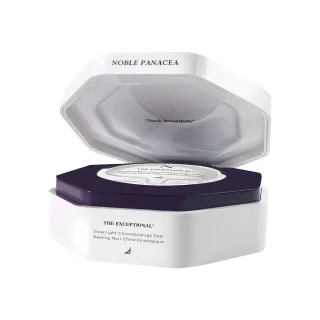
Noble Panacea The Overnight Chronobiology Peel

Noble Panacea The Overnight Chronobiology Peel

Efficacy100/100IrritancyHigh

Works for

Exfoliation
Lactic acid, Glycolic acid + 4 more
Works well
What the product description says
“Exfoliates and removes dead skin cells”
Source: Bluemercury

This product can help exfoliate the skin. In other words, it helps break down the bonds between dead cells on the surface of the skin and speed up the skin turnover. Skin often appears softer and brighter after exfoliation, but overdoing it can result in disrupted skin barrier. The following ingredient is doing the exfoliating job in this product: gluconolactone, glycolic acid, lactic acid, mandelic acid, salicylic acid.

Lactic acidKey activeEffect: HighAn exfoliating and moisturizing alpha-hydroxy acid (AHA). Typically causes less irritation than other AHAs, for example, glycolic acid. At high concentrations (about 15%), lactic acid can help reduce lines and wrinkles. Recent studies show that lactic acid can support the "good" bacteria living on skin's surface (healthy skin microbiome)~2.3–2.8%
Glycolic acidKey activeEffect: HighAn alpha-hydroxy acid (AHA) that helps to remove the dead skin cells on the surface of the skin reveling a more even, smoother complexation. It is also able to stimulate collagen production with long-term use. Could help to reduce pore congestion. It can be irritating to the skin. Apply sunscreen daily if using products with glycolic acid~1.6–1.9%
Mandelic acidKey activeEffect: HighHelps shed the upper layer of dead cells from the surface of the skin revealing smoother, brighter skin. It can help to reduce hyperpigmentation. It has anti-bacterial properties, and might help to reduce blemishes, as well as fine lines and wrinkles. It is considered to be gentler than glycolic acid~1.4–1.7%
Tartaric acidKey activeEffect: MediumAn AHA (alpha-hydroxy acid). It oxidizes quickly which makes it less effective in skincare formulations. It can support skin's barrier and moisture levels~0.95–1.15%
GluconolactoneKey activeEffect: HighA polyhydroxy acid (PHA) that helps shed the dead cells from the skin surface revealing smoother skin. Is believed to be genter than AHAs. It helps attract water to the upper layer of the skin and can stimulate production of skin's own hyaluronic acid resulting in improved hydration levels. It has been shown to be helpful against acne and clogged pores if used consistently (e.g over a period of 12 weeks) in high enough concentration. It can help reduce fine lines and wrinkles and improve skin tone with long-term application. Can help neutralize free radicals~0.65–1%
Salicylic acidKey activeEffect: HighUsed for skin exfoliation. It has an anti-inflammatory and anti-bacterial effect, helps to unclog pores, prevent blemishes and speed up healing of the existing ones. Sometimes referred to as a BHA (beta-hydroxy acid)~0.55–0.8%
Evens skin tone
Lactic acid, Glycolic acid + 5 more
Works well
What the product description says
“Helps to combat pigmentation”
Source: Bluemercury

This product can help reduce hypepigmentation and even out the skin tone because it contains the following effective ingredients: gluconolactone, glycolic acid, lactic acid, mandelic acid, salicylic acid

The following ingredient (ingredients) in this product might be helpful, but there is no evidence to confirm that it actually can help even out the skin tone: dilauryl thiodipropionate.

Keep in mind that you would need to apply any topical skincare targetted at hypigmentation consistently for a couple of months to get a result. No topical skincare product can help get rid of hyperpigmentation (including post-acne marks and age spots) instantly.

Lactic acidKey activeEffect: HighAn exfoliating and moisturizing alpha-hydroxy acid (AHA). Typically causes less irritation than other AHAs, for example, glycolic acid. At high concentrations (about 15%), lactic acid can help reduce lines and wrinkles. Recent studies show that lactic acid can support the "good" bacteria living on skin's surface (healthy skin microbiome)~2.3–2.8%
Glycolic acidKey activeEffect: HighAn alpha-hydroxy acid (AHA) that helps to remove the dead skin cells on the surface of the skin reveling a more even, smoother complexation. It is also able to stimulate collagen production with long-term use. Could help to reduce pore congestion. It can be irritating to the skin. Apply sunscreen daily if using products with glycolic acid~1.6–1.9%
Mandelic acidKey activeEffect: HighHelps shed the upper layer of dead cells from the surface of the skin revealing smoother, brighter skin. It can help to reduce hyperpigmentation. It has anti-bacterial properties, and might help to reduce blemishes, as well as fine lines and wrinkles. It is considered to be gentler than glycolic acid~1.4–1.7%
GluconolactoneKey activeEffect: HighA polyhydroxy acid (PHA) that helps shed the dead cells from the skin surface revealing smoother skin. Is believed to be genter than AHAs. It helps attract water to the upper layer of the skin and can stimulate production of skin's own hyaluronic acid resulting in improved hydration levels. It has been shown to be helpful against acne and clogged pores if used consistently (e.g over a period of 12 weeks) in high enough concentration. It can help reduce fine lines and wrinkles and improve skin tone with long-term application. Can help neutralize free radicals~0.65–1%
Dilauryl thiodipropionateKey activeEffect: MediumHelps preserve the product formulation. It also can have a skin lightening effect. It can be irritating.~0.05%
Salicylic acidEffect: LowUsed for skin exfoliation. It has an anti-inflammatory and anti-bacterial effect, helps to unclog pores, prevent blemishes and speed up healing of the existing ones. Sometimes referred to as a BHA (beta-hydroxy acid)~0.55–0.8%
NiacinamideUnder-dosedIs proven to be effective in reducing blemishes, evening out skin tone and helping to improve lines and wrinkles. It helps the skin to repair sun damage, calm down inflammation and keep maintain good levels of moisture. The concentration of about 2% is effective for supporting the skin barrier and evening out the skin tone. Concentration of 4-6% is better for helping with acne and balancing the sebum production~0.4–0.6%
Anti-aging
Lactic acid, Glycolic acid + 3 more
Works well
What the product description says
“Visibly improves fine lines and wrinkles”
Source: Bluemercury

This product can help reduce and prevent fine lines and wrinkles, improve skin elasticity and firmness because it contains gluconolactone, glycolic acid.

These ingredients in the product can also be helpful, even though there is less evidence for their effectiveness: centella asiatica leaf extract, lactic acid.

Keep in mind that it typically takes at least 6 weeks to notice any results because the changes that are needed to improve fine lines and elasticity happen in the deeper layers of the skin. No topical anti-aging product can “erase” wrinkles or fully reverse signs of aging.

Lactic acidKey activeEffect: MediumAn exfoliating and moisturizing alpha-hydroxy acid (AHA). Typically causes less irritation than other AHAs, for example, glycolic acid. At high concentrations (about 15%), lactic acid can help reduce lines and wrinkles. Recent studies show that lactic acid can support the "good" bacteria living on skin's surface (healthy skin microbiome)~2.3–2.8%
Glycolic acidKey activeEffect: HighAn alpha-hydroxy acid (AHA) that helps to remove the dead skin cells on the surface of the skin reveling a more even, smoother complexation. It is also able to stimulate collagen production with long-term use. Could help to reduce pore congestion. It can be irritating to the skin. Apply sunscreen daily if using products with glycolic acid~1.6–1.9%
GluconolactoneKey activeEffect: HighA polyhydroxy acid (PHA) that helps shed the dead cells from the skin surface revealing smoother skin. Is believed to be genter than AHAs. It helps attract water to the upper layer of the skin and can stimulate production of skin's own hyaluronic acid resulting in improved hydration levels. It has been shown to be helpful against acne and clogged pores if used consistently (e.g over a period of 12 weeks) in high enough concentration. It can help reduce fine lines and wrinkles and improve skin tone with long-term application. Can help neutralize free radicals~0.65–1%
Centella asiatica leaf extractKey activeEffect: MediumA plant extract that has been shown to be able to reduce inflammation in skin, support restoration of skin barrier function, as well as support collagen production. It can be irritating to sensitive skin. Might be helpful in preventing stretch marks. It could, however, itself be irritating.~0.25–0.5%
NiacinamideUnder-dosedIs proven to be effective in reducing blemishes, evening out skin tone and helping to improve lines and wrinkles. It helps the skin to repair sun damage, calm down inflammation and keep maintain good levels of moisture. The concentration of about 2% is effective for supporting the skin barrier and evening out the skin tone. Concentration of 4-6% is better for helping with acne and balancing the sebum production~0.4–0.6%
Anti-blemish
Side benefit · Salicylic acid, Glycolic acid + 5 more
Works well

This product can help reduce breakouts and clogged pores because it contains the following ingredient: salicylic acid. This ingredient is used for treating acne and can have a noticeable effect.

The following ingredient (ingredients) in this product might be helpful, but there is no evidence to confirm that it actually works: gluconolactone, glycolic acid, mandelic acid

Salicylic acidHeroEffect: HighUsed for skin exfoliation. It has an anti-inflammatory and anti-bacterial effect, helps to unclog pores, prevent blemishes and speed up healing of the existing ones. Sometimes referred to as a BHA (beta-hydroxy acid)~0.55–0.8%
Glycolic acidKey activeEffect: MediumAn alpha-hydroxy acid (AHA) that helps to remove the dead skin cells on the surface of the skin reveling a more even, smoother complexation. It is also able to stimulate collagen production with long-term use. Could help to reduce pore congestion. It can be irritating to the skin. Apply sunscreen daily if using products with glycolic acid~1.6–1.9%
Mandelic acidKey activeEffect: MediumHelps shed the upper layer of dead cells from the surface of the skin revealing smoother, brighter skin. It can help to reduce hyperpigmentation. It has anti-bacterial properties, and might help to reduce blemishes, as well as fine lines and wrinkles. It is considered to be gentler than glycolic acid~1.4–1.7%
GluconolactoneKey activeEffect: MediumA polyhydroxy acid (PHA) that helps shed the dead cells from the skin surface revealing smoother skin. Is believed to be genter than AHAs. It helps attract water to the upper layer of the skin and can stimulate production of skin's own hyaluronic acid resulting in improved hydration levels. It has been shown to be helpful against acne and clogged pores if used consistently (e.g over a period of 12 weeks) in high enough concentration. It can help reduce fine lines and wrinkles and improve skin tone with long-term application. Can help neutralize free radicals~0.65–1%
CarnitineEffect: Low~1.1–1.3%
Centella asiatica leaf extractEffect: LowA plant extract that has been shown to be able to reduce inflammation in skin, support restoration of skin barrier function, as well as support collagen production. It can be irritating to sensitive skin. Might be helpful in preventing stretch marks. It could, however, itself be irritating.~0.25–0.5%
NiacinamideUnder-dosedIs proven to be effective in reducing blemishes, evening out skin tone and helping to improve lines and wrinkles. It helps the skin to repair sun damage, calm down inflammation and keep maintain good levels of moisture. The concentration of about 2% is effective for supporting the skin barrier and evening out the skin tone. Concentration of 4-6% is better for helping with acne and balancing the sebum production~0.4–0.6%
Anti-oxidation
Side benefit · Tartaric acid, Gluconolactone + 3 more
May help

This product contains antioxidants (gluconolactone, tartaric acid) that can help neutralize free radicals in skin to lessen the damage it gets from the UV light (sun). There is some human evidence for this effect in skin, though it is smaller or less consistent than the evidence for the best antioxidants.

Tartaric acidKey activeEffect: MediumAn AHA (alpha-hydroxy acid). It oxidizes quickly which makes it less effective in skincare formulations. It can support skin's barrier and moisture levels~0.95–1.15%
GluconolactoneKey activeEffect: MediumA polyhydroxy acid (PHA) that helps shed the dead cells from the skin surface revealing smoother skin. Is believed to be genter than AHAs. It helps attract water to the upper layer of the skin and can stimulate production of skin's own hyaluronic acid resulting in improved hydration levels. It has been shown to be helpful against acne and clogged pores if used consistently (e.g over a period of 12 weeks) in high enough concentration. It can help reduce fine lines and wrinkles and improve skin tone with long-term application. Can help neutralize free radicals~0.65–1%
Chlorella vulgaris extractEffect: LowA plant extract that can help to attract water to the upper layer of the skin and might have some anti-oxidant and anti-inflammatory properties~0.3–0.55%
Trifolium pratense flower extractEffect: LowRed clover flower extract. Can contain anti-oxidants but also potential irritant compounds~0.25–0.5%
Vaccinium myrtillus fruit extractEffect: LowA plant extract that might help neutralize free radicals in skin, but research on its efficacy in skin is lacking~0.25–0.5%
Moisturizing
Side benefit · Lactic acid, Carnitine + 14 more
Works

This product contains good ingredients to attract water to the upper layer of the skin. These ingredients are called "humectants": glycerin, lactic acid.

When humectants are on the surface of the skin, they “pull in” the moisture from the outside environment, or from within deeper layers of the skin. If the air is dry, humectants can speed up the moisture loss from the skin. This is why it is a good idea to use another product on top of this one to help "seal in" the moisture (look for ingredients like dimethicone, squalane, oils and butters).

Lactic acidKey active· HumectantEffect: HighAn exfoliating and moisturizing alpha-hydroxy acid (AHA). Typically causes less irritation than other AHAs, for example, glycolic acid. At high concentrations (about 15%), lactic acid can help reduce lines and wrinkles. Recent studies show that lactic acid can support the "good" bacteria living on skin's surface (healthy skin microbiome)~2.3–2.8%
CarnitineKey activeEffect: Medium~1.1–1.3%
Tartaric acidKey activeEffect: MediumAn AHA (alpha-hydroxy acid). It oxidizes quickly which makes it less effective in skincare formulations. It can support skin's barrier and moisture levels~0.95–1.15%
GluconolactoneKey activeEffect: HighA polyhydroxy acid (PHA) that helps shed the dead cells from the skin surface revealing smoother skin. Is believed to be genter than AHAs. It helps attract water to the upper layer of the skin and can stimulate production of skin's own hyaluronic acid resulting in improved hydration levels. It has been shown to be helpful against acne and clogged pores if used consistently (e.g over a period of 12 weeks) in high enough concentration. It can help reduce fine lines and wrinkles and improve skin tone with long-term application. Can help neutralize free radicals~0.65–1%
GlycerinKey active· HumectantEffect: HighOne of the best moisturizing ingredients. Naturally present in skin. It attracts water to the upper layer of the skin working as a humectant~0.4–0.65%
Chlorella vulgaris extractKey activeEffect: MediumA plant extract that can help to attract water to the upper layer of the skin and might have some anti-oxidant and anti-inflammatory properties~0.3–0.55%
Saccharum officinarum extractKey activeEffect: HighSugar extract that helps attract water to the upper layer of the skin~0.25–0.5%
Sodium hyaluronateKey active· HumectantEffect: HighOne of the best moisturizing ingredients. Attracts water into the upper layer of the skin~0.25–0.45%
Sodium hyaluronate crosspolymerKey active· HumectantEffect: HighAttracts water into the upper layer of the skin~0.2–0.35%
Sodium acetylated hyaluronateKey active· HumectantEffect: HighA type of hyaluronic acid that works as an excellent moisturizer by attracting water into the upper layer of the skin. Is typically feels less sticky on the skin compared to the usual hyaluronic acid~0.2–0.35%
Hydrolyzed sodium hyaluronateKey activeEffect: HighAttracts water into the upper layer of the skin~0.2–0.4%
Pentylene glycol· EmollientEffect: LowUsed to preserve products, dissolve other ingredients and create a nice product texture~4.1–5%
Butylene glycol· HumectantEffect: LowUsed to create a nice product texture and help delivery of other ingredients. Might be somewhat helpful in attracting water to the upper layer of the skin~3–3.6%
Caprylyl glycol· Humectant, EmollientEffect: LowHelps preserve products and creates a nice product texture~0.15–0.3%
LecithinEffect: Low, below effective doseUsed mostly for creating emulsions - helping oil and water mix together. Helps soften the upper layer of the skin~0.2–0.4%
NiacinamideUnder-dosedIs proven to be effective in reducing blemishes, evening out skin tone and helping to improve lines and wrinkles. It helps the skin to repair sun damage, calm down inflammation and keep maintain good levels of moisture. The concentration of about 2% is effective for supporting the skin barrier and evening out the skin tone. Concentration of 4-6% is better for helping with acne and balancing the sebum production~0.4–0.6%

Can it cause trouble?

Irritancy
4 strong irritants: Citrus aurantium dulcis fruit extract, Citrus limon fruit extract + 2 more — patch-test recommended
High risk
We flagged 24 ingredients with irritancy potential. Severity depends on your sensitivity threshold; the table lists the worst offenders first.
IngredientFunctionIrritationEst. amount
Glycolic acidAn alpha-hydroxy acid (AHA) that helps to remove the dead skin cells on the surface of the skin reveling a more even, smoother complexation. It is also able to stimulate collagen production with long-term use. Could help to reduce pore congestion. It can be irritating to the skin. Apply sunscreen daily if using products with glycolic acidHigh~1.6–1.9%est.
Mandelic acidHelps shed the upper layer of dead cells from the surface of the skin revealing smoother, brighter skin. It can help to reduce hyperpigmentation. It has anti-bacterial properties, and might help to reduce blemishes, as well as fine lines and wrinkles. It is considered to be gentler than glycolic acidHigh~1.4–1.7%est.
Salicylic acidUsed for skin exfoliation. It has an anti-inflammatory and anti-bacterial effect, helps to unclog pores, prevent blemishes and speed up healing of the existing ones. Sometimes referred to as a BHA (beta-hydroxy acid)High~0.55–0.8%est.
Citrus aurantium dulcis fruit extractA plant extract that is used as a fragrance. Can be irritating and lead to photosensitivityHigh~0.5–0.75%est.
Citrus limon fruit extractUsed as a fragrance. Can be irritating and cause photosensitivityHigh~0.45–0.7%est.
Chamomilla recutita flower extractPlant extract that can have healing and anti-inflammatory properties. It is a potential allergen and can be irritatingHigh~0.25–0.5%est.
Trifolium pratense flower extractRed clover flower extract. Can contain anti-oxidants but also potential irritant compoundsHigh~0.25–0.5%est.
Dilauryl thiodipropionateHelps preserve the product formulation. It also can have a skin lightening effect. It can be irritating.High~0.05%est.
Benzyl alcoholA preservative. Can be used to mask unpleasant smell. Can be irritatingHigh~0.05–0.1%est.
Pentylene glycolUsed to preserve products, dissolve other ingredients and create a nice product textureMedium~4.1–5%est.
Lactic acidAn exfoliating and moisturizing alpha-hydroxy acid (AHA). Typically causes less irritation than other AHAs, for example, glycolic acid. At high concentrations (about 15%), lactic acid can help reduce lines and wrinkles. Recent studies show that lactic acid can support the "good" bacteria living on skin's surface (healthy skin microbiome)Medium~2.3–2.8%est.
Tartaric acidAn AHA (alpha-hydroxy acid). It oxidizes quickly which makes it less effective in skincare formulations. It can support skin's barrier and moisture levelsMedium~0.95–1.15%est.
GluconolactoneA polyhydroxy acid (PHA) that helps shed the dead cells from the skin surface revealing smoother skin. Is believed to be genter than AHAs. It helps attract water to the upper layer of the skin and can stimulate production of skin's own hyaluronic acid resulting in improved hydration levels. It has been shown to be helpful against acne and clogged pores if used consistently (e.g over a period of 12 weeks) in high enough concentration. It can help reduce fine lines and wrinkles and improve skin tone with long-term application. Can help neutralize free radicalsMedium~0.65–1%est.
Phytic acidAn alpha-hydroxy acid (AHA), but is mostly used to stabilize product formulations in cosmeticsMedium~0.55–0.8%est.
Hydroxypropyl methylcelluloseUsed to create a thicker product consistency and stabilize the formulationMedium~0.35–0.6%est.
Chlorella vulgaris extractA plant extract that can help to attract water to the upper layer of the skin and might have some anti-oxidant and anti-inflammatory propertiesMedium~0.3–0.55%est.
Centella asiatica leaf extractA plant extract that has been shown to be able to reduce inflammation in skin, support restoration of skin barrier function, as well as support collagen production. It can be irritating to sensitive skin. Might be helpful in preventing stretch marks. It could, however, itself be irritating.Medium~0.25–0.5%est.
Vaccinium myrtillus fruit extractA plant extract that might help neutralize free radicals in skin, but research on its efficacy in skin is lackingMedium~0.25–0.5%est.
Acer saccharum extractA plant extract that contains small percentage of AHAs. Is unlikely to have any skin benefit due the small concentration of the active compoundsMedium~0.25–0.45%est.
Leuconostoc/radish root ferment filtrateA preservative that comes from radishes fermented by a bacteria. New research suggests that the preservation properties in the ingredient come from an ammonium salt that is not present naturally in radish root but used in its cultivation. Is problematic because the exact amount of the preservative agents is difficult to determineMedium~0.25–0.45%est.
Sodium hyaluronate crosspolymerAttracts water into the upper layer of the skinMedium~0.2–0.35%est.
Caprylyl glycolHelps preserve products and creates a nice product textureMedium~0.15–0.3%est.
HydroxyacetophenoneUsed to increase effectiveness of preservativesMedium~0.1–0.2%est.
EthylhexylglycerinA preservativeMedium~0.05–0.15%est.
Comedogenic
1 ingredient rated 2 or more on the 0–5 pore-clogging scale
1 flagged
These ingredients have a comedogenic rating of 2 or more on a 0–5 scale; the table shows each one's rating. In leave-on products they can clog pores in acne-prone skin.
IngredientFunctionRatingEst. amount
Chlorella vulgaris extractA plant extract that can help to attract water to the upper layer of the skin and might have some anti-oxidant and anti-inflammatory properties3/5~0.3–0.55%est.
Did this help you decide?

User reviews

Would you recommend?
No community reviews yet.

Be the first — your take helps the next person decide.

Ingredients

Filter by role to see what each ingredient is doing.

Water~45–55%
Formula
Irritation risk
Low

Plain old water

More about Water
Propanediol~4.6–5.6%
Formula
Irritation risk
Low

Acts as a solvent for other ingredients. Speeds up the absorption of other ingredients into the skin

More about Propanediol
Pentylene glycol~4.1–5%
Irritant · medium
Irritation risk
Medium
Works for
Moisturizing

Used to preserve products, dissolve other ingredients and create a nice product texture

More about Pentylene glycol
Butylene glycol~3–3.6%
Formula
Irritation risk
Low
Works for
Moisturizing

Used to create a nice product texture and help delivery of other ingredients. Might be somewhat helpful in attracting water to the upper layer of the skin

More about Butylene glycol
Lactic acid~2.3–2.8%
Key activeIrritant · medium
Irritation risk
Medium
Works for
Evens skin toneMoisturizingExfoliationAnti-aging

An exfoliating and moisturizing alpha-hydroxy acid (AHA). Typically causes less irritation than other AHAs, for example, glycolic acid. At high concentrations (about 15%), lactic acid can help reduce lines and wrinkles. Recent studies show that lactic acid can support the "good" bacteria living on skin's surface (healthy skin microbiome)

More about Lactic acid
Sodium bicarbonate~1.9–2.3%
Formula
Irritation risk
Low

Helps regulate the product pH

More about Sodium bicarbonate
Glycolic acid~1.6–1.9%
Key activeIrritant · high
Irritation risk
High
Works for
ExfoliationEvens skin toneAnti-agingAnti-blemish

An alpha-hydroxy acid (AHA) that helps to remove the dead skin cells on the surface of the skin reveling a more even, smoother complexation. It is also able to stimulate collagen production with long-term use. Could help to reduce pore congestion. It can be irritating to the skin. Apply sunscreen daily if using products with glycolic acid

More about Glycolic acid
Mandelic acid~1.4–1.7%
Key activeIrritant · high
Irritation risk
High
Works for
Evens skin toneExfoliationAnti-blemishAntibacterial

Helps shed the upper layer of dead cells from the surface of the skin revealing smoother, brighter skin. It can help to reduce hyperpigmentation. It has anti-bacterial properties, and might help to reduce blemishes, as well as fine lines and wrinkles. It is considered to be gentler than glycolic acid

More about Mandelic acid
Oligosaccharide fatty acid esters (osmv)
Not recognized
Malic acid~1.1–1.4%
Formula
Irritation risk
Low

Helps adjust the product pH

More about Malic acid
Tartaric acid~0.95–1.15%
Key activeIrritant · medium
Irritation risk
Medium
Works for
MoisturizingAnti-oxidationExfoliation

An AHA (alpha-hydroxy acid). It oxidizes quickly which makes it less effective in skincare formulations. It can support skin's barrier and moisture levels

More about Tartaric acid
Gluconolactone~0.65–1%
Key activeIrritant · medium
Irritation risk
Medium
Works for
MoisturizingAnti-agingEvens skin toneExfoliationAnti-blemishAnti-oxidation

A polyhydroxy acid (PHA) that helps shed the dead cells from the skin surface revealing smoother skin. Is believed to be genter than AHAs. It helps attract water to the upper layer of the skin and can stimulate production of skin's own hyaluronic acid resulting in improved hydration levels. It has been shown to be helpful against acne and clogged pores if used consistently (e.g over a period of 12 weeks) in high enough concentration. It can help reduce fine lines and wrinkles and improve skin tone with long-term application. Can help neutralize free radicals

More about Gluconolactone
Salicylic acid~0.55–0.8%
Hero · Anti-blemishIrritant · high
Irritation risk
High
Works for
Anti-inflammatoryAnti-blemishExfoliationAntibacterialEvens skin tone

Used for skin exfoliation. It has an anti-inflammatory and anti-bacterial effect, helps to unclog pores, prevent blemishes and speed up healing of the existing ones. Sometimes referred to as a BHA (beta-hydroxy acid)

More about Salicylic acid
Phytic acid~0.55–0.8%
Irritant · medium
Irritation risk
Medium

An alpha-hydroxy acid (AHA), but is mostly used to stabilize product formulations in cosmetics

More about Phytic acid
Citrus aurantium dulcis fruit extract~0.5–0.75%
Irritant · high
Irritation risk
High

A plant extract that is used as a fragrance. Can be irritating and lead to photosensitivity

More about Citrus aurantium dulcis fruit extract
Citrus limon fruit extract~0.45–0.7%
Irritant · high
Irritation risk
High

Used as a fragrance. Can be irritating and cause photosensitivity

More about Citrus limon fruit extract
Carnitine~1.1–1.3%
Key active
Irritation risk
Low
Works for
MattifyingCleansingMoisturizingAnti-blemish
More about Carnitine
Oat amino acids~0.45–0.65%
Formula
Niacinamide~0.4–0.6%
Under-dosed
Irritation risk
Low
Works for
Evens skin toneAnti-blemishAnti-agingMoisturizingReduces irritationAntibacterialReduces rednessAnti-inflammatory

Is proven to be effective in reducing blemishes, evening out skin tone and helping to improve lines and wrinkles. It helps the skin to repair sun damage, calm down inflammation and keep maintain good levels of moisture. The concentration of about 2% is effective for supporting the skin barrier and evening out the skin tone. Concentration of 4-6% is better for helping with acne and balancing the sebum production

More about Niacinamide
Glycerin~0.4–0.65%
Key active
Irritation risk
Low
Works for
Moisturizing

One of the best moisturizing ingredients. Naturally present in skin. It attracts water to the upper layer of the skin working as a humectant

More about Glycerin
Hydroxypropyl methylcellulose~0.35–0.6%
Irritant · medium
Irritation risk
Medium
Works for
Cleansing

Used to create a thicker product consistency and stabilize the formulation

More about Hydroxypropyl methylcellulose
Chlorella vulgaris extract~0.3–0.55%
Key activeComedogenic 3/5Irritant · medium
Irritation risk
Medium
Comedogenicity
3/5
Works for
MoisturizingAnti-oxidationAnti-inflammatory

A plant extract that can help to attract water to the upper layer of the skin and might have some anti-oxidant and anti-inflammatory properties

More about Chlorella vulgaris extract
Ananas sativus fruit juice~0.3–0.5%
Formula
Chamomilla recutita flower extract~0.25–0.5%
Irritant · high
Irritation risk
High
Works for
Anti-inflammatory

Plant extract that can have healing and anti-inflammatory properties. It is a potential allergen and can be irritating

More about Chamomilla recutita flower extract
Centella asiatica leaf extract~0.25–0.5%
Key activeIrritant · medium
Irritation risk
Medium
Works for
Anti-inflammatoryReduces irritationReduces rednessAnti-agingAnti-blemish

A plant extract that has been shown to be able to reduce inflammation in skin, support restoration of skin barrier function, as well as support collagen production. It can be irritating to sensitive skin. Might be helpful in preventing stretch marks. It could, however, itself be irritating.

More about Centella asiatica leaf extract
Trifolium pratense flower extract~0.25–0.5%
Irritant · high
Irritation risk
High
Works for
Anti-oxidation

Red clover flower extract. Can contain anti-oxidants but also potential irritant compounds

More about Trifolium pratense flower extract
Vaccinium myrtillus fruit extract~0.25–0.5%
Irritant · medium
Irritation risk
Medium
Works for
Anti-oxidation

A plant extract that might help neutralize free radicals in skin, but research on its efficacy in skin is lacking

More about Vaccinium myrtillus fruit extract
Saccharum officinarum extract~0.25–0.5%
Key active
Irritation risk
Low
Works for
Moisturizing

Sugar extract that helps attract water to the upper layer of the skin

More about Saccharum officinarum extract
Acer saccharum extract~0.25–0.45%
Irritant · medium
Irritation risk
Medium

A plant extract that contains small percentage of AHAs. Is unlikely to have any skin benefit due the small concentration of the active compounds

More about Acer saccharum extract
Leuconostoc/radish root ferment filtrate~0.25–0.45%
Irritant · medium
Irritation risk
Medium

A preservative that comes from radishes fermented by a bacteria. New research suggests that the preservation properties in the ingredient come from an ammonium salt that is not present naturally in radish root but used in its cultivation. Is problematic because the exact amount of the preservative agents is difficult to determine

More about Leuconostoc/radish root ferment filtrate
Sodium hyaluronate~0.25–0.45%
Key active
Irritation risk
Low
Works for
Moisturizing

One of the best moisturizing ingredients. Attracts water into the upper layer of the skin

More about Sodium hyaluronate
Hydrolyzed sodium hyaluronate~0.2–0.4%
Key active
Irritation risk
Low
Works for
Moisturizing

Attracts water into the upper layer of the skin

More about Hydrolyzed sodium hyaluronate
Sodium acetylated hyaluronate~0.2–0.35%
Key active
Irritation risk
Low
Works for
Moisturizing

A type of hyaluronic acid that works as an excellent moisturizer by attracting water into the upper layer of the skin. Is typically feels less sticky on the skin compared to the usual hyaluronic acid

More about Sodium acetylated hyaluronate
Sodium hyaluronate crosspolymer~0.2–0.35%
Key activeIrritant · medium
Irritation risk
Medium
Works for
Moisturizing

Attracts water into the upper layer of the skin

More about Sodium hyaluronate crosspolymer
Lecithin~0.2–0.4%
Formula
Irritation risk
Low
Works for
CleansingMoisturizing

Used mostly for creating emulsions - helping oil and water mix together. Helps soften the upper layer of the skin

More about Lecithin
Isopentyldiol~0.15–0.25%
Formula
Irritation risk
Low

Helps dissolve other ingredients in a formulation

More about Isopentyldiol
Caprylyl glycol~0.15–0.3%
Irritant · medium
Irritation risk
Medium
Works for
Moisturizing

Helps preserve products and creates a nice product texture

More about Caprylyl glycol
Hydroxyacetophenone~0.1–0.2%
Irritant · medium
Irritation risk
Medium

Used to increase effectiveness of preservatives

More about Hydroxyacetophenone
Ethylhexylglycerin~0.05–0.15%
Irritant · medium
Irritation risk
Medium

A preservative

More about Ethylhexylglycerin
Dilauryl thiodipropionate~0.05%
Key activeIrritant · high
Irritation risk
High
Works for
Evens skin tone

Helps preserve the product formulation. It also can have a skin lightening effect. It can be irritating.

More about Dilauryl thiodipropionate
Benzyl alcohol~0.05–0.1%
Irritant · high
Irritation risk
High

A preservative. Can be used to mask unpleasant smell. Can be irritating

More about Benzyl alcohol
Ingredient list view

Water, Propanediol, Pentylene glycol, Butylene glycol, Lactic acid, Sodium bicarbonate, Glycolic acid, Mandelic acid, Unknown, Malic acid, Tartaric acid, Gluconolactone, Salicylic acid, Phytic acid, Citrus aurantium dulcis fruit extract, Citrus limon fruit extract, Carnitine, Oat amino acids, Niacinamide, Glycerin, Hydroxypropyl methylcellulose, Chlorella vulgaris extract, Ananas sativus fruit juice, Chamomilla recutita flower extract, Centella asiatica leaf extract, Trifolium pratense flower extract, Vaccinium myrtillus fruit extract, Saccharum officinarum extract, Acer saccharum extract, Leuconostoc/radish root ferment filtrate, Sodium hyaluronate, Hydrolyzed sodium hyaluronate, Sodium acetylated hyaluronate, Sodium hyaluronate crosspolymer, Lecithin, Isopentyldiol, Caprylyl glycol, Hydroxyacetophenone, Ethylhexylglycerin, Dilauryl thiodipropionate, Benzyl alcohol

Compare prices

Retailers ranked by price — lowest first.

Bluemercury
$300.00
Buy

Affiliate links · As an Amazon Associate, WIMJ earns from qualifying purchases.

Worth comparing, line by line.

Match % combines shared ingredients, the first five ingredients, shared actives and hero ingredients, irritancy (lower counts in the alternative's favour), texture and body area. Only products in the same routine step are compared.

Side-by-side comparison of this product against its closest alternatives
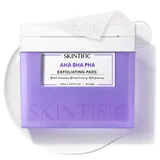
Noble PanaceaThe Overnight Chronobiology PeelYOUR PRODUCTGlossierSolutionskintificAHA BHA PHA Exfoliating PadsClark's Botanical7-Acid Daily Glow Peel
Match—88%84%83%
Price$300.00—$14.36−$285.64$85.00−$215.00
Shared key ingredients—6 of 167 of 168 of 16
Key difference——Dipotassium GlycyrrhizateHyaluronic Acid
Irritancy High Low Medium High
Drying alcohol————
View product Shop Shop Shop

More alternatives: Skin proud Daily AHA BHA Detox Tonic with Glycolic, Lactic and Salicylic AcidPacifica Beauty Glow Baby Brightening Peel Pads

Cheaper alternatives? See how this stacks up against similar formulas.
We compare ingredient profiles across our catalog — pick the closest match for your budget.
Open dupe finder

Sources cited in this review

Every concentration estimate and effectiveness label is anchored to one of these 42 studies and safety reviews.

  1. 1
  2. 2
  3. 3
  4. 4
  5. 5
  6. 6
Noble Panacea The Overnight Chronobiology Peel
Noble PanaceaThe Overnight Chronobiology Peel

Affiliate links · As an Amazon Associate, WIMJ earns from qualifying purchases.

As an Amazon Associate, WIMJ earns from qualifying purchases.