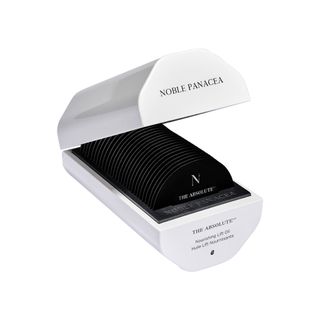
Noble Panacea The Absolute Nourishing Lift Oil
Works for
2 of 2 advertised claims delivered
Anti-aging4 ingredients credited for this claimStrong support
“The appearance of wrinkles is reduced, and skin is left with youthful glow.Key Benefits Restoring. Hydra Intense.”
This product can help reduce and prevent fine lines and wrinkles, improve skin elasticity and firmness because it contains retinol.
Keep in mind that it typically takes at least 6 weeks to notice any results because the changes that are needed to improve fine lines and elasticity happen in the deeper layers of the skin. No topical anti-aging product can “erase” wrinkles or fully reverse signs of aging.
Moisturizing20 ingredients credited for this claimGood support
“The appearance of wrinkles is reduced, and skin is left with youthful glow.Key Benefits Restoring. Hydra Intense.”
This product can help soften the skin and reduce its moisture loss with emollients and occlusives: caprylic/capric triglyceride, helianthus annuus seed oil.
Keep in mind that this product does not contain effective ingredients to attract water to the upper layer of the skin. This is why an additional product with humectants like glycerin or hyaluronic acid can be helpful (apply it before this product for the best results).
ExfoliationNot advertised by the brand · 1 ingredient credited for this claimStrong support
This product can help exfoliate the skin. In other words, it helps break down the bonds between dead cells on the surface of the skin and speed up the skin turnover. Skin often appears softer and brighter after exfoliation, but overdoing it can result in disrupted skin barrier. The following ingredient is doing the exfoliating job in this product: retinol.
Evens skin toneNot advertised by the brand · 2 ingredients credited for this claimStrong support
This product can help reduce hypepigmentation and even out the skin tone because it contains the following effective ingredients: retinol.
Keep in mind that you would need to apply any topical skincare targetted at hypigmentation consistently for a couple of months to get a result. No topical skincare product can help get rid of hyperpigmentation (including post-acne marks and age spots) instantly.
Anti-oxidationNot advertised by the brand · 16 ingredients credited for this claimStrong support
This product contains antioxidants (retinol) that can help neutralize free radicals in skin. By doing so, they can lessen the damage the skin gets from the UV light (sun).
The following ingredients - rubus idaeus seed oil also can have an antioxidant effect, but there is less evidence to confirm their effectiveness in skin.
Anti-blemishNot advertised by the brand · 3 ingredients credited for this claimStrong support
This product can help reduce breakouts and clogged pores because it contains the following ingredient: retinol. This ingredient is used for treating acne and can have a noticeable effect.
Can it cause trouble?
Irritancy4 strong irritants: Silybum marianum seed oil, Retinol + 2 more — patch-test recommendedHigh risk
Comedogenic2 ingredients rated 2 or more on the 0–5 pore-clogging scale2 flagged


User reviews
Be the first — your take helps the next person decide.
Ingredients
Filter by role to see what each ingredient is doing.
Squalane~25–37%
- Irritation risk
- Low
An oil naturally present in skin. Works as an emollient to soften the skin and form a protective layer on its surface without a greasy feeling.
More about SqualaneSilybum marianum seed oil~6.6–9.9%
- Irritation risk
- High
A plant oil that contains essential oils that can be irritating. Can help soften the upper layer of the skin. Might have some anti-oxidant activity but evidence is lacking
More about Silybum marianum seed oilCaprylic/capric triglyceride~4.6–7%
- Irritation risk
- Medium
A good mix of fatty acids that forms a protective layer on the skin. Improves the shelf life of products. Derived from coconut and glycerin
More about Caprylic/capric triglycerideDipentaerythrityl hexacaprylate/hexacaprate~2.8–4.2%
- Irritation risk
- Low
Ascorbyl tetraisopalmitate~2.3–3.5%
- Irritation risk
- Medium
A vitamin C derivative. Studies show that is might be effective in reducing hyperpigmentation, but there are no studies confirming that it is effectively converted into the bioavailable form of Vitamin C in skin. It is not clear how this derivative compares in effectiveness to the topical application of bioavailable form of vitamin C (L-ascorbic acid)
More about Ascorbyl tetraisopalmitatePanax ginseng root extract~2–2.9%
- Irritation risk
- High
A plant extract that might have some anti-inflammatory properties, but solid evidence is lacking. It can be irritating
More about Panax ginseng root extractHexyldecanol~1.6–2.5%
- Irritation risk
- Low
Helps soften the upper layer of the skin
More about HexyldecanolCyclodextrin~1.4–2%
- Irritation risk
- Low
A type of sugar that is used to support delivery of active ingredients and can enhance their penetration into the skin without disrupting the skin's barrier
More about CyclodextrinPotassium hydroxide~1.1–1.7%
Corylus avellana seed oil~0.85–1.3%
- Irritation risk
- Low
Rubus idaeus seed oil~0.6–1.35%
- Irritation risk
- Medium
A plant oil that might be able to help neutralize free radicals in skin
More about Rubus idaeus seed oilOenothera biennis oil~0.5–1.15%
- Irritation risk
- Medium
Helps soften the upper layer of the skin and can support skin barrier function
More about Oenothera biennis oilLimnanthes alba seed oil~0.45–1.05%
- Irritation risk
- Low
This oil's cmposition is closest to rapeseed oil. It is a very stable oil and serves as an emoillient
More about Limnanthes alba seed oilArgania spinosa kernel oil~0.4–1%
- Irritation risk
- Medium
An emollient that helps soften the upper layer of the skin. Might have some weak anti-oxidant properties
More about Argania spinosa kernel oilHydrolyzed sodium hyaluronate~0.35–0.8%
- Irritation risk
- Low
Attracts water into the upper layer of the skin
More about Hydrolyzed sodium hyaluronateCrithmum maritimum extract~0.35–0.75%
- Irritation risk
- Low
- Comedogenicity
- 3/5
An algae extract that might have anti-oxidant properties
More about Crithmum maritimum extractRetinol~0.3–0.7%
- Irritation risk
- High
Two steps removed from the active form of vitamin A - retinoic acid. Once converted to the retinoic acid in the skin, retinol is proven to be effective against all signs of aging. It improves skin cell turnover, helps fight blemishes and clogged pores, can regulate excess oil production and even skin tone. It can, however, be quite irritating
More about RetinolPorphyra umbilicalis extract~0.3–0.7%
- Irritation risk
- Low
- Comedogenicity
- 3/5
An algae extract that can help attract water to the upper layer of the skin. Might have an anti-oxidant effect in skin but evidence is lacking
More about Porphyra umbilicalis extractApium graveolens seed extract~0.15–0.65%
Linum usitatissimum seed extract~0.15–0.6%
- Irritation risk
- Low
Myrtus communis leaf extract~0.15–0.55%
- Irritation risk
- High
A plant extract that contains an essential oil and often used for its fragrance. Can be irritating. It has some anti-bacterial and anti-oxidant properties
More about Myrtus communis leaf extractOlea europaea fruit oil~0.2–0.75%
- Irritation risk
- Medium
An emollient that helps soften the skin but is not effective for restoring its barrier function. Might be helpful to calm down inflammation
More about Olea europaea fruit oilNannochloropsis oculata extract~0.15–0.55%
- Irritation risk
- Low
A microalgae extract that helps to attact water to the upper layer of the skin
More about Nannochloropsis oculata extractBrassica campestris sterols~0.15–0.7%
- Irritation risk
- Low
Help soften the upper layer of the skin
More about Brassica campestris sterolsTocopherol~0.15–0.5%
- Irritation risk
- Low
Pure form of vitamin E. Can help moisturise and protect the skin from free radicals. Often used to help stabilise other ingredients or the formula itself
More about TocopherolOlea europaea leaf extract~0.1–0.5%
- Irritation risk
- Medium
A plant extract that might have some anti-oxidant and anti-inflammatory properties but evidence for effectiveness in skin is missing
More about Olea europaea leaf extractRosmarinus officinalis leaf extract~0.1–0.45%
- Irritation risk
- High
Can be helpful in reducing inflammation in skin, including inflamed acne. It can be irritating
More about Rosmarinus officinalis leaf extractSorbitan trioleate~0.15–0.55%
Stearic acid~0.3–0.7%
- Irritation risk
- Low
Helps oil and water mix together and works as an emollient
More about Stearic acidPhospholipids~0.1–0.5%
- Irritation risk
- Low
Emollients that are naturaly present in skin. In addition, they help water and oil mix together in the product
More about PhospholipidsBisabolol~0.1–0.4%
- Irritation risk
- Low
An active component of chamomile plant that historically has been used to calm down irritated skin. A recent study shows that bisabolol indeed can have some anti-inflammatory effect on skin, even though conclusive data is lacking. Bisabolol has a sweet floral scent and can be added to products for its aromatic properties
More about BisabololCetylhydroxyproline palmitamide~0.15–0.6%
- Irritation risk
- Low
A type of lipid similar to ceramides naturally present in skin. Helps to soften the upper layer of the skin and supports the skin barrier function to keep it hydrated. Can help to prevent inflammation in skin
More about Cetylhydroxyproline palmitamideHelianthus annuus extract~0.15–0.55%
- Irritation risk
- Low
Helps soften the upper layer of the skin
More about Helianthus annuus extractRosmarinus officinalis leaf extract~0.05–0.25%
- Irritation risk
- High
Can be helpful in reducing inflammation in skin, including inflamed acne. It can be irritating
More about Rosmarinus officinalis leaf extractOryza sativa bran extract~0.05–0.25%
Helianthus annuus seed oil~0.1–0.4%
- Irritation risk
- Low
A great emollient due to its high linoleic acid content. One of the most effective plant oils in helping skin hydration and repairing skin barrier function
More about Helianthus annuus seed oilIngredient list view
Squalane, Silybum marianum seed oil, Caprylic/capric triglyceride, Dipentaerythrityl hexacaprylate/hexacaprate, Ascorbyl tetraisopalmitate, Panax ginseng root extract, Hexyldecanol, Cyclodextrin, Potassium hydroxide, Unknown, Corylus avellana seed oil, Rubus idaeus seed oil, Oenothera biennis oil, Limnanthes alba seed oil, Argania spinosa kernel oil, Hydrolyzed sodium hyaluronate, Crithmum maritimum extract, Retinol, Porphyra umbilicalis extract, Apium graveolens seed extract, Linum usitatissimum seed extract, Myrtus communis leaf extract, Olea europaea fruit oil, Nannochloropsis oculata extract, Brassica campestris sterols, Tocopherol, Olea europaea leaf extract, Rosmarinus officinalis leaf extract, Sorbitan trioleate, Stearic acid, Phospholipids, Bisabolol, Cetylhydroxyproline palmitamide, Helianthus annuus extract, Rosmarinus officinalis leaf extract, Oryza sativa bran extract, Helianthus annuus seed oil
Compare prices
Retailers ranked by price — lowest first.

Worth comparing, line by line.
Match % combines shared ingredients, the first five ingredients, shared actives and hero ingredients, irritancy (lower counts in the alternative's favour), texture and body area. Only products in the same routine step are compared.
| Noble PanaceaThe Absolute Nourishing Lift OilYOUR PRODUCT | CatriceYouth Repairing Sleep Oil | MALIN + GOETZHinoki Aroma Oil | StriVectinS.T.A.R. Light Retinol Night Oil | |
|---|---|---|---|---|
| Match | — | 64% | 62% | 61% |
| Price | $330.00 | — | $70.00−$260.00 | $57.84−$272.16 |
| Shared key ingredients | — | 3 of 12 | 3 of 12 | 4 of 12 |
| Key difference | — | Algae Extract | 3-O-Ethyl Ascorbic Acid | Hydroxypinacolone Retinoate |
| Irritancy | High | Medium | Medium | High |
| Drying alcohol | — | — | — | — |
| View product | Shop | Shop | Shop |


Sources cited in this review
Every concentration estimate and effectiveness label is anchored to one of these 30 studies and safety reviews.
- 1
- 2
- 3
- 4
- 5
- 6

Affiliate links · As an Amazon Associate, WIMJ earns from qualifying purchases.