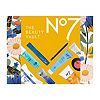
No7 Limited Edition Beauty Vault
Works for
1 of 3 advertised claims delivered
Sun protectionSPF 15 · 6 UV filters · Broad spectrumWeak protectionSPF under 30
This product offers broad spectrum sun protection, but it is weak. We recommend to use a broad spectrum sunscreen with at least SPF 30.
This product can be considered "reef safe" because it does not contain the UV filters (oxybenzone and octinoxate) that can be harmful to coral reefs when present in the water in high concentrations.
Moisturizing48 ingredients credited for this claimStrong support
“PAO 18M *only 1 available, shade may vary No7 HydraLuminous Day Cream SPF 15 + 5* UVA Drier Skin 50 ml e 1.”
This product can help improve hydration of the skin with the two types of ingredients.
The first type is called “humectants”:
these ingredients help attract water.
When humectants are on the surface of the skin, they “pull in” the moisture from the outside environment, or from
within deeper layers of the skin. The following ingredients in this product do the job:
anhydroxylitol, glycerin.
This product also contains ingredients called “occlusives”. They help reduce the speed with which our skin loses moisture to the outside environment. These ingredients also help soften the upper layer of the skin, so it feels less tight and nicer to the touch. The following ingredients in this product do the job: beeswax, cera alba.
The following ingredients in this product are especially good for supporting the skin barrier and helping with the hydration level: acetyl dipeptide-1 cetyl ester, palmitoyl tetrapeptide-7, palmitoyl tripeptide-1, panthenol
Exfoliation2 ingredients credited for this claimWeak support
“PAO 6M No7 Radiance+ Daily Energising Exfoliating Cleanser 100ml e 3.”
This product does not contain effective exfoliating ingredients. It might be able to deliver physical exfoliation, that is scrub off some of the dead cells on the surface of the skin. We do not recommend physical exfoliation, because it is not uniform (some bits of skin can get exfoliated too much while others not at all). It can also traumatize the skin and aggrevate acne and other skin conditions.
Anti-agingNot advertised by the brand · 11 ingredients credited for this claimModerate support
This product contains acetyl dipeptide-1 cetyl ester, palmitoyl tetrapeptide-7, palmitoyl tripeptide-1. These ingredients might be able to help reduce and prevent fine lines and wrinkles, improve skin elasticity and firmness, but there is not enough evidence that it actually works. The biggest anti-aging effect in this product comes from sun protection. Sun damage is the main factor causing early signs of skin aging. We, however, do not recommend using this product as a sunscreen because the protection it offers is not strong enough).
Can it cause trouble?
Irritancy8 strong irritants: Limonene, Linalool + 6 more — patch-test recommendedHigh risk
Comedogenic12 ingredients rated 2 or more on the 0–5 pore-clogging scale12 flagged

User reviews
Be the first — your take helps the next person decide.
Ingredients
Filter by role to see what each ingredient is doing.
Water~40–60%
Copernicia cerifera wax~4.3–6.5%
- Irritation risk
- Low
Helps to soften the upper layer of the skin and create a nice product consistency
More about Copernicia cerifera waxCera alba~3.8–5.7%
- Irritation risk
- Medium
Forms a protective barrier that holds water and keeps dry skin hydrated. Keeps an emulsion from separating into its oil and liquid components, and increases the thickness of a product. Can be an allergen
More about Cera albaBeeswax~3.3–4.9%
- Irritation risk
- Low
Forms a protective barrier that holds water and keeps dry skin hydrated. Keeps an emulsion from separating into its oil and liquid components, and increases the thickness of a product. Can be an allergen
More about BeeswaxParaffin~2.4–3.6%
- Irritation risk
- Low
Prevents water loss from the skin surface and thickens the product consistency
More about ParaffinAcrylates copolymer~2.1–3.1%
- Irritation risk
- Medium
Used to stabilize product formulation, help create an even product layer over skin (for example, in sunscreen) and create a thicker product consistency
More about Acrylates copolymerButylene glycol~1.8–2.8%
- Irritation risk
- Low
Used to create a nice product texture and help delivery of other ingredients. Might be somewhat helpful in attracting water to the upper layer of the skin
More about Butylene glycolStearic acid~1.8–2.7%
- Irritation risk
- Low
Helps oil and water mix together and works as an emollient
More about Stearic acidPalmitic acid~1.5–2.2%
- Irritation risk
- Low
An emollient that is naturally present in skin and helps soften it
More about Palmitic acidTriethanolamine~1.2–1.9%
- Irritation risk
- Medium
Used to adjust pH of the product and can help improve the product's smell
More about TriethanolamineCyclopentasiloxane~1.1–1.7%
- Irritation risk
- Low
A silicone that helps improve the product texture and spreadability. Can absorb oil creating a short-term mattifying effect on the skin
More about CyclopentasiloxaneArgania spinosa kernel oil~0.9–1.35%
- Irritation risk
- Medium
An emollient that helps soften the upper layer of the skin. Might have some weak anti-oxidant properties
More about Argania spinosa kernel oilNylon-12~0.9–1.35%
Trimethylsiloxysilicate~0.6–1.35%
- Irritation risk
- Low
A type of silicone that helps create a nice product consistency and support the delivery of other ingredients
More about TrimethylsiloxysilicateCera microcristallina~0.6–1.35%
- Irritation risk
- Low
Helps to soften the upper layer of the skin, reduce water loss from its surface and create a thicker product consistency
More about Cera microcristallinaMicrocrystalline wax~0.55–1.25%
Hdi/trimethylol hexyllactone crosspolymer~0.5–1.2%
- Irritation risk
- Low
Used to create a silky product texture and add volume to products
More about Hdi/trimethylol hexyllactone crosspolymerPhenoxyethanol~0.5–1%
- Irritation risk
- Low
A preservative. It helps prevent bacterial growth in cosmetic products
More about PhenoxyethanolTocopheryl acetate~0.4–1%
- Irritation risk
- Medium
A more stable but less bio-available form of vitamin E compared to Tocopherol. Might help moisturize and protect the skin from free radicals, but mostly used in low concentrations to stabilize other ingredients.
More about Tocopheryl acetateAminomethyl propanol~0.45–1.05%
Hydroxyethylcellulose~0.45–1.05%
- Irritation risk
- Low
Used to thicken product formulations and create gel-like textures
More about HydroxyethylcelluloseMethylparaben~0.15–0.3%
Sodium laureth sulfate~0.6–1.35%
- Irritation risk
- High
- Comedogenicity
- 2/5
Works as a foaming cleansing agent
More about Sodium laureth sulfatePanthenol~0.4–1%
- Irritation risk
- Low
Helps attract water to the upper layer of the skin and can help improve skin barrier function
More about PanthenolEthylparaben~0.2–0.4%
Hydrolyzed keratin~0.45–1%
- Irritation risk
- Low
Caprylyl glycol~0.45–1.05%
- Irritation risk
- Medium
Helps preserve products and creates a nice product texture
More about Caprylyl glycolSilica~0.5–1.15%
C11-15 pareth-7~0.45–1%
Potassium sorbate~0.3–0.6%
Sorbic acid~0.3–0.6%
Ci 77499~0.4–1%
Iron oxides~0.4–0.95%
- Irritation risk
- Low
An umbrella term for the following three colorants: CI 77491, CI 77492, CI 77499. They might be able to offer some protection against visible light, but the degree of the protection is not clear
More about Iron oxidesWater~0.4–1%
Glycerin~0.45–1.05%
- Irritation risk
- Low
One of the best moisturizing ingredients. Naturally present in skin. It attracts water to the upper layer of the skin working as a humectant
More about GlycerinCocamidopropyl betaine~1.1–1.6%
- Irritation risk
- High
Helps water and oil mix together. Used as a cleansing ingredient. Could be an allergen
More about Cocamidopropyl betaineSodium laureth sulfate~0.6–1.35%
- Irritation risk
- High
- Comedogenicity
- 2/5
Works as a foaming cleansing agent
More about Sodium laureth sulfateDecyl glucoside~0.5–1.15%
- Irritation risk
- High
Helps oil and water mix together. Can be irritating
More about Decyl glucosideGlyceryl oleate~0.45–1.05%
- Irritation risk
- High
Helps oil and water mix together. Can be irritating
More about Glyceryl oleateCoco-glucoside~0.45–1.1%
- Irritation risk
- High
Used as a cleansing agent (surfactant) in cleansers. Helps water and oil mix together in lotions. Can be irritating
More about Coco-glucosidePrunus armeniaca seed powder~0.5–1.15%
- Irritation risk
- Low
Acrylates/c10-30 alkyl acrylate crosspolymer~0.45–1%
- Irritation risk
- Medium
Maintains the texture of skincare products. Allows the product to spread evenly. Helps oil and water mix together
More about Acrylates/c10-30 alkyl acrylate crosspolymerPhenoxyethanol~0.45–1%
- Irritation risk
- Low
A preservative. It helps prevent bacterial growth in cosmetic products
More about PhenoxyethanolSodium benzoate~0.25–0.5%
Sodium chloride~0.4–1%
- Irritation risk
- Low
Used to stabilize mixtures of oil and water, and create thicker, gel-like product textures
More about Sodium chloridePeg-40 hydrogenated castor oil~0.45–1.05%
- Irritation risk
- Medium
Helps oil and water mix together
More about Peg-40 hydrogenated castor oilLimonene~0.4–0.95%
- Irritation risk
- High
A common frangrance that can easily irritate skin, especially if exposed to air, light or heat
More about LimoneneCitric acid~0.4–1%
- Irritation risk
- Medium
Can work as an exfoliant but is typically used to adjust the product pH
More about Citric acid3-o-ethyl ascorbic acid~0.4–0.95%
- Irritation risk
- High
A vitamin C derivative that is more stable but less potent than pure form of vitamin C. Can help neutralize free radicals and help reduce hyperpigmentation, but the required concentration is likely to be much higher than for the pure form of vitamin C, limiting the ingredient's effectiveness in products
More about 3-o-ethyl ascorbic acidAnthemis nobilis flower water~0.4–0.95%
- Irritation risk
- Low
Dipropylene glycol~0.4–0.95%
- Irritation risk
- Low
Helps to dissolve other ingredients in a formulation. Slows down the rate of product drying
More about Dipropylene glycolLinalool~0.4–0.95%
Sodium hydroxide~0.4–1%
Parfum~0.4–0.95%
- Irritation risk
- High
An aromatic blend of unspecified and possibly irritating ingredients
More about ParfumDisodium edta~0.4–1%
Cocamidopropyl dimethylamine~0.45–1%
- Irritation risk
- High
Helps oil and water mix together. Can work as a cleansing agent. Can be irritating
More about Cocamidopropyl dimethylamineBenzotriazolyl dodecyl p-cresol~0.4–1%
- Irritation risk
- Medium
Used to stabilize the product formulation protecting it from sun light
More about Benzotriazolyl dodecyl p-cresolSodium sulfate~0.4–0.95%
- Irritation risk
- Medium
Used to improve the product consistency and stabilize formulations
More about Sodium sulfateVaccinium myrtillus fruit extract~0.4–0.95%
- Irritation risk
- Medium
A plant extract that might help neutralize free radicals in skin, but research on its efficacy in skin is lacking
More about Vaccinium myrtillus fruit extractSaccharum officinarum extract~0.4–0.95%
- Irritation risk
- Low
Sugar extract that helps attract water to the upper layer of the skin
More about Saccharum officinarum extractPropylene glycol~0.4–0.95%
- Irritation risk
- High
Helps oil and water mix together and can enhance the penetration of other ingredients into the skin. It can be irritating
More about Propylene glycolAlcohol denat.~0.4–1%
- Irritation risk
- High
Produces temporary toning effect. Can help dissolve other ingredients or preserve products
More about Alcohol denat.Citrus limon fruit extract~0.4–0.95%
- Irritation risk
- High
Used as a fragrance. Can be irritating and cause photosensitivity
More about Citrus limon fruit extractCitrus aurantium dulcis fruit extract~0.4–0.95%
- Irritation risk
- High
A plant extract that is used as a fragrance. Can be irritating and lead to photosensitivity
More about Citrus aurantium dulcis fruit extractAlcohol~0.4–1%
- Irritation risk
- High
Can be drying and contribute to skin irritation. Used in formulars to dissolve other ingredients, create a thinner product consistency or for its antibacterial properties
More about Alcohol1,2-hexanediol~0.4–0.95%
Tris(tetramethylhydroxypiperidinol) citrate~0.4–1%
- Irritation risk
- Low
Acer saccharum extract~0.4–0.95%
- Irritation risk
- Medium
A plant extract that contains small percentage of AHAs. Is unlikely to have any skin benefit due the small concentration of the active compounds
More about Acer saccharum extractBiosaccharide gum-4~0.4–0.95%
Tocopherol~0.35–0.85%
- Irritation risk
- Low
Pure form of vitamin E. Can help moisturise and protect the skin from free radicals. Often used to help stabilise other ingredients or the formula itself
More about TocopherolBenzyl alcohol~0.4–0.95%
- Irritation risk
- High
A preservative. Can be used to mask unpleasant smell. Can be irritating
More about Benzyl alcoholDenatonium benzoate~0.4–1%
- Irritation risk
- Low
Hydrogenated palm glycerides citrate~0.45–1.05%
- Irritation risk
- Low
Helps soften the upper layer of the skin
More about Hydrogenated palm glycerides citrateDehydroacetic acid~0.3–0.6%
Water~0.4–1%
Glycerin~0.45–1.05%
- Irritation risk
- Low
One of the best moisturizing ingredients. Naturally present in skin. It attracts water to the upper layer of the skin working as a humectant
More about GlycerinNiacinamide~0.4–1%
- Irritation risk
- Low
Is proven to be effective in reducing blemishes, evening out skin tone and helping to improve lines and wrinkles. It helps the skin to repair sun damage, calm down inflammation and keep maintain good levels of moisture. The concentration of about 2% is effective for supporting the skin barrier and evening out the skin tone. Concentration of 4-6% is better for helping with acne and balancing the sebum production
More about NiacinamideAlcohol denat.~0.4–1%
- Irritation risk
- High
Produces temporary toning effect. Can help dissolve other ingredients or preserve products
More about Alcohol denat.Dimethicone~0.45–1.1%
- Irritation risk
- Low
A silicone that helps to reduce water loss from the surface of the skin. Can temporarily "fill in" lines and wrinkles, absorb oil, and create a nice product finish
More about DimethiconeButylene glycol~0.4–1%
- Irritation risk
- Low
Used to create a nice product texture and help delivery of other ingredients. Might be somewhat helpful in attracting water to the upper layer of the skin
More about Butylene glycolAcrylates/c10-30 alkyl acrylate crosspolymer~0.45–1%
- Irritation risk
- Medium
Maintains the texture of skincare products. Allows the product to spread evenly. Helps oil and water mix together
More about Acrylates/c10-30 alkyl acrylate crosspolymerPhenoxyethanol~0.45–1%
- Irritation risk
- Low
A preservative. It helps prevent bacterial growth in cosmetic products
More about PhenoxyethanolMica~0.45–1%
- Irritation risk
- Low
Creates an illusion of smoother and more radiant skin tone. Adds shimmer to the skin by reflecting light
More about MicaSodium hyaluronate~0.4–0.95%
- Irritation risk
- Low
One of the best moisturizing ingredients. Attracts water into the upper layer of the skin
More about Sodium hyaluronateEthylhexylglycerin~0.4–1%
Sodium hydroxide~0.4–1%
Iris florentina root extract~0.4–0.95%
- Irritation risk
- Low
Tocopherol~0.35–0.85%
- Irritation risk
- Low
Pure form of vitamin E. Can help moisturise and protect the skin from free radicals. Often used to help stabilise other ingredients or the formula itself
More about TocopherolCi 77891~0.4–0.95%
- Irritation risk
- Low
Titanium dioxide~0.5–1.15%
- Irritation risk
- Low
Works as a UV filter when used in high concentrations. It is photostable and is effective mostly against the UVB light, with some protection in the UVA range. In small concentrations, used for its ability to improve the color of cosmetic products. Is usually well tolerated by the skin
More about Titanium dioxideCi 77491~0.4–1%
- Irritation risk
- Low
A red colorant made of iron oxide. Typically is not irritating
More about Ci 77491Iron oxides~0.4–0.95%
- Irritation risk
- Low
An umbrella term for the following three colorants: CI 77491, CI 77492, CI 77499. They might be able to offer some protection against visible light, but the degree of the protection is not clear
More about Iron oxidesWater~0.4–1%
Kaolin~0.5–1.15%
- Irritation risk
- Low
A type of clay that consists mainly of aluminum silicate. Helps absorb oil and creates a thicker product consistency. Can be used to add a white color
More about KaolinCaprylic/capric triglyceride~0.45–1.1%
- Irritation risk
- Medium
A good mix of fatty acids that forms a protective layer on the skin. Improves the shelf life of products. Derived from coconut and glycerin
More about Caprylic/capric triglycerideGlycerin~0.45–1.05%
- Irritation risk
- Low
One of the best moisturizing ingredients. Naturally present in skin. It attracts water to the upper layer of the skin working as a humectant
More about GlycerinAlcohol denat.~0.4–1%
- Irritation risk
- High
Produces temporary toning effect. Can help dissolve other ingredients or preserve products
More about Alcohol denat.Isostearyl isostearate~0.45–1.05%
- Irritation risk
- Medium
- Comedogenicity
- 3/5
Helps soften the upper layer of the skin and improve the product texture. It can be comedogenic
More about Isostearyl isostearateCetearyl alcohol~0.45–1.05%
- Irritation risk
- Low
- Comedogenicity
- 2/5
A non-drying alcohol. Works as an emollient. Helps water and oil mix together and creates a nice product texture
More about Cetearyl alcoholGlyceryl stearate~0.45–1.1%
- Irritation risk
- Low
An emollient that softens the skin and forms a protective layer on its surface. Helps water and oil mix together
More about Glyceryl stearateButyrospermum parkii butter~0.45–1.05%
- Irritation risk
- Low
- Comedogenicity
- 3/5
A great moisturising ingredient that softens the skin and reduces water loss from its upper layer. It also can be helpful in protecting skin from free radicals
More about Butyrospermum parkii butterDimethicone~0.45–1.1%
- Irritation risk
- Low
A silicone that helps to reduce water loss from the surface of the skin. Can temporarily "fill in" lines and wrinkles, absorb oil, and create a nice product finish
More about DimethiconePeg-100 stearate~0.5–1.15%
- Irritation risk
- Low
Helps oil and water mix togehter and creates a nice product texture
More about Peg-100 stearatePhenoxyethanol~0.45–1%
- Irritation risk
- Low
A preservative. It helps prevent bacterial growth in cosmetic products
More about PhenoxyethanolPanthenol~0.4–1%
- Irritation risk
- Low
Helps attract water to the upper layer of the skin and can help improve skin barrier function
More about PanthenolCaprylyl glycol~0.45–1.05%
- Irritation risk
- Medium
Helps preserve products and creates a nice product texture
More about Caprylyl glycolXanthan gum~0.45–1%
- Irritation risk
- Low
Used to create a thicker product consistency
More about Xanthan gumCarbomer~0.4–1%
- Irritation risk
- Low
Helps create a thicker or gel-like product texture. It is not a surfactant but can be used in gentle cleansing formulations
More about CarbomerParfum~0.4–0.95%
- Irritation risk
- High
An aromatic blend of unspecified and possibly irritating ingredients
More about ParfumButylene glycol~0.4–1%
- Irritation risk
- Low
Used to create a nice product texture and help delivery of other ingredients. Might be somewhat helpful in attracting water to the upper layer of the skin
More about Butylene glycolTocopheryl acetate~0.35–0.85%
- Irritation risk
- Medium
A more stable but less bio-available form of vitamin E compared to Tocopherol. Might help moisturize and protect the skin from free radicals, but mostly used in low concentrations to stabilize other ingredients.
More about Tocopheryl acetateAscorbyl glucoside~0.35–0.85%
- Irritation risk
- Medium
A vitamin C derivative that is more stable but less potent than pure form of vitamin C. Has a potential to boost collagen production, nutralise free radicals and reduce hyperpigmentation, but the required concentration is likely to be much higher than for the pure form of vitamin C, limiting the ingredient's effectiveness in products
More about Ascorbyl glucosideEthylhexylglycerin~0.4–1%
Potassium hydroxide~0.45–1%
Tetrasodium edta~0.4–0.95%
Dipropylene glycol~0.4–0.95%
- Irritation risk
- Low
Helps to dissolve other ingredients in a formulation. Slows down the rate of product drying
More about Dipropylene glycolSpiraea ulmaria extract~0.4–0.95%
- Irritation risk
- Low
Dimethicone~0.45–1.1%
- Irritation risk
- Low
A silicone that helps to reduce water loss from the surface of the skin. Can temporarily "fill in" lines and wrinkles, absorb oil, and create a nice product finish
More about DimethiconeWater~0.4–1%
Dimethicone crosspolymer~0.4–1%
- Irritation risk
- Low
Used to create a thicker product texture. Helps soften the upper layer of the skin and might be able to prevent moisture loss from its surface
More about Dimethicone crosspolymerButylene glycol~0.4–1%
- Irritation risk
- Low
Used to create a nice product texture and help delivery of other ingredients. Might be somewhat helpful in attracting water to the upper layer of the skin
More about Butylene glycolGlycerin~0.45–1.05%
- Irritation risk
- Low
One of the best moisturizing ingredients. Naturally present in skin. It attracts water to the upper layer of the skin working as a humectant
More about GlycerinAlcohol denat.~0.4–1%
- Irritation risk
- High
Produces temporary toning effect. Can help dissolve other ingredients or preserve products
More about Alcohol denat.Sodium ascorbyl phosphate~0.35–0.85%
- Irritation risk
- Medium
A stable derivative of vitamin C. It is oil-soluble which means it is more likely to penetrate the skin compared to the pure form of vitamin C (which is water-soluble), but it is less bio-available and is way less effective in stimulating collagen and reducing wrinkles compared to the pure form of vitamin C (L-ascorbic acid) and its other derivatives (for example, magnesium ascorbyl phosphate). At the same time, this vitamin C derivative has been shown in studies to be effective in reducing acne, blemishes and clogged pores. It is less irritating then the pure form of vitamin C
More about Sodium ascorbyl phosphatePeg/ppg-18/18 dimethicone~0.45–1.05%
- Irritation risk
- Low
A silicone that mixes with water creating nice light-weight product texture
More about Peg/ppg-18/18 dimethiconeMagnesium sulfate~0.4–1%
Cetyl peg/ppg-10/1 dimethicone~0.4–1%
- Irritation risk
- Low
A type of silicone that helps water and oil mix together. Can help to soften upper layer of the skin
More about Cetyl peg/ppg-10/1 dimethiconeHexyl laurate~0.45–1.05%
- Irritation risk
- Medium
Helps soften the upper layer of the skin and create a nice product consistency
More about Hexyl lauratePolyglyceryl-4 isostearate~0.45–1.05%
- Irritation risk
- Medium
Helps water and oil mix together
More about Polyglyceryl-4 isostearatePhenoxyethanol~0.45–1%
- Irritation risk
- Low
A preservative. It helps prevent bacterial growth in cosmetic products
More about PhenoxyethanolRetinyl palmitate~0.4–0.95%
- Irritation risk
- High
Three steps removed from the active form of vitamin A - retinoic acid. To have an effect in the skin, it first needs to be converted twice to become the retinoic acid. This means it is less potent than retinol, but could also be less irritating. Once converted to the retinoic acid in the skin, it helps against all signs of aging, improves skin cell turnover and helps fight blemishes and clogged pores. However, in many cosmetic formulations, it is used in a concentration that is too low to have the full effect
More about Retinyl palmitateHydrolyzed rice protein~0.4–0.95%
- Irritation risk
- Low
Helps attract water to the upper layer of the skin. Might have some anti-oxidant properties
More about Hydrolyzed rice proteinPropylene glycol~0.4–0.95%
- Irritation risk
- High
Helps oil and water mix together and can enhance the penetration of other ingredients into the skin. It can be irritating
More about Propylene glycolSorbitan laurate~0.45–1%
Salicylic acid~0.4–0.95%
- Irritation risk
- High
Used for skin exfoliation. It has an anti-inflammatory and anti-bacterial effect, helps to unclog pores, prevent blemishes and speed up healing of the existing ones. Sometimes referred to as a BHA (beta-hydroxy acid)
More about Salicylic acidTocopheryl acetate~0.35–0.85%
- Irritation risk
- Medium
A more stable but less bio-available form of vitamin E compared to Tocopherol. Might help moisturize and protect the skin from free radicals, but mostly used in low concentrations to stabilize other ingredients.
More about Tocopheryl acetateMethylparaben~0.15–0.3%
Carbomer~0.4–1%
- Irritation risk
- Low
Helps create a thicker or gel-like product texture. It is not a surfactant but can be used in gentle cleansing formulations
More about CarbomerMedicago sativa extract~0.4–0.95%
- Irritation risk
- Medium
A plant extract that might help neutralize free radicals in skin
More about Medicago sativa extractEthylparaben~0.2–0.4%
Polysorbate 20~0.45–1.05%
Hydroxyethylcellulose~0.45–1%
- Irritation risk
- Low
Used to thicken product formulations and create gel-like textures
More about HydroxyethylcelluloseAcetyl dipeptide-1 cetyl ester~0.4–1%
- Irritation risk
- Low
A type of peptide. Peptides are excellent moisturizers and might be able support collagen production reducing fine lines and wrinkles
More about Acetyl dipeptide-1 cetyl esterPanax ginseng root extract~0.45–1.05%
- Irritation risk
- High
A plant extract that might have some anti-inflammatory properties, but solid evidence is lacking. It can be irritating
More about Panax ginseng root extractMorus alba leaf extract~0.4–0.95%
- Irritation risk
- Low
Sodium benzoate~0.25–0.5%
Tocopherol~0.35–0.85%
- Irritation risk
- Low
Pure form of vitamin E. Can help moisturise and protect the skin from free radicals. Often used to help stabilise other ingredients or the formula itself
More about TocopherolEthylhexylglycerin~0.4–1%
Palmitoyl tripeptide-1~0.45–1.05%
- Irritation risk
- Low
A type of peptide. Peptides are excellent moisturizers and might be able support collagen production reducing fine lines and wrinkles
More about Palmitoyl tripeptide-1Palmitoyl tetrapeptide-7~0.45–1.05%
- Irritation risk
- Low
A type of peptide. Peptides are excellent moisturizers and might be able support collagen production reducing fine lines and wrinkles
More about Palmitoyl tetrapeptide-7Water~0.4–1%
Propylene glycol~0.4–0.95%
- Irritation risk
- High
Helps oil and water mix together and can enhance the penetration of other ingredients into the skin. It can be irritating
More about Propylene glycolCetearyl isononanoate~0.45–1%
- Irritation risk
- Low
An emollient that softens the skin and helps prevent moisture loss.
More about Cetearyl isononanoatePhenoxyethanol~0.45–1%
- Irritation risk
- Low
A preservative. It helps prevent bacterial growth in cosmetic products
More about PhenoxyethanolGlycerin~0.45–1.05%
- Irritation risk
- Low
One of the best moisturizing ingredients. Naturally present in skin. It attracts water to the upper layer of the skin working as a humectant
More about GlycerinCaprylic/capric triglyceride~0.45–1.1%
- Irritation risk
- Medium
A good mix of fatty acids that forms a protective layer on the skin. Improves the shelf life of products. Derived from coconut and glycerin
More about Caprylic/capric triglycerideHexyldecanol~0.45–1.05%
- Irritation risk
- Low
Helps soften the upper layer of the skin
More about HexyldecanolHexyldecyl laurate~0.45–1.05%
- Irritation risk
- Low
Helps soften the upper layer of the skin
More about Hexyldecyl laurateCeteareth-20~0.5–1.15%
- Irritation risk
- Medium
- Comedogenicity
- 2/5
Helps oil and water mix together. Has some emollient properties
More about Ceteareth-20Cetearyl alcohol~0.45–1.05%
- Irritation risk
- Low
- Comedogenicity
- 2/5
A non-drying alcohol. Works as an emollient. Helps water and oil mix together and creates a nice product texture
More about Cetearyl alcoholBenzoic acid~0.25–0.5%
Glyceryl stearate~0.45–1.1%
- Irritation risk
- Low
An emollient that softens the skin and forms a protective layer on its surface. Helps water and oil mix together
More about Glyceryl stearateSodium citrate~0.4–0.95%
- Irritation risk
- Medium
Helps to control the skin's pH level. Maintains the skin's natural film of amino-lactic acids and oils. Helps to preserve products
More about Sodium citrateTetrasodium edta~0.4–0.95%
Tocopheryl acetate~0.35–0.85%
- Irritation risk
- Medium
A more stable but less bio-available form of vitamin E compared to Tocopherol. Might help moisturize and protect the skin from free radicals, but mostly used in low concentrations to stabilize other ingredients.
More about Tocopheryl acetateDehydroacetic acid~0.3–0.6%
Citric acid~0.4–1%
- Irritation risk
- Medium
Can work as an exfoliant but is typically used to adjust the product pH
More about Citric acidCeteareth-12~0.45–1%
Cetyl palmitate~0.45–1.05%
- Irritation risk
- Low
An emollient that helps soften the skin and is used to improve product texture and stability
More about Cetyl palmitateButylene glycol~0.4–1%
- Irritation risk
- Low
Used to create a nice product texture and help delivery of other ingredients. Might be somewhat helpful in attracting water to the upper layer of the skin
More about Butylene glycolPanax ginseng root extract~0.45–1.05%
- Irritation risk
- High
A plant extract that might have some anti-inflammatory properties, but solid evidence is lacking. It can be irritating
More about Panax ginseng root extractCyclopentasiloxane~0.45–1.05%
- Irritation risk
- Low
A silicone that helps improve the product texture and spreadability. Can absorb oil creating a short-term mattifying effect on the skin
More about CyclopentasiloxaneIsododecane~0.4–1%
- Irritation risk
- Low
An emollient that helps soften the skin and can decrease moisture loss. Helps create a nice product texture
More about IsododecanePolybutene~0.45–1%
Synthetic wax~0.45–1.05%
- Irritation risk
- Low
Used to stabilize product formulations and thicken product consistency
More about Synthetic waxSimmondsia chinensis seed oil~0.45–1.1%
- Irritation risk
- Medium
Softens the upper layer of skin and helps restore the healthy skin barrier. Has shown to help calm down inflammation in skin. It is a stable oil, meaning that it retains its properties even when exposed to air.
More about Simmondsia chinensis seed oilHydrogenated cottonseed oil~0.45–1.05%
- Irritation risk
- Low
- Comedogenicity
- 3/5
Ceresin~0.45–1%
Ozokerite~0.45–1%
Cera microcristallina~0.45–1.1%
- Irritation risk
- Low
Helps to soften the upper layer of the skin, reduce water loss from its surface and create a thicker product consistency
More about Cera microcristallinaMicrocrystalline wax~0.4–1%
Tocopherol~0.35–0.85%
- Irritation risk
- Low
Pure form of vitamin E. Can help moisturise and protect the skin from free radicals. Often used to help stabilise other ingredients or the formula itself
More about TocopherolMica~0.45–1%
- Irritation risk
- Low
Creates an illusion of smoother and more radiant skin tone. Adds shimmer to the skin by reflecting light
More about MicaAscorbyl palmitate~0.35–0.85%
- Irritation risk
- Medium
Being a lipid soluble form of vitamin C, it is more stable and can penetrate the skin better than L-Ascorbic acid. It is effective in protecting the skin from free radicals, as well as evening the skin tone, but is less effective in stimulating collagen production compared to L-Ascorbic acid.
More about Ascorbyl palmitatePhenoxyethanol~0.45–1%
- Irritation risk
- Low
A preservative. It helps prevent bacterial growth in cosmetic products
More about PhenoxyethanolCi 77499~0.4–1%
Iron oxides~0.4–0.95%
- Irritation risk
- Low
An umbrella term for the following three colorants: CI 77491, CI 77492, CI 77499. They might be able to offer some protection against visible light, but the degree of the protection is not clear
More about Iron oxidesCi 77510~0.4–1%
- Irritation risk
- Low
Isododecane~0.4–1%
- Irritation risk
- Low
An emollient that helps soften the skin and can decrease moisture loss. Helps create a nice product texture
More about IsododecaneOctyldodecanol~0.45–1%
- Irritation risk
- Low
An emollient that helps to soften the skin and create a pleasant product texture and stabilize the formulation
More about OctyldodecanolHydrogenated polydecene~0.4–1%
- Irritation risk
- Low
Helps to soften the upper layer of the skin and create a nice product texture
More about Hydrogenated polydeceneHydrogenated styrene/isoprene copolymer~0.4–1%
- Irritation risk
- Medium
Helps to create a thicker product consistency
More about Hydrogenated styrene/isoprene copolymerDisteardimonium hectorite~0.4–1%
- Irritation risk
- Low
A type of clay that is used to thicken the product consistency
More about Disteardimonium hectoritePolyethylene~0.5–1.2%
Helianthus annuus seed wax~0.45–1.05%
- Irritation risk
- Low
Helps soften the upper layer of the skin and support skin's barrier function while creating a thicker product consistency
More about Helianthus annuus seed waxPropylene carbonate~0.45–1.05%
- Irritation risk
- Low
Is used to dissolve other ingredients and create nice product texture
More about Propylene carbonateDicalcium phosphate~0.5–1.2%
- Irritation risk
- Low
Silica dimethyl silylate~0.45–1.05%
Tocopheryl acetate~0.35–0.85%
- Irritation risk
- Medium
A more stable but less bio-available form of vitamin E compared to Tocopherol. Might help moisturize and protect the skin from free radicals, but mostly used in low concentrations to stabilize other ingredients.
More about Tocopheryl acetateTalc~0.5–1.15%
Pentaerythrityl tetra-di-t-butyl hydroxyhydrocinnamate~0.4–0.9%
- Irritation risk
- Low
Used to increase stability of product formulations
More about Pentaerythrityl tetra-di-t-butyl hydroxyhydrocinnamateMica~0.45–1%
- Irritation risk
- Low
Creates an illusion of smoother and more radiant skin tone. Adds shimmer to the skin by reflecting light
More about MicaTocopherol~0.35–0.85%
- Irritation risk
- Low
Pure form of vitamin E. Can help moisturise and protect the skin from free radicals. Often used to help stabilise other ingredients or the formula itself
More about TocopherolSynthetic fluorphlogopite~0.4–0.95%
- Irritation risk
- Low
A mineral that is used as an optical filter (makes the skin looks nicer through light reflection) and to improve the texture of cosmetic products
More about Synthetic fluorphlogopiteCalcium sodium borosilicate~0.4–1%
Tin oxide~0.5–1.15%
- Irritation risk
- Low
A colorant that can add a pearl-like appearance to the formulation
More about Tin oxideCi 42090~0.4–1%
Blue 1 lake~0.4–1%
Iron oxides~0.4–0.95%
- Irritation risk
- Low
An umbrella term for the following three colorants: CI 77491, CI 77492, CI 77499. They might be able to offer some protection against visible light, but the degree of the protection is not clear
More about Iron oxidesCi 77491~0.4–1%
- Irritation risk
- Low
A red colorant made of iron oxide. Typically is not irritating
More about Ci 77491Iron oxides~0.4–0.95%
- Irritation risk
- Low
An umbrella term for the following three colorants: CI 77491, CI 77492, CI 77499. They might be able to offer some protection against visible light, but the degree of the protection is not clear
More about Iron oxidesCi 77492~0.4–1%
Iron oxides~0.4–0.95%
- Irritation risk
- Low
An umbrella term for the following three colorants: CI 77491, CI 77492, CI 77499. They might be able to offer some protection against visible light, but the degree of the protection is not clear
More about Iron oxidesCi 45410~0.4–1%
Ci 77891~0.4–0.95%
- Irritation risk
- Low
Titanium dioxide~0.5–1.15%
- Irritation risk
- Low
Works as a UV filter when used in high concentrations. It is photostable and is effective mostly against the UVB light, with some protection in the UVA range. In small concentrations, used for its ability to improve the color of cosmetic products. Is usually well tolerated by the skin
More about Titanium dioxideIsododecane~0.4–1%
- Irritation risk
- Low
An emollient that helps soften the skin and can decrease moisture loss. Helps create a nice product texture
More about IsododecaneOctyldodecanol~0.45–1%
- Irritation risk
- Low
An emollient that helps to soften the skin and create a pleasant product texture and stabilize the formulation
More about OctyldodecanolHydrogenated polydecene~0.4–1%
- Irritation risk
- Low
Helps to soften the upper layer of the skin and create a nice product texture
More about Hydrogenated polydeceneHydrogenated styrene/isoprene copolymer~0.4–1%
- Irritation risk
- Medium
Helps to create a thicker product consistency
More about Hydrogenated styrene/isoprene copolymerDisteardimonium hectorite~0.4–1%
- Irritation risk
- Low
A type of clay that is used to thicken the product consistency
More about Disteardimonium hectoritePolyethylene~0.5–1.2%
Helianthus annuus seed wax~0.45–1.05%
- Irritation risk
- Low
Helps soften the upper layer of the skin and support skin's barrier function while creating a thicker product consistency
More about Helianthus annuus seed waxDicalcium phosphate~0.5–1.2%
- Irritation risk
- Low
Propylene carbonate~0.45–1.05%
- Irritation risk
- Low
Is used to dissolve other ingredients and create nice product texture
More about Propylene carbonateSilica dimethyl silylate~0.45–1.05%
Tocopheryl acetate~0.35–0.85%
- Irritation risk
- Medium
A more stable but less bio-available form of vitamin E compared to Tocopherol. Might help moisturize and protect the skin from free radicals, but mostly used in low concentrations to stabilize other ingredients.
More about Tocopheryl acetatePentaerythrityl tetra-di-t-butyl hydroxyhydrocinnamate~0.4–0.9%
- Irritation risk
- Low
Used to increase stability of product formulations
More about Pentaerythrityl tetra-di-t-butyl hydroxyhydrocinnamateMica~0.45–1%
- Irritation risk
- Low
Creates an illusion of smoother and more radiant skin tone. Adds shimmer to the skin by reflecting light
More about MicaTocopherol~0.35–0.85%
- Irritation risk
- Low
Pure form of vitamin E. Can help moisturise and protect the skin from free radicals. Often used to help stabilise other ingredients or the formula itself
More about TocopherolSynthetic fluorphlogopite~0.4–0.95%
- Irritation risk
- Low
A mineral that is used as an optical filter (makes the skin looks nicer through light reflection) and to improve the texture of cosmetic products
More about Synthetic fluorphlogopiteCalcium sodium borosilicate~0.4–1%
Tin oxide~0.5–1.15%
- Irritation risk
- Low
A colorant that can add a pearl-like appearance to the formulation
More about Tin oxideCi 77492~0.4–1%
Iron oxides~0.4–0.95%
- Irritation risk
- Low
An umbrella term for the following three colorants: CI 77491, CI 77492, CI 77499. They might be able to offer some protection against visible light, but the degree of the protection is not clear
More about Iron oxidesCi 77891~0.4–0.95%
- Irritation risk
- Low
Titanium dioxide~0.5–1.15%
- Irritation risk
- Low
Works as a UV filter when used in high concentrations. It is photostable and is effective mostly against the UVB light, with some protection in the UVA range. In small concentrations, used for its ability to improve the color of cosmetic products. Is usually well tolerated by the skin
More about Titanium dioxideCi 15850~0.4–1%
Ci 77491~0.4–1%
- Irritation risk
- Low
A red colorant made of iron oxide. Typically is not irritating
More about Ci 77491Iron oxides~0.4–0.95%
- Irritation risk
- Low
An umbrella term for the following three colorants: CI 77491, CI 77492, CI 77499. They might be able to offer some protection against visible light, but the degree of the protection is not clear
More about Iron oxidesCi 42090~0.4–1%
Blue 1 lake~0.4–1%
Ci 45410~0.4–1%
Ci 15985~0.4–1%
Ci 19140~0.4–1%
Water~0.4–1%
C12-15 alkyl benzoate~0.45–1.05%
- Irritation risk
- Low
Enhances the product texture and makes it more spreadable. Helps reduce water loss from the outer layer of skin. Extands the shelf life by preventing bacteria growth
More about C12-15 alkyl benzoateGlycerin~0.45–1.05%
- Irritation risk
- Low
One of the best moisturizing ingredients. Naturally present in skin. It attracts water to the upper layer of the skin working as a humectant
More about GlycerinOctocrylene~0.55–1.25%
- Irritation risk
- Medium
A weak sunscreen that protects against the sun rays that cause sunburn (UVB) and is somewhat effective against the UVA rays. It is quite stable and can help stabilize other, more vulnerable, sunscreen ingredients like Avobenzone. It is an organic, or so called "chemical" sunscreen
More about OctocryleneButyl methoxydibenzoylmethane~0.55–1.35%
- Irritation risk
- Medium
Avobenzone. An organic, or so-called "chemical" UV filter. Protects against both UVA and UVB rays. Needs to be combined with other filters in a formulation to be stable.
More about Butyl methoxydibenzoylmethaneDimethicone~0.5–1.15%
- Irritation risk
- Low
A silicone that helps to reduce water loss from the surface of the skin. Can temporarily "fill in" lines and wrinkles, absorb oil, and create a nice product finish
More about DimethiconeEthylhexyl salicylate~0.55–1.35%
- Irritation risk
- Low
Octisalate. A UV filter. It offers some protection against the sun rays that cause sunburn (UVB), but does not protect against the most aging sun rays (UVA). It loses its effectiveness quickly when exposed to sunlight. It is an organic, or so called "chemical" sunscreen
More about Ethylhexyl salicylateCetearyl alcohol~0.5–1.15%
- Irritation risk
- Low
- Comedogenicity
- 2/5
A non-drying alcohol. Works as an emollient. Helps water and oil mix together and creates a nice product texture
More about Cetearyl alcoholCetearyl glucoside~0.45–1.1%
- Irritation risk
- Medium
Helps water and oil in the product mix well together and improves product texture
More about Cetearyl glucosideAluminum starch octenylsuccinate~0.45–1.05%
- Irritation risk
- Medium
Used to thicken the product's consistency
More about Aluminum starch octenylsuccinateTribehenin~0.45–1.1%
- Irritation risk
- Low
Used to create a thicker product consistency and soften the upper layer of the skin
More about TribeheninAmmonium acryloyldimethyltaurate/vp copolymer~0.45–1.1%
- Irritation risk
- Low
Increases thickness of a product. Texture enhancer for oil-in-water emulsions
More about Ammonium acryloyldimethyltaurate/vp copolymerPhenoxyethanol~0.5–1%
- Irritation risk
- Low
A preservative. It helps prevent bacterial growth in cosmetic products
More about PhenoxyethanolButyrospermum parkii butter~0.5–1.15%
- Irritation risk
- Low
- Comedogenicity
- 3/5
A great moisturising ingredient that softens the skin and reduces water loss from its upper layer. It also can be helpful in protecting skin from free radicals
More about Butyrospermum parkii butterBis-ethylhexyloxyphenol methoxyphenyl triazine~0.6–1.35%
- Irritation risk
- Medium
Tinosorb S. One of the most effective broad spectrum sunscreen ingredients. Protects from both UVA and UVB rays. It is photostable. Unfortunately, not approved by FDA (US) yet.
More about Bis-ethylhexyloxyphenol methoxyphenyl triazinePotassium cetyl phosphate~0.5–1.15%
- Irritation risk
- Medium
Helps oil and water mix together
More about Potassium cetyl phosphateXylitylglucoside~0.45–1.05%
- Irritation risk
- Low
Helps attract water to the upper layer of the skin and repair the skin barrier function
More about XylitylglucosidePanthenol~0.45–1.05%
- Irritation risk
- Low
Helps attract water to the upper layer of the skin and can help improve skin barrier function
More about PanthenolDimethiconol~0.5–1.15%
- Irritation risk
- Low
A silicone that makes products more spreadable and keeps skin smooth. Helps to add gloss to skin and may visually fill in fine lines/wrinkles for short time
More about DimethiconolAnhydroxylitol~0.45–1.05%
- Irritation risk
- Low
Helps attract water to the upper layer of the skin and repair the skin barrir function
More about AnhydroxylitolTocopheryl acetate~0.4–0.95%
- Irritation risk
- Medium
A more stable but less bio-available form of vitamin E compared to Tocopherol. Might help moisturize and protect the skin from free radicals, but mostly used in low concentrations to stabilize other ingredients.
More about Tocopheryl acetateMethylparaben~0.15–0.3%
Parfum~0.45–1.05%
- Irritation risk
- High
An aromatic blend of unspecified and possibly irritating ingredients
More about ParfumDiethylhexyl butamido triazone~0.6–1.35%
- Irritation risk
- Medium
Uvasorb HEB. A UV filter. Is effective against UVB and UVA II rays (but not UVA I). It is photostable. Unfortunately, is not approved by FDA (US) yet
More about Diethylhexyl butamido triazoneXylitol~0.45–1.05%
- Irritation risk
- Low
Helps attract water to the upper layer of the skin and repair the skin barrier function
More about XylitolAscorbyl glucoside~0.4–0.95%
- Irritation risk
- Medium
A vitamin C derivative that is more stable but less potent than pure form of vitamin C. Has a potential to boost collagen production, nutralise free radicals and reduce hyperpigmentation, but the required concentration is likely to be much higher than for the pure form of vitamin C, limiting the ingredient's effectiveness in products
More about Ascorbyl glucosideXanthan gum~0.45–1.1%
- Irritation risk
- Low
Used to create a thicker product consistency
More about Xanthan gumEthylparaben~0.2–0.4%
Propylene glycol~0.45–1.05%
- Irritation risk
- High
Helps oil and water mix together and can enhance the penetration of other ingredients into the skin. It can be irritating
More about Propylene glycolTetrasodium edta~0.45–1.05%
Butylene glycol~0.45–1.05%
- Irritation risk
- Low
Used to create a nice product texture and help delivery of other ingredients. Might be somewhat helpful in attracting water to the upper layer of the skin
More about Butylene glycolGlucose~0.45–1.05%
- Irritation risk
- Low
Helps attract water to the upper layer of the skin. Could be helpful in restoring the skin barrier function
More about GlucoseSimethicone~0.5–1.1%
- Irritation risk
- Low
A type of silicone that helps to create nice product texture and is used as an anti-foaming agent
More about SimethiconeT-butyl alcohol~0.45–1.05%
- Irritation risk
- Medium
Used to dissolve other ingredients and to improve smell of products. It could be irritating
More about T-butyl alcoholPanax ginseng root extract~0.5–1.1%
- Irritation risk
- High
A plant extract that might have some anti-inflammatory properties, but solid evidence is lacking. It can be irritating
More about Panax ginseng root extractDipropylene glycol~0.45–1.05%
- Irritation risk
- Low
Helps to dissolve other ingredients in a formulation. Slows down the rate of product drying
More about Dipropylene glycolBiosaccharide gum-4~0.45–1.05%
Potassium hydroxide~0.45–1.1%
Morus alba leaf extract~0.45–1.05%
- Irritation risk
- Low
Benzyl alcohol~0.45–1%
- Irritation risk
- High
A preservative. Can be used to mask unpleasant smell. Can be irritating
More about Benzyl alcoholTalc~0.5–1.2%
Alumina~0.55–1.25%
- Irritation risk
- Low
The same compound that is used safely in dental implants and bone cements. In cosmetics, it is used to improve the consistency of products
More about AluminaPhenyl trimethicone~0.45–1.1%
- Irritation risk
- Low
A type of silicone that can decrease loss of moisture from the skin surface. It helps create a nice product texture
More about Phenyl trimethiconeOctyldodecanol~0.45–1.05%
- Irritation risk
- Low
An emollient that helps to soften the skin and create a pleasant product texture and stabilize the formulation
More about OctyldodecanolCaprylic/capric/myristic/stearic triglyceride~0.45–1.1%
- Irritation risk
- Low
Helps to soften the upper layer of the skin
More about Caprylic/capric/myristic/stearic triglycerideOctyldodecyl stearoyl stearate~0.45–1.1%
- Irritation risk
- Low
Zinc stearate~0.4–1%
- Irritation risk
- Low
Tocopheryl acetate~0.35–0.85%
- Irritation risk
- Medium
A more stable but less bio-available form of vitamin E compared to Tocopherol. Might help moisturize and protect the skin from free radicals, but mostly used in low concentrations to stabilize other ingredients.
More about Tocopheryl acetateCi 15850~0.4–0.9%
Ci 19140~0.35–0.85%
Ci 77499~0.35–0.85%
Iron oxides~0.35–0.85%
- Irritation risk
- Low
An umbrella term for the following three colorants: CI 77491, CI 77492, CI 77499. They might be able to offer some protection against visible light, but the degree of the protection is not clear
More about Iron oxidesCi 77491~0.35–0.8%
- Irritation risk
- Low
A red colorant made of iron oxide. Typically is not irritating
More about Ci 77491Iron oxides~0.3–0.75%
- Irritation risk
- Low
An umbrella term for the following three colorants: CI 77491, CI 77492, CI 77499. They might be able to offer some protection against visible light, but the degree of the protection is not clear
More about Iron oxidesCi 75470~0.15–0.65%
Ingredient list view
Water, Copernicia cerifera wax, Cera alba, Beeswax, Paraffin, Acrylates copolymer, Butylene glycol, Stearic acid, Palmitic acid, Triethanolamine, Cyclopentasiloxane, Argania spinosa kernel oil, Nylon-12, Trimethylsiloxysilicate, Cera microcristallina, Microcrystalline wax, Hdi/trimethylol hexyllactone crosspolymer, Phenoxyethanol, Tocopheryl acetate, Aminomethyl propanol, Hydroxyethylcellulose, Methylparaben, Sodium laureth sulfate, Panthenol, Ethylparaben, Hydrolyzed keratin, Caprylyl glycol, Silica, C11-15 pareth-7, Potassium sorbate, Sorbic acid, Ci 77499, Iron oxides, Water, Glycerin, Cocamidopropyl betaine, Sodium laureth sulfate, Decyl glucoside, Glyceryl oleate, Coco-glucoside, Prunus armeniaca seed powder, Acrylates/c10-30 alkyl acrylate crosspolymer, Phenoxyethanol, Sodium benzoate, Sodium chloride, Peg-40 hydrogenated castor oil, Limonene, Citric acid, 3-o-ethyl ascorbic acid, Anthemis nobilis flower water, Dipropylene glycol, Linalool, Sodium hydroxide, Parfum, Disodium edta, Cocamidopropyl dimethylamine, Benzotriazolyl dodecyl p-cresol, Sodium sulfate, Vaccinium myrtillus fruit extract, Saccharum officinarum extract, Propylene glycol, Alcohol denat., Citrus limon fruit extract, Citrus aurantium dulcis fruit extract, Alcohol, 1,2-hexanediol, Tris(tetramethylhydroxypiperidinol) citrate, Acer saccharum extract, Biosaccharide gum-4, Tocopherol, Benzyl alcohol, Denatonium benzoate, Hydrogenated palm glycerides citrate, Dehydroacetic acid, Water, Glycerin, Niacinamide, Alcohol denat., Dimethicone, Butylene glycol, Acrylates/c10-30 alkyl acrylate crosspolymer, Phenoxyethanol, Mica, Sodium hyaluronate, Ethylhexylglycerin, Sodium hydroxide, Iris florentina root extract, Tocopherol, Ci 77891, Titanium dioxide, Ci 77491, Iron oxides, Water, Kaolin, Caprylic/capric triglyceride, Glycerin, Alcohol denat., Isostearyl isostearate, Cetearyl alcohol, Glyceryl stearate, Butyrospermum parkii butter, Dimethicone, Peg-100 stearate, Phenoxyethanol, Panthenol, Caprylyl glycol, Xanthan gum, Carbomer, Parfum, Butylene glycol, Tocopheryl acetate, Ascorbyl glucoside, Ethylhexylglycerin, Potassium hydroxide, Tetrasodium edta, Dipropylene glycol, Spiraea ulmaria extract, Dimethicone, Water, Dimethicone crosspolymer, Butylene glycol, Glycerin, Alcohol denat., Sodium ascorbyl phosphate, Peg/ppg-18/18 dimethicone, Magnesium sulfate, Cetyl peg/ppg-10/1 dimethicone, Hexyl laurate, Polyglyceryl-4 isostearate, Phenoxyethanol, Retinyl palmitate, Hydrolyzed rice protein, Propylene glycol, Sorbitan laurate, Salicylic acid, Tocopheryl acetate, Methylparaben, Carbomer, Medicago sativa extract, Ethylparaben, Polysorbate 20, Hydroxyethylcellulose, Acetyl dipeptide-1 cetyl ester, Panax ginseng root extract, Morus alba leaf extract, Sodium benzoate, Tocopherol, Ethylhexylglycerin, Palmitoyl tripeptide-1, Palmitoyl tetrapeptide-7, Water, Propylene glycol, Cetearyl isononanoate, Phenoxyethanol, Glycerin, Caprylic/capric triglyceride, Hexyldecanol, Hexyldecyl laurate, Ceteareth-20, Cetearyl alcohol, Benzoic acid, Glyceryl stearate, Sodium citrate, Tetrasodium edta, Tocopheryl acetate, Dehydroacetic acid, Citric acid, Ceteareth-12, Cetyl palmitate, Butylene glycol, Panax ginseng root extract, Cyclopentasiloxane, Isododecane, Polybutene, Synthetic wax, Simmondsia chinensis seed oil, Hydrogenated cottonseed oil, Ceresin, Ozokerite, Cera microcristallina, Microcrystalline wax, Tocopherol, Mica, Ascorbyl palmitate, Phenoxyethanol, Ci 77499, Iron oxides, Ci 77510, Unknown, Isododecane, Octyldodecanol, Hydrogenated polydecene, Hydrogenated styrene/isoprene copolymer, Disteardimonium hectorite, Polyethylene, Helianthus annuus seed wax, Propylene carbonate, Dicalcium phosphate, Silica dimethyl silylate, Tocopheryl acetate, Talc, Pentaerythrityl tetra-di-t-butyl hydroxyhydrocinnamate, Mica, Tocopherol, Synthetic fluorphlogopite, Calcium sodium borosilicate, Tin oxide, Ci 42090, Blue 1 lake, Iron oxides, Ci 77491, Iron oxides, Ci 77492, Iron oxides, Ci 45410, Ci 77891, Titanium dioxide, Isododecane, Octyldodecanol, Hydrogenated polydecene, Hydrogenated styrene/isoprene copolymer, Disteardimonium hectorite, Polyethylene, Helianthus annuus seed wax, Dicalcium phosphate, Propylene carbonate, Silica dimethyl silylate, Tocopheryl acetate, Pentaerythrityl tetra-di-t-butyl hydroxyhydrocinnamate, Mica, Tocopherol, Synthetic fluorphlogopite, Calcium sodium borosilicate, Tin oxide, Ci 77492, Iron oxides, Ci 77891, Titanium dioxide, Ci 15850, Ci 77491, Iron oxides, Ci 42090, Blue 1 lake, Ci 45410, Ci 15985, Ci 19140, Water, C12-15 alkyl benzoate, Glycerin, Octocrylene, Butyl methoxydibenzoylmethane, Dimethicone, Ethylhexyl salicylate, Cetearyl alcohol, Cetearyl glucoside, Aluminum starch octenylsuccinate, Tribehenin, Ammonium acryloyldimethyltaurate/vp copolymer, Phenoxyethanol, Butyrospermum parkii butter, Bis-ethylhexyloxyphenol methoxyphenyl triazine, Potassium cetyl phosphate, Xylitylglucoside, Panthenol, Dimethiconol, Anhydroxylitol, Tocopheryl acetate, Methylparaben, Parfum, Diethylhexyl butamido triazone, Xylitol, Ascorbyl glucoside, Xanthan gum, Ethylparaben, Propylene glycol, Tetrasodium edta, Butylene glycol, Glucose, Simethicone, T-butyl alcohol, Panax ginseng root extract, Dipropylene glycol, Biosaccharide gum-4, Potassium hydroxide, Morus alba leaf extract, Benzyl alcohol, Talc, Alumina, Phenyl trimethicone, Octyldodecanol, Caprylic/capric/myristic/stearic triglyceride, Octyldodecyl stearoyl stearate, Zinc stearate, Tocopheryl acetate, Ci 15850, Ci 19140, Ci 77499, Iron oxides, Ci 77491, Iron oxides, Ci 75470
Compare prices
Retailers ranked by price — lowest first.
Worth comparing, line by line.
Match % combines shared ingredients, the first five ingredients, shared actives and hero ingredients, irritancy (lower counts in the alternative's favour), texture and body area. Only products in the same routine step are compared.
| No7Limited Edition Beauty VaultYOUR PRODUCT | La Roche-PosayEffaclar Duo+ SPF 30 | SVRSEBIACLEAR Crème SPF50 | |
|---|---|---|---|
| Match | — | 61% | 60% |
| Price | $42.31 | $20.09−$22.22 | — |
| Shared key ingredients | — | 6 of 35 | 6 of 35 |
| Key difference | — | Capryloyl Salicylic Acid | Gluconolactone |
| Irritancy | High | Medium | Medium |
| SPF | SPF 15 | SPF 30 | SPF 50 |
| Drying alcohol | Contains drying alcohol | Contains drying alcohol | — |
| View product | Shop | Shop |


Product summary
"No7 - Limited Edition Beauty Vault" "is a broad spectrum sunscreen meaning that it protects both from UVB rays (" burning "- they cause sunburn) and UVA rays (" aging "- they don't cause sunburn but lead to premature aging and pigmentation issues). However, this sunscreen does not offer enough sun protection. We recommend to use a sunscreen with at least SPF 30 daily.
Because it includes good moisturizing ingredients, it can also work as a hydrating day cream.
Sunscreen filters
This is a" mixed "sunscreen in the sense that it uses both mineral and organic (so-called" chemical ") sun filters. Here are the organic filters this product uses: tinosorb s, avobenzone, uvasorb heb, octisalate and octocrylene. As for the mineral filters, this sunscreen uses titanium dioxide.
Irritation risk
It contains a bunch of common irritants, including ingredients that do not provide any known benefit for the skin. It might not be the best choice if your skin is sensitive. We assess the overall irritancy of this product to be high. For a detailed overview of all potential irritants: click here
You can see the detailed formula review with the breakdown of all actives in the product and the full ingredient list with estimated concentrations in the tables below.
About the brand
According to Cruelty-Free Kitty" No7 "is cruelty free, but its parent company is not.
Price
The product retails for 32.00£ in the United Kingdom.
For a detailed price comparison: click here.
Sources cited in this review
Every concentration estimate and effectiveness label is anchored to one of these 64 studies and safety reviews.
- 1
- 2
- 3
- 4
- 5
- 6Surfactants and experimental irritant contact dermatitisncbi.nlm.nih.gov

Affiliate links · As an Amazon Associate, WIMJ earns from qualifying purchases.