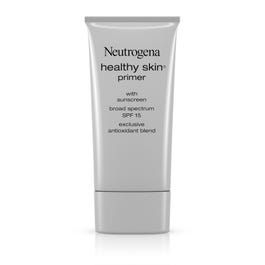
Neutrogena Healthy Skin Makeup Primer, Broad Spectrum SPF 15
Works for
0 of 2 advertised claims delivered
Sun protectionSPF 15 · 4 UV filters · Broad spectrumWeak protectionSPF under 30
This product offers broad spectrum sun protection, but it is weak. We recommend to use a broad spectrum sunscreen with at least SPF 30.
Evens skin tone1 ingredient credited for this claimLimited support
“oz tube of tone-correcting primerHelps even and brightens skinSilky, lightweight formula helps makeup apply more smoothly and extends the wear of makeupOptical modifiers help minimize the look of imperfectionsNatural Soy helps improve the look of skin overtime”
This product contains ingredients (glycine soja seed extract) that could help reduce hyperpigmentation (for example, post-acne marks or age spots) in theory, but there is not enough evidence that they actually work.
The biggest effect for evening out skin tone in this product comes from sun protection. Sun damage is the main factor causing age spots, darkening of post-acne marks and other discolorations. This is why sun protection is the best strategy for maintaining an even skin tone. We, however, do not recommend using this product as a sunscreen because the protection it offers is not strong enough).
MoisturizingNot advertised by the brand · 10 ingredients credited for this claimGood support
This product can help soften the skin and reduce its moisture loss with emollients and occlusives: dimethicone, isododecane.
Keep in mind that this product does not contain effective ingredients to attract water to the upper layer of the skin. This is why an additional product with humectants like glycerin or hyaluronic acid can be helpful (apply it before this product for the best results).
Can it cause trouble?
Irritancy9 flagged ingredientsMedium risk
ComedogenicClean of flagged comedogenic ingredientsNone flagged
User reviews
Be the first — your take helps the next person decide.
Ingredients
Filter by role to see what each ingredient is doing.
Water~45–55%
Dimethicone~5.3–6.5%
- Irritation risk
- Low
A silicone that helps to reduce water loss from the surface of the skin. Can temporarily "fill in" lines and wrinkles, absorb oil, and create a nice product finish
More about DimethiconeC12-15 alkyl benzoate~4.5–5.5%
- Irritation risk
- Low
Enhances the product texture and makes it more spreadable. Helps reduce water loss from the outer layer of skin. Extands the shelf life by preventing bacteria growth
More about C12-15 alkyl benzoateIsododecane~3.3–4%
- Irritation risk
- Low
An emollient that helps soften the skin and can decrease moisture loss. Helps create a nice product texture
More about IsododecaneMethyl trimethicone~2.4–3%
- Irritation risk
- Low
A type of silicone that helps create a silky product finish and dissolve other ingredients
More about Methyl trimethiconeLauryl peg-9 polydimethylsiloxyethyl dimethicone~2–2.5%
- Irritation risk
- Low
A type of silicone that helps to soften upper layer of the skin and create a nice product texture
More about Lauryl peg-9 polydimethylsiloxyethyl dimethiconeSilica~1.9–2.4%
Butylene glycol~1.4–1.7%
- Irritation risk
- Low
Used to create a nice product texture and help delivery of other ingredients. Might be somewhat helpful in attracting water to the upper layer of the skin
More about Butylene glycolPeg-9 polydimethylsiloxyethyl dimethicone~1.1–1.4%
- Irritation risk
- Medium
A type of silicone that helps water and oil mix together
More about Peg-9 polydimethylsiloxyethyl dimethiconeSynthetic fluorphlogopite~1–1.2%
- Irritation risk
- Low
A mineral that is used as an optical filter (makes the skin looks nicer through light reflection) and to improve the texture of cosmetic products
More about Synthetic fluorphlogopiteDimethicone/peg-10/15 crosspolymer~0.7–1.05%
Sodium chloride~0.65–0.95%
- Irritation risk
- Low
Used to stabilize mixtures of oil and water, and create thicker, gel-like product textures
More about Sodium chlorideNylon-12~0.65–0.95%
Phenoxyethanol~0.45–0.7%
- Irritation risk
- Low
A preservative. It helps prevent bacterial growth in cosmetic products
More about PhenoxyethanolQuaternium-90 bentonite~0.45–0.65%
- Irritation risk
- Low
Dimethicone crosspolymer~0.4–0.65%
- Irritation risk
- Low
Used to create a thicker product texture. Helps soften the upper layer of the skin and might be able to prevent moisture loss from its surface
More about Dimethicone crosspolymerCaprylyl glycol~0.45–0.65%
- Irritation risk
- Medium
Helps preserve products and creates a nice product texture
More about Caprylyl glycolGlycine soja seed extract~0.45–0.65%
- Irritation risk
- Medium
An emollient that helps soften the skin. Might be somewhat helpful in evening the skin tone.
More about Glycine soja seed extractTocopherol~0.3–0.6%
- Irritation risk
- Low
Pure form of vitamin E. Can help moisturise and protect the skin from free radicals. Often used to help stabilise other ingredients or the formula itself
More about TocopherolPropylene carbonate~0.35–0.6%
- Irritation risk
- Low
Is used to dissolve other ingredients and create nice product texture
More about Propylene carbonateDimethicone/vinyl dimethicone crosspolymer~0.3–0.55%
- Irritation risk
- Low
Used to stabilize product formulations and create a nice product texture
More about Dimethicone/vinyl dimethicone crosspolymerDisodium edta~0.25–0.5%
Sorbic acid~0.25–0.5%
Chrysanthemum parthenium flower/leaf/stem juice~0.25–0.45%
- Irritation risk
- Low
Titanium dioxide~0.35–0.65%
- Irritation risk
- Low
Works as a UV filter when used in high concentrations. It is photostable and is effective mostly against the UVB light, with some protection in the UVA range. In small concentrations, used for its ability to improve the color of cosmetic products. Is usually well tolerated by the skin
More about Titanium dioxideMica~0.3–0.55%
- Irritation risk
- Low
Creates an illusion of smoother and more radiant skin tone. Adds shimmer to the skin by reflecting light
More about MicaCi 77163~0.25–0.5%
Iron oxides~0.25–0.45%
- Irritation risk
- Low
An umbrella term for the following three colorants: CI 77491, CI 77492, CI 77499. They might be able to offer some protection against visible light, but the degree of the protection is not clear
More about Iron oxidesTin oxide~0.4–0.6%
- Irritation risk
- Low
A colorant that can add a pearl-like appearance to the formulation
More about Tin oxideButyl methoxydibenzoylmethane2%
- Irritation risk
- Medium
Avobenzone. An organic, or so-called "chemical" UV filter. Protects against both UVA and UVB rays. Needs to be combined with other filters in a formulation to be stable.
More about Butyl methoxydibenzoylmethaneHomosalate3%
- Irritation risk
- Medium
A weak sunscreen that offers some protection against the sun rays that cause sunburn (UVB), but does not offer meaningful protection against protect against the most aging sun rays (UVA). It loses its effectiveness quickly when exposed to sunlight. It is an organic, or so called "chemical" sunscreen. When used in low concentrations, helps to stabilize the product formulation
More about HomosalateEthylhexyl methoxycinnamate4%
- Irritation risk
- High
Octinoxate. When used in higher concentrations, works as a sunscreen protecting the skin from UVB rays. When used in lower concentration, helps to preserve the product formulation. Is shown to be harmful to coral reefs - consider avoiding bathing in coral reef areas when wearing a product with this ingredient. It can be irritating
More about Ethylhexyl methoxycinnamateWater~0.25–0.45%
Dimethicone~0.3–0.55%
- Irritation risk
- Low
A silicone that helps to reduce water loss from the surface of the skin. Can temporarily "fill in" lines and wrinkles, absorb oil, and create a nice product finish
More about DimethiconeC12-15 alkyl benzoate~0.3–0.5%
- Irritation risk
- Low
Enhances the product texture and makes it more spreadable. Helps reduce water loss from the outer layer of skin. Extands the shelf life by preventing bacteria growth
More about C12-15 alkyl benzoateIsododecane~0.25–0.5%
- Irritation risk
- Low
An emollient that helps soften the skin and can decrease moisture loss. Helps create a nice product texture
More about IsododecaneMethyl trimethicone~0.25–0.45%
- Irritation risk
- Low
A type of silicone that helps create a silky product finish and dissolve other ingredients
More about Methyl trimethiconeLauryl peg-9 polydimethylsiloxyethyl dimethicone~0.25–0.5%
- Irritation risk
- Low
A type of silicone that helps to soften upper layer of the skin and create a nice product texture
More about Lauryl peg-9 polydimethylsiloxyethyl dimethiconeSilica~0.4–0.6%
Butylene glycol~0.25–0.45%
- Irritation risk
- Low
Used to create a nice product texture and help delivery of other ingredients. Might be somewhat helpful in attracting water to the upper layer of the skin
More about Butylene glycolPeg-9 polydimethylsiloxyethyl dimethicone~0.25–0.5%
- Irritation risk
- Medium
A type of silicone that helps water and oil mix together
More about Peg-9 polydimethylsiloxyethyl dimethiconeSynthetic fluorphlogopite~0.25–0.5%
- Irritation risk
- Low
A mineral that is used as an optical filter (makes the skin looks nicer through light reflection) and to improve the texture of cosmetic products
More about Synthetic fluorphlogopiteDimethicone/peg-10/15 crosspolymer~0.25–0.45%
Sodium chloride~0.25–0.5%
- Irritation risk
- Low
Used to stabilize mixtures of oil and water, and create thicker, gel-like product textures
More about Sodium chlorideNylon-12~0.3–0.5%
Phenoxyethanol~0.25–0.5%
- Irritation risk
- Low
A preservative. It helps prevent bacterial growth in cosmetic products
More about PhenoxyethanolQuaternium-90 bentonite~0.25–0.45%
- Irritation risk
- Low
Dimethicone crosspolymer~0.25–0.5%
- Irritation risk
- Low
Used to create a thicker product texture. Helps soften the upper layer of the skin and might be able to prevent moisture loss from its surface
More about Dimethicone crosspolymerCaprylyl glycol~0.25–0.5%
- Irritation risk
- Medium
Helps preserve products and creates a nice product texture
More about Caprylyl glycolGlycine soja seed extract~0.3–0.5%
- Irritation risk
- Medium
An emollient that helps soften the skin. Might be somewhat helpful in evening the skin tone.
More about Glycine soja seed extractTocopherol~0.25–0.45%
- Irritation risk
- Low
Pure form of vitamin E. Can help moisturise and protect the skin from free radicals. Often used to help stabilise other ingredients or the formula itself
More about TocopherolPropylene carbonate~0.25–0.5%
- Irritation risk
- Low
Is used to dissolve other ingredients and create nice product texture
More about Propylene carbonateDimethicone/vinyl dimethicone crosspolymer~0.2–0.4%
- Irritation risk
- Low
Used to stabilize product formulations and create a nice product texture
More about Dimethicone/vinyl dimethicone crosspolymerDisodium edta~0.2–0.4%
Sorbic acid~0.2–0.35%
Chrysanthemum parthenium flower/leaf/stem juice~0.15–0.3%
- Irritation risk
- Low
Titanium dioxide~0.25–0.45%
- Irritation risk
- Low
Works as a UV filter when used in high concentrations. It is photostable and is effective mostly against the UVB light, with some protection in the UVA range. In small concentrations, used for its ability to improve the color of cosmetic products. Is usually well tolerated by the skin
More about Titanium dioxideMica~0.2–0.35%
- Irritation risk
- Low
Creates an illusion of smoother and more radiant skin tone. Adds shimmer to the skin by reflecting light
More about MicaCi 77163~0.15–0.3%
Iron oxides~0.1–0.15%
- Irritation risk
- Low
An umbrella term for the following three colorants: CI 77491, CI 77492, CI 77499. They might be able to offer some protection against visible light, but the degree of the protection is not clear
More about Iron oxidesTin oxide~0.2–0.35%
- Irritation risk
- Low
A colorant that can add a pearl-like appearance to the formulation
More about Tin oxideIngredient list view
Water, Dimethicone, C12-15 alkyl benzoate, Isododecane, Methyl trimethicone, Lauryl peg-9 polydimethylsiloxyethyl dimethicone, Silica, Butylene glycol, Peg-9 polydimethylsiloxyethyl dimethicone, Synthetic fluorphlogopite, Dimethicone/peg-10/15 crosspolymer, Sodium chloride, Nylon-12, Phenoxyethanol, Quaternium-90 bentonite, Dimethicone crosspolymer, Caprylyl glycol, Glycine soja seed extract, Tocopherol, Propylene carbonate, Dimethicone/vinyl dimethicone crosspolymer, Disodium edta, Sorbic acid, Chrysanthemum parthenium flower/leaf/stem juice, Titanium dioxide, Mica, Ci 77163, Iron oxides, Tin oxide, Butyl methoxydibenzoylmethane, Homosalate, Ethylhexyl methoxycinnamate, Water, Dimethicone, C12-15 alkyl benzoate, Isododecane, Methyl trimethicone, Lauryl peg-9 polydimethylsiloxyethyl dimethicone, Silica, Butylene glycol, Peg-9 polydimethylsiloxyethyl dimethicone, Synthetic fluorphlogopite, Dimethicone/peg-10/15 crosspolymer, Sodium chloride, Nylon-12, Phenoxyethanol, Quaternium-90 bentonite, Dimethicone crosspolymer, Caprylyl glycol, Glycine soja seed extract, Tocopherol, Propylene carbonate, Dimethicone/vinyl dimethicone crosspolymer, Disodium edta, Sorbic acid, Chrysanthemum parthenium flower/leaf/stem juice, Titanium dioxide, Mica, Ci 77163, Iron oxides, Tin oxide
Compare prices
Retailers ranked by price — lowest first.


Product summary
"Neutrogena - Healthy Skin Makeup Primer, Broad Spectrum SPF 15" "is a broad spectrum sunscreen meaning that it protects both from UVB rays (" burning "- they cause sunburn) and UVA rays (" aging "- they don't cause sunburn but lead to premature aging and pigmentation issues). However, it does not offer enough sun protection. We recommend to use a sunscreen with at least SPF 30 daily.
It also works as a moisturizer, so you do not have to use an additional hydrating product.
Sunscreen filters
This is a" mixed "sunscreen in the sense that it uses both mineral and organic (so-called" chemical ") sun filters. The organic filters in the product are: avobenzone, octinoxate and homosalate. As for the mineral filters, this sunscreen uses titanium dioxide.
Irritation risk
There are actives in this product that can be irritating. We assess the overall irritancy of this product to be medium. For a detailed overview of all potential irritants: click here
You can see the detailed formula review with the breakdown of all actives in the product and the full ingredient list with estimated concentrations in the tables below.
Price
The product retails from 11.97$ up to 14.50$ in the United States.
For a detailed price comparison: click here.
Sources cited in this review
Every concentration estimate and effectiveness label is anchored to one of these 6 studies and safety reviews.
- 1
- 2Final Report on the Safety Assessment of Dimethicone Copolyoljournals.sagepub.com
- 3Vitamin E in dermatologyncbi.nlm.nih.gov
- 4Vitamin E and Skin Healthlpi.oregonstate.edu
- 5Safety Assessment of Tin(IV) Oxide as Used in Cosmeticscir-safety.org
- 6

Affiliate links · As an Amazon Associate, WIMJ earns from qualifying purchases.