Works for:
based on ingredients and %- Cleansing
Can it cause trouble?
- Irritation risk: high
- Comedogenic risk ingredients: 1
Key actives
Works for
Cleansing
What does the product description say?
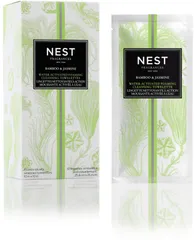
Bamboo & Jasmine Water-Activated Foaming Cleansing Towelettes
Source: From product name
This product works by removing dirt and oil from the surface of the skin. It uses a combination of mild cleansing agents (cocamidopropyl betaine, cocamidopropyl dimethylamine, decyl glucoside, disodium laureth sulfosuccinate, laureth-3, lauryl glucoside, peg-150 pentaerythrityl tetrastearate, peg-7 glyceryl cocoate, polysorbate 20, ppg-2 hydroxyethyl cocamide, sodium c14-16 olefin sulfonate, sodium laurate, sodium lauroyl sarcosinate, sodium lauryl sulfoacetate, trisodium sulfosuccinate) and should be able to cleanse the skin gently. Still keep in mind that any cleansing can disrupt the skin barrier, and most people do not need to cleanse their skin more than once per day.
Even though this formulation is mild, the following cleansing agents could trigger an irritation or allergy for some people: cocamidopropyl betaine, cocamidopropyl dimethylamine, decyl glucoside, sodium c14-16 olefin sulfonate
Helps water and oil mix together. Used as a cleansing ingredient. Could be an allergen
Helps oil and water mix together. Can work as a cleansing agent. Can be irritating
Helps oil and water mix together. Can be irritating
Helps oil and water mix together
Helps oil and water mix together
Helps oils and water mix together and works as a cleansing agent
Helps oil and water mix together
Helps oil and water mix together and used as a cleansing agent. Can be irritating and is better avoided for sensitive skin
Helps oil and water mix together and works as a cleansing agent
Helps oil and water mix together
How honest is this product?
| Promise | Can it deliver? |
|---|---|
| Cleansing |
Total Promises Fulfilled score: 100/100.
Potential irritants
Comedogenic ingredients
User reviews (0)
Averages from community submissions.
No reviews yet for this product.
Be the first to share your experience!
Tried this product?
Help capture what the ingredient list can't—texture, finish, pilling, scent, and more. Answer what you can, skip the rest.
Takes ~30 seconds.
Reviews are shown in aggregate. No personal details.
| Product | Similarity | Price | Irritancy |
|---|---|---|---|
 NEST Fragrances Bamboo & Jasmine Water-Activated Foaming Cleansing Towelettes | Current | - | |
 Drunk Elephant Mello Marula Cream Cleanser with 1.0% Colloidal Oatmeal | 32% | ≈ $34.93 | |
 CeraVe Cream to Foam Cleanser | 31% | ≈ $9.34 | |
 VitaminSea.beauty Red Algae Coconut Oil Gel Facial Cleanser | 31% | - | |
 RoC Skincare Barrier Renew Gel-To-Foam Cleanser | 31% | $12.99 | |
 EviDenS de Beauté The Cleansing Foaming Gel | 30% | - |
Key Actives
Pure form of vitamin E. Can help moisturise and protect the skin from free radicals. Often used to help stabilise other ingredients or the formula itself
Helps attract water to the upper layer of the skin and can help improve skin barrier function
Can be helpful in reducing inflammation in skin, including inflamed acne. It can be irritating
An amino-acid that helps increase skin hydration and might help to slightly improve skin firmness, potentially reducing lines and wrinkles
An amino-acid that helps to attract water to the upper layer of the skin. In combination with other amino-acids, might help to reduce fine lines and wrinkles
An amino-acid that helps to attract water to the upper layer of the skin and might help to lighten the skin, but solid evidence is lacking
An amino-acid that helps to attract water to the upper layer of the skin. In combination with other amino-acids, might help to reduce fine lines and wrinkles
A plant oil with a high content of linoleic acid that helps soften the upper layer of the skin and helps strengthen the skin barrier. It is an excellent moisturizer. Might have an anti-oxidant effect
Helps oil and water mix together and used as a cleansing agent. Can be irritating and is better avoided for sensitive skin
Helps water and oil mix together. Used as a cleansing ingredient. Could be an allergen
Helps oils and water mix together and works as a cleansing agent
One of the best moisturizing ingredients. Naturally present in skin. It attracts water to the upper layer of the skin working as a humectant
Helps oil and water mix together. Can work as a cleansing agent. Can be irritating
Naturally present in skin and helps to attract water to its upper layer
Helps attract water to the upper layer of the skin. Is often used to adjust the pH level of the product
An amino acid that is naturally present in skin and helps keep it hydrated. When used together with AHAs, it can reduce their irritating effect on the skin
Naturally present in skin and helps to attract water to its upper layer
An amino acid that can help attract water to the upper layer of the skin and support skin's barrier function
Helps soften the upper layer of the skin
Helps oil and water mix together
Helps oil and water mix together. Can be irritating
Helps oil and water mix together and works as a cleansing agent
Helps to attract water to the upper layer of the skin and can help restore the skin barrier function
Helps soften the upper layer of the skin
An emollient. Found to be as effective as a moisturizer for dry skin as mineral oil. Could be comedogenic
Helps oil and water mix together
Potential irritants
Helps oil and water mix together and used as a cleansing agent. Can be irritating and is better avoided for sensitive skin
An aromatic blend of unspecified and possibly irritating ingredients
Helps water and oil mix together. Used as a cleansing ingredient. Could be an allergen
A preservative. Can be used to mask unpleasant smell. Can be irritating
Helps oil and water mix together. Can work as a cleansing agent. Can be irritating
Can be helpful in reducing inflammation in skin, including inflamed acne. It can be irritating
Helps oils and water mix together and works as a cleansing agent
Helps preserve products and creates a nice product texture
Used to improve the product consistency and stabilize formulations
Traditionally used to treat sunburns, dermatitis and inflammation, but evidence for its effectiveness is lacking. The extract can contain humectants that help attract water into the skin
Helps to control the skin's pH level. Maintains the skin's natural film of amino-lactic acids and oils. Helps to preserve products
Helps attract water to the upper layer of the skin. Is often used to adjust the pH level of the product
Helps oil and water mix together and works as a cleansing agent
A more stable but less bio-available form of vitamin E compared to Tocopherol. Might help moisturize and protect the skin from free radicals, but mostly used in low concentrations to stabilize other ingredients.
Can work as an exfoliant but is typically used to adjust the product pH
A plant oil that helps soften the upper layer of the skin. Is unlikely to be helpful in restoring skin barrier function due to the low content of linoleic acid
Comedogenic ingredients
An emollient. Found to be as effective as a moisturizer for dry skin as mineral oil. Could be comedogenic
All ingredients
Helps oil and water mix together and used as a cleansing agent. Can be irritating and is better avoided for sensitive skin
An aromatic blend of unspecified and possibly irritating ingredients
Helps water and oil mix together. Used as a cleansing ingredient. Could be an allergen
Helps oils and water mix together and works as a cleansing agent
A preservative. It helps prevent bacterial growth in cosmetic products
Helps preserve products and creates a nice product texture
Used to stabilize mixtures of oil and water, and create thicker, gel-like product textures
One of the best moisturizing ingredients. Naturally present in skin. It attracts water to the upper layer of the skin working as a humectant
Used to improve the product consistency and stabilize formulations
A preservative. Can be used to mask unpleasant smell. Can be irritating
Helps soften the upper layer of the skin and create a nice product finish
Helps oil and water mix together. Can work as a cleansing agent. Can be irritating
Used to improve the product consistency and stabilize formulations
Traditionally used to treat sunburns, dermatitis and inflammation, but evidence for its effectiveness is lacking. The extract can contain humectants that help attract water into the skin
Helps attract water to the upper layer of the skin and can help improve skin barrier function
Helps to control the skin's pH level. Maintains the skin's natural film of amino-lactic acids and oils. Helps to preserve products
Naturally present in skin and helps to attract water to its upper layer
Helps attract water to the upper layer of the skin. Is often used to adjust the pH level of the product
An amino acid that is naturally present in skin and helps keep it hydrated. When used together with AHAs, it can reduce their irritating effect on the skin
An amino-acid that helps increase skin hydration and might help to slightly improve skin firmness, potentially reducing lines and wrinkles
Naturally present in skin and helps to attract water to its upper layer
An amino acid that can help attract water to the upper layer of the skin and support skin's barrier function
An amino-acid that helps to attract water to the upper layer of the skin. In combination with other amino-acids, might help to reduce fine lines and wrinkles
Helps oil and water mix together and works as a cleansing agent
Helps to attract water to the upper layer of the skin and can help restore the skin barrier function
Can be helpful in reducing inflammation in skin, including inflamed acne. It can be irritating
Pure form of vitamin E. Can help moisturise and protect the skin from free radicals. Often used to help stabilise other ingredients or the formula itself
An amino-acid that helps to attract water to the upper layer of the skin and might help to lighten the skin, but solid evidence is lacking
An amino-acid that helps to attract water to the upper layer of the skin. In combination with other amino-acids, might help to reduce fine lines and wrinkles
A plant oil with a high content of linoleic acid that helps soften the upper layer of the skin and helps strengthen the skin barrier. It is an excellent moisturizer. Might have an anti-oxidant effect
An emollient. Found to be as effective as a moisturizer for dry skin as mineral oil. Could be comedogenic
A more stable but less bio-available form of vitamin E compared to Tocopherol. Might help moisturize and protect the skin from free radicals, but mostly used in low concentrations to stabilize other ingredients.
Can work as an exfoliant but is typically used to adjust the product pH
A plant oil that helps soften the upper layer of the skin. Is unlikely to be helpful in restoring skin barrier function due to the low content of linoleic acid
Ingredient list view
Sodium c14-16 olefin sulfonate, Parfum, Cocamidopropyl betaine, Polysorbate 20, Water, Peg-7 glyceryl cocoate, Phenoxyethanol, Cassia hydroxypropyltrimonium chloride, Caprylyl glycol, Sodium chloride, Glycerin, Sodium sulfate, Benzyl alcohol, Chlorphenesin, Sodium benzoate, Potassium sorbate, Disodium edta, Polyquaternium-7, Sorbic acid, Cocamidopropyl dimethylamine, Ethylhexylglycerin, Sodium sulfate, Tetradecene, Bht, Sodium glycolate, Aloe barbadensis leaf juice, Panthenol, Sodium citrate, Sodium acetate, Oryza sativa bran extract, Sodium pca, Hexadecene, Sodium lactate, Arginine, Aspartic acid, Pca, Isoleucine, Threonine, Helianthus annuus extract, Sodium lauryl sulfoacetate, Lauryl glucoside, Decyl glucoside, Disodium laureth sulfosuccinate, Sodium lauroyl sarcosinate, Glycine, Rosmarinus officinalis leaf extract, Tocopherol, Trisodium sulfosuccinate, Alanine, Serine, Valine, Caryodendron orinocense seed oil, Camelina sativa seed oil, Cocos nucifera oil, Tocopheryl acetate, Proline, Histidine, Phenylalanine, Sodium laurate, Citric acid, Disteareth-75 ipdi, Peg-150 pentaerythrityl tetrastearate, Ppg-2 hydroxyethyl cocamide, Sodium hydroxide, Laureth-3, Helichrysum angustifolium flower extract, Moringa oleifera seed oil, Benzyl salicylate, Hexyl cinnamal, Linalool, Citronellol, Geraniol
- Final Report On the Safety Assessment of Sodium Alpha-Olefin Sulfonates
- Glycerol and the skin: holistic approach to its origin and functions
- Amended Safety Assessment of Sodium Sulfate as Used in Cosmetics
- Occupational contact allergy to cocamidopropyl betaine and its impurities
- Skin moisturizing effects of panthenol-based formulations
- Safety Assessment of Panthenol, Pantothenic Acid, and Derivatives as Used in Cosmetics
- Acetyl aspartic acid, a novel active ingredient, demonstrates potential to improve signs of skin ageing: from consumer need to clinical proof
- In vivo topical application of acetyl aspartic acid increases fibrillin-1 and collagen IV deposition leading to a significant improvement of skin firmness
- Local rhamnosoft, ceramides and L‐isoleucine in atopic eczema: a randomized, placebo controlled trial
- Topical palmitoyl pentapeptide provides improvement in photoaged human facial skin
- Ecofriendly surfactant is allergen of the year
- Effect of Topical Application of Glycine and Proline on Recalcitrant Leg Ulcers of Prolidase Deficiency
- Functional glycine receptor in cultured human keratinocytes
- Allergic contact dermatitis induced by rosemary leaf extract in a cleansing gel
- Safety Assessment of Rosmarinus officinalis (Rosemary)-Derived Ingredients as Used in Cosmetics
- Rosmarinus officinalis Extract Suppresses Propionibacterium acnes–Induced Inflammatory Responses
- Vitamin E in dermatology
- Vitamin E and Skin Health
- Combination of amino acids reduces pigmentation in B16F0 melanoma cells
- Chemical characterization and antioxidant activity of Amazonian (Ecuador) Caryodendron orinocense Karst. and Bactris gasipaes Kunth seed oils
- Physical and chemical characteristics and fatty acids composition of seeds oil isolated from Camelina sativa (L) cultivated in Mongolia
- Histidine and/or Histidine Derivative for the Treatment of Inflammatory Skin Diseases
- Safety Assessment of α-Amino Acids as Used in Cosmetics
- Moringa oleifera seed oil: Composition, nutritional aspects and health attributes
- Moringa oleifera Seeds and Oil: Characteristics and Uses for Human Health
- Annex I: Clinical evidence regarding sensitisation to individual fragrance chemicals and to natural extracts