Works for
2 of 3 advertised claims delivered
Anti-aging2 ingredients credited for this claimModerate support
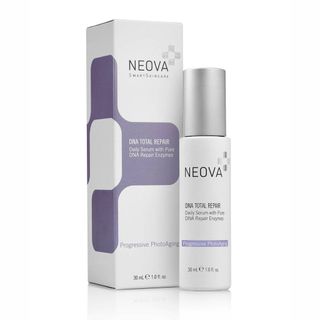
“Powered by three advanced DNA Repair Enzymes, this formula helps identify, remove, and repair visible signs of UV-induced skin damage, supporting healthier, stronger, more resilient skin.”
This product contains arabidopsis thaliana extract. This ingredient might be able to help reduce and prevent fine lines and wrinkles, improve skin elasticity and firmness, but there is not enough evidence that it actually works.
Moisturizing20 ingredients credited for this claimGood support
This product can help improve hydration of the skin with the two types of ingredients.
The first type is called “humectants”:
these ingredients help attract water.
When humectants are on the surface of the skin, they “pull in” the moisture from the outside environment, or from
within deeper layers of the skin. The following ingredients in this product do the job:
anhydroxylitol, glycerin.
This product also contains ingredients called “occlusives”. They help reduce the speed with which our skin loses moisture to the outside environment. These ingredients also help soften the upper layer of the skin, so it feels less tight and nicer to the touch. The following ingredients in this product do the job: butyrospermum parkii butter, dimethicone.
Evens skin tone1 ingredient credited for this claimLimited support
“Daily exposure to sunlight creates cumulative DNA damage that accelerates aging, uneven tone, and loss of skin vitality.”
This product contains ingredients (pinus pinaster bark extract) that could help reduce hyperpigmentation (for example, post-acne marks or age spots) in theory, but there is not enough evidence that they actually work.
Anti-oxidationNot advertised by the brand · 8 ingredients credited for this claimModerate support
This product contains antioxidants (pinus pinaster bark extract) that might be able to help neutralize free radicals in skin to lessen the damage it gets from the UV light (sun). There is not enough evidence to confirm their effectiveness in skin though.
Can it cause trouble?
Irritancy1 strong irritant: CamphorMedium risk
Comedogenic2 ingredients rated 2 or more on the 0–5 pore-clogging scale2 flagged

User reviews
Be the first — your take helps the next person decide.
Ingredients
Filter by role to see what each ingredient is doing.
Water~45–55%
Hydrogenated polyisobutene~5.3–6.5%
- Irritation risk
- Low
Used to improve the product consistency and soften the upper layer of the skin
More about Hydrogenated polyisobuteneSaccharide isomerate~3.9–4.8%
- Irritation risk
- Low
Helps attract water to the upper layer of the skin
More about Saccharide isomerateButyrospermum parkii butter~3.1–3.8%
- Irritation risk
- Low
- Comedogenicity
- 3/5
A great moisturising ingredient that softens the skin and reduces water loss from its upper layer. It also can be helpful in protecting skin from free radicals
More about Butyrospermum parkii butterPentylene glycol~2.3–2.8%
- Irritation risk
- Medium
Used to preserve products, dissolve other ingredients and create a nice product texture
More about Pentylene glycolCyclopentasiloxane~1.9–2.3%
- Irritation risk
- Low
A silicone that helps improve the product texture and spreadability. Can absorb oil creating a short-term mattifying effect on the skin
More about CyclopentasiloxaneDimethicone~1.6–2%
- Irritation risk
- Low
A silicone that helps to reduce water loss from the surface of the skin. Can temporarily "fill in" lines and wrinkles, absorb oil, and create a nice product finish
More about DimethiconePolysorbate 60~1.4–1.7%
Ammonium acryloyldimethyltaurate/vp copolymer~1.1–1.4%
- Irritation risk
- Low
Increases thickness of a product. Texture enhancer for oil-in-water emulsions
More about Ammonium acryloyldimethyltaurate/vp copolymerErgothioneine~0.95–1.15%
- Irritation risk
- Low
Can help neutralize free radicals in skin. Preliminary studies show that it can be more effective than coenzyme Q10 but studies on effective concentration for topical applications are lacking
More about ErgothioneineXylitylglucoside~0.65–1%
- Irritation risk
- Low
Helps attract water to the upper layer of the skin and repair the skin barrier function
More about XylitylglucosideMicrococcus lysate~0.55–0.8%
- Irritation risk
- Low
Consists of remains of dead bacteria cells. Is likely helpful in attracting water to the upper layer of the skin. Might be helpful in reducing inflammation and neutralizing free radicals in skin. It is claimed to be a "DNA repair enzyme"
More about Micrococcus lysatePlankton extract~0.5–0.75%
- Irritation risk
- Medium
- Comedogenicity
- 3/5
Can help attract water to the upper layer of the skin
More about Plankton extractArabidopsis thaliana extract~0.45–0.7%
- Irritation risk
- Medium
Plant extract that might be helpful in repairing sun damage but evidence of effectiveness in skin are lacking
More about Arabidopsis thaliana extractAvena sativa kernel extract~0.45–0.65%
- Irritation risk
- Low
An effective moisturizing and skin barrier repair ingredient. Helps calm down inflammation and has some anti-oxidant properties
More about Avena sativa kernel extractCassia alata leaf extract~0.45–0.65%
- Irritation risk
- Medium
Might have some anti-oxidant properties. Can be used as a fragrance. Can be irritating
More about Cassia alata leaf extractCitric acid~0.4–0.6%
- Irritation risk
- Medium
Can work as an exfoliant but is typically used to adjust the product pH
More about Citric acidBuddleja davidii leaf extract~0.3–0.6%
- Irritation risk
- Low
Saccharomyces lysate extract~0.3–0.55%
- Irritation risk
- Low
Helps attract water to the upper layer of the skin. Can have some anti-inflammatory effect
More about Saccharomyces lysate extractEvodia rutaecarpa fruit extract~0.3–0.5%
- Irritation risk
- Low
Hydroxyethyl acrylate/sodium acryloyldimethyl taurate copolymer~0.25–0.5%
- Irritation risk
- Medium
A gelling agent that thickens the product consistency and leaves the skin with a velvety finish
More about Hydroxyethyl acrylate/sodium acryloyldimethyl taurate copolymerAnhydroxylitol~0.25–0.5%
- Irritation risk
- Low
Helps attract water to the upper layer of the skin and repair the skin barrir function
More about AnhydroxylitolPhenoxyethanol~0.25–0.45%
- Irritation risk
- Low
A preservative. It helps prevent bacterial growth in cosmetic products
More about PhenoxyethanolSqualane~0.3–0.55%
- Irritation risk
- Low
An oil naturally present in skin. Works as an emollient to soften the skin and form a protective layer on its surface without a greasy feeling.
More about SqualaneXylitol~0.25–0.45%
- Irritation risk
- Low
Helps attract water to the upper layer of the skin and repair the skin barrier function
More about XylitolGlycerin~0.25–0.5%
- Irritation risk
- Low
One of the best moisturizing ingredients. Naturally present in skin. It attracts water to the upper layer of the skin working as a humectant
More about GlycerinCaprylyl glycol~0.25–0.5%
- Irritation risk
- Medium
Helps preserve products and creates a nice product texture
More about Caprylyl glycolPanthenol~0.2–0.4%
- Irritation risk
- Low
Helps attract water to the upper layer of the skin and can help improve skin barrier function
More about PanthenolButylene glycol~0.2–0.4%
- Irritation risk
- Low
Used to create a nice product texture and help delivery of other ingredients. Might be somewhat helpful in attracting water to the upper layer of the skin
More about Butylene glycolEthylhexylglycerin~0.2–0.4%
Hexylene glycol~0.2–0.35%
- Irritation risk
- Medium
Helps create a more spreadable product texture
More about Hexylene glycolAllantoin~0.15–0.3%
- Irritation risk
- Low
Helps calm down inflammation in skin and can help reduce itching. Helps to repair the skin barrier and keep skin hydrated
More about AllantoinBisabolol~0.15–0.3%
- Irritation risk
- Low
An active component of chamomile plant that historically has been used to calm down irritated skin. A recent study shows that bisabolol indeed can have some anti-inflammatory effect on skin, even though conclusive data is lacking. Bisabolol has a sweet floral scent and can be added to products for its aromatic properties
More about BisabololDunaliella salina extract~0.15–0.3%
- Irritation risk
- Low
A green micro-algae extract that might help neutralize free radicals in skin, but solid evidence is lacking. It helps to soften the upper layer of the skin
More about Dunaliella salina extractCamphor~0.15–0.25%
- Irritation risk
- High
Lecithin~0.15–0.3%
- Irritation risk
- Low
Used mostly for creating emulsions - helping oil and water mix together. Helps soften the upper layer of the skin
More about LecithinPinus pinaster bark extract~0.15–0.25%
- Irritation risk
- Medium
A plant extract that might help neutralize free radicals and reduce hyperpigmentation, but evidence of effectiveness of topical application is lacking. It can be an INCI name for the trademarked ingredient Pycnogenol (but could also be a different type of this plant's bark extract)
More about Pinus pinaster bark extractPotassium sorbate~0.1–0.2%
Sodium benzoate~0.1–0.15%
Bht~0.01–0.05%
Ingredient list view
Water, Hydrogenated polyisobutene, Saccharide isomerate, Butyrospermum parkii butter, Pentylene glycol, Cyclopentasiloxane, Dimethicone, Polysorbate 60, Ammonium acryloyldimethyltaurate/vp copolymer, Ergothioneine, Xylitylglucoside, Micrococcus lysate, Plankton extract, Arabidopsis thaliana extract, Avena sativa kernel extract, Cassia alata leaf extract, Citric acid, Buddleja davidii leaf extract, Saccharomyces lysate extract, Evodia rutaecarpa fruit extract, Hydroxyethyl acrylate/sodium acryloyldimethyl taurate copolymer, Anhydroxylitol, Phenoxyethanol, Squalane, Xylitol, Glycerin, Caprylyl glycol, Panthenol, Butylene glycol, Ethylhexylglycerin, Hexylene glycol, Allantoin, Bisabolol, Dunaliella salina extract, Camphor, Lecithin, Pinus pinaster bark extract, Potassium sorbate, Sodium benzoate, Bht
Compare prices
Retailers ranked by price — lowest first.
Affiliate links · prices updated regularly · As an Amazon Associate, WIMJ earns from qualifying purchases.
Worth comparing, line by line.
Match % combines shared ingredients, the first five ingredients, shared actives and hero ingredients, irritancy (lower counts in the alternative's favour), texture and body area. Only products in the same routine step are compared.
| NeovaDNA Total RepairYOUR PRODUCT | Be MinimalistSepicalm 03% Moisturizer | Step 4: MoisturizeSepicalm 03% Moisturizer | |
|---|---|---|---|
| Match | — | 51% | 51% |
| Price | $125.00 | $7.26−$117.74 | — |
| Shared key ingredients | — | 7 of 17 | 7 of 17 |
| Key difference | — | Caprylic/Capric Triglyceride | Caprylic/Capric Triglyceride |
| Irritancy | Medium | Low | Low |
| Drying alcohol | — | — | — |
| View product | Shop | Shop |


Sources cited in this review
Every concentration estimate and effectiveness label is anchored to one of these 15 studies and safety reviews.
- 1
- 2
- 3Final Report on the Safety Assessment of Dimethicone Copolyoljournals.sagepub.com
- 4A comparison of the relative antioxidant potency of L‐ergothioneine and idebenoneonlinelibrary.wiley.com
- 5
- 6Repair of Damaged DNA by Arabidopsis Cell Extractncbi.nlm.nih.gov

Affiliate links · As an Amazon Associate, WIMJ earns from qualifying purchases.